

Homes that lean on solar need different things than a weekend camper does. You may want rooftop stability, portable backup, or a full off-grid stack that handles the whole load without turning your garage into a tangle of parts. This roundup keeps those use cases separate, so you can match the panel setup to your roof, shed, RV, blackout plan, or small homestead.
The Shortlist At A Glance

Renogy 200W Portable Solar Panel

ECO-WORTHY 400W Solar Panels N-Type 4pcs 100 Watt 18V Monocrystalline

Renogy 400 Watt 12 Volt Premium 4 Pcs 100W Panel

DOKIO 800W Solar Panels 2-Pack of 400W 31V

ECO-WORTHY 200 Watts 12 Volt/24 Volt Solar Panel Kit

Renogy ShadowFlux Solar Panel 400 Watt
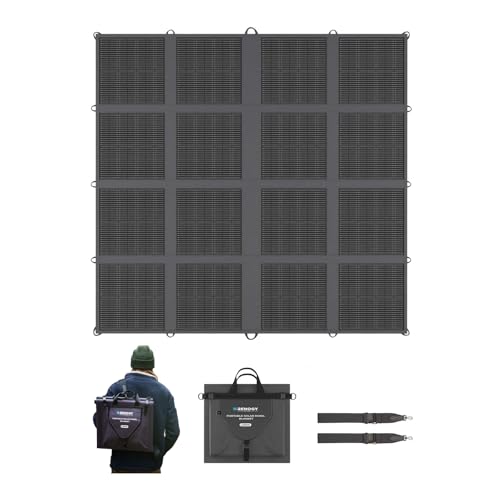
Renogy 400W Portable Solar Panel for Power Stations

Jackery HomePower 3600 Plus Portable Power Station with 2X 200W Solar Panels

ECO-WORTHY 1200W 24V 5.52KWH Lithium Battery Solar System
More Details On Our Top Picks
A foldable 200W panel like this makes sense for a garage shelf, an RV bay, or a blackout kit you can move without strain. The kickstand helps angle the panel, while the USB-A and USB-C outputs give you more everyday usefulness than a plain panel tied to one power station. IP65 water resistance means it’s built for splashes and dust, not a soak, so storage still matters.
You may find this especially handy for short trips, patio use, or backup charging in a home setup that already leans on a portable power station. Compared with the fixed Renogy ShadowFlux and the ECO-WORTHY roof-ready options, this one is about mobility first, not permanent mounting. It feels more like a carry-out tool than a rooftop commitment, and that’s the point.
Strong Points
- Foldable format keeps it easy to move between home, campsite, and vehicle use.
- USB-A and USB-C outputs add direct charging options for smaller devices.
- Kickstand support helps you set a better angle without extra hardware.
- IP65 protection suits dusty storage areas and damp outdoor sessions.
Minor Gripes
- Portable format means it’s less suited to a permanent roof install.
- Water resistance is practical, but long exposure still calls for care.
Feature Snapshot
Who It Suits Best
Homeowners who want a portable backup panel for a power station will get the most from it.
A Better Fit Elsewhere
Renogy ShadowFlux Solar Panel 400 Watt fits better for a roof that stays in place year-round.
Four 100W panels give you a modular path to 400W, which is handy for a shed, boat, RV roof, or a small homestead system that grows in stages. The N-type cells and 16BB layout point to a more refined panel structure, while IP68 water resistance means the panel side is meant for tougher outdoor exposure than the portable picks above. That said, fixed mounting still takes planning, especially around roof space and cable runs.
For most off-grid spaces, this set lands in the middle ground between a travel panel and a full system kit. Compared with Renogy’s 200W folding unit, it asks for installation but gives you a more permanent footprint. It pairs well with a 12V or 24V battery bank, so it suits users who already have the rest of the system mapped out.
Highlights
- Four-panel layout makes staged placement and expansion easier.
- IP68 resistance suits exposed outdoor mounting better than basic portable panels.
- 100W module size helps with flexible roof or ground layouts.
- Works across 12V and 24V battery setups, which broadens system fit.
Points To Note
- Installation takes more effort than a foldable backup panel.
- Physical placement matters, especially on smaller roofs or uneven sheds.
Core Details
Who Will Love This
Shoppers building a small fixed off-grid array for a shed, cabin, or boat should look here first.
Another Choice May Suit
Renogy 400W Portable Solar Panel for Power Stations fits better for someone who needs to move panels around often.
This bundle leans into convenience, because you’re not just buying panels, you’re getting the pieces that make a 12V setup easier to assemble. The 40A MPPT controller matters here, since MPPT stands for maximum power point tracking, a controller type that helps a system harvest energy more intelligently than a basic regulator. Bluetooth, fuse, mounting brackets, adaptor kit, and tray cables round out the package, which is a relief for anyone building a first serious setup.
Compared with the ECO-WORTHY kit below, this one feels more complete for a DIY home or camper project that wants fewer missing parts. The trade-off is simple: a bundled kit is convenient, but you still need enough space and a clear plan for wiring. For a garage build or a weekend install, that balance works well.
Reasons To Buy
- Controller, brackets, fuse, adaptor kit, and cables reduce the number of separate parts to source.
- Bluetooth support makes monitoring easier once the system is installed.
- 400W at 12V gives you a practical base for modest home or RV loads.
- Panel-and-controller pairing is friendlier for first-time system builders.
Worth Noting
- Kit format asks for more installation space than a portable panel.
- Wiring still needs careful planning, especially in tight utility areas.
Technical Sheet
Built With In Mind
DIY homeowners setting up a first wired solar bank will benefit most from the bundled parts and controller.
Swap It Out When
ECO-WORTHY 400W Solar Panels N-Type 4pcs 100 Watt 18V Monocrystalline is the easier pick for a modular array with more direct panel-only flexibility.
This 2-pack makes sense for larger fixed spaces where you want a higher ceiling from the start. Each panel runs at 400W and comes with a 9.84 ft lead, which helps with placement on sheds, cabins, patios, or broader yard installs. The 31V output gives the set a stronger high-output feel than the smaller kits above, though the panels ask for real mounting space.
For homeowners building a bigger off-grid array, this pair feels more serious than the travel-friendly picks. The honest read is that it’s less forgiving in cramped spaces, but that same footprint pays off when roof or wall space is available. It pairs especially well with installations that already have room for proper cable routing.
Upsides
- Two large panels give you a straightforward path to more total output.
- 9.84 ft lead improves placement flexibility in wider installations.
- Works with both 12V and 24V systems, which helps planning.
- Monocrystalline construction fits home and outbuilding use well.
Small Caveats
- Large panels need enough mounting area to make sense.
- Moving or storing a pair this size takes more effort than folding gear.
Details At A Glance
The Right Fit
Homeowners with sheds, cabins, or broad roof sections should get the most from this set.
Reach For A Different Pick When
Renogy 200W Portable Solar Panel fits better for compact backup use or storage-tight homes.
A 200W kit with a 30A PWM controller gives you a straightforward entry point for RV, camper, vehicle, or caravan power. PWM means pulse-width modulation, a simpler controller style that usually suits smaller systems where cost and ease matter more than squeezing out every last bit of panel performance. That makes the kit approachable, though it does lean more basic than the MPPT bundle from Renogy above.
For weekend travel or modest off-grid tasks, it lands in a very useful middle zone. You get the panels and controller together, so the system feels less pieced together than a panel-only purchase. The trade-off is that it’s best for lighter needs, not a heavy home backup role.
Best Bits
- Kit format keeps the core parts together for a cleaner first install.
- 12V and 24V support gives you flexibility across common small systems.
- 100W panel pair is easier to place than larger fixed arrays.
- Works well for travel rigs and compact off-grid builds.
Areas To Watch
- PWM controller is simpler than MPPT and suits lighter use better.
- Capacity is modest for full home backup plans.
Feature Rundown
Whose Shelf It Belongs On
Travelers and RV owners who want a manageable starter kit should feel right at home with this one.
Where A Sibling Pick Shines
Renogy 400 Watt 12 Volt Premium 4 Pcs 100W Panel makes more sense for a more capable wired home setup.
This pair is aimed at homes where shade is part of daily life, not an occasional nuisance. Renogy calls out partial shading from trees, roofs, buildings, leaves, and snow, which tells you a lot about the environments it’s built to handle. For rooftop installs in a wooded neighborhood, that focus is unusually practical.
Compared with the ECO-WORTHY 400W array, this set is more specialized and less general-purpose. The N-type 25% efficiency note also signals a higher-performance panel class, though that matters most when your roof layout and shade pattern make better capture worth the extra attention. It suits a homeowner who wants a more thoughtful rooftop fit rather than a broad utility panel.
What We Like
- Shading focus helps in places where trees or buildings block part of the roof.
- N-type construction and 25% efficiency point to a more advanced panel class.
- Two 200W panels make rooftop planning more manageable.
- Useful for marine, RV, and rooftop home use in one package.
Honest Caveats
- Specialized design makes less sense for wide-open, shade-free roofs.
- Higher-performance panels still need careful placement to pay off.
Core Details
Perfect Match For
Homeowners with partially shaded roofs should give this one a hard look.
Look Elsewhere When
DOKIO 800W Solar Panels 2-Pack of 400W 31V fits better for a broad, high-output fixed array with more surface to work with.
The backpack-size blanket format is the part that stands out here, because it trims storage stress without giving up the 400W class. For camping, pickup travel, or marine use, that smaller footprint can matter as much as output. It feels designed for people who want meaningful charging potential without dedicating half the trunk to solar gear.
Compared with the foldable 200W Renogy panel, this one goes after a higher output target while still staying portable. The trade-off is obvious: a more capable portable panel still asks for setup space and careful handling. For power-station owners who move gear often, the format is the real selling point.
Standout Traits
- 400W output is strong for a portable panel format.
- Backpack-size blanket design makes storage and transport easier.
- High-efficiency N-type build suits mobile charging setups.
- Works well for boats, pickups, and camping rigs with limited space.
Points To Note
- Portable format still needs room to deploy.
- Handling and storage matter more than they do with fixed panels.
Feature Card
Who Should Grab It
Travelers who need strong portable charging in a compact package are the natural fit here.
A Better Fit Elsewhere
Renogy ShadowFlux Solar Panel 400 Watt is better for a permanent rooftop setup where shade matters.
Some homes need more than panels, they need a complete backup stack that behaves like a portable utility room. This bundle pairs a 3584Wh LFP power station with two 200W panels, 3600W AC output, and expandability up to 21kWh, which puts it in a very different lane from the panel-only picks above. LFP stands for lithium iron phosphate, a battery chemistry often chosen for its steady home-backup profile.
For outages, RV stays, or a garage backup setup, the whole package reduces the number of separate pieces you need to sort out. The trade-off is size, cost, and the fact that you’re buying a system rather than a simple panel set. That makes it a stronger fit for households that want a ready backup path instead of building piece by piece.
Bright Spots
- Built-in power station and panels keep the system more unified.
- 3600W AC output supports more demanding home backup loads.
- 3584Wh storage gives you meaningful reserve capacity.
- Expandability up to 21kWh suits households planning ahead.
- Also works for RV use, so it does more than sit in a utility room.
Room For Improvement
- More of a system purchase than a simple solar panel buy.
- Bulk and complexity may exceed what a small apartment or light-use setup needs.
Quick Facts
Built For In Mind
Households that want an integrated emergency backup system should get the most from this bundle.
Where Shoppers Go Wrong
Renogy 400 Watt Portable Solar Panel for Power Stations fits better for someone who already owns a separate power station and just needs panels.
This is the fullest off-grid package in the group, with six 195W panels, two 12.8V 280Ah lithium batteries, a 60A MPPT controller, and a 3000W pure sine wave inverter. Pure sine wave means the inverter produces smoother AC power that suits more household electronics than a rougher output shape. For a cabin, homestead, or dedicated backup outbuilding, that combination gives you a real system rather than a pieced-together starting point.
Compared with the Jackery bundle, this ECO-WORTHY setup is less portable and more infrastructure-like. The upside is obvious: you get panel generation, battery storage, control, and inversion in one off-grid stack. It’s the kind of package that fits a place you plan to power consistently, not a setup you move every weekend.
Best Bits
- Six-panel layout gives you strong generation capacity.
- Two lithium batteries provide built-in storage for off-grid use.
- 60A MPPT controller supports more capable system management.
- 3000W pure sine wave inverter broadens appliance compatibility.
- Good fit for cabins and homesteads that need a full stack.
Softer Spots
- Large, system-level package demands planning and installation space.
- More parts mean more setup work than a simple panel kit.
Core Details
Who Should Grab It
Cabin owners and serious off-grid homeowners are the natural match for this full system.
Where Shoppers Go Wrong
Renogy 400W Portable Solar Panel for Power Stations is the smarter choice for compact travel backup rather than a full homestead build.
How To Choose The Right Solar Panels For Homes
Match The Panel Style To Your Space
Roof-mounted panels suit a house that stays put, while portable panels make more sense for backup charging, RV use, or a garage that doubles as storage. Rigid monocrystalline panels usually belong in fixed installs because they reward careful placement and stable mounting. Foldable or blanket-style options give you flexibility, but the trade-off is that they’re easier to store than they are to secure long term.
Read Power Numbers In Context
Watts tell you capacity, not the whole story. A 200W panel can handle light backup jobs, while 400W or 800W groups suit larger loads, and full systems with batteries and inverters move into household backup territory. The smart move is to match output to daily needs, then leave room for cloudy days, shade, and seasonal changes.
Don’t Skip The Controller And Battery Side
A panel alone collects energy, but a controller manages the flow and a battery stores it for later. PWM controllers suit simpler, smaller setups, while MPPT controllers usually make more sense once the array grows or the roof space is tight. For homes that want steady backup, battery chemistry and inverter output matter as much as the panel count.
Think About Installation And Maintenance
A patio or shed install can tolerate a bit more flexibility than a finished roof, but the wiring still needs clean routing and weather-aware placement. Portable panels need regular folding, drying, and storage habits, especially after damp weather. Fixed panels need clear mounting space, and the more hardware included, the more time you should set aside for setup.
What To Weigh Before You Commit
Common Shopping Slip Ups
A lot of trouble starts with buying too little output for the job. A small portable panel can be useful, but it won’t carry a whole-home backup plan on its own. Another common miss is overlooking mounting space, since roof angle, shade, and cable length shape the real outcome as much as the watt rating.
What The Higher Tier Buys
Higher-tier systems usually spend more on storage, control, and integration, not just panel wattage. MPPT controllers, lithium batteries, and pure sine wave inverters add cost because they improve how the system behaves as a whole. That upgrade makes sense when you want a more complete home backup setup, not just a panel to top off a power station.
Frequently Asked Questions
What size solar setup suits a typical home backup plan?
A small backup plan often starts with a modest panel array and a separate power station or battery bank. Bigger houses need more output, more storage, and a clearer plan for which circuits matter most.
Is a portable panel enough for home use?
It works for light backup charging, small appliances, or power-station support. It falls short for a true whole-home setup.
What’s the difference between MPPT and PWM?
MPPT is a more advanced controller style that manages solar input more intelligently. PWM is simpler and usually better for smaller, easier systems.
Why does shade matter so much?
Shade can cut output fast, especially on rooftop installs with trees, chimneys, or nearby buildings. Panels built with shading in mind can help, but placement still matters a lot.
Should you buy a panel-only setup or a full kit?
A panel-only setup suits you when the rest of the system already exists. A full kit makes more sense when you want the panels, controller, and supporting parts in one package.
Closing Thoughts
The right solar setup for your home depends less on trend and more on use. Portable panels fit backup kits and travel gear, while fixed arrays suit sheds, cabins, roofs, and larger off-grid plans. The strongest choice is the one that matches your space, your wiring comfort level, and the kind of outage or daily load you actually want to cover. Start with the job, then let the hardware follow.
