

Choosing solar panels for your home usually comes down to space, wattage, and how much setup work you want to handle. Some households need portable panels for backup power and weekend use, while others want roof-ready modules that can support a steadier system. This list keeps both camps in mind, so you can match the panel style to your garage, RV, shed, or main roof without sorting through padded listings.
Quick Look At Our Shortlist

Renogy 200W Portable Solar Panel

ECO-WORTHY 400W Solar Panels N-Type 4pcs 100 Watt 18V Monocrystalline

N-Type 16BB 400W Bifacial Solar Panel

Renogy Solar Panels 2PCS 320 Watt Solar Panel 18BB N-Type Solar Panel

Jackery HomePower 3600 Plus Portable Power Station

ECO-Worthy 1.6KWH Complete Solar Panel Kit 400W 12V for RV Off Grid
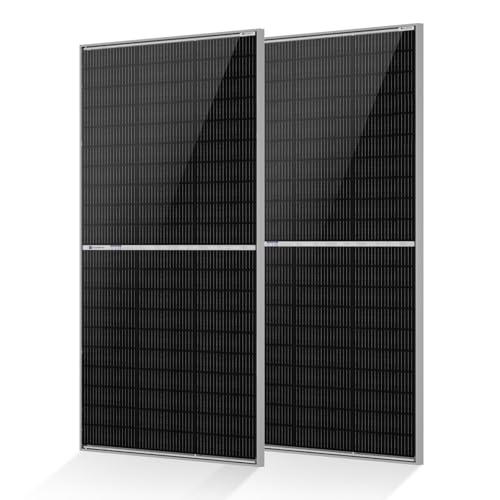
ECO-WORTHY N-Type 18BB 2Pcs 195 Watt Solar Panel

Renogy 1180W Solar Panels 2pcs 590 Watt N-Type Bifacial Solar Panel
More Details On Our Top Picks
Portable panels make the most sense when your backup setup moves between the patio, an RV, and a storage shelf, and this Renogy foldable design fits that rhythm. The kickstand helps with basic positioning, while the USB-A and USB-C outputs add handy charging flexibility for small gear. IP65 water resistance points to better dust and splash tolerance, though a foldable panel still asks for a little care during packing.
That lighter, travel-ready shape sets it apart from the fixed roof panels later in the list. You may find it especially useful for blackout prep, weekend camping, or topping off a power station without committing to a permanent mount. The trade-off is straightforward, smaller coverage than the larger home-focused arrays here.
Strong Points
- Foldable format makes storage easier in a garage, closet, or trunk.
- Kickstand support helps you angle the panel without extra hardware.
- USB-A and USB-C outputs add direct charging options for small devices.
- IP65 rating gives more confidence around dust and splashes during outdoor use.
Minor Gripes
- Portable layout suits backup and travel more than fixed roof installation.
- Smaller surface area cannot match larger multi-panel home arrays.
- Folding gear benefits from gentle handling during setup and storage.
Feature Snapshot
Who It Suits Best
You fit this panel best when your home backup setup needs to stay mobile and easy to store.
Where A Sibling Pick Shines
Renogy Solar Panels 2PCS 320 Watt Solar Panel 18BB N-Type Solar Panel suits homeowners who want a more permanent roof-oriented pair.
This four-panel set leans into simple system building, which helps when you want to expand a shed, cabin, or small home array without overcomplicating the layout. The 100-watt panels are easier to place than oversized modules, and the 18V monocrystalline format suits common off-grid battery banks. IP68 water resistance suggests stronger sealing than the portable Renogy pick above, although the trade-off is a more fixed, less grab-and-go setup.
Compared with the Renogy portable option, this one makes more sense for steady installs where panel count matters more than portability. You may appreciate the 16BB cell layout too, since more busbars can help current move with less internal resistance, which is useful in a system that runs often. For a first serious off-grid array, this lands in a sensible middle ground.
What We Like
- Four separate panels make layout planning easier in tighter spaces.
- 100-watt sizing gives you more mounting flexibility than a single large panel.
- IP68 sealing suits outdoor installs that see regular weather exposure.
- N-type monocrystalline construction fits homeowners who want a modern panel format.
- Works across common 12V and 24V battery setups.
Areas To Watch
- Four-panel installation takes more mounting time and cable planning.
- Smaller modules can mean more roof hardware than larger pair-based kits.
Core Details
Right Fit For
You fit this set best when you want a flexible, weather-tough starting point for an off-grid system.
A Better Fit Elsewhere
Renogy 1180W Solar Panels 2pcs 590 Watt N-Type Bifacial Solar Panel suits homeowners planning a larger roof array with more headroom.
Bifacial panels are worth a look when reflected light from a pale roof, driveway, or nearby surface can add a little extra output. This Callsun pair also uses a dual-module parallel anti-shade layout, which is useful in places where part of the array might see different light levels through the day. Compared with the ECO-WORTHY four-pack, this two-panel format can feel cleaner on a roof, though the real benefit depends on your mounting space.
The 16BB cell structure and claimed 25% conversion efficiency point to a more advanced panel build than many basic budget options. For homeowners and RV owners who want a tidier installation with shade management in mind, that combination makes practical sense. The honest read is simple, this suits a careful setup more than a casual portable backup plan.
Highlights
- Bifacial design can capture light from the front and rear sides.
- Two-panel format keeps the layout simpler than a four-panel spread.
- Anti-shade design helps the pair handle uneven light better.
- Works with both 12V and 24V systems.
Points To Note
- Bifacial performance depends heavily on mounting height and surrounding surfaces.
- Roof placement needs thoughtful spacing to make the most of the design.
- Higher-efficiency panels usually ask for a more precise installation plan.
Details At A Glance
Made For
You fit this pair best when roof space is limited and you want a smarter layout with shade-aware behavior.
Another Choice May Suit
Renogy Solar Panels 2PCS 320 Watt Solar Panel 18BB N-Type Solar Panel suits households that want more total output from a straightforward roof pair.
A two-panel, 320-watt-per-panel setup makes this Renogy pair feel much more serious than the portable 200-watt option earlier in the list. That output level fits homeowners building a roof array for steadier daily use, and the 12V and 24V compatibility keeps it broad enough for different system plans. The monocrystalline construction should suit anyone who wants a cleaner, roof-first layout with less fuss than a larger kit.
Compared with the ECO-WORTHY four-pack, this pair offers fewer mounting points and a simpler physical footprint, which can matter on a crowded roof. You may find it especially fitting for a shed, cabin, or smaller home backup system where panel count and output both matter. The trade-off is just the usual one for higher-output modules, installation planning needs to be a bit more deliberate.
Upsides
- 320-watt modules provide strong output from each panel.
- Two-panel setup keeps installation cleaner than a four-piece array.
- Works across 12V and 24V configurations.
- Well suited to roof spaces that need strong output without a huge parts list.
Small Caveats
- Higher-output modules usually need careful roof planning and mounting.
- Less modular than a four-panel kit when you want to spread panels around obstacles.
- Cleaning and access become more important once the panels are mounted high.
Technical Sheet
Best Suited To
You fit this pair best when you want a roof-ready setup with stronger individual panel output.
Swap It Out When
ECO-WORTHY 400W Solar Panels N-Type 4pcs 100 Watt 18V Monocrystalline suits anyone who prefers more modular panel placement.
This bundle shifts the discussion from loose panels to a complete backup-minded system, which is a very different kind of home use. The 3584Wh lithium iron phosphate battery, often shortened to LFP, gives you a big energy reserve for outages, while the 3600W AC output supports much heavier household loads than the smaller portable panel above. You also get two 200W solar panels in the package, so the setup path feels less pieced together.
The expandable capacity up to 21kWh is the kind of detail that matters for households planning beyond short backup use. That said, a full power station bundle takes more space and more budget planning than a simple roof panel pair. For emergency power, remote work backup, or RV use, it brings a lot into one system without forcing you to source every part separately.
Reasons To Buy
- Large 3584Wh battery reserve supports serious backup planning.
- 3600W AC output covers more demanding household equipment.
- Two included 200W panels simplify the start of a solar-powered setup.
- Expandable design gives you room to build the system later.
- LFP battery chemistry suits long-term stationary use better than lighter-duty packs.
Room For Improvement
- Bundle size makes storage and placement more demanding than a panel-only kit.
- Better suited to backup planning than casual weekend charging.
- System scale means more thought for cable routing and room placement.
Core Details
Whose Shelf It Belongs On
You fit this bundle best when you want one system to handle backup power, RV use, and future expansion.
Look Elsewhere When
Renogy 200W Portable Solar Panel suits anyone who only needs a lighter, easier-to-store charging panel.
Complete kits remove a lot of guesswork, and this ECO-Worthy bundle does exactly that for a 12V off-grid setup. You get four 100W panels, a 40A MPPT controller, two 100Ah lithium batteries, an upgraded 2000W inverter, and a Bluetooth module, which means the parts list is already assembled for you. Compared with the panel-only ECO-WORTHY set above, this is clearly for someone who wants a fuller system path rather than a box of modules.
The MPPT controller, or maximum power point tracking controller, matters because it helps the array work closer to its usable output range as conditions change. The trade-off is simple, a complete kit brings more components to place, wire, and maintain, but it also reduces the number of separate purchases. For an RV, cabin, or shed build, that convenience can save a lot of second-guessing.
Best Bits
- Full bundle keeps the parts list compact for a first build.
- 40A MPPT controller suits more controlled charging management.
- Two lithium batteries add usable storage right away.
- Bluetooth module makes basic system monitoring more convenient.
Worth Noting
- More components mean more space needed for wiring and placement.
- Complete kits ask for careful planning during installation.
- Better for a planned system than a quick portable solution.
Feature Rundown
Built With In Mind
You fit this kit best when you want a more complete solar setup for RV or small off-grid use.
Skip It When
ECO-WORTHY 2PCS 195 Watt Solar Panel suits you better when you want a simpler panel pair with less setup bulk.
This pair stands out for homes and vehicles that see changing light, because the 6-zone matrix anti-shade design is meant to keep output steadier across uneven conditions. Bifacial construction adds another angle too, since both sides can contribute more than a one-sided panel in the right mounting environment. Compared with the Callsun bifacial pick, this one feels slightly more straightforward on the spec sheet, which may suit a practical rooftop or farm setup.
The 195-watt size is a good middle point for people who want more than a tiny travel panel but less bulk than oversized roof modules. You may find it easier to plan around than the 320-watt Renogy pair, especially on mixed-use structures like a garage or shed. The honest trade-off is that you are still dealing with a fixed panel setup rather than something you can fold away.
Standout Traits
- Anti-shade layout helps the panel pair handle uneven light more gracefully.
- Bifacial design gives reflected light a chance to contribute.
- Mid-size output works well for many small roof or outbuilding installs.
- Two-panel format keeps the installation plan manageable.
Honest Caveats
- Bifacial performance depends on the mounting surface and placement.
- Fixed panels need a real installation plan, not just casual placement.
- Pair-based layout may not fit every roof obstacle cleanly.
At A Glance
The Right Fit
You fit this pair best when you want a mid-size panel setup that handles shade changes better than basic modules.
Reach For A Different Pick When
Renogy 200W Portable Solar Panel suits you better when your setup needs to fold away and move often.
This Renogy pair clearly belongs in the large-array conversation, not the portable one. At 590 watts per panel, it’s aimed at home roofs and other higher-demand setups where fewer, stronger modules can cover more ground. The bifacial construction and 16BB layout point to a more advanced design than the smaller panel sets earlier in the roundup.
Compared with the 320-watt Renogy pair, this option moves you into a much heavier-duty range for households that want serious output from two modules. That extra capacity comes with a planning trade-off, because larger panels ask for more attention to roof space, mounting, and access. For a home system that needs to do real work, this feels like the most ambitious panel-only pick here.
Bright Spots
- 590-watt panels give the pair strong output per module.
- Bifacial build can use reflected light in the right setup.
- Two-panel format still keeps the array simpler than a multi-piece spread.
- Fits home roofs and other high-demand installations well.
Trade Offs
- Larger panel size asks for careful measuring before installation.
- Heavy-duty modules are less forgiving in tight roof layouts.
- Cleaning and upkeep matter more once the panels are mounted high.
Quick Facts
Who Should Grab It
You fit this pair best when your home setup needs substantial output from only a couple of large panels.
Where Shoppers Go Wrong
ECO-WORTHY 400W Solar Panels N-Type 4pcs 100 Watt 18V Monocrystalline suits you better when a smaller module size makes roof planning easier.
How To Choose The Right Solar Panels For Home Use
Match Output To Your Real Load
Your first choice should start with the devices you want to support, not the boldest watt number on the page. A portable 200W panel can help with backup charging and light use, while a 1180W two-panel set belongs in a much larger home system. For a shed fridge, security gear, or a small cabin, midrange panels often make more sense than oversized modules that crowd the roof.
Think in terms of daily use, not just peak output. A power station bundle like the Jackery setup suits emergency backup because storage and panel input are already paired together, while panel-only kits work better when you already have a controller, battery bank, or inverter path in mind. The right fit depends on how much of your system is already in place.
Choose The Right Panel Style
Foldable panels are handy for storage and temporary placement, especially around RV trips, patios, and blackout prep. Fixed monocrystalline panels are better when your roof or outbuilding can support a more permanent layout. Bifacial panels add another layer of usefulness by capturing light from both sides, but they need thoughtful mounting and the right surrounding surface to make that feature pay off.
Busbar count matters too, even though the term can sound technical at first. More busbars, such as 16BB or 18BB, mean more conductive pathways across the cells, which can support more even current flow inside the module. That matters most in larger arrays or settings with partial shade, where small differences in light can affect how smoothly the system behaves.
Plan For Installation And Access
The most practical panels are the ones you can actually place, wire, clean, and revisit later without frustration. Two-panel systems are simpler to mount than four-panel kits, but smaller modules may need more parts to cover the same roof area. Portable panels win on convenience, though they trade away the permanence and tidy roof fit that many homes need.
Maintenance also deserves attention. Dust, leaves, and seasonal debris reduce usable surface area, so roof access and easy cleaning should be part of your decision. A panel that looks efficient on paper can become a chore on a tall roof, which is why easy reach matters almost as much as wattage for many households.
Think About System Completeness
Some shoppers only need panels, while others need a controller, battery, and inverter in the same box. Complete kits reduce guesswork and can be a smart move for first-time off-grid projects, especially in RVs and small cabins. Panel-only picks are better for custom builds and for anyone who already knows the rest of the electrical chain.
That’s the real decision point in this category: standalone flexibility versus bundled simplicity. A higher-output panel pair can be a smarter long-term choice for a home roof, but a kit can save time at the start. Choose the path that matches your space, your wiring comfort, and how much of the system you want handled in one purchase.
A Quick Reality Check
Mistakes Worth Dodging
One common mistake is buying a panel size that looks impressive but doesn’t fit the roof, rack, or battery plan. Another is ignoring whether the setup is portable, fixed, or bundled, because those three styles solve different problems. You also want to avoid treating bifacial designs like they work the same everywhere, since mounting height and surrounding surfaces matter.
Another easy slip is overlooking cleaning and access. Panels that live on a roof for years need a path for maintenance, and awkward placement can turn a simple dust wipe into a hassle. A smaller, well-placed array often beats a larger one that nobody wants to reach.
The Upgrade Payoff
Higher-tier solar panels usually cost more because they use more advanced cell layouts, stronger sealing, or bifacial construction that can add usable output in the right setting. In this roundup, that shows up in N-type panels, 16BB and 18BB busbar layouts, and larger per-panel watt ratings. Those features matter most when roof space is tight or the home setup has real daily demand.
The upgrade makes sense for households that want fewer panels and a cleaner installation path. It matters less for casual backup use, where a portable foldable panel or a complete kit may be easier to live with. Spend up where output density, layout simplicity, or system growth matter most.
Frequently Asked Questions
Are portable solar panels enough for home backup?
Portable panels can handle light backup charging and power station top-ups well. They are a practical fit for short outages and mixed-use spaces.
What does bifacial mean?
Bifacial panels can use light from both the front and back sides. That works best when the mounting surface and angle allow reflected light to reach the rear.
Is more wattage always better?
Higher wattage helps only when your roof space, wiring plan, and battery system can support it. A smaller panel that fits cleanly often serves you better than a larger one that crowds the layout.
Do I need an MPPT controller?
An MPPT controller helps a solar setup track usable power more effectively as sunlight changes. It matters most in full off-grid systems and larger home builds.
Should you choose a kit or separate parts?
A kit suits a simpler start because it bundles core pieces together. Separate parts give you more control when your home system is already partly built.
Closing Thoughts
The best solar panels for home use are the ones that fit your space before they impress you on paper. A portable foldable panel helps with backup and travel, a complete kit reduces setup guesswork, and larger roof panels make sense when you want more output from fewer modules. You do not need the biggest setup in the list, just the one that fits your roof, your storage room, and the way you actually use power day to day.
