

Solar has moved past the era of one-size-fits-all rooftop rigs. Today, anyone from a weekend camper to a van-lifer to a homeowner building a small off-grid cabin can pick from a wide menu of panel formats, connector kits, and portable power setups. The trick is matching the right hardware to your actual lifestyle, your roof, your battery bank, or your weekend in the woods. I put together this roundup to help you sort through the options without the marketing fog.
The Shortlist At A Glance

Vansdon 2 to 1 Solar Branch Connector (1 Pair)

Vansdon 2 to 1 Solar Branch Connector (2 Pair)

Renogy 100W 12V Solar Panel Starter Kit
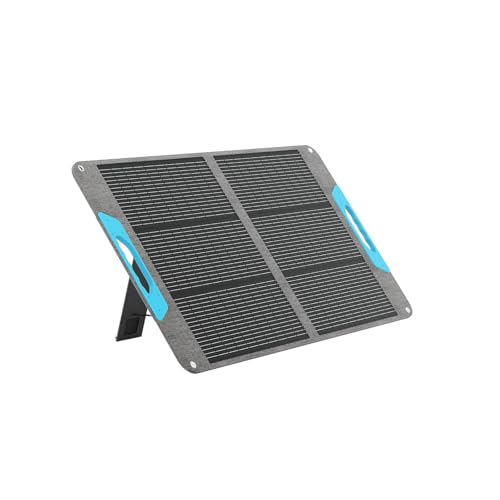
RENOGY REGO 100W Portable Solar Panel

200W ETFE Foldable Solar Panel Charger

TWELSEAVAN 500W Portable Solar Panel

250W HPBC Portable Solar Panel
More On The Choices That Made The List
Building a small solar array usually starts with the unglamorous parts, and that is exactly where the Vansdon 2-to-1 branch connector earns its keep. These Y-splitters let you combine two panel runs into a single feed heading toward your controller, which matters when you want to expand a starter kit without rewiring everything from scratch.
The connectors use tinned copper internals, which helps keep resistance low and corrosion at bay, especially if your array lives outdoors through humid summers. For anyone wiring up a shed, a small cabin, or a first rooftop experiment, a single pair covers the typical two-string hookup without leaving you short.
Positive Takeaways
- Tinned copper cores hold up well to oxidation in damp climates
- Compact Y-format is easy to tuck behind a combiner box or rail mount
- Standard MC4-style footprint plays nicely with most mainstream panels
- A single pair suits modest two-string builds without surplus clutter
Things To Consider
- Only one pair is included, so larger arrays will need extras
- You’ll want a basic crimper on hand if you ever replace the leads
Made For
First-time builders wiring a single rooftop string or a small cabin setup who just need the bare minimum to branch two panels together.
Consider Something Else When
Anyone planning a four-panel or larger string should reach for the Vansdon 2-to-1 Branch Connector (2 Pair) instead, since the extra connectors prevent mid-project shortages.
Where the single-pair version is a tidy starter pack, the twin-pack version of the Vansdon branch connector is the safer bet for anyone planning a slightly bigger array. You get two Y-splitters in the box, which sounds minor until you are halfway up a ladder and realize you need one more.
The housing design matches the single-pair version, with tinned copper internals that resist corrosion through long outdoor exposure. For most homeowners building a four-panel rooftop or a multi-string ground mount, two pairs let you wire cleanly without a panicked second order. Compare that to the single-pair option, and the only real difference is simply having backup connectors on hand.
Everyday Perks
- Two pairs cover a typical four-panel array without leftovers
- Same corrosion-resistant tinned copper internals as the single pack
- Useful to keep a spare on the shelf for future expansions
Worth Noting
- The housings can feel snug during cold-weather installs, so warm them slightly first
- Doesn’t include any extra adapters for non-MC4 panel brands
Who It Suits Best
DIYers building a mid-sized rooftop or ground array who want enough branch connectors on hand to finish the job in one go.
Where Another Pick Suits Better
Anyone running just two panels should save a few dollars and stick with the Vansdon 2-to-1 Solar Branch Connector (1 Pair), since the extra pair would just sit in a drawer.
Few kits have done more to bring DIY solar to the mainstream than the Renogy 100W 12V starter set. You get a rigid monocrystalline panel paired with a 30A PWM (Pulse Width Modulation, a basic charge controller type) controller, plus the cabling you need to wire it up. It is genuinely turnkey for someone who has never touched solar before.
The panel itself is sized to fit a standard roof rack or ground-mount frame, and the included controller handles a small 12V battery bank comfortably. For a garden shed, a tiny cabin, or a backup panel on an RV that already has its own charging system, this kit is hard to beat on simplicity. The honest read is that PWM is older tech than MPPT (Maximum Power Point Tracking, a more efficient controller type), so anyone planning serious expansion may outgrow it.
Real-World Strengths
- True all-in-one package with panel, controller, and leads included
- Rigid aluminum frame handles rooftop and pole-mount setups
- Well-documented for first-time installers
- Plays nicely with common 12V deep-cycle batteries
Trade Offs
- PWM controller is less efficient than modern MPPT units in cold or low-light conditions
- Rigid format is less travel-friendly than the foldable panels later in this list
Right Fit For
Beginners powering a shed, a small cabin, or a single-battery backup system who want everything in one box without sourcing parts separately.
Skip It When
Anyone needing lightweight, on-the-go charging should consider the RENOGY REGO 100W Portable Solar Panel instead, since it folds down for travel.
When the goal is to throw solar in the trunk rather than bolt it to a roof, the RENOGY REGO 100W portable panel is the obvious shape. It folds into a briefcase-style carry and pops open into a flat panel array, with no mounting hardware required to start harvesting sun.
You can angle it on the ground, lean it against a picnic table, or hang it from a tree strap on a sunny campsite. For campers, tailgaters, and overlanders who already own a portable power station, this is a clean way to top off batteries during the day. Compare that to the Renogy 100W Starter Kit reviewed earlier, and the trade-off is clear: you trade rigid-mount permanence for grab-and-go convenience.
The Practical Payoff
- Folds flat for storage in a trunk or RV compartment
- Lightweight build makes one-person setup realistic
- Pairs cleanly with most portable power stations on the market
- No drilling, framing, or mounting brackets required
Honest Caveats
- Folding hinges need careful handling over the long haul
- Lower output than the larger 200W and 250W portable options in this list
Best Suited To
Campers, weekend tailgaters, and overlanders who want a grab-and-go panel that pairs with a portable power station rather than a fixed battery bank.
Look Elsewhere When
Full-time RV owners running bigger daily loads should reach for the TWELSEAVAN 500W Portable Solar Panel, since the higher wattage covers refrigerators and inverters comfortably.
Portable panels sometimes feel like they pick two out of three: light, cheap, or powerful. This 200W ETFE (Ethylene Tetrafluoroethylene, a durable laminate that boosts light transmission and weather resistance) foldable panel leans hard into the third option without going full briefcase-sized.
The standout feature set is the integrated output ports. A QC3.0 (Quick Charge 3.0, a fast-charging USB standard) USB-A, a 60W Type-C, and a standard MC4 output (the most common solar connector type) let you charge phones, laptops, and power stations directly from the panel without extra adapters. The IP65 rating (an Ingress Protection level meaning dust-tight and resistant to low-pressure water jets) also shrugs off rain showers and dusty trails, which matters when the forecast turns.
Notable Gains
- Direct USB-A and Type-C outputs cut down on cable clutter
- ETFE laminate improves light transmission and weather durability
- MC4 output still feeds larger power stations when needed
- IP65 rating handles unexpected rain at the campsite
A Few Limitations
- 200W is honest in full sun but drops meaningfully under cloud cover
- Larger folded footprint than the 100W REGO panel
Who Will Love This
Tech-heavy travelers who want to charge laptops and phones directly from the panel without dragging extra adapters to the campsite.
Another Choice May Suit
Anyone needing higher sustained output for an RV battery bank should consider the TWELSEAVAN 500W Portable Solar Panel, since the 500W rating handles larger daily draws more comfortably.
For full-time RV life or serious off-grid backup, a portable panel under 200W starts to feel anemic. The TWELSEAVAN 500W panel is built for that heavier workload, using HPBC cells (Hybrid Passivated Back Contact cells, a newer cell architecture with contacts on the rear for higher efficiency) and a 42V high-voltage design that suits modern MPPT charge controllers.
The 25% conversion rate is on the higher end of what portable panels currently offer, and owners commonly report meaningful output even on hazy mornings. It is still a foldable unit, so it travels in a truck bed or storage bay rather than mounting permanently, but the wattage is closer to a roof array than a weekend camping accessory. Compare that to the 200W ETFE panel reviewed earlier, and the difference shows up in how many appliances you can run between charges.
A Strong Showing
- 500W output rivals small rooftop arrays in a portable form factor
- HPBC cell tech keeps efficiency high even in lower-angle sunlight
- 42V design pairs with modern MPPT controllers for cleaner harvesting
- Stable output reported during dawn, dusk, and overcast conditions
Room For Improvement
- Bigger folded footprint than smaller portable panels
- Requires a sizeable MPPT controller to fully realize the wattage
Built With In Mind
Full-time RVers and homeowners building a portable off-grid backup who need serious wattage without bolting panels to a permanent roof.
Reach For A Different Pick When
Weekend campers who only need to keep a small power station topped off should choose the RENOGY REGO 100W Portable Solar Panel, since the 500W version would be overkill for short trips.
The 250W HPBC panel from TWELSEAVAN lands in the sweet spot between the smaller 100W and 200W portable options and the heavier 500W unit. It uses the same HPBC cell architecture for higher conversion efficiency, with an ETFE top layer for better light transmittance and weather resistance.
The IP68 rating (an Ingress Protection level meaning fully dust-tight and submersible beyond casual splashes) is a step up from the IP65 rating on some competitors, meaning it shrugs off seaside mist and heavy downpours more confidently. For weekend RV trips where you still want meaningful charging but do not need full-time off-grid capacity, this panel threads a nice middle ground. It is noticeably more compact than the 500W version but still pulls enough wattage to keep a fridge running.
A Favorable Mix
- HPBC cells deliver 25.8% conversion efficiency in a mid-size package
- ETFE laminate boosts light capture and panel longevity
- IP68 rating holds up in coastal or wet-climate conditions
- Stable output reported during low-light morning and evening windows
Points To Keep In Mind
- Still requires a capable MPPT controller to maximize the wattage
- Larger folded size than 100W-class panels, so trunk space matters
Whose Shelf It Belongs On
Weekend RVers and van-lifers who want more charging headroom than a 100W panel without committing to a 500W rig.
A Better Fit Elsewhere
Anyone running a full-time RV refrigerator and inverter load should consider the TWELSEAVAN 500W Portable Solar Panel instead, since 250W may run short across multiple cloudy days.
What Matters Most When Picking Solar Hardware
Cell Type And Conversion Efficiency
Monocrystalline cells are the standard for most modern panels, and conversion efficiency numbers give you a rough sense of how much power a panel pulls per square inch. HPBC and PERC (Passivated Emitter and Rear Cell, a cell design that bounces unused light back through the cell) designs push efficiency higher than older polycrystalline panels, which matters when roof or vehicle space is limited. Higher efficiency means less panel area for the same output, which is exactly what small rooftops and vans need.
Wattage Matched To Your Daily Draw
Before picking a panel, estimate how much energy you actually use. A camper charging phones and a small light bank can live comfortably on 100W, while full-time RV owners running fridges and inverters usually want 300W or more. Buying more wattage than you need costs money up front, while buying less leaves you short on cloudy days. Match the panel to the load, not the marketing.
Portability Versus Permanent Mount
Rigid panels with aluminum frames suit rooftops, sheds, and ground mounts where they sit in one spot for years. Portable foldable panels suit campers, renters, and anyone who moves their setup regularly. The trade-off is simple: portable means flexible positioning, while rigid means lower cost per watt. Honest use cases usually pick one camp or the other clearly.
Connectors, Controllers, And Cable Compatibility
MC4 connectors are the de facto standard, but always confirm your controller and battery bank speak the same voltage language. PWM controllers are cheaper and fine for small 12V setups, while MPPT controllers harvest meaningfully more energy from higher-wattage arrays. Skipping that compatibility check is the most common reason starter installs underperform.
Key Considerations Across These Picks
Pitfalls Shoppers Hit
The most common mistake is buying a panel by wattage alone and ignoring voltage. A 100W panel with the wrong voltage output can quietly undercharge your battery bank or cook a cheap controller. Another frequent slip is assuming portable panels work the same as rigid rooftop arrays; folding hinges, fabric edges, and lighter frames all respond differently to long-term sun and wind. Confirm connector types, controller compatibility, and mounting style before clicking order.
Where The Extra Money Goes
Stepping up to HPBC cells, ETFE laminate, and higher IP ratings (IP65 versus IP68) usually means better low-light output, longer panel lifespan, and stronger weather resistance. For full-time off-grid use, those upgrades pay back through years of reliable output and fewer replacements. For occasional weekend trips, the savings from a more basic panel often make more sense than paying for durability you won’t fully use.
Frequently Asked Questions
What Are The Main Types Of Solar Panels?
The three main categories are monocrystalline, polycrystalline, and thin-film panels. Monocrystalline panels offer the highest efficiency per square foot and dominate the rooftop and portable markets. Polycrystalline panels are a budget-friendly older alternative with slightly lower efficiency. Thin-film panels are flexible and lightweight but typically need more area to match rigid-panel output.
Which Type Of Solar Panel Is Most Efficient?
Monocrystalline panels, especially newer HPBC and PERC designs, currently lead the field in efficiency. Some HPBC panels in this roundup push past 25% conversion, which was rare just a few years ago. Real-world efficiency still depends heavily on sunlight angle, temperature, and shading.
How Many Watts Of Solar Do I Need?
For light weekend use like charging phones and running LED lights, 100W is usually enough. Mid-size portable setups with a power station, laptop, and small fridge typically want 200W to 300W. Full-time RV or off-grid living generally calls for 400W or more, often split across multiple panels.
Are Foldable Solar Panels As Good As Rigid Panels?
Foldable panels are now impressively capable, but they usually cost more per watt and have shorter physical lifespans than rigid aluminum-framed panels. For travel and temporary setups, they are excellent. For permanent rooftop installations, rigid panels still win on durability and cost.
How Long Do Portable Solar Panels Last?
Most quality portable panels last around five to ten years, depending on how often they are folded, exposed to weather, and transported. The first things to wear are usually the fabric edges, fold hinges, and connector cables rather than the cells themselves. Storing them flat in a dry place extends their working life noticeably.
Closing Remarks
The right solar setup depends less on chasing specs and more on honestly matching the hardware to how you actually live. Campers, off-gridders, homeowners, and shed-power DIYers all live under the same sun but with very different daily energy appetites. Pick the wattage, format, and connector setup that fits your real routine, and the rest usually falls into place.
