

I’ve been writing about off-grid and outdoor power gear long enough to know that a 100W panel sits in a sweet spot for most people. It’s strong enough to top off batteries on a camper van or run a small shed setup, yet light enough for one person to haul up onto a roof without help. The trick is matching the right panel to how you actually live, whether that’s weekend camping, a remote cabin, or a backup system for the next storm.
This list pulls together five solid options covering rigid residential mounts, portable briefcase designs, and foldable panels for power stations. I’ll walk through what each one really offers, where it shines, and where it falls short, so you can pick with confidence instead of guesswork.
The Main Contenders

Renogy 100 Watt Solar Panel N-Type 16BB
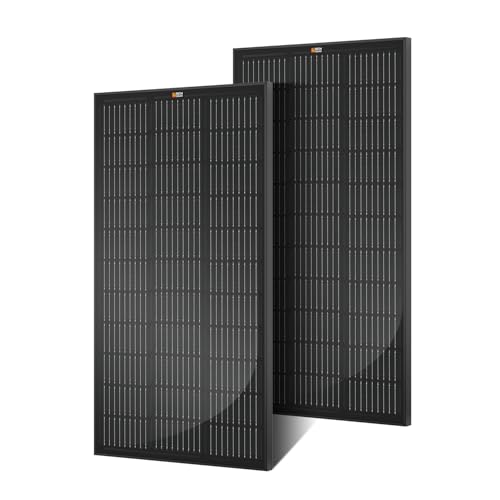
RICH SOLAR 2 Pack 100W Monocrystalline Panel

Goal Zero Boulder 100 Briefcase Solar Panel

Renogy 200 Watt N-Type 16BB Solar Panel

TWELSEAVAN 200W ETFE Foldable Solar Panel
Taking A Closer Look At The Options
This rigid Renogy panel leans on newer N-type cell architecture (cells arranged so more current flows with less resistance) and a 16-busbar design, which means thin conductive strips on each cell that capture more electrons. The combination pushes conversion efficiency, the share of sunlight actually turned into electricity, toward 25%, a noticeable bump over older PERC (Passivated Emitter and Rear Cell) panels. In practical terms, you’ll squeeze more watts out of a smaller rooftop footprint, which matters when mounting space is the real constraint.
For a homeowner wiring a shed, a small cabin, or a backup system on a garage roof, the build feels well-suited. The aluminum frame handles weather year-round, and Renogy’s ecosystem makes pairing with a charge controller straightforward. I’ve seen these hold up well in coastal humidity where cheaper panels tend to fog up. Beginners benefit from solid documentation, while pros appreciate the predictable output curve.
The Helpful Details
- N-type cells with 16 busbars push efficiency close to 25%, meaning more power per square inch than typical PERC panels.
- Rigid aluminum frame tolerates rooftop mounting and rough weather without flexing.
- Standard MC4 connectors (the most common solar plug type on the market) drop into nearly any charge controller or portable power station setup.
- Reportedly delivers around 20W more output than conventional panels of the same size, a quiet but useful margin.
Things To Consider
- Not portable. Once mounted, it stays put, so campers should look at the briefcase options further down.
- The higher cell density means it runs hotter in direct midday sun if ventilation behind the panel is poor, which can trim output by a few percent.
- You supply your own mounting hardware and charge controller, which adds to the total project cost.
Who Will Love This
DIYers with a fixed install location who want the highest output per square foot from a single 100W panel.
Look Elsewhere When
Frequent campers should consider the Goal Zero Boulder 100 Briefcase instead, since that model folds and travels.
Getting two panels in a single bundle changes the math for anyone building a small off-grid system. Each panel is a standard 12V monocrystalline unit, and the all-black finish looks cleaner on a shed roof than the typical blue-and-silver aesthetic. For someone running a couple of deep-cycle batteries to power lights, a water pump, or a small fridge, this pair covers the basics without forcing a second order.
The panels are designed to chain together in series (wiring positive to negative for higher voltage) or parallel (wiring positive to positive for higher current), which is helpful when matching a charge controller’s input range. At roughly 39 by 21 inches each, they fit common RV battery compartment layouts and tilt easily on ground mounts. They’re a sensible middle ground for the person who doesn’t need premium N-type tech but wants dependable daily output.
Useful Strengths
- Two-panel bundle delivers roughly 200W combined, enough to keep a modest battery bank topped up.
- Monocrystalline cells (single-crystal silicon for higher efficiency than polycrystalline) handle low-light mornings and cloudy days better than older polycrystalline designs.
- All-black frame and cells blend into dark roofing or shed walls for a tidy install.
- Series or parallel wiring flexibility lets you match the setup to your charge controller’s preferences.
Trade Offs
- Efficiency sits below the N-type panels in this roundup, so you need a bit more roof area for the same output.
- The 3-foot cable is short, which can complicate spacing on wider mounts.
- Build quality is solid but not as refined as premium-tier panels, so owners in harsh climates may want extra sealing around the junction box.
Key Product Details
Made For
First-time solar builders outfitting a small cabin, shed, or RV who want two panels ready to wire together.
Swap It Out When
Anyone chasing maximum output from limited roof space should step up to the Renogy 100W N-Type panel for higher efficiency.
The Boulder 100 Briefcase has earned a loyal following among overlanders and weekend campers because it solves a simple problem: how to carry a real 100W panel without it taking up half the trunk. Two hinged 50W panels fold into a protective case with a built-in kickstand, and the tempered glass face shrugs off the kind of scratches that ruin cheaper portables. Set it out at a campsite, angle it toward the sun, and let it feed a portable power station for the rest of the afternoon.
The trade-off is weight. This isn’t a featherweight foldable. It’s a glass-and-aluminum panel meant to stay in the vehicle, not the backpack. For someone already running a Goal Zero Yeti or similar power station, the plug-and-play feel is a real convenience, and the brand’s ecosystem removes a lot of compatibility guesswork.
What Earns Its Place
- Folding briefcase design with a kickstand makes setup at camp about as easy as solar gets.
- Tempered glass surface holds up to road vibration and incidental contact better than thin-film portables.
- Plugs directly into common Goal Yeti power stations without extra adapters.
Points To Keep In Mind
- Heavier than flexible or ETFE-laminated (a durable, UV-resistant plastic layer) foldables, so it’s a vehicle item, not a hiking item.
- Briefcase footprint when unfolded is wide, so smaller campsites can be a tight fit.
- Output per dollar is lower than fixed rigid panels, since you’re paying for portability.
Best Suited To
Car campers, overlanders, and tailgaters who already own or plan to buy a compatible portable power station.
Consider Something Else When
Anyone who needs to charge laptops and phones directly from the panel should consider the TWELSEAVAN foldable with built-in USB-C output.
I know this is a 200W panel in a roundup titled for 100W panels, but it earns a place because the same N-type 16BB tech behind Renogy’s 100W unit shows up here at double the output in a smaller, lighter shell. Renogy trimmed the panel footprint by roughly 7.5% and shed about 11.7% of the weight compared to earlier models, which is exactly what a Class B van owner wants to hear. Same power, less roof real estate.
The build quality mirrors the 100W sibling, so the same aluminum frame and weather rating apply. For someone who started planning around a 100W panel and then realized they need more headroom for a fridge, fan, and lights on a multi-day trip, the 200W version answers without forcing a redesign. It also pairs well with the same charge controllers, so swapping in the bigger panel is rarely a wiring headache.
Everyday Advantages
- 200W output in a compact, van-friendly footprint that leaves room for roof vents and racks.
- N-type 16BB cell tech matches the efficiency of the smaller Renogy unit, so no compromise in conversion quality.
- Lighter than previous Renogy 200W panels, which matters for gas-mileage-conscious vanlifers.
- Standard MC4 connectors keep it compatible with the same charge controllers as the 100W model.
Honest Caveats
- Higher price than two separate 100W panels in some configurations, though the convenience offsets that for tight installs.
- Still a rigid panel, so transport requires care and a permanent or semi-permanent mounting plan.
Feature Snapshot
Right Fit For
Van builders and small-roof RVers who want premium efficiency without dedicating the whole roof to solar.
A Better Fit Elsewhere
Strictly budget shoppers building a stationary shed array will get more watts per dollar from the RICH SOLAR two-pack.
Foldable panels live in a different category than rigid mounts, and this TWELSEAVAN model packs features the others don’t. The 200W output comes from a four-panel fold-out array wrapped in ETFE laminate, which handles UV, rain, and the occasional dropped backpack far better than the PET (polyethylene terephthalate) coating on cheaper foldables. It also throws in USB-C and QC3.0 (Qualcomm Quick Charge 3.0, a fast-charging standard for phones) outputs, so a phone or laptop can charge straight off the panel without a power station in between.
The included MC4 adapters and an 8-in-1 connector set cover most portable power stations, which removes the usual adapter scavenger hunt. For emergency kits, RV overflow, or a primary power source at a base camp, this strikes a useful balance between output and packability. Owners commonly report that the kickstand and grommets make field positioning easier than expected.
The Upside
- 200W of folding output in a carry-handle form factor that fits behind a truck seat.
- Built-in 60W USB-C and QC3.0 ports let you charge small electronics directly, skipping the power station for quick top-ups.
- ETFE laminate resists UV yellowing and weather better than cheaper PET coatings.
- IP65 water resistance (protected against low-pressure water jets, so rain and splashes are fine) handles unexpected drizzle at camp.
- Wide connector bundle covers most portable power stations without buying extras.
Worth Bearing In Mind
- Foldables never match rigid panel efficiency in direct side-by-side output tests, so peak wattage depends heavily on perfect sun angle.
- The multiple ports and folding hinges add small failure points that owners sometimes report after a year of heavy travel use.
- Storage bulk is real. Even folded, it’s a sizable carry, so it won’t suit ultralight backpackers.
Quick Facts
Perfect Match For
Power station owners who camp, travel, or keep a bug-out bag and want foldable capacity with direct device charging.
Reach For A Different Pick When
Anyone needing a permanent rooftop install should pick the Renogy 200W rigid panel for longer service life under constant sun.
Picking The Right Panel For How You Actually Use It
A 100W panel sounds simple, but the real decision usually comes down to form factor and how often the panel moves. Rigid panels like the Renogy N-Type or the RICH SOLAR pair belong on roofs, sheds, and ground mounts where they sit in one place for years. Portable briefcase and foldable designs like the Goal Zero Boulder or TWELSEAVAN make more sense for campers, RVers, and anyone who needs to chase the sun throughout the day.
Efficiency matters more than people expect, especially on small roofs. The difference between a 20%-efficient panel and a 25%-efficient one can mean the gap between fitting one panel or two on the same surface. N-type and modern monocrystalline cells both outperform older polycrystalline designs (made of multiple silicon crystals, less efficient but cheaper), particularly in low light, on cloudy mornings, and during winter sun angles.
Match the panel to your charge controller and battery voltage. Most 100W panels are 12V nominal, but the open-circuit voltage (the voltage a panel produces with nothing connected) climbs well above that in cold weather, and series-wired arrays can exceed the input ceiling of cheaper controllers. If you plan to chain panels, a controller rated for the higher voltage saves a future upgrade.
Think about the connector type before you commit. MC4 has become the de facto standard, but some portable power stations use proprietary plugs or barrel connectors. Buying adapters for an entire system adds up, so a panel with broad compatibility, like the TWELSEAVAN’s bundle, can quietly save both money and frustration.
Key Considerations Across These Picks
Where Shoppers Go Wrong
The most common mistake is buying a panel without checking the charge controller’s input voltage window. A cheap PWM controller (Pulse Width Modulation, a basic on-off charging method) caps out around 30V, and a cold morning can push even a single 12V panel above that. The second mistake is underestimating cable runs. Long distances between panel and battery quietly bleed power through resistance, so thicker cable or a higher-voltage array pays off.
When Paying More Pays Off
Spending more on higher-efficiency cells tends to make sense on small or shaded roofs, where every extra watt matters. The Renogy N-Type panels cost more upfront, but the output per square inch is meaningfully better, and they tend to degrade more slowly over decades of use. For a fixed install that will sit on a roof for 20 years, the upgrade math usually works out. For a portable panel that gets dragged in and out of a truck bed, durability and convenience features matter more than peak efficiency.
Frequently Asked Questions
What Can A 100 Watt Solar Panel Actually Power?
A 100W panel in good sun produces roughly 400 to 500 watt-hours per day, enough to top off a phone, run small LED lights, or slowly charge a 50Ah portable power station. Running a full-size fridge or AC unit from a single 100W panel isn’t realistic without battery storage.
How Many 100 Watt Solar Panels Do I Need For A Battery?
Most 12V deep-cycle batteries need around 10 to 13 amps of charge input. A single 100W panel produces roughly 5 to 6 amps in peak sun, so two panels are a common starting point for keeping a 100Ah battery topped up under regular use.
Do 100W Solar Panels Work On Cloudy Days?
Modern monocrystalline panels still produce 10 to 25% of their rated output through cloud cover. N-type cells generally outperform older designs in low light, which matters more in winter or in regions with frequent overcast skies.
Can I Leave A Solar Panel Outside Year Round?
Rigid aluminum-framed panels are designed for permanent outdoor mounting and handle rain, snow, and UV exposure well. Foldable and briefcase panels last longer if stored indoors during harsh weather and prolonged sun exposure when not in use.
What Is The Difference Between Monocrystalline And Polycrystalline Panels?
Monocrystalline panels use single-crystal silicon, which gives them higher efficiency and better low-light performance. Polycrystalline panels use multiple silicon fragments melted together, which costs less but produces less power per square inch and degrades slightly faster.
The Takeaway
Five panels, five different jobs. The Renogy 100W N-Type earns its spot for fixed installs that need real efficiency, the RICH SOLAR pair makes sense for budget builders, and the Goal Zero briefcase still rules for campers who value simplicity. The Renogy 200W and TWELSEAVAN foldable round out the list for anyone needing more output or true portability. Match the panel to your install, and the rest of the system tends to fall into place.
