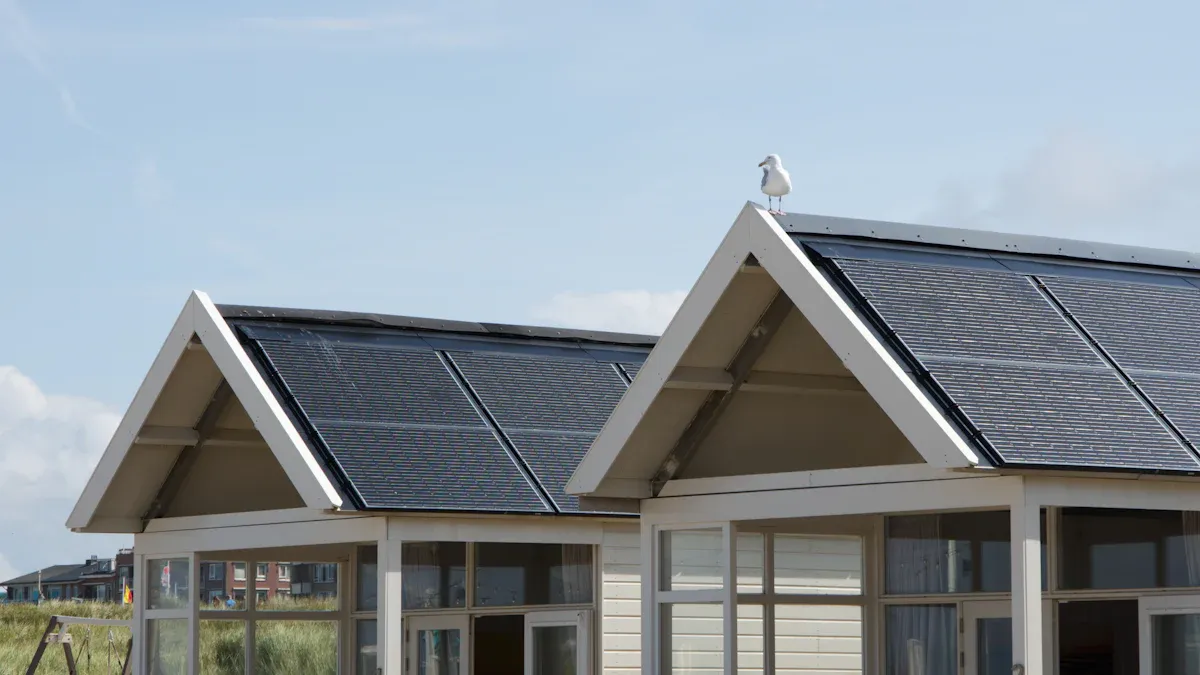
Imagine living in harmony with nature while enjoying the comforts of modern life. Off-grid living offers you that chance. By harnessing solar energy, you can reduce your carbon footprint and gain energy independence. Did you know the global off-grid housing market was valued at USD 2.59 billion in 2024? It’s expected to grow to USD 5.13 billion by 2033! With off-grid solar solutions, nearly 400 million people could access electricity for the first time by 2030. When you choose to build your own solar station, you not only support sustainable living but also empower yourself to take control of your energy needs.
Key Takeaways
Understand the three main components of a solar station: solar panels, batteries, and inverters. Each plays a crucial role in energy generation and storage.
Choose the right solar panels based on your space and budget. Monocrystalline panels are more efficient but pricier, while polycrystalline panels are more affordable but require more space.
Select LiFePO4 batteries for long-term energy storage. They last longer and are safer compared to traditional lead-acid batteries, making them a smart investment.
Assess your energy needs before building your solar station. Calculate daily usage and peak demands to ensure your system meets your requirements.
Regular maintenance is key to efficiency. Clean solar panels, inspect for damage, and monitor performance to keep your system running smoothly.
Solar Station Components

Building your own solar station means understanding the essential components that make it work efficiently. Let’s dive into the three main parts: solar panels, batteries, and inverters.
Solar Panels
Solar panels are the heart of your solar station. They convert sunlight into electricity, which powers your home or devices. When choosing solar panels, you’ll typically encounter two types: monocrystalline and polycrystalline.
Here’s a quick comparison to help you decide:
Feature | Monocrystalline Panels | Polycrystalline Panels |
|---|---|---|
Efficiency Rate | 15% – 24.1% | 14% – 20% |
Performance in Low Light | Better | Lower |
Degradation Rate | As low as 0.3% annually | Higher |
Ideal for Limited Space | Yes | No |
Cost-Effectiveness | Higher | More cost-effective |
Monocrystalline panels are more efficient and take up less space, making them ideal for limited areas. However, they tend to be pricier. Polycrystalline panels are more affordable but may require more space and have slightly lower efficiency.
Batteries
Batteries store the energy generated by your solar panels. This stored energy is crucial for off-grid living, especially during cloudy days or at night. When selecting batteries, consider using LiFePO4 batteries. They offer several advantages over traditional lead-acid batteries:
LiFePO4 batteries are cost-effective in the long term due to their longevity and low maintenance.
Lead-acid batteries may appear cheaper initially but incur higher replacement and maintenance costs over time.
LiFePO4 batteries are recognized as the safest type of lithium battery. They can last a decade or longer and handle flexible charging and deeper discharge cycles without damage. This reliability makes them a smart choice for solar storage.
Here’s a quick comparison of battery types:
Feature | LiFePO4 Batteries | Lead-Acid Batteries |
|---|---|---|
Lifespan | Up to 10 times longer | Shorter lifespan |
Energy Efficiency | 95%+ | Lower efficiency |
Weight | 50% lighter | Heavier |
Safety | Does not overheat, leak, or explode | Can overheat and leak |
Environmental Impact | Non-toxic and recyclable | Contains harmful materials |
Initial Cost | Higher upfront cost | Lower upfront cost |
Long-term Value | Superior performance and value | Expensive in the long run |
Inverters
Inverters play a vital role in your solar station. They convert the direct current (DC) electricity generated by your solar panels into alternating current (AC) electricity, which most household appliances use. When selecting an inverter, look for features that enhance efficiency and usability:
Feature/Specification | Description |
|---|---|
Automatic generator start/stop capability | Allows the inverter to manage generator operation automatically based on power needs. |
Seamless transfer between power sources | Ensures uninterrupted power supply by switching between solar and generator power smoothly. |
Reduced component count and wiring complexity | Simplifies installation and maintenance by minimizing the number of components required. |
Integrated system monitoring and control | Provides real-time data and control over the solar power system for better management. |
Continuous power rating | Indicates the inverter’s ability to supply steady loads indefinitely. |
Surge capacity | Determines the inverter’s ability to handle short-term peak demands, typically 2-3 times the continuous rating. |
Input voltage ranges | Must match the battery bank configuration for optimal performance. |
Efficiency ratings | Impacts battery life and system performance, with modern inverters achieving 90-95% efficiency. |
Built-in features | Includes MPPT solar charge controllers, remote monitoring, and programmable settings for enhanced functionality. |
Pure sine wave vs. modified sine wave | Affects appliance compatibility and system efficiency, with pure sine wave being the preferred choice for sensitive electronics. |
Using an MPPT charge controller can significantly improve your system’s efficiency. These controllers track and adjust the electrical operating point of your solar panels, ensuring maximum power extraction. This is especially useful when conditions fluctuate, leading to higher energy yields compared to traditional PWM controllers.
By understanding these components, you can make informed decisions that enhance the efficiency and reliability of your solar station.
Build Your Own DIY Solar Power Station

Assessing Energy Needs
Before you start building your own solar power station, you need to assess your energy needs. This step is crucial for ensuring that your system can meet your power requirements. Here’s how to do it:
Determine Daily Energy Usage: Calculate how much energy you use daily. Look at your appliances and devices to find their wattage. Multiply the wattage by the hours you use each device to get your total energy consumption.
Identify Peak Power Demands: Consider the maximum power your devices will draw at any given time. This helps you choose the right inverter and battery size.
Account for Seasonal Variations: Energy needs can change with the seasons. For example, you might use more power for heating in winter. Factor in these variations when planning your system.
Use Smart Monitoring Devices: Consider using energy audit templates or smart monitoring devices to gather accurate data about your energy consumption. This information will help you make informed decisions.
You can also use tools to estimate your daily energy consumption. Here’s a handy table of some recommended tools:
Tool Name | Description |
|---|---|
Off-grid energy calculator | A tool to calculate energy requirements and recommend the right fuel cell for off-grid applications. |
Off Grid Solar Load Calculator | Helps calculate the amount of electricity currently used to determine the size of the solar power system needed. |
Off-grid energy calculator
Off Grid Solar Load Calculator
Installation Process
Once you’ve assessed your energy needs, it’s time to install your DIY solar power station. Follow these steps for a successful installation:
Gather Your Materials: Make sure you have all the components ready, including solar panels, batteries, inverters, and wiring.
Plan Your Layout: Decide where to place your solar panels, batteries, and inverter. Ensure that your panels get maximum sunlight exposure.
Wiring and Assembly:
Start by connecting the solar panels to the charge controller.
Connect the charge controller to the batteries.
Finally, connect the inverter to the batteries to convert DC to AC power.
Tip: Proper grounding is essential for safety. It provides a path for fault currents and helps prevent electrical hazards.
Install Disconnect Switches: Use DC and AC disconnect switches for safe power isolation during maintenance. This step is crucial for your safety.
Use Surge Protective Devices: Protect your system from voltage spikes by installing surge protective devices.
Document Everything: Keep a record of all components and designs for future reference. This documentation will help you troubleshoot any issues later.
Avoid common mistakes during installation, such as:
Using incompatible parts, which can lead to inefficiency.
Neglecting system monitoring, which can cause unnoticed issues.
Skipping maintenance, which can reduce the efficiency of your solar panels.
For temporary off-grid living, consider compact solar solutions like:
Jackery SolarSaga 100: Lightweight and efficient.
Luvknit 100W Foldable: Great value with high portability and affordability.
By following these steps, you can successfully build your own DIY solar power station that meets your energy needs while ensuring safety and reliability.
Safety Measures for Off-Grid Systems
Electrical Safety
When you set up your off-grid solar system, electrical safety should be your top priority. Here are some essential safety standards to follow:
Component Selection: Always use certified components. This ensures safety and reliability in your system.
Thermal Management: Implement effective cooling solutions. This helps prevent overheating, which can lead to dangerous situations.
Circuit Layout: Follow strict clearance and creepage requirements. This avoids electrical arcing, which can cause fires.
Additionally, conduct regular tests to verify the integrity of your system. These include:
Dielectric Strength (Hipot): Checks insulation integrity.
Insulation Resistance: Measures how well your insulation resists electrical flow.
Ground Bond Test: Ensures a robust protective earth connection.
Tip: Proper ventilation is crucial, especially in battery storage areas. It prevents the buildup of harmful gases.
Maintenance Tips
Regular maintenance keeps your solar system running smoothly and extends its lifespan. Here are some simple yet effective practices:
Keep Solar Panels Clean: Dust and debris can block sunlight. Clean them a few times a year with water and a soft cloth.
Routine Inspections: Check for cracks, discoloration, or shading issues. This helps catch problems early.
Manage Surrounding Vegetation: Trim trees and bushes to prevent shadows from obstructing sunlight.
Trimming surrounding vegetation is a straightforward practice that positively impacts your solar panels’ efficiency. By regularly pruning trees and branches, you prevent shadows from obstructing sunlight, ensuring uninterrupted energy production.
Monitor Performance: Keep an eye on your energy output. If you notice a drop, investigate the cause.
By following these safety measures and maintenance tips, you can enjoy a reliable and efficient off-grid solar system for years to come.
Scalability of Your Solar Setup
Expanding Your System
As your energy needs grow, you might want to expand your solar setup. Here are some effective strategies to consider:
Add More Solar Panels: If you find your current system isn’t meeting your energy demands, adding more solar panels is a straightforward solution. Just ensure that your inverter can handle the additional power. Mismatched inverters can lead to energy losses, so check compatibility before you buy.
Upgrade Your Batteries: If you’re using batteries for energy storage, consider upgrading to larger or more efficient models. This will help you store more energy for those cloudy days or nighttime use.
Explore Innovative Solutions: Look into options like floating PV systems. These can improve efficiency by cooling the panels and reducing water evaporation. They also integrate well with existing hydroelectric infrastructure, making them a dual-benefit solution.
Utilizing sheep for grazing under solar panels can also enhance biodiversity while reducing maintenance costs. This sustainable practice has been successfully implemented across thousands of acres in the U.S.
Future-Proofing
To ensure your solar system remains effective as your energy needs evolve, consider these future-proofing strategies:
Technology/Component | Description |
|---|---|
Integration with IoT Devices | Allows devices to run efficiently based on solar production, reducing grid energy purchase needs. |
Solar Roofs | Aesthetic solar tiles that generate power while serving as roofing materials. |
Building-Integrated Photovoltaics (BIPV) | Solar technology integrated into building materials, allowing for energy generation without traditional panels. |
Solar-Powered Vehicles | Vehicles that can recharge using solar energy, reducing dependence on fossil fuels. |
Artificial Intelligence (AI) | Optimizes solar systems by predicting energy production and maintenance needs. |
By planning for scalability, you can adapt your solar setup to meet future energy demands. Assess your current infrastructure to identify strengths and weaknesses. This proactive approach will help you integrate renewable energy sources and implement advanced storage systems, ensuring your solar system remains reliable and efficient.
Building your own solar station offers incredible benefits for off-grid living. You gain energy independence while enjoying significant cost savings compared to commercial power stations. By harnessing clean power, you not only reduce your carbon footprint but also protect yourself against rising energy costs.
When you choose your off-grid system, you empower yourself to design your solar array and pick the right battery for your needs. This journey towards energy self-sufficiency is rewarding and fulfilling. So, why wait? Take the first step towards a sustainable future today!
FAQ
What is an off-grid solar and storage system?
An off-grid solar and storage system allows you to generate and store your own electricity without relying on the utility grid. This setup typically includes solar panels, batteries, and an inverter to convert energy for household use.
How do I determine the size of my solar system?
To size your solar system, calculate your daily energy needs by adding up the wattage of all devices you plan to power. Consider peak usage times and seasonal variations to ensure your system meets your needs.
Can I expand my solar system later?
Yes! You can easily expand your solar system by adding more solar panels or upgrading your batteries. Just ensure your inverter can handle the additional capacity to avoid inefficiencies.
What maintenance does an off-grid solar system require?
Regular maintenance includes cleaning solar panels, checking battery health, and inspecting wiring connections. Keeping your system in good shape ensures optimal performance and longevity.
Are there any safety concerns with off-grid systems?
Yes, safety is crucial. Always use certified components, ensure proper ventilation, and follow electrical safety standards. Regular inspections help identify potential hazards before they become serious issues.