

Solar charging gets a lot easier once the controller matches your battery bank, panel array, and daily use. The wrong unit can feel fussy in a van, a shed, or a marine setup, while the right one quietly keeps the whole system steady. This roundup leans toward practical fit, from compact 10A units to high-capacity MPPT models for larger off-grid builds.
You’ll see which picks make sense for simple battery charging, Bluetooth monitoring, dual USB convenience, and higher input voltage setups. The goal is straightforward, help you choose a controller that suits your panels now and leaves room for the way you actually use power.
The Shortlist At A Glance

Renogy Voyager 20A PWM Solar Charge Controller 12/24V

30A PWM Solar Charge Controller 12V 24V Dual USB

SUMRY Hybrid Solar Inverter 4000W DC24V to AC120V

ECO-WORTHY 30A 12/24V PWM Solar Charger Controller Bluetooth

Upgraded 100A MPPT Solar Charge Controller 12V 24V 36V 48V

POWLAND 100A MPPT Solar Charge Controller 12V/24V/36V/48V
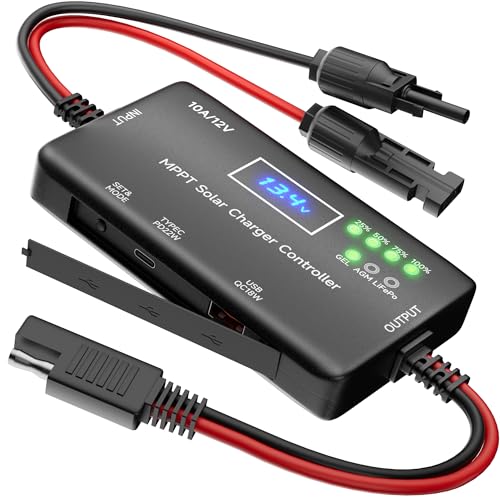
SUNAPEX MPPT Solar Charge Controller 12V 10A

POWLAND 120A MPPT Solar Charge Controller 12V/24V/36V/48V/60V/72V/84V/96V

Victron Energy SmartSolar MPPT Tr Charge Controller 150V 70A 12/24/36/48V
More Details On Our Top Picks
Marine use changes the equation fast, and this sealed 20A PWM unit is built for exactly that kind of damp, messy environment. The IP67 rating points to strong dust and water resistance, so it makes sense on a boat, a dock box, or a protected outdoor install where splash exposure is part of daily life.
Compared with the more feature-heavy controllers below, this one keeps the setup plain and dependable. The trade-off is simple, PWM controllers are usually a better fit for modest arrays than for larger, higher-voltage builds, so you’ll want to match it to the size of your system instead of stretching it.
Strong Points
- IP67 sealing suits wet, exposed locations.
- 20A output fits compact marine or cabin systems.
- 12V and 24V support keeps the setup flexible.
- Low-fuss design suits a straightforward install.
Things To Consider
- PWM design makes it a better match for smaller arrays than for larger expansions.
- You give up the extra tuning and harvesting flexibility of MPPT units.
- Sealed gear still needs clean cable routing and dry mounting space.
Feature Snapshot
Who It Suits Best
Boat owners, van setups, and small off-grid sheds benefit most, especially where weather exposure matters more than advanced monitoring.
Where A Sibling Pick Shines
ECO-WORTHY 30A 12/24V PWM Solar Charger Controller Bluetooth suits you better when you want Bluetooth monitoring and dual USB charging in a compact home or cabin setup.
This Rolokit unit leans into convenience, with dual USB ports and an LCD display that makes it easier to check basic system behavior at a glance. For a shed, weekend cabin, or starter battery bank, that kind of quick visibility can be more useful than a pile of advanced settings.
The adjustable timing and multiple load modes push it beyond the most basic controllers, which helps when you want the load output to behave a certain way on a schedule. The honest read is that it still lives in the simpler PWM camp, so it suits modest systems better than large, fast-expanding arrays.
What We Like
- Dual USB output adds everyday charging convenience.
- LCD screen helps you track the system without guesswork.
- Auto parameter adjustment reduces setup friction.
- Timer and load modes help match the controller to routine use.
Minor Gripes
- PWM design keeps it in the smaller-system lane.
- Touch-free setup still depends on careful wiring and battery compatibility.
- The feature mix is helpful, but not as deep as app-based or higher-end MPPT units.
Core Details
Who Should Grab It
Beginners building a modest off-grid setup, or anyone who wants simple USB charging alongside battery control, should feel at home here.
Swap It Out When
Victron Energy SmartSolar MPPT Tr Charge Controller 150V 70A suits you better when your system needs deeper monitoring, higher capacity, and more room to expand.
This pick sits in a different lane from the others, because it combines inverter duties with a built-in MPPT charge controller. Pure sine wave output matters for gear that prefers cleaner AC power, and the glass top cover plus LCD display make the front panel feel more like a control center than a bare utility box.
Support for battery-less operation and AGM or lithium batteries gives you room to plan a fuller off-grid system. The trade-off is that this kind of all-in-one unit asks for more careful system design, so it suits larger installations far better than a tiny weekend setup.
Upsides
- Combines inverter and charge control in one enclosure.
- 4000W output suits larger home-style off-grid loads.
- Pure sine wave output is friendlier to sensitive electronics.
- Battery-less support opens up broader setup planning.
- LCD display gives you direct system feedback.
Room For Improvement
- Install planning is more demanding than with a standalone controller.
- The feature set makes sense for bigger systems, not a tiny backup kit.
- All-in-one gear can be harder to place in tight spaces.
Details At A Glance
Made For
Home backup plans, cabin systems, and serious off-grid installs benefit most, especially where you want one enclosure doing several jobs.
Another Choice May Suit
POWLAND 120A MPPT Solar Charge Controller 12V/24V/36V/48V/60V/72V/84V/96V fits better when you already have an inverter and need a controller focused on panel input flexibility.
Bluetooth is the obvious draw here, and it matters because remote checking is far nicer than kneeling over a controller every time you want a status readout. Add the dual USB ports and you get a practical fit for compact cabins, RV storage bays, or a bench setup in a workshop.
Compared with the Rolokit 30A unit, this ECO-WORTHY option leans harder into monitoring and app-linked convenience. The caveat is that Bluetooth tools are only useful when the signal, app behavior, and wiring all play nicely, so a clean install still matters.
Highlights
- Bluetooth adds remote visibility without opening a panel box.
- Dual USB ports support everyday charging needs.
- 30A rating gives a little more room than basic 20A models.
- Negative-ground design fits many common small-system layouts.
- Battery support spans lithium, lead-acid, and gel types.
Softer Spots
- Bluetooth usefulness depends on clean setup and app comfort.
- PWM design keeps it aimed at modest solar arrays.
- More features mean more settings to learn at the start.
Core Details
Built With In Mind
RV users, small cabin owners, and workshop setups benefit most, especially when you want a controller that feels a little more connected.
Look Elsewhere When
Victron Energy SmartSolar MPPT Tr Charge Controller 150V 70A is the stronger match for bigger arrays and a more serious monitoring setup.
For larger battery banks, this 100A MPPT controller brings the kind of headroom that makes expansion feel less cramped. MPPT, or maximum power point tracking, matters because it lets the controller work more efficiently with panel voltage than a basic PWM unit usually can.
The 12V to 48V battery range and 100V input ceiling make it appealing for people building beyond a starter rig. The trade-off is that this sort of capacity deserves careful wiring and a clear system plan, so it suits experienced installers or organized DIY projects more than casual plug-and-play use.
Reasons To Buy
- 100A capacity supports serious charging demands.
- MPPT design suits systems that benefit from tighter energy handling.
- 12V through 48V support gives broad battery-bank compatibility.
- LCD display helps with day-to-day system checks.
- Dual USB ports add small-device convenience.
Points To Note
- Large-capacity controllers need clean, deliberate wiring.
- The setup makes more sense for experienced off-grid planning.
- Dual USB is handy, though the main draw is system capacity.
Feature Rundown
The Right Fit
DIY off-grid projects, larger RV electrical builds, and battery banks that need real headroom are the sweet spot here.
Reach For A Different Pick When
Rolokit 30A PWM Solar Charge Controller 12V 24V Dual USB suits a smaller system where simplicity matters more than high-capacity expansion.
This POWLAND model looks like the steadier, more expandable cousin to the other 100A controllers in the group. The 150V input ceiling is the detail that stands out, because higher input tolerance gives you more room to work with panel layouts that don’t all look the same.
In a workshop, homestead, or RV power closet, that flexibility can save frustration during future upgrades. The catch is that higher input potential still needs careful matching to your panels and battery bank, so the spec sheet rewards planning rather than improvisation.
Best Bits
- 100A capacity supports substantial charging demand.
- 150V input gives more room for panel layout planning.
- Works across 12V through 48V battery systems.
- LCD display helps keep routine checks simple.
- MPPT design suits more demanding solar setups.
Areas To Watch
- More headroom also means more attention during setup.
- High-input systems reward careful wiring and labeling.
- The unit makes the most sense once your array plan is already clear.
Feature Card
Whose Shelf It Belongs On
People planning phased expansions, especially in cabins or workshop systems, should find this a comfortable middle ground between compact and oversized.
Where Shoppers Go Wrong
Victron Energy SmartSolar MPPT Tr Charge Controller 150V 70A is the more polished fit when monitoring tools and brand refinement matter more than raw current rating.
Small battery setups often need a controller that does the basics well without taking up much room, and that’s the role this SUNAPEX model fills. Type-C and USB outputs make it feel especially handy in a camper, tool trailer, or compact backup station where you still want to top up phones and small devices.
The LCD voltage and current display keeps the day-to-day readout easy to follow, while the battery support list gives it broader use than a plain one-battery solution. The trade-off is the 10A ceiling, so this one belongs with modest solar input rather than a growing roof array.
Bright Spots
- Compact 10A format suits tight installations.
- Type-C and USB outputs add useful charging options.
- LCD readout helps you keep an eye on voltage and current.
- Battery support includes LiFePO4, AGM, and gel types.
- Zero battery drain is a practical advantage for parked systems.
Small Caveats
- 10A capacity fits lighter setups, not larger arrays.
- Small controllers still benefit from tidy cable management.
- The feature list is useful, but it stays focused on compact-use needs.
Quick Facts
Perfect Match For
Camper owners, small battery boxes, and light backup stations fit this controller well, especially where space is tight and charging needs stay modest.
Skip It When
Upgraded 100A MPPT Solar Charge Controller 12V 24V 36V 48V is the better route once your solar input and battery bank start getting larger.
This POWLAND controller is built for people who already know the system is going to grow, because its voltage range stretches far beyond the smaller models above. The 230V input ceiling is the standout detail, and it gives you a lot of room to plan unusual or larger panel layouts without feeling boxed in.
That extra flexibility comes with a clear trade-off, though, since bigger controllers deserve careful installation and orderly cable runs. For a large cabin, workshop, or custom solar wall, that’s usually a fair exchange, while a tiny basic setup would be overkill.
Best Bits
- 120A capacity suits large charging demands.
- Very wide battery-voltage support adds real planning freedom.
- 230V input limit opens up more panel arrangement options.
- LCD display helps with routine monitoring.
- MPPT design fits larger and more varied arrays.
Worth Noting
- The scale makes sense only for serious solar plans.
- Installation takes more attention than with smaller units.
- Large-capacity controllers reward tidy, labeled wiring.
Technical Sheet
Best Suited To
Custom off-grid projects, larger workshop arrays, and serious system expansion plans are the best match here.
Not Your Match When
SUNAPEX MPPT Solar Charge Controller 12V 10A is the simpler pick for a small portable setup where space and current draw stay light.
Victron’s SmartSolar line stands out because it feels geared toward planning, not just basic charging. Bluetooth matters here, since it gives you a cleaner way to track system behavior from a distance, which is useful in a garage, a rig, or a fixed off-grid install where the controller isn’t always in easy reach.
The 150V input ceiling and 70A rating make this a serious fit for larger solar arrays without crossing into the oversized territory of the 120A units above. The honest trade-off is that this level of control and flexibility is most rewarding when you want to monitor, fine-tune, and expand rather than just keep a small battery topped up.
Positives
- Bluetooth support gives you useful remote visibility.
- 150V input offers strong flexibility for panel layouts.
- 70A output suits substantial but not extreme systems.
- 12V through 48V support fits many common battery banks.
- MPPT design works well for more deliberate solar planning.
Trade Offs
- Its strengths make the most sense in a well-planned setup.
- Advanced controls are less necessary for a very small system.
- Bluetooth is useful, though the install still needs proper wiring and placement.
Spec Overview
Who Will Love This
Experienced off-grid installers, meticulous RV owners, and anyone who wants data-rich solar monitoring should feel right at home here.
Where Shoppers Go Wrong
Rolokit 30A PWM Solar Charge Controller 12V 24V Dual USB is the easier choice for a tiny starter setup where Bluetooth monitoring would be more than you need.
How To Choose The Right Solar Charge Controllers
Start With Battery Voltage And Controller Type
Your battery bank sets the first boundary. A 12V or 24V cabin setup can live comfortably with a simpler PWM controller, while larger systems often make better use of MPPT, which tracks the panel’s maximum power point so more of the array’s output reaches the battery in changing light.
Match the controller to the battery chemistry too. The SUNAPEX model names LiFePO4, AGM, and gel support, while the ECO-WORTHY and other picks show broader common-system compatibility, so your battery label should shape the shortlist before anything else.
Think About Panel Voltage And Expansion Room
Panel input limits matter more than many first-time installers expect. A controller with a 100V or 150V ceiling, like the ELUSH or POWLAND models, gives you more room to arrange panel strings without painting yourself into a corner.
That extra room helps in real spaces such as a roof with mixed panel positions or a future expansion on a shed or trailer. Smaller PWM units still make sense for compact systems, but they are less forgiving once your array starts growing.
Choose Features That Match Daily Use
Daily visibility can be as useful as raw capacity. LCD displays help you read voltage and current without guessing, Bluetooth makes remote checks easier, and USB or Type-C outputs can be handy in a camper or workshop bench setup.
Those conveniences do add complexity, so keep the use case honest. A simple boat battery often needs a sealed controller like the Renogy Voyager more than app tools, while a home-style off-grid setup may justify a smarter, more connected unit.
Size The Controller For The Real Load
Current rating is the part that keeps systems calm under pressure. A 10A or 20A controller fits light-duty charging, 30A gives a little more breathing room, and 70A to 120A belongs with larger banks and broader solar plans.
The right size is the one that matches your present load without forcing the hardware to work at the edge all the time. That usually means leaving some headroom, especially for setups that will gain panels or batteries later.
Things Worth Knowing First
Common Shopping Slip Ups
A lot of trouble starts with a mismatch between battery voltage and controller range. Another common mistake is choosing a controller for current rating alone, then discovering the panel layout or battery chemistry needs a different type of support.
Mounting and wiring get overlooked too. A sealed controller still needs clean cable routing, and a high-capacity unit still needs tidy installation, especially in cramped vans, sheds, or control boxes.
The Upgrade Payoff
Higher-tier controllers usually cost more because they give you broader voltage support, stronger current handling, and better monitoring. MPPT units also tend to justify their place in systems where panel conditions vary through the day or where you want more efficient use of available sunlight.
That extra spending makes sense once your setup is no longer a toy system. For a large cabin, a serious RV electrical build, or a grow-on-your-own array, the added flexibility is often worth it.
Frequently Asked Questions
What Does PWM Mean In A Solar Controller?
PWM stands for pulse width modulation, a simpler charging method often used in smaller systems. It usually fits modest panel and battery setups better than large expansion plans.
What Does MPPT Add?
MPPT stands for maximum power point tracking, a control method that helps a system use panel output more effectively. It matters most in larger or more varied solar setups.
How Do You Choose Between 10A, 30A, And 100A?
The right current rating depends on how much charging your panels can send at once. Light portable setups fit smaller ratings, while bigger battery banks need far more headroom.
Do Bluetooth Features Matter?
Bluetooth is useful when you want to check status from a distance without opening the enclosure. It is most helpful in RVs, garages, cabins, and fixed installations.
Can One Controller Fit Every Battery Type?
No single controller suits every battery chemistry and array size. Matching the battery type, voltage, and controller style is the safest way to narrow the list.
Closing Thoughts
The right solar charge controller feels almost invisible once it’s installed, and that’s a good sign. For a boat or damp outdoor spot, the Renogy Voyager makes sense, while the Victron and POWLAND models suit larger, more deliberate systems that need room to grow. Smaller setups often do well with the Rolokit, ECO-WORTHY, or SUNAPEX picks, especially when convenience matters as much as capacity. Choose around your battery bank first, then let the panel layout and daily use shape the rest.
