

Solar cellular trail cameras make sense when you want eyes on a property without hiking back and forth for cards or fresh batteries. That matters for hunters, landowners, and anyone watching a remote driveway, food plot, or back lot. The strongest options here differ in a few real ways, from multi-carrier LTE and solar panels to live view, no-glow flash, and longer-lasting internal power. You’ll see which models fit quiet scouting, property monitoring, or a setup that needs less day-to-day attention.
Quick Look At The Shortlist

TACTACAM Reveal X 3.0 Cellular Trail Camera 4K Photo 1080p Video
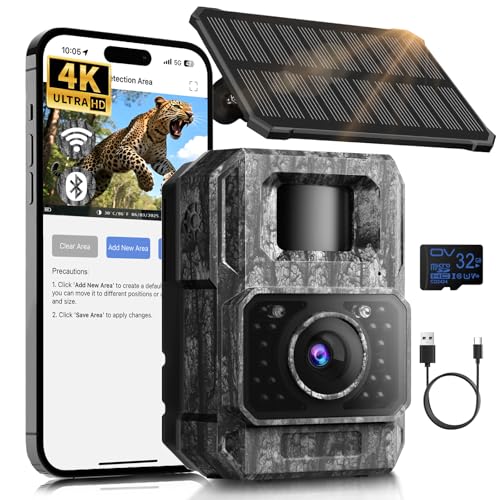
MAXDONE Solar Trail Camera 4K 64MP WiFi Bluetooth Night Vision

SPYPOINT FLEX-S Solar Outdoor Cellular Trail Camera Integrated Solar Panel

SEHMUA 4G LTE Cellular Trail Game Camera 360° Panoramic View
Oculview 4G LTE Cellular Trail Camera 360° Live Streaming Solar Deer Camera
SPYPOINT Flex-M Solar Bundle Cellular Trail Camera with Solar Panel

SPYPOINT Flex-S-Dark Solar Cellular Trail Camera 40MP Photos 1080p Videos
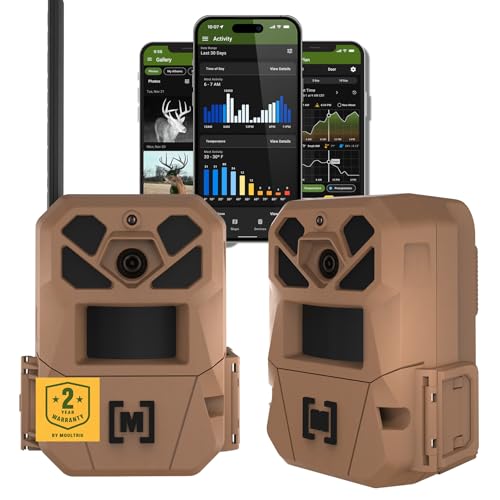
Moultrie Edge 3 Cellular Trail Camera 2-Pack 40MP 0.5s Trigger

MagicEagle Trail Camera 4G Cellular Trail Camera 2K Audible Video
More Details On Our Top Picks
Multi-carrier LTE is the real story here, because the camera can latch onto whichever network has the better signal at the site. That’s a smart fit for fence lines, back forty corners, or hunting land where one carrier works better than another. The lack of an SD card slot also keeps the routine lighter, and the IP66 housing points to solid dust and water resistance for outdoor placement.
Its 4K stills and 1080p video give you enough detail for trail reading without forcing a bulky setup. The trade-off is that this model leans hard into connectivity, so it suits you best when cellular coverage matters more than local storage flexibility. The six-plus-month battery claim is also a good sign for lower-maintenance use between visits, though real runtime always depends on signal, trigger activity, and weather.
Strong Points
- Auto-connect LTE reduces carrier guesswork at remote sites.
- 4K photos help with identifying antlers, coat markings, and movement patterns.
- 1080p video fits quick checks on how animals move through an area.
- No SD card needed keeps setup simpler than card-based trail cameras.
- IP66 housing supports outdoor use in dusty or wet conditions.
Things To Consider
- Cellular performance still depends on local network strength.
- Stored clips and photos live in the connected ecosystem, so account setup matters.
- More frequent motion events can shorten battery life more quickly than the headline suggests.
Feature Snapshot
Who It Suits Best
You’ll like this most for remote scouting where signal quality changes from spot to spot and you want fewer trips to the camera.
A Better Fit Elsewhere
Moultrie Edge 3 Cellular Trail Camera 2-Pack 40MP 0.5s Trigger suits landowners who want two cameras watching more ground at once.
The MAXDONE leans into a broad feature mix, with 4K stills, 64MP image capture, WiFi, Bluetooth, and night vision all in one package. For a backyard edge, cabin lot, or small parcel, that blend makes it easy to move between quick phone checks and more traditional trail use. The included 32GB card and 6000mAh power source help it feel more complete out of the box than some stripped-down options.
Compared with the TACTACAM above, this one feels more local-device friendly thanks to WiFi and Bluetooth rather than cellular-only dependence. That makes setup and nearby review more approachable, though it also means the camera suits short-range access better than a deep-woods deployment. The IP66 shell is another practical touch for weather exposure, and that matters once the camera sits out near a fence post for weeks at a time.
What We Like
- 4K and 64MP specs give you plenty of detail on paper and in use.
- WiFi and Bluetooth can simplify nearby setup and file access.
- 32GB memory card included saves a separate purchase.
- 6000mAh power helps support longer gaps between visits.
Small Caveats
- Cellular scouting isn’t the main focus here, so it suits shorter-range access better.
- Some users will still prefer a dedicated app workflow for remote property checks.
- Regular card and battery management still matter, especially in high-activity areas.
Core Details
Made For
You’ll get the most from it in locations close enough for WiFi or Bluetooth access, especially around a backyard, cabin, or managed food plot.
Swap It Out When
SPYPOINT FLEX-S Solar Outdoor Cellular Trail Camera Integrated Solar Panel is the smarter move for long-range property monitoring with cellular delivery.
Built-in solar support changes the maintenance rhythm, and that’s the main reason this SPYPOINT stands out. For a hunting lease, game trail, or roadside field edge, the less often you have to open the housing, the better. Dual-SIM LTE adds flexibility in areas where one carrier is stronger than another, which is a useful detail for scattered rural coverage.
Compared with the TACTACAM Reveal X 3.0, this model leans more into solar-first convenience than high-end still resolution. You give up some image bragging rights, but you gain a setup that feels easier to leave in place. The 36MP photo output and 1080p video with sound should be enough for most trail checks, especially when you care more about pattern tracking than giant prints.
Highlights
- Integrated solar panel helps reduce battery handling.
- Dual-SIM LTE supports better network flexibility in rural areas.
- 36MP stills provide useful detail for everyday scouting.
- 1080p video with sound adds context to movement and behavior.
- Less maintenance suits places you don’t want to visit often.
Trade Offs
- Photo resolution trails some higher-detail options in this list.
- Solar performance still depends on placement and daylight exposure.
- App and service setup may take a little patience at first.
At A Glance
Right Fit For
You’ll appreciate this most on a rural property where solar assistance and easy upkeep matter more than chasing the biggest image file.
Where A Sibling Pick Shines
MagicEagle Trail Camera 4G Cellular Trail Camera 2K Audible Video suits you better when long battery reserve and local storage are bigger priorities.
The 360-degree panoramic view is the headline feature here, and it changes how you think about coverage. Instead of watching a narrow lane, you’re closer to monitoring an open area, which is useful for security-minded setups, shed corners, or larger feeding zones. The built-in SIM card and instant alerts push it toward fast, phone-first awareness.
Compared with SPYPOINT FLEX-S, this SEHMUA spends more of its value on live visibility than on a simpler scouting workflow. That makes it attractive for users who want to see what’s happening rather than only collect motion clips. The trade-off is plain enough, since this much connectivity and panoramic control usually asks more from setup and account management than a basic trail camera.
Bright Spots
- 360-degree view covers a wider area than a fixed-lens trail camera.
- Live streaming can help you check activity without a site visit.
- Built-in SIM card simplifies initial activation.
- Instant alerts are handy for property-watch scenarios.
- Two-pack format suits larger coverage plans.
Minor Gripes
- Wide coverage works best when you place the unit carefully.
- Live features usually bring more app setup and account upkeep.
- The larger feature set may feel more complex than a simple scouting cam.
Details At A Glance
The Right Fit
You’ll get the most from this on larger properties or security-style setups where broad visibility matters more than a narrow trail lane.
Another Choice May Suit
Moultrie Edge 3 Cellular Trail Camera 2-Pack 40MP 0.5s Trigger is a steadier fit for simple multi-camera scouting with less emphasis on live streaming.
Oculview goes after the user who wants phone-based control, live streaming, and cloud storage in one outdoor camera. That setup feels especially handy for a remote gate, a hunting lane, or a property edge where you want a quicker sense of what’s moving through. The included SIM card keeps the listing from feeling bare, and the solar support helps it fit the long-haul outdoor routine.
Compared with SEHMUA’s broader two-pack approach, this one reads more like a single-camera control point with a cloud-driven workflow. The clear night vision claim points toward practical after-dark use, though the trade-off is the usual one for connected cameras, meaning more dependence on account setup and service-side features. For most mixed-use properties, that’s fine, as long as you prefer visibility over a stripped-down trail-only tool.
Reasons To Buy
- 360-degree live streaming expands what one camera can monitor.
- Remote phone control suits property checks from afar.
- Cloud storage adds an extra layer of file access convenience.
- Solar support helps reduce charging chores on long placements.
Areas To Watch
- More connected features usually mean more app setup.
- Cloud-centered use may feel more involved than local-only cameras.
- Wide-angle placement takes a little planning to make the most of the view.
Core Details
Whose Shelf It Belongs On
You’ll like this for a property where phone control and live viewing matter as much as trail capture.
Reach For A Different Pick When
TACTACAM Reveal X 3.0 Cellular Trail Camera 4K Photo 1080p Video fits you better when multi-carrier reliability matters more than live streaming.
This bundle makes sense for rougher placements because it adds solar support, GPS, and IP65 water resistance in one package. For hunters who leave cameras on long lease runs, GPS can help with placement notes and recovery, while the water resistance gives a bit more confidence around wet grass, mist, or stormy edges. Compared with SPYPOINT FLEX-S, this Flex-M leans more toward rugged practicality than a simpler solar-centered setup.
The dual-SIM LTE support is useful in rural territory where one carrier might be weak. The trade-off is that this is still a connected camera bundle, so you’re dealing with the normal app and account setup that comes with cellular gear. The honest read is that it suits someone who wants a solid field tool more than a flashy feature list.
Upsides
- Solar bundle format helps reduce battery chores.
- GPS can make location tracking easier across larger properties.
- IP65 water resistance adds a useful layer for outdoor mounting.
- Dual-SIM LTE helps in spotty coverage areas.
Points To Note
- IP65 is solid, though it still calls for sensible placement away from standing water.
- Cellular setup takes some account work before it feels routine.
- Solar performance still improves with smarter sun exposure and mounting angle.
Feature Rundown
Built With In Mind
You’ll appreciate this bundle for field setups that need a little extra resilience and location tracking.
Look Elsewhere When
MAXDONE Solar Trail Camera 4K 64MP WiFi Bluetooth Night Vision is the cleaner fit for close-range access and included storage.
No-glow flash is the key differentiator here, and that matters anywhere a visible nighttime flash would feel intrusive. For a game trail near bedding cover or a backyard edge where you want less attention drawn to the unit, that’s a useful trait. The built-in solar panel also supports the low-maintenance appeal, so this one is built for quiet, repeat placements.
Against the regular FLEX-S, the Dark version shifts the focus toward stealthier nighttime capture rather than broad convenience alone. The 40MP photos and 1080p video with sound give it a solid detail level without pushing into bulky, overcomplicated territory. The compromise is that no-glow performance can sometimes feel less visually obvious on the camera side, so positioning and framing still matter.
Best Bits
- No-glow flash helps keep nighttime activity less conspicuous.
- Built-in solar panel supports lower-maintenance placement.
- 40MP stills offer strong detail for trail and property use.
- 1080p video with sound adds context without overloading the workflow.
Honest Caveats
- No-glow setups can make camera aiming more important.
- Solar support still benefits from a smart, sun-friendly position.
- The feature mix is focused, so it skips some extra bells and whistles.
Technical Sheet
Best Suited To
You’ll get the most from this in spots where nighttime discretion matters and you want a camera that blends into the routine.
Another Choice May Suit
Moultrie Edge 3 Cellular Trail Camera 2-Pack 40MP 0.5s Trigger suits you better if you want two cameras and faster-trigger coverage.
The two-pack format changes the math here, because you can cover separate trails, feeders, or entry points without shopping again right away. The 0.5-second trigger speed is the detail that stands out most for active trails, where quick response often matters more than flashy extras. Add 40MP stills, 1080p video, multi-carrier support, and GPS, and you get a setup that feels built for coverage rather than fuss.
Compared with the single-camera picks above, this one works better when your property needs two watch points at once. Low-glow flash is another practical touch, especially for mixed daytime and nighttime use near fields or lanes. The trade-off is simple enough, since a two-camera package can take a bit more planning for placement, charging, and app organization.
Positives
- Two cameras in the box help you cover more ground.
- 0.5-second trigger speed supports fast-moving trail activity.
- Multi-carrier support adds flexibility in rural coverage areas.
- GPS can help keep track of camera locations.
- Low-glow flash fits places where you want less visible nighttime output.
Worth Noting
- Two units mean more placement planning and more app organization.
- Battery and signal management matters more when you’re running multiple cameras.
- Low-glow flash is practical, though not as discreet as no-glow designs.
Key Specs
Who Will Love This
You’ll like this most if your land needs two monitored spots and you want quicker capture on active routes.
Skip It When
TACTACAM Reveal X 3.0 Cellular Trail Camera 4K Photo 1080p Video suits you better when a single premium camera and automatic carrier switching matter more.
The long-life battery is the anchor here, and the listed 13,000mAh capacity gives this camera a very different feel from smaller, more frequent-charge models. For a season-long stand, remote property corner, or site where access is awkward, that kind of reserve matters a lot. Solar support and Type-C charging add flexibility, while the included 32GB card makes the setup feel more complete than some bare-bones units.
What separates this one from the others is the mix of battery reserve, cloud storage, AI event filtering, and anti-theft tech. AI in this context means the camera can sort through events more selectively, which helps cut down on pointless alerts and saves data use. The trade-off is complexity, since this is the pick for someone who wants more digital management in exchange for less routine attention.
Plus Points
- 13,000mAh battery capacity supports long stays in the field.
- Solar support and Type-C charging add power flexibility.
- Cloud storage helps keep files accessible away from the camera.
- AI event filtering can reduce noisy alerts from trivial movement.
- Included 32GB card makes the starting setup easier.
Room For Improvement
- More software features can take extra setup time.
- Long runtime still depends on sun exposure and activity levels.
- Feature depth may be more than a casual trail user wants.
Core Details
Built For In Mind
You’ll appreciate this most for long-stay setups where battery reserve and solar support matter more than a simple set-and-forget trail cam.
A Different Pick Fits Better
SPYPOINT FLEX-S Solar Outdoor Cellular Trail Camera Integrated Solar Panel is the cleaner choice for you if a simpler solar-cellular setup feels easier to manage.
How To Choose The Right Solar Cellular Trail Cameras
Signal And Coverage Matter First
Cellular trail cameras live or die by signal quality, so carrier flexibility deserves real attention. Multi-carrier LTE is useful on rural land where one network may work better than another, while built-in SIM support can simplify setup for less technical use. A camera with strong network behavior saves you the frustration of missed uploads and repeated site visits.
Coverage shape matters just as much. A fixed lens works well for a trail pinch point, while 360-degree viewing suits open spaces, lots, and perimeter-style monitoring. The honest read is that the right camera depends on whether you want to watch a lane or a broader section of ground.
Solar Support Changes Maintenance
An integrated solar panel can reduce battery handling, especially on cameras mounted high or far from the truck. That’s a real advantage for lease land, food plots, and property edges that are awkward to reach. You still want good sun exposure, because shade, angle, and heavy motion activity affect how long the setup stays comfortable.
Solar bundles can also vary in how self-contained they feel. Some lean on the panel for steady support, while others pair solar with a large internal battery for more cushion. For most field setups, that extra cushion is worth more than a flashy spec sheet.
Image Detail Versus Practical Use
Higher resolution helps, but it should match the job. A 40MP or 64MP still image can make trail reading easier, while 1080p video is usually enough for motion context and behavior checks. Very high detail matters most when you want to study antlers, body shape, or small movement cues from a distance.
Don’t overlook trigger speed and flash type either. Faster triggers help on active paths, and no-glow or low-glow flash can matter near bedding cover, barns, or places where you want a quieter nighttime footprint. Those details often shape daily usefulness more than one extra headline feature.
App Workflow Should Feel Manageable
Cellular cameras can feel simple or fiddly depending on the app side. Phone alerts, cloud storage, and remote review are handy, but only when the setup stays easy enough to use in regular life. A model with too much account friction can turn a smart feature into a chore.
Think about how often you’ll visit the site and how much hands-on control you want. A landowner checking a remote gate has different needs than a hunter scouting a specific trail. The best fit is usually the one that trims the most time from your routine without making the camera harder to trust.
What To Weigh Before You Click
Wrong Turns To Avoid
Don’t choose a camera on resolution alone. A sharp photo means little if the network is weak, the flash is too visible for the spot, or the unit needs too much upkeep for your schedule.
Another common miss is underestimating placement. Solar panels need light, panoramic views need room, and no-glow units need careful framing, so the site matters as much as the spec list.
The Upgrade Payoff
Higher-tier models usually cost more because they combine better connectivity, stronger power systems, and richer app features. Multi-carrier service, built-in solar support, bigger batteries, and cloud tools all add convenience, but they also add complexity behind the scenes.
That upgrade makes sense when you manage remote land, need fewer visits, or want more control from your phone. For a small backyard or a short walking route, a simpler camera can be easier to live with.
Frequently Asked Questions
What makes a solar cellular trail camera different from a standard trail camera?
A solar cellular trail camera can send images or alerts through a network connection instead of waiting for you to pull a card. Solar support also helps reduce how often you need to swap batteries.
Do you need WiFi for these cameras?
Many of these models work without WiFi because they use LTE connections instead. That makes them better suited to remote land, hunting spots, and other places far from home internet.
Which matters more, battery size or solar support?
Both matter, but they solve different problems. A larger battery gives you more reserve, while solar support helps keep that reserve from running down so quickly.
Are no-glow cameras better for nighttime use?
No-glow flash can be a smarter choice where you want less visible light at night. The trade-off is that careful placement matters more, since you still want the camera aimed well.
What’s the main thing to check before choosing one?
Start with coverage and signal at the exact site. After that, match the camera’s power system and app workflow to how often you plan to visit it.
Final Thoughts
You’ve got a wide spread here, from simple solar support to live streaming, multi-carrier LTE, and two-camera coverage. The best choice depends on whether you want easier maintenance, faster alerting, or stronger field range, and that part is more important than chasing the loudest spec. For remote land, lean toward flexibility and battery support. For closer property use, a simpler setup can be easier to live with, and that often feels better once it’s mounted.
