

You want a panel that keeps a phone, headlamp, or power bank moving without turning your pack into dead weight. For backpacking, the useful question isn’t just wattage, it’s how much usable charging you get from a panel you can actually carry, open, and keep pointed at the sun.
That balance gets easier to judge once you compare fold size, port options, waterproofing, and how the panel handles real trail habits like short breaks, damp campsites, and quick pack-up mornings. The nine picks below cover ultra-light options, higher-output choices, and sturdier models for longer trips.
The Shortlist At A Glance

ELECOM NESTOUT Portable Solar Panel 4-Panel

BigBlue Ultra-Light Portable 25W Solar Panel Charger

FlexSolar 20W Foldable Solar Panel Charger

SOLUPUP Solar Panels 30W Portable Foldable Solar Charger
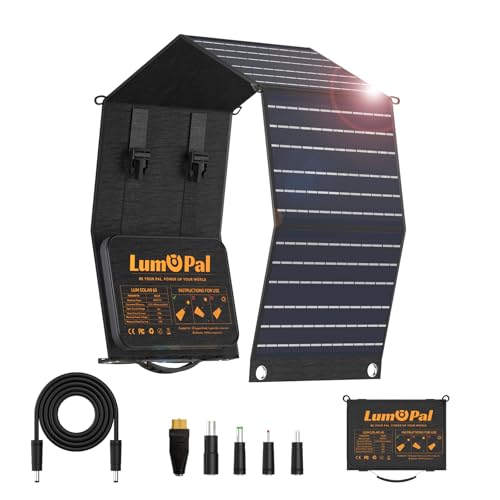
LUMOPAL 60W Foldable Solar Panel Charger

ELECOM NESTOUT Portable Solar Panel 2-Panel
FlexSolar 25W Portable Solar Panel Charger
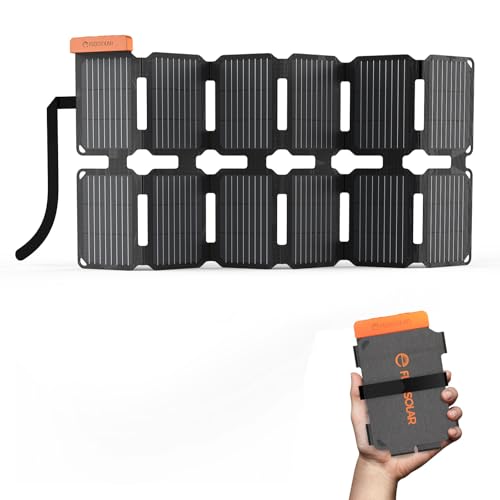
FlexSolar 36W Ultra-Portable Solar Panel Charger
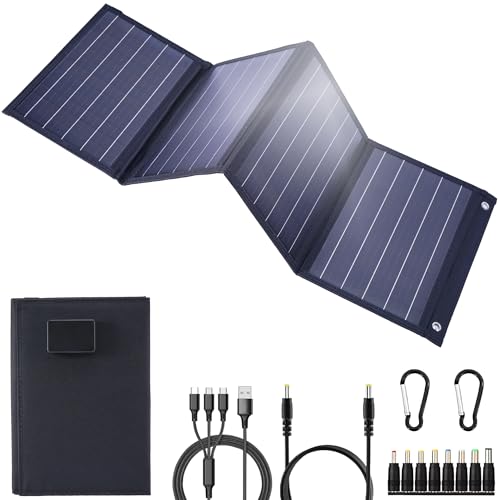
2026Upgrade 40W Foldable Solar Panel Charger
More Details On Our Top Picks
Four folding panels give this NESTOUT version a more planted feel than the smaller, lighter options below. The ripstop nylon shell and adjustable stands matter on uneven ground, especially in a camp where you keep shifting the panel to catch better light.
Dual USB-A ports suit simple trail charging, so you can top up a phone and a second small device without carrying extra adapters. The trade-off is size, because the sturdier layout is less pocketable than the BigBlue and FlexSolar picks.
Strong Points
- Four-panel layout gives you a wider charging surface than the compact two-panel style.
- Ripstop nylon adds a tougher outer layer for pack tosses and camp use.
- Adjustable stands help you angle the panel on rocks, dirt, or a picnic table.
- Dual USB-A outputs fit straightforward phone-and-accessory charging.
Worth Noting
- It takes more pack space than the lighter, slimmer picks.
- USB-A only means less flexibility for newer gear that leans on USB-C.
- The larger fold-out shape asks for a bit more setup room at camp.
Feature Snapshot
Who It Suits Best
You suit this panel best when you want a sturdy, trail-friendly charger for phones and small accessories on longer overnights.
A Better Fit Elsewhere
BigBlue Ultra-Light Portable 25W Solar Panel Charger suits gram-counting hikers who want a smaller carry and a USB-C port.
This is the kind of panel that makes sense for a stripped-down pack. At 0.84 pounds, it stays close to the featherweight end of the group, and the pocket-size format is easier to stash than the larger ELECOM four-panel build.
USB-A and USB-C outputs give you better cable flexibility, which helps on trips where one device still uses older gear and another relies on USB-C. IP68 waterproofing signals very strong dust and water resistance, though you still need to think about keeping the ports clean and covered between uses.
What We Like
- Very light carry weight suits long mileage days.
- USB-A and USB-C make it easier to match mixed devices.
- Pocket-size folding form keeps pack storage simple.
- IP68 rating adds reassuring weather resistance for rough conditions.
Points To Note
- Compact size usually means less panel surface than larger 30W and 60W options.
- The smaller profile can be less forgiving in patchy shade.
- Ports and folds still benefit from regular wipe-downs after dusty trips.
Details At A Glance
Who Should Grab It
You suit this option best when every ounce matters and you still want both USB-A and USB-C on the same panel.
Where A Sibling Pick Shines
SOLUPUP Solar Panels 30W Portable Foldable Solar Charger fits you better when you want more panel output and don’t mind a bit more bulk.
FlexSolar keeps the pitch simple, which helps on a trail where you just want dependable top-ups for small electronics. The 20W rating is modest, but the 5V USB-A and USB-C outputs cover the basics without making the panel feel overbuilt for short trips.
IP67 waterproofing adds a useful layer of weather tolerance, and that matters in a pack that sees rain, mud, and quick campsite setup. Compared with the ELECOM and BigBlue picks, this one feels easier to carry, though you give up some charging headroom.
Upsides
- Low 20W output keeps the panel straightforward for basic trail gear.
- USB-A and USB-C support a wide range of small devices.
- IP67 protection suits damp or dusty outdoor conditions.
- Compact fold makes it easy to slide into a pack pocket.
Room For Improvement
- Twenty watts is better for light loads than for heavier charging demands.
- Smaller panels can be more sensitive to cloud cover and angle changes.
- Like most foldables, it benefits from careful storage so the hinges stay tidy.
Core Details
Made For
You suit this panel best for starter backpacking kits, short hikes, and simple emergency charging needs.
Another Choice May Suit
FlexSolar 25W Portable Solar Panel Charger makes more sense for you when you want a bit more output in a similar carry style.
SOLUPUP moves into a sweeter middle zone, with enough rated output to feel more useful than the 20W models while staying less imposing than the 60W LUMOPAL. The built-in smart chip is the key selling point here, since it helps the panel recognize devices and manage charge flow with less guesswork.
The auto-reconnect function also makes sense for real outdoor use, because passing clouds and shifting shade are part of backpacking life. You still need decent sun exposure, though, and the foldable format will ask for a little more packing room than the ultra-light BigBlue.
Highlights
- 30W output gives you a useful step up from the smallest panels.
- USB-A and USB-C improve cable flexibility on the trail.
- Smart-chip control helps with charge management across different devices.
- Auto-reconnect support is handy after temporary sunlight loss.
Softer Spots
- The panel still depends on strong sun for the best day-to-day usefulness.
- It carries more easily than 60W units, but it’s not the lightest pick here.
- Folded storage needs a little care so the cable ends and panels stay tidy.
At A Glance
Best Suited To
You suit this panel best for backpacking trips where you want a practical blend of output, device compatibility, and portability.
Look Elsewhere When
LUMOPAL 60W Foldable Solar Panel Charger fits you better when you want to push larger gear like a laptop or portable power station.
LUMOPAL sits in the heavier-duty corner of this roundup, and the port mix tells you why. A PD USB-C port rated up to 60W, two QC3.0 USB-A ports, and a DC output give you far more flexibility than the simpler USB-only panels above.
That kind of spread suits longer basecamp stays, car-to-trail transitions, or backpacking setups that include a laptop or portable power station. The trade-off is obvious: more output options usually mean more bulk and more need to manage cables well.
Reasons To Buy
- USB-C PD support opens the door to higher-demand devices.
- Two QC3.0 USB-A ports help handle older accessories and phones.
- DC output broadens compatibility with larger portable gear.
- 60W ceiling gives you more room for multi-device charging plans.
Minor Gripes
- It’s a bigger commitment in your pack than the 20W and 25W choices.
- More ports mean more cords to keep organized on the trail.
- For very light weekend trips, the extra capacity may feel like more than you need.
Technical Sheet
Whose Shelf It Belongs On
You suit this panel best when your trail setup includes higher-demand devices and you want a solar option that reaches beyond phone charging.
Swap It Out When
FlexSolar 36W Ultra-Portable Solar Panel Charger makes more sense for lighter campers who still want extra port variety without moving up to 60W.
The two-panel NESTOUT keeps the same general family feel as the four-panel version, but the smaller fold makes it easier to live with in a tighter pack. That matters on weekend hikes, where you want something more manageable than the larger ELECOM layout without dropping into the tiniest ultralight category.
Dual USB-A ports keep the setup familiar, and the 28W class gives you a sensible middle ground for charging trail phones and small accessories. In most camps, the cleaner packability of this model will matter more than raw charging ambition.
Best Bits
- Two-panel fold is easier to store than the larger four-panel layout.
- Dual USB-A ports keep charging simple and familiar.
- 28W output hits a practical middle zone for backpacking trips.
- Water-resistant ripstop nylon adds a useful layer of durability.
Areas To Watch
- USB-A only can feel limiting if your kit has moved mostly to USB-C.
- The smaller fold gives up some panel area compared with the four-panel version.
- Like other fabric-shelled panels, it’s worth brushing off grit before packing it away.
Feature Rundown
Who Will Love This
You suit this panel best if you want NESTOUT build quality in a smaller fold that feels easier to carry day after day.
Right Fit For
BigBlue Ultra-Light Portable 25W Solar Panel Charger is the cleaner match for you when a lighter carry matters more than the extra structure here.
FlexSolar’s 25W panel lands in a very workable spot for hikers who want more than an entry-level charger without dragging a heavy rig around. Built-in USB-A and USB-C ports keep the setup tidy, and that kind of simplicity helps on fast-moving trips where you want less cable fiddling.
Compared with the 20W FlexSolar and the compact BigBlue, this version gives you a little more room to charge routine gear while staying easy to pack. The honest read is that it suits trips with steady sun exposure better than deep-shade forest routes.
Positives
- 25W output gives you a small but useful step up from the 20W class.
- Built-in USB-A and USB-C ports keep accessories down.
- Ultra-light build suits day hikes and fast backpacking starts.
- Works well for phones and other small trail electronics.
Small Caveats
- It still sits in the light-duty category compared with 30W, 36W, and 60W picks.
- Built-in ports are convenient, but they don’t replace the need for tidy cable storage.
- Shade-heavy camps can make a compact panel feel less productive.
Spec Overview
Built With In Mind
You suit this panel best if you want a light, easy-carry option for phones and small electronics on active trips.
Where A Sibling Pick Shines
SOLUPUP Solar Panels 30W Portable Foldable Solar Charger fits you better when you want a little more charging headroom from a similar foldable format.
FlexSolar’s 36W model stands out because it mixes portability with a broader port set. USB-A, USB-C, and DC outputs cover more gear than the simpler panels, so the setup works for a camp that includes phones, batteries, and a few higher-demand accessories.
The trade-off is predictably a little more panel to manage, but that’s the price of flexibility. For backpacking trips that blur into longer stays, this version can feel like a more adaptable middle path than the 25W and 28W options.
Bright Spots
- 36W output gives you more ceiling than the smaller travel-first panels.
- USB-A, USB-C, and DC outputs widen device compatibility.
- Still marketed as ultra-portable, so it doesn’t jump straight into bulky territory.
- Good fit for mixed camping gear instead of only basic phone charging.
Honest Caveats
- The extra output and ports bring more cable management to think about.
- It’s less pared down than the smallest panels in this list.
- For short trips with only a phone, the added flexibility may be more than you need.
Feature Card
The Right Fit
You suit this panel best if you want one portable charger that can handle more than a phone without jumping to the 60W class.
Skip It When
FlexSolar 25W Portable Solar Panel Charger is the cleaner pick for lighter kits that don’t need the broader port mix here.
This one is built for shoppers who care more about output efficiency than a tiny folded footprint. The listed 25% efficiency, N-type cell design, and MPPT charge control point toward a panel that aims to squeeze more useful charging from available sunlight, which matters on short daylight windows.
USB-C, USB-A, and DC12V support make it the broadest electrical match in the roundup, and the IP67 protection adds confidence for wet or dusty travel. The catch is that more advanced internals usually come with a more technical feel, so it suits detail-minded hikers better than casual weekend packers.
Standout Traits
- 40W output gives you the highest rated power in this list.
- 25% efficiency and N-type cell design point to strong sunlight use.
- MPPT control helps the panel adapt charging more intelligently.
- USB-C, USB-A, and DC12V cover a wide range of gear.
Areas To Watch
- It sounds more technical than the simpler panels, so setup-minded hikers may appreciate it more.
- The broader feature set can feel like overkill for tiny phone-only kits.
- Like any foldable panel, it still benefits from careful storage after dusty trail days.
Core Details
Who It Suits Best
You suit this panel best if you want a more technical, output-focused solar charger for longer backpacking trips and mixed device loads.
Reach For A Different Pick When
BigBlue Ultra-Light Portable 25W Solar Panel Charger fits you better when your priority is the lightest possible carry with simpler charging needs.
How To Choose The Right Portable Solar Panels For Backpacking
Size, Weight, And Folded Shape
Backpacking rewards panels that disappear into the pack until you need them. Weight matters, but folded dimensions matter just as much, because a flat, tidy panel is easier to slot beside a stove, rain shell, or food bag.
Very light models, like the BigBlue and FlexSolar 25W picks, suit hikers who count every ounce. Larger foldouts, like the ELECOM four-panel version or the LUMOPAL 60W model, make more sense when camp charging matters more than a minimalist carry.
Ports And Device Mix
USB-A still works for plenty of trail gadgets, yet USB-C has become the easier all-around choice for newer phones and compact batteries. A panel with both, such as the BigBlue or several FlexSolar options, gives you more cable flexibility without adding much fuss.
Higher-output models add DC outputs, and that matters for gear that expects a round barrel-style input or a portable power station connection. The more varied your kit, the more useful a broader port set becomes.
Output Ratings And Real Use
Wattage tells you how much charging potential a panel offers, but real use depends on sunlight, angle, and shade. A 20W or 25W panel can handle a phone and a small accessory, while 30W to 40W gives you more breathing room for longer days or multiple devices.
Backpackers often get better results from the panel they can position well than from a bigger panel they leave buried in the pack. That is why adjustability, stand design, and easy deployment matter almost as much as the number on the label.
Weather Resistance And Trail Durability
Water resistance matters in the backcountry because mornings are damp and weather shifts fast. IP67 and IP68 ratings, where listed, point to stronger dust and water protection, while ripstop nylon or similarly tough outer materials help during repeated packing and unpacking.
Even so, no foldable panel likes being stuffed away while gritty or wet. A quick wipe and a careful fold usually pays off in better long-term handling, especially on longer routes.
Things Worth Knowing First
Traps First Timers Fall Into
Many hikers focus on wattage alone and end up with a panel that is awkward to carry or hard to fit in a day pack. Port layout matters just as much, because a USB-C-only setup can be frustrating on mixed-gear trips.
Another common slip-up is ignoring panel size in shade-heavy camps. A lighter, smaller model may look tidy on paper, yet a slightly larger panel can be more useful in real trail conditions.
The Upgrade Payoff
Higher-tier panels usually cost more because they bring more output, broader port options, tougher materials, or smarter charge control. Features like MPPT, N-type cells, and dual-port layouts are part of what you pay for.
That upgrade makes sense for longer trips, bigger battery banks, or mixed electronics. For short weekend hikes with only a phone, a simpler 20W to 25W panel often feels easier to live with.
Frequently Asked Questions
Can you use a solar panel directly with a phone?
Yes, many of these panels can connect straight to a phone through USB. A power bank still helps smooth out charging when sunlight keeps changing.
How much wattage makes sense for backpacking?
For phones and small devices, 20W to 30W is a practical starting point. Higher output helps when you carry more electronics or want faster recovery from cloudy stretches.
Is a waterproof rating important on trail?
It matters because rain, mist, and damp mornings are normal outdoors. Higher protection ratings also help when your gear gets splashed or packed near wet items.
Do built-in ports matter as much as wattage?
They do, because the right ports decide what you can actually charge. A useful port mix often beats a higher watt number that does not match your gear.
Which panel is easiest to pack?
The BigBlue Ultra-Light Portable 25W Solar Panel Charger is the easiest carry from this list. Its small size and low weight make it a natural fit for tighter packs.
Closing Thoughts
The right backpacking solar panel depends on how much weight you want to carry and how many devices you need to keep alive. For the lightest trips, BigBlue and the smaller FlexSolar options make packing simpler. For longer outings or more demanding gear, SOLUPUP, LUMOPAL, and the 2026Upgrade panel give you more breathing room. Pick the one that matches your trail rhythm, and your power setup feels a lot less like a chore.
