

Home backup power gets easier to plan once you match the battery to the way you live. Some homes need a compact power station for outages and weekend use, while others need rack-style storage for a full solar setup or a larger household load. The right pick depends on capacity, output, expandability, and how much space you can give it.
That’s why this list leans on practical fit instead of flashy claims. You’ll see portable units for quick setup, large LiFePO4 packs for fixed storage, and a few options that sit between those two roles.
Quick Look At The Shortlist

Jackery Explorer 2000 v2 Portable Power Station 2042Wh 2200W AC Output

12V 600Ah LiFePO4 Lithium Battery with 200A BMS 7680Wh Energy
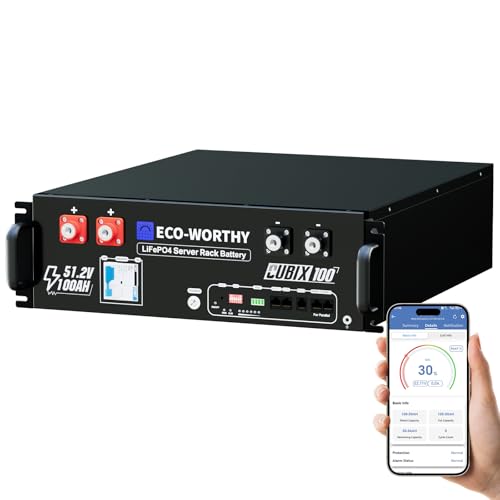
ECO-WORTHY Cubix100 48V 100Ah LiFePO4 Lithium Battery w Bluetooth 5120Wh Server Rack Battery

Jackery HomePower 3000 and 2x200W Solar Panels 3072Wh 3600W AC Output

Jackery HomePower 3600 Plus Portable Power Station 3600W AC Output 3584Wh LFP Solar Generator

12V 100Ah LiFePO4 Lithium Battery Group 31 Deep Cycle with Smart 100A BMS

48V 100Ah LiFePO4 Lithium Battery Bluetooth with Active Balancing Wall-Mounted 5.12kWh

ECO-WORTHY Powermega 48V 314Ah 2 Pack LiFePO4 Battery Energy Storage

ECO-Worthy Cubix100 48V 600Ah Server Rack Battery LiFePO4 6 Pack 30.72kWh Solar Battery Kit
More Details On Our Top Picks
Jackery’s 2042Wh capacity sits in a very practical range for outages, camping, and keeping key appliances alive for a night or two. The 2200W AC output gives you enough headroom for many household devices, while the LiFePO4 battery chemistry is the kind of detail that matters for long-term ownership.
Compared with the bigger HomePower options later in this list, this one stays more portable and less intimidating to store. The trade-off is simple, you give up the roomier scaling of a rack battery, but you gain a setup that feels easier to move around the house or load into a car.
Strong Points
- 2042Wh works well for short outage coverage and weekend power needs.
- 2200W AC output supports many common plugs and small appliances.
- LiFePO4 cells usually suit owners who want steadier long-term use.
- USB-C PD 100W helps modern devices charge without extra adapters.
Worth Noting
- Solar panels are optional, so you still need to plan the charging path.
- It won’t match the storage depth of the larger rack-style picks here.
- Portable power stations can take up floor or shelf space that you may want to reserve.
Feature Snapshot
Who It Suits Best
Households wanting a portable backup source for outages, van trips, or camping get the most from this setup.
A Better Fit Elsewhere
Jackery HomePower 3000 and 2x200W Solar Panels suits you better for a more home-focused backup bundle with solar included.
This dumfume battery leans hard into fixed storage, with 7680Wh and a 200A BMS, meaning it’s built for bigger loads than a compact power station. The IP65 rating points to sealed dust and water resistance, which matters in sheds, trailers, or storage spaces that aren’t climate-perfect.
Compared with the Jackery portable units, this is less about grab-and-go convenience and more about building a serious energy bank. The low-temperature cutoff also makes sense for homes and cabins in colder regions, though installation and system matching still deserve careful planning.
Highlights
- 7680Wh gives you a large reserve for heavier backup needs.
- 200A BMS supports higher current management in a fixed system.
- IP65 protection helps in dusty or damp storage areas.
- Low-temp cutoff suits colder climates better than many basic batteries.
- LiFePO4 chemistry fits owners who want a long-use battery bank.
Points To Note
- Its size makes it a planning project, not a casual plug-in item.
- Weight and mounting need to be considered before installation.
- It works best in a system that’s already designed around 12V storage.
Technical Sheet
Built With In Mind
RV owners, off-grid cabins, and home storage setups that need a large single-battery reserve are the strongest match.
A Better Fit Elsewhere
VEMDIA 12V 100Ah LiFePO4 Lithium Battery suits you better for a lighter swap into a smaller RV or backup system.
This rack battery moves into more organized home storage territory, and the Bluetooth link makes day-to-day monitoring feel less like guesswork. For a garage, utility room, or equipment closet, that kind of visibility can help you keep an eye on voltage, state of charge, and system behavior without walking over to the unit constantly.
Compared with the dumfume 12V pack, the Cubix100 feels more like part of a planned solar array than a solo battery block. The trade-off is that server-rack style hardware usually asks for a cleaner installation and a bit more system knowledge, so it suits experienced setups better than casual backup use.
Upsides
- 48V architecture fits many home solar storage builds.
- Bluetooth monitoring helps you check battery status more easily.
- 5120Wh offers a strong middle ground for backup storage.
- Rack form keeps the footprint tidy in dedicated spaces.
Small Caveats
- Server-rack placement works best in a prepared installation zone.
- Bluetooth and WiFi features only matter when your setup can use them.
- It’s less portable than the Jackery power stations above.
Details At A Glance
The Right Fit
Solar homeowners who want a rack-style battery with app-based monitoring will feel at home with this pick.
Another Choice May Suit
Jackery HomePower 3600 Plus Portable Power Station suits you better if you want backup power with less installation work.
This bundle stands out because the solar panels are already part of the package, which cuts down on guesswork for a home backup plan. With 3072Wh of storage, 3600W AC output, and 7200W surge capacity, it looks aimed at the kind of household that wants real support for essential appliances without moving into full rack-system complexity.
Compared with the smaller Jackery Explorer 2000 v2, this one feels closer to a home-first setup than a travel-first one. The honest read is that the bundle takes more space and commitment, but that extra structure can help a lot when you want a system that feels ready rather than improvised.
What We Like
- Solar panels in the box simplify the first steps.
- 3072Wh is a practical size for home backup planning.
- 3600W AC output covers a wider spread of appliances.
- 7200W surge capacity helps with startup demands from certain devices.
Trade Offs
- The included panels and battery take more room than a compact station.
- It feels less suited to frequent carry-around use.
- Homes with very small storage areas may find it cumbersome.
Core Details
Whose Shelf It Belongs On
Homeowners who want a solar-ready backup bundle for outages and essential-room power get the most from this setup.
Skip It When
Jackery Explorer 2000 v2 is the better fit for you if portability matters more than a larger home backup bundle.
This one is for households that already know they want a larger backup station and may want to build upward later. The 3584Wh battery and 3600W AC output make it a strong match for home essentials, and the expandable design up to 21kWh gives it a longer runway than the more fixed units earlier in the list.
Compared with the HomePower 3000 bundle, this model leaves solar panel choice in your hands, which is better for some setups and less convenient for others. The trade-off is straightforward, you get more flexibility in how you build the system, but you also take on more planning work.
Reasons To Buy
- 3584Wh gives you a generous base for home backup.
- 3600W AC output supports demanding household gear.
- Expandable storage up to 21kWh adds long-term room to grow.
- LFP chemistry suits repeated use better than short-life entry options.
Areas To Watch
- Solar panels are optional, so the system takes more planning.
- Expanded capacity depends on your overall setup and budget.
- It’s still a substantial unit, so storage space matters.
Feature Rundown
Right Fit For
Homeowners who want a large portable station with expansion room, but do not need an included solar panel kit.
Where A Sibling Pick Shines
Jackery HomePower 3000 and 2x200W Solar Panels suits you better if you want solar panels bundled from the start.
This VEMDIA battery is the kind of swap that makes sense for a smaller system, especially in an RV, boat, or compact backup setup. Group 31 sizing matters because it signals a common replacement footprint, and the 100A smart BMS helps the battery manage charging and discharge behavior more cleanly.
Compared with the 600Ah dumfume battery, this one is far easier to integrate into a modest setup. The trade-off is capacity, of course, but for travel rigs and lighter home backup duty, that smaller scale can be exactly what you want.
Positives
- Group 31 sizing makes replacement planning simpler in many rigs.
- 100Ah capacity fits lighter backup and mobility-focused use.
- Smart 100A BMS helps manage the battery more effectively.
- LiFePO4 chemistry is well suited to repeat charge cycles.
Softer Spots
- It is much smaller than the large home-storage packs in this roundup.
- You may need multiple units for a larger backup plan.
- Cold-weather cutoff is useful, but installation still needs sensible placement.
Quick Facts
Made For
RV owners, marine setups, and smaller off-grid or home backup systems that need a compact drop-in style battery.
A Better Fit Elsewhere
Jackery Explorer 2000 v2 Portable Power Station suits you better if you want a self-contained power station instead of a battery-only replacement.
The wall-mounted format gives this HumsiENK battery a cleaner home than many boxier storage units, and that matters in garages, utility rooms, or dedicated power closets. Bluetooth, LCD monitoring, and active balancing make it feel more system-aware, almost like a dashboard for a home solar setup.
Compared with the ECO-WORTHY Cubix100 rack battery, this one leans more toward a neat wall installation than a server-rack layout. The honest trade-off is that you’ll want a proper mounting plan and enough wall space, but the result can look tidier than a stack of bulkier hardware.
Bright Spots
- Wall-mounted design helps keep floor space open.
- Bluetooth monitoring gives you a clearer view of system status.
- LCD readout is handy for quick local checks.
- Active balancing supports more even cell behavior during use.
- 5.12kWh fits many mid-sized home storage plans.
Minor Gripes
- Wall mounting asks for solid installation planning.
- It won’t suit everyone who wants a portable backup option.
- Bluetooth features are most useful in an actively monitored setup.
At A Glance
Best Suited To
Home solar setups that want a wall-mounted battery with app visibility and a tidy footprint.
Where A Sibling Pick Shines
ECO-WORTHY Cubix100 48V 100Ah LiFePO4 Lithium Battery w Bluetooth suits you better if you prefer a server-rack layout instead of a wall unit.
This two-pack is aimed at serious home storage, where one battery is only part of the story and the system is expected to do real work. Active balancing, a 200A BMS, Bluetooth, WiFi, and multiple comms ports give it the kind of integration that matters in more complex solar installs.
Compared with the single-battery Cubix100, this set pushes farther into large-scale planning and system communication. The catch is that it asks more of your installation, your cabinet or rack space, and your overall solar design, so it suits experienced setups more than casual backup needs.
Best Bits
- Two-pack format supports larger storage goals.
- 314Ah rating points to substantial capacity per unit.
- Bluetooth and WiFi help with monitoring in a connected system.
- Active balancing can support steadier pack behavior.
- Multiple communication ports help with system integration.
Room For Improvement
- The scale makes this a planning-heavy purchase.
- It suits dedicated battery spaces more than casual placement.
- Setup complexity will matter to anyone building a first system.
Core Details
The Right Fit
Experienced off-grid or home backup installers who want a larger two-battery storage block will get the most from this one.
Look Elsewhere When
Jackery HomePower 3600 Plus Portable Power Station suits you better if you want a simpler self-contained setup.
This six-pack kit sits at the far end of the home storage scale, with 30.72kWh on offer for people who want a serious solar battery bank. The server-rack layout keeps the system organized, but this is clearly a bigger project than the portable Jackery picks or the single-battery Cubix100.
The hazardous-material shipping note and non-returnable status make practical planning more important here than on the smaller units. That doesn’t make it a bad option, just one that belongs in a carefully thought-out installation rather than a casual home upgrade.
Positives
- 30.72kWh is substantial storage for larger home backup plans.
- Six-battery kit gives you a ready-made system block.
- Server-rack format keeps the layout orderly.
- It fits homes that want a long-term battery bank.
Areas To Watch
- Hazardous-material shipping makes handling and setup more complex.
- Non-returnable status means you should be certain about fit and plan.
- It belongs in a dedicated installation area, not a casual storage shelf.
Feature Card
Whose Shelf It Belongs On
Homeowners building a large backup bank for solar storage and dedicated energy rooms are the clearest match.
Swap It Out When
ECO-WORTHY Cubix100 48V 100Ah LiFePO4 Lithium Battery w Bluetooth suits you better if you want a smaller, easier first step.
How To Choose The Right Home Solar Battery
Start With Your Real Load
Your first question is not brand, it’s what you actually want to keep running. A portable station like the Jackery Explorer 2000 v2 makes sense for lights, phones, a router, and a few small appliances, while a 48V rack battery belongs in a more fixed solar layout.
Capacity is usually listed in watt-hours, or Wh, which tells you how much energy the battery can store. Higher Wh numbers matter for longer runtimes, but they also usually mean a larger footprint and more weight.
Match Output To The Appliances You Care About
AC output, measured in watts, tells you how much power the unit can supply at once. A 3600W system like the Jackery HomePower 3000 or 3600 Plus can handle more demanding household gear than a smaller station, but the honest trade-off is that you pay in size and commitment.
Surge output matters too, because some appliances draw extra power right as they start. That extra headroom can be the difference between a smooth startup and a system that feels undersized.
Think About Chemistry And Placement
LiFePO4, short for lithium iron phosphate, is a battery chemistry known for stable everyday use and long cycle life. It shows up across this roundup because it suits people who want a home storage setup that gets used often rather than only once in a while.
Placement still matters as much as chemistry. A wall-mounted pack like the HumsiENK or a server-rack set like the ECO-WORTHY options works best in a dedicated location, while a portable power station belongs in spaces where you may need to move it.
Plan For Growth Before You Settle
Expandable systems can save you from replacing the whole setup later. The Jackery HomePower 3600 Plus, for example, leaves room to grow up to 21kWh, which makes sense for households expecting higher usage over time.
That upgrade path is useful, but only when your solar array, wiring, and storage space can support it. A smaller battery can be the smarter first step for many homes, especially when you want a clear, manageable starting point.
Things Worth Knowing First
Hidden Buying Traps
A common mistake is matching the battery to the panel count and ignoring the inverter, wiring, and mounting space. Another is assuming every 12V battery can drop into any 12V system without checking size, current limits, and temperature behavior.
Storage is another easy miss. Large home batteries can be awkward in tight garages or utility rooms, so measuring the install area before you commit saves a lot of frustration.
The Upgrade Payoff
Higher-tier systems usually cost more because they add storage, smarter monitoring, and more flexible expansion paths. Bluetooth, WiFi, active balancing, and larger BMS ratings all add to the bill, but they also make the battery easier to manage in a serious setup.
That extra spend makes the most sense for homes that plan to lean on solar storage often. For lighter use, a simpler portable station can be enough and easier to live with.
Frequently Asked Questions
What Size Home Solar Battery Works For A Small House?
A compact power station around the 2000Wh range can cover short outages and small loads. A larger fixed battery makes more sense once you want to support several circuits or a fuller backup plan.
Why Do So Many Home Solar Battery Picks Use LiFePO4?
LiFePO4 is valued for repeat use and long service life in home storage setups. It’s a strong fit for people who want a battery they can cycle often.
Is A Portable Power Station Enough For Home Backup?
For lights, communication gear, and a few small appliances, it can be enough. For broader household coverage, a larger fixed battery or bundle usually fits better.
What Does BMS Mean On A Home Solar Battery?
BMS means battery management system. It helps oversee charge, discharge, and cell balancing inside the battery pack.
Do Solar Panels Need To Come With The Battery?
No, but bundled panels make the first setup easier. Separate panels give you more freedom, while a bundle reduces planning steps.
Closing Thoughts
Your best home solar battery comes down to three things: how much power you need, how much space you have, and how hands-on you want the setup to be. Portable stations suit easier backup and travel, while rack and wall-mounted batteries fit a more permanent solar plan. The right choice should feel practical on day one and still make sense next year.
