

Home solar gear does a lot more than sit on a roof. The right setup can help with a backyard cabin, a travel trailer, a shed, or a whole-home backup plan, but the wrong one can leave you with awkward wiring, too little output, or panels that fit the space poorly. This roundup keeps the focus on use case, system size, and the kind of ownership details that matter once the boxes arrive. You’ll see portable foldables, rigid panels, and full kits, so you can match the pick to your space instead of forcing your space to match the pick.
Quick Look At The Shortlist

JJN 550 Watt Bifacial Solar Panels 2PCS

Renogy 200W Portable Solar Panel

ECO-WORTHY 400W Solar Panels N-Type 4pcs
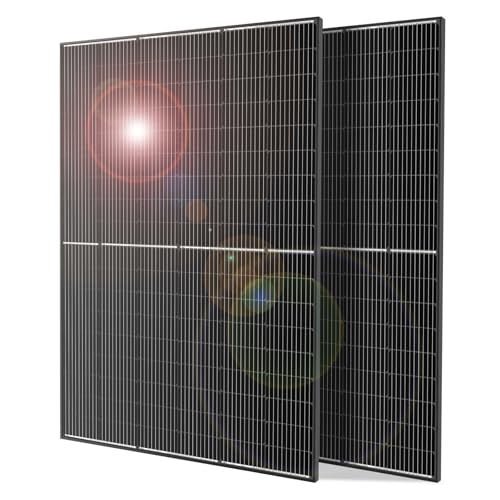
DOKIO 800W Solar Panel Set

JJN Bifacial 425 Watt Solar Panel


ECO-WORTHY 10KW Output 9.36KWH Off Grid Solar System

Renogy Solar Panels 200 Watt N-Type

Jackery HomePower 3600 Plus Portable Power Station
More Details On Our Top Picks
Big roof plans need panels that scale cleanly, and this JJN pair is built around that kind of setup. The bifacial design means the back side is also meant to capture light, so it suits reflective roofs, open ground mounts, and farm edges better than a basic single-face panel.
The 12/24/48 volt compatibility gives you room to match different system designs, which helps on larger off-grid projects or mixed home backup layouts. The trade-off is obvious enough, these are not casual portable panels, so mounting space and system planning matter more than with the foldable Renogy pick.
Strong Points
- Bifacial construction can make better use of reflected light in open installations.
- Wide voltage compatibility gives you more room to match your system layout.
- Monocrystalline cells keep the panel profile focused on efficient power collection.
- Two-panel set suits larger arrays without forcing a piecemeal build.
- Useful for rooftops, farms, and fixed off-grid spaces where space planning matters.
Things To Consider
- Installation takes more planning than a foldable panel with a kickstand.
- Bifacial performance depends a lot on mounting height and surface reflectivity.
- Shipping and handling can matter more with larger rigid panels.
Feature Snapshot
Built With In Mind
You benefit most here when your project already has a clear mounting plan and you want panel output that can grow with it. For most rooftops, that kind of flexibility is more useful than a lightweight foldable design.
Where A Sibling Pick Shines
Renogy 200W Portable Solar Panel suits van trips and temporary setups better, since it folds away and travels more easily than this rigid JJN pair.
This Renogy foldable makes more sense for travel than the fixed JJN panel above. The kickstand and lightweight build are handy on a campsite table, beside an RV, or near a portable power station during a blackout.
The IP65 rating means it’s built with dust and water resistance in mind, which is useful for outdoor storage and unpredictable weather. You also get USB-A and USB-C outputs, so the panel can serve more than one charging setup, though a portable style like this usually trades raw roof-friendly scale for convenience.
What We Like
- Foldable format packs down neatly for trips and temporary use.
- Kickstand helps you set the panel at a practical angle without much fuss.
- USB-A and USB-C outputs broaden charging options for mobile gear.
- IP65 build suits outdoor use where dust and splashes are part of the day.
Room For Improvement
- Portable format is less suited to permanent roof mounting.
- Foldable gear usually needs a bit more care during storage and transport.
- Output space is smaller than what you get from a full rigid array.
Details At A Glance
Who It Suits Best
You’ll like this most if you want a solar panel that can move with your gear and still feel organized at setup time. It fits campers, RV users, and home backup setups that lean portable rather than permanent.
Another Choice May Suit
DOKIO 800W Solar Panel Set is a better fit for a fixed yard or shed installation, since it gives you two rigid panels and longer leads for a steadier setup.
Compared with the portable Renogy panel, this ECO-WORTHY set leans back toward fixed placement. Four 100-watt modules give you a more modular way to size a small home, shed, or boat system without jumping straight to a huge array.
The N-type cell structure is paired with 16BB, which means 16 busbars, the thin metal strips that move current across the cell. That matters because it can support steadier collection across the panel surface, while the IP68 sealing is the part you’ll care about most in damp or dusty installs.
Highlights
- Four-panel layout makes expansion and placement a little easier to plan.
- N-type construction suits users who want a more current-focused module design.
- IP68 sealing is useful in harsher outdoor spots and marine-adjacent environments.
- Works with 12V and 24V battery setups for flexible small systems.
Points To Note
- Separate panels mean more mounting decisions than a single larger slab.
- Cleaning and inspection still matter, especially in dusty farm or shed use.
- Fixed-panel installs ask for more wiring planning than a foldable kit.
Core Details
Whose Shelf It Belongs On
This suits you best when a compact but structured solar setup matters more than portability. It’s a sensible fit for cabins, boats, and small off-grid spaces that need tidy panel grouping.
Swap It Out When
Renogy Solar Panels 200 Watt N-Type is the easier choice for travel-heavy use, because the foldable format saves space and sets up faster.
This DOKIO set shifts the conversation toward larger fixed installs. Two 400-watt panels give you a more serious footprint than the 200-watt portable options, and the 31-volt output points it toward 24V off-grid systems.
The 9.84-foot cables, aluminum frame, and pre-drilled holes make the install story more straightforward for a yard, shed, or dedicated off-grid structure. The honest read is that you get a more permanent-minded package here, so it asks for a real mounting plan instead of casual placement.
Upsides
- Two 400-watt panels give you substantial output for a fixed setup.
- Long leads help with placement where the controller or equipment sits farther away.
- Pre-drilled holes simplify mounting on a prepared surface.
- Aluminum framing suits outdoor structures that need a sturdier feel.
Softer Spots
- Large rigid panels need enough room for handling and mounting.
- Best suited to planned installs, not quick carry-and-go use.
- Cleaning rooftop dust or shed buildup is part of regular ownership.
Feature Rundown
The Right Fit
You’ll get the most from this set in a yard, shed, or small outbuilding where a stable mounting position is already part of the plan. It suits someone who wants panel output without the portability trade-off.
Look Elsewhere When
Renogy 200W Portable Solar Panel is the better choice for travel or short-term placement, since it folds up and carries more easily.
Where the larger JJN pair above aims at scale, this single 425-watt panel feels a little more adaptable for mixed projects. The bifacial layout is still here, so you can take advantage of reflected light in the right mounting environment.
UL 61730 appears in the listing, which is a solar module safety and design standard, and the 16BB cell structure points to a more detailed current path across the panel. That matters most for home roofs, farm structures, and off-grid systems that want a serious panel without jumping to a multi-panel array.
Positives
- Single-panel format keeps planning simpler than a multi-piece set.
- Bifacial construction gives reflective surfaces a chance to add value.
- N-type monocrystalline build suits users looking for a modern module style.
- Works across 12V, 24V, and 48V systems, which broadens layout options.
Minor Gripes
- Performance upside still depends on the mounting situation.
- Rigid panel handling calls for enough space and a careful install.
- Less modular than a four-panel small-system kit.
At A Glance
Perfect Match For
You fit this panel best when you want one serious rigid module instead of a cluster of smaller pieces. It suits rooftops, farm buildings, and off-grid layouts where cleaner panel counts help.
Reach For A Different Pick When
ECO-WORTHY 400W Solar Panels N-Type 4pcs is easier to stage for small systems, especially when you want to spread placement across several modules.
This DOKIO two-pack sits close to the 800-watt set above, but the framing here feels cleaner for someone who wants the same basic power class in a simpler naming path. The pair of 400-watt monocrystalline panels makes sense in cabins, patios, and other fixed spaces where two matched modules are easier to place than a more fragmented kit.
The 9.84-foot lead on each panel helps with distance between the panel location and the rest of the system. You still want a thoughtful installation, though, because rigid panels are best treated as part of a planned layout rather than something you shuffle around after the fact.
Reasons To Buy
- Matched pair keeps the system feeling straightforward.
- Long leads help reduce layout stress during installation.
- Useful in cabins, patios, and other semi-permanent spaces.
- Monocrystalline panel type suits users who want a familiar rigid format.
Worth Noting
- Still a fixed-panel setup, so storage and handling need space.
- Pair format works best when your mounting area is already clear.
Key Specs
Made For
This is a solid match for someone who wants two rigid panels and a direct route to a small fixed system. It works well in outdoor structures where the installation zone is already chosen.
Skip It When
Renogy 200W Portable Solar Panel makes more sense for travel use, because its foldable frame is easier to move and store.
By this point, the roundup has moved from individual panels to a full off-grid home kit, and that changes the game completely. ECO-WORTHY bundles 12 solar panels, a 10KW inverter, and two 48V lithium batteries, so you’re looking at a system built for serious backup planning rather than a few isolated modules.
The 9.36KWH figure points to stored energy capacity, which helps explain why this kit belongs in larger homes, cabins, or properties that need more than a simple charging boost. The trade-off is size and complexity, because a full kit takes more space, more planning, and a more deliberate install path than any standalone panel here.
Best Bits
- All-in-one format reduces the guesswork of matching major components.
- Includes panels, inverter, and batteries in a single home backup concept.
- 120V and 240V inverter support broadens the electrical use case.
- Large stored capacity helps with longer backup planning.
- Well suited to properties that need a complete off-grid framework.
Areas To Watch
- Installation complexity is higher than with a single panel or small pair.
- Physical footprint will matter in garages, utility rooms, and sheds.
- More components mean more planning around placement and wiring.
Technical Sheet
Who Should Grab It
You suit this kit best when you want a whole-home style off-grid package instead of piecing together parts one by one. It fits properties where backup planning is a real project, not an afterthought.
Where Another Pick Suits Better
JJN 550 Watt Bifacial Solar Panels 2PCS is the lighter path for a smaller roof or farm array, since it starts with just the panel side of the system.
Renogy’s 200-watt rigid panel sits in a very usable middle ground. It’s less portable than the foldable Renogy option earlier in the list, but it’s better suited to a roof, van top, cabin wall, or a small farm system that needs a fixed module.
The 16BB layout points to 16 busbars across the cell surface, and the listing’s 25% high-efficiency wording tells you the panel is aimed at stronger output density rather than bulk. That makes it attractive for tighter installations, though it still asks for proper mounting space and a clear plan for wiring.
Bright Spots
- 200-watt size fits many small to mid-scale home power layouts.
- N-type and 16BB design point toward a more advanced panel structure.
- Works with 12V and 24V systems, which keeps it versatile.
- Good match for roofs, cabins, vans, and small farm buildings.
Small Caveats
- Rigid mounting is part of the package, so it’s less flexible than a foldable panel.
- You’ll want enough roof or frame space for a neat install.
Feature Card
Best Suited To
You’ll get the most from this panel when you want a steady, fixed module for everyday solar use. It fits households and mobile rigs that don’t need foldable gear.
Not Your Match When
Renogy 200W Portable Solar Panel is the easier pick for trips, since it folds and carries more naturally than this rigid panel.
This Jackery setup plays a different role from every panel-only item above. You get a portable power station with two 200-watt solar panels, so the system can store power, deliver AC output, and still remain mobile enough for home backup, RV use, or emergency planning.
The 3584Wh LFP battery, expandable capacity up to 21kWh, and 3600W AC output are the big anchors here. LFP means lithium iron phosphate, a battery chemistry often chosen for long-cycle home backup systems, though the whole package is still heavier and more complex than a single-panel solution.
Plus Points
- Combines storage, inverter output, and solar input in one portable system.
- 3600W AC output supports more demanding backup scenarios.
- Expandable capacity gives the system room to grow.
- Two included 200-watt panels help you start with a matched solar setup.
- Useful for emergency home support and RV use alike.
Honest Caveats
- More capable systems usually bring more weight and more setup planning.
- Storage units need thoughtful placement in a garage, utility room, or RV space.
- Solar charging still depends on weather and panel placement.
Core Details
Who Will Love This
You fit this best when you want backup power that can move with you but still feel serious enough for home use. It suits emergency planning, RV travel, and households that want stored power plus solar input in one package.
Another Choice May Suit
JJN 550 Watt Bifacial Solar Panels 2PCS makes more sense for a fixed roof or farm array, since it focuses on panel output rather than battery-backed storage.
How To Choose The Right Home Solar Panels
Match The Panel Style To The Job
Rigid panels suit roofs, sheds, and permanent off-grid layouts because they mount cleanly and stay put. Foldable panels, like the Renogy portable model, make more sense for travel, temporary camps, and power stations you move between spaces.
Bifacial panels collect light from both sides, which can help on reflective surfaces or raised mounts. The catch is that they need more thoughtful placement, so they fit planned installs better than casual setups.
Read Output In Context
Wattage tells you how much power a panel can produce under ideal conditions, but that number only helps when it matches your actual setup. A 200-watt panel works well for small systems, while 400-watt and 550-watt modules suit larger rooftop or off-grid arrays.
A full kit changes the story again. The ECO-WORTHY 10KW system includes panels, inverter, and batteries, so you’re choosing a power architecture rather than a single module.
Check Voltage, Wiring, And Space
Voltage compatibility matters because it helps the panel fit your inverter, charge controller, or battery bank. The JJN 550-watt panel handles 12V, 24V, and 48V setups, which gives you more room to plan the rest of the system.
Space matters just as much as numbers. Two 400-watt rigid panels need secure mounting and clear access, while a portable 200-watt foldable panel needs storage room and easy handling.
Think About Ownership, Not Just Purchase Day
Solar gear lives outside, so weather exposure, cleaning, and installation time all matter. IP65 and IP68 ratings point to stronger dust and water resistance, but they don’t remove the need for sensible placement and occasional upkeep.
Long cable runs, pre-drilled holes, and sturdy frames can save headaches later. That’s the part many people miss, because the smoothest setup usually comes from good fit, not just bigger output.
A Quick Reality Check
Common Shopping Slip Ups
A common mistake is matching panel size to a wish list instead of the space you actually have. Rigid panels need mounting room, and a large kit can overwhelm a small utility area fast.
Another slip-up is ignoring voltage and system pairing. A panel can look appealing on paper, but the setup still has to work with your battery bank, inverter, or charge controller.
What The Higher Tier Buys
More money usually brings more parts, more output, or a more advanced cell design. That’s why a full off-grid kit or a bifacial high-output panel sits above a basic portable unit.
The upgrade makes sense when you want fewer compromises. For whole-home backup, larger arrays, or multi-day off-grid living, the stronger package can save you from patching together mismatched pieces later.
Frequently Asked Questions
What size home solar panel works for a small cabin?
A 200-watt to 400-watt panel range is a sensible starting point for a small cabin. You can scale from there once you know your daily load.
Are bifacial panels worth considering for home use?
They can be useful on reflective roofs, open mounts, and raised ground installs. The upside depends on how much light reaches the rear side of the panel.
Do portable solar panels work for home backup?
Yes, especially for small electronics and power stations. They make more sense as a flexible backup layer than as a whole-house solution.
What does 12V, 24V, or 48V compatibility mean?
Those voltages show the system types the panel can work with. Higher compatibility gives you more room to match the rest of your setup.
Is a full kit better than buying panels alone?
A full kit helps when you want storage, inverter output, and panels designed to work together. Panels alone are better when you already have the rest of the system in place.
Final Thoughts
The right home solar setup depends on how permanent your space is and how much power you need to cover. Portable panels suit travel and temporary backup, while rigid panels and full kits fit roofs, sheds, cabins, and serious off-grid plans. JJN, ECO-WORTHY, DOKIO, Renogy, and Jackery each solve a different problem, and that’s the point. Choose the one that matches your layout, your storage room, and your day-to-day use, then build from there at a pace that feels sensible.
