

Home Energy Solar Panels make sense when you want backup power, campsite charging, or a steadier off-grid setup without turning your space into a project site. You’ll see a mix here, from foldable portable panels for travel to rigid panels and full kits for home or RV systems. The right choice depends on where you mount it, how much power you need, and how often you plan to move it. A compact panel can feel like a pocketknife, while a larger array suits a fixed setup.
Quick Look At The Shortlist

Renogy 200W Portable Solar Panel
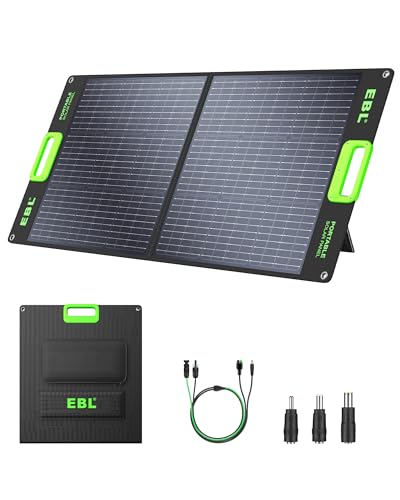
EBL Solar Panel 100W Portable Solar Panel

ECO-WORTHY 400W Solar Panels N-Type 4pcs 100 Watt 18V Monocrystalline

Renogy Solar Panels 200 Watt N-Type

N-Type 16BB 200W Bifacial Solar Panel

ECO-Worthy 1.6KWH Complete Solar Panel Kit 400W 12V for RV Off Grid

ZOUPW 480W Bifacial Portable Solar Panel N-Type 16BB for Power Station
More Details On Our Top Picks
For camping vans and emergency backup, this 200W foldable panel hits a useful middle ground. The kickstand helps you angle it without fuss, and the USB-A plus USB-C outputs add convenience for smaller gear alongside a power station.
IP65 means the enclosure is built to resist dust and light water exposure, which matters on damp mornings or at a muddy campsite. The trade-off is that a portable panel still asks you to set it out and pack it away, so fixed roof users may want a rigid option instead.
Strong Points
- Foldable design keeps storage simple in an RV or trunk.
- Built-in kickstand makes daytime positioning less awkward.
- USB-A and USB-C outputs add flexibility for small devices.
- 200W output suits power-station top-offs during trips or outages.
Things To Consider
- Portable format means you need setup and takedown time.
- Best for temporary placement, not a permanent roof mount.
- Lightweight gear can still need careful handling during transport.
Core Details
Who It Suits Best
You get the most from this pick in an RV, on a campsite, or during home backup use that needs mobility.
Where A Sibling Pick Shines
EBL Solar Panel 100W Portable Solar Panel suits smaller power-station owners who want a lighter, lower-output setup than the Renogy 200W Portable Solar Panel.
This 100W panel is the gentler fit in the lineup, especially for smaller power stations or short outings. The adjustable kickstand makes aiming it more practical, and the parallel cable gives you room to expand later without starting from scratch.
IP65 protection keeps the design suited to outdoor use, though the smaller output means you’re working with a slower charging pace than the Renogy 200W Portable Solar Panel. That slower pace is not a flaw for light loads, and it makes sense for hikers, weekend campers, or anyone packing to stay nimble.
What We Like
- 100W size stays manageable for travel and quick deployment.
- Kickstand helps with basic sun alignment at camp.
- Parallel cable supports a more flexible setup path.
- Well suited to modest power-station charging needs.
Room For Improvement
- Lower output suits smaller loads better than whole-home backup.
- Parallel setup is useful, yet it adds another cable to manage.
Feature Snapshot
Made For
You’ll like this most for compact camping kits, hiking trips, and small station charging.
A Better Fit Elsewhere
ZOUPW 480W Bifacial Portable Solar Panel fits power-station owners who want much higher output than the EBL Solar Panel 100W Portable Solar Panel.
Once you move from portable panels to a fixed array, the ECO-WORTHY four-panel set starts making more sense. It is built around 100W monocrystalline modules, so the package works better for a shed, cabin, boat, or RV setup that stays in place.
IP68 gives you a tougher weather-resistance spec than the IP65 panels above, and the 16BB cell layout points to denser internal wiring for better collection across the surface. The trade-off is installation effort, since a four-panel array asks for more planning, more mounting space, and more attention to wiring than a foldable kit.
Highlights
- Four 100W panels give you a larger fixed array to work with.
- IP68 rating suits tougher outdoor exposure.
- Monocrystalline build is a smart fit for steady off-grid use.
- Works across several settings, from farm outbuildings to boats.
- Pairs naturally with 12V and 24V battery systems.
Points To Note
- Installation takes more space than a portable panel.
- Four-panel format adds mounting and cable planning.
- Less convenient for people who want grab-and-go use.
Technical Sheet
Built With In Mind
You get the best match here for semi-permanent off-grid spaces that need a dependable panel array.
Another Choice May Suit
Renogy Solar Panels 200 Watt N-Type fits travelers and van owners better, since it keeps the install footprint lighter than the ECO-WORTHY 400W Solar Panels N-Type 4pcs 100 Watt 18V Monocrystalline.
Compared with the foldable Renogy 200W Portable Solar Panel, this one is the more fixed-install answer for roof, cabin, or marine use. The N-Type cell design and 16BB layout point toward a panel tuned for steady output in a permanent system, especially where space matters.
It’s rated for 12V and 24V systems, which gives you flexibility across common RV and off-grid builds. The honest read is that it favors people who know where the panel will live, since a rigid module is less convenient to move but easier to commit to a clean, stable install.
Bright Spots
- Rigid format suits roof and wall mounting.
- Works with both 12V and 24V systems.
- 16BB cell layout supports efficient panel design.
- Good fit for cabins, marine spaces, and RV roofs.
Softer Spots
- Less convenient to move than a foldable panel.
- Fixed placement asks for more install commitment.
- Best value shows up in stationary setups.
Details At A Glance
The Right Fit
You’ll appreciate this most in an RV roof, cabin, or home backup install that stays put.
Swap It Out When
Renogy 200W Portable Solar Panel is the better match for travelers who want to carry their panel rather than mount it.
This Callsun panel is for people who want a little more from a fixed 200W module. Bifacial means it can capture light from both sides, so rooftop installs with reflective surfaces may get more useful output than a plain single-face panel in the same spot.
The dual-module parallel anti-shade design is the other important detail, because partial shade can be the nuisance that ruins a decent layout. That said, a bifacial panel pays off most clearly in the right environment, so a shaded yard or cramped mount may not show the same advantage.
Reasons To Buy
- Bifacial design can make use of reflected light.
- Anti-shade layout helps in less-than-ideal roof conditions.
- 16BB and N-Type architecture suit a more advanced panel build.
- Works with 12V battery systems for common off-grid use.
Areas To Watch
- Best results depend on the mounting environment.
- More advanced design may be more than some simple installs need.
- Reflective surfaces matter more here than with standard panels.
Feature Rundown
Whose Shelf It Belongs On
You’ll get the most from this panel in a rooftop or fixed location that has some reflected light around it.
Reach For A Different Pick When
Renogy Solar Panels 200 Watt N-Type suits a straightforward fixed install better if you do not need the extra bifacial layer from the Callsun N-Type 16BB 200W Bifacial Solar Panel.
Full-system kits save a lot of guesswork, and this ECO-Worthy bundle is the clearest example in the lineup. You’re getting four 100W panels, a 40A MPPT controller, two 12V 100Ah lithium batteries, a 2000W inverter, and a Bluetooth module, so the package covers most of a basic off-grid RV setup.
MPPT stands for maximum power point tracking, a controller style that adjusts charging to pull useful energy from the panel array more efficiently than a simpler controller. The trade-off is size and complexity, because a complete kit takes more room, more planning, and more budget than a standalone panel, but that effort can save time for first-time installers.
Best Bits
- Bundle includes panels, controller, batteries, and inverter.
- Bluetooth module adds easier system monitoring.
- MPPT controller helps the array work more intelligently.
- Good starting point for an RV or small off-grid build.
- Reduces the hassle of piecing together separate parts.
Honest Caveats
- Kit takes more installation planning than a single panel.
- Large bundle needs room for batteries and inverter placement.
- Better suited to committed projects than casual portable use.
Core Details
Perfect Match For
You’ll like this most if you want a single purchase for an RV-based off-grid setup.
A Better Fit Elsewhere
ECO-WORTHY 400W Solar Panels N-Type 4pcs 100 Watt 18V Monocrystalline suits people who already have the rest of the system and only need the panel array.
The ZOUPW panel sits at the portable end of the high-output range, and that makes it a strong match for larger power stations. Its bifacial design gives the rear side a chance to contribute, while the foldable format still keeps it more travel-friendly than a rigid roof panel.
Compatibility with EcoFlow Delta, Bluetti, and Anker C1000 units narrows the fit in a useful way, since you know this panel was built with popular station ecosystems in mind. The trade-off is the same one you see with any bigger portable array, because size helps output but also asks for more space during storage and setup.
Plus Points
- High 480W output suits larger portable power stations.
- Bifacial design can take advantage of reflected light.
- Foldable format still travels more easily than fixed panels.
- Works with several well-known station families.
- IP68 rating supports tougher outdoor conditions.
Small Caveats
- Bigger portable format needs more storage space.
- Strong output makes placement and handling more important.
- Best fit depends on having a compatible power station.
Feature Card
Who Should Grab It
You’ll get the best match here for a larger portable power station in home backup or RV use.
Look Elsewhere When
EBL Solar Panel 100W Portable Solar Panel makes more sense for compact travel kits that do not need this much panel surface.
How To Choose The Right Home Energy Solar Panels
Match Output To The Way You Use Power
Output is the first filter. A 100W portable panel suits smaller stations and light weekend use, while 200W panels make more sense for daily charging, RV backup, or a steadier off-grid routine. A 400W array or a 480W portable setup moves you closer to meaningful system support, especially when you need to recharge larger batteries.
You also want to think in terms of steady demand, not just peak use. A phone and lantern setup is very different from a fridge, fan, and laptop routine, and the panel needs to fit the heaviest part of that load pattern.
Choose Portability Or Permanence Early
Foldable panels work well for travel, emergency storage, and campsite use because you can move them without tools. Rigid modules suit roofs, cabins, and sheds better, since they are meant to stay in place and be wired into a fixed system.
The choice changes maintenance too. Portable gear needs packing, unfolding, and cable handling, while fixed panels ask for mounting space and a cleaner install plan.
Look Closely At Weather And Build Details
IP ratings matter because solar gear lives outdoors. IP65 covers dust and light water exposure, while IP68 points to a tougher seal level that suits harsher conditions or longer-term exposure.
Cell design matters as well. N-Type panels and 16BB layouts often signal a more advanced module design, while bifacial panels can use reflected light from the rear side, which helps most in open or reflective settings.
Make The System Fit Your Power Source
Some panels plug into a power station, and others belong in a broader battery setup. USB-A and USB-C outputs add convenience for smaller devices, while MPPT controllers, batteries, and inverters matter more in a full off-grid build.
That’s where compatibility saves headaches. A panel that suits a 12V battery system or a specific power-station family is easier to live with than a strong panel that doesn’t line up with your existing gear.
Things Worth Knowing First
Common Shopping Slip Ups
Many people focus on wattage and ignore the mounting style. A strong panel still disappoints when the frame, cable routing, or storage size doesn’t fit the space you actually have.
Another common miss is buying portable gear for a fixed roof role, or the other way around. The shape of the system matters as much as the output number.
What The Higher Tier Buys
Higher-tier panels often use more advanced cell layouts, stronger weather sealing, or bifacial construction. Those details can improve durability and make the panel more useful in less-than-ideal lighting.
You also pay for system completeness in kit bundles. Batteries, controllers, inverters, and monitoring parts add up because they save you from sourcing every component separately.
Frequently Asked Questions
What size panel works best for a small power station?
A 100W portable panel is a sensible starting point for compact stations and light charging routines. The EBL Solar Panel 100W Portable Solar Panel fits that role well.
Are bifacial panels worth considering for home use?
Bifacial panels make the most sense when the mounting area reflects light or leaves room behind the panel. The Callsun and ZOUPW options show where that design can matter.
Do portable panels make sense for RV travel?
Yes, portable panels are useful when you want to move gear between campsites, storage, and the vehicle. The Renogy 200W Portable Solar Panel is a practical example.
What helps a panel suit a fixed off-grid setup?
Rigid construction, weather resistance, and system compatibility matter most in that case. ECO-WORTHY 400W Solar Panels N-Type 4pcs 100 Watt 18V Monocrystalline fits that kind of use.
Is a full kit easier for a first install?
A kit can simplify planning because the main parts arrive together. ECO-Worthy 1.6KWH Complete Solar Panel Kit 400W 12V for RV Off Grid is built around that idea.
Final Thoughts
The right Home Energy Solar Panels depend on how close you want to stay to the gear. Portable picks make sense for RV travel, campsite charging, and backup storage, while rigid panels and full kits suit roofs, cabins, and more committed off-grid plans. Start with your space, your battery setup, and how much movement you expect from the system. That keeps the choice practical, which is usually the right way to spend here.
