

Picking a lithium battery for an RV solar setup is mostly about matching capacity, fit, and charging behavior to your own travel style. Long trips, off-grid camps, and home backup all ask for different things, and the right battery keeps the system feeling calm instead of constantly strained. This roundup focuses on size, BMS features, temperature protection, and practical installation fit, so your setup works with less guesswork.
Quick Look At The Shortlist

dumfume 12V 600Ah LiFePO4 Battery, 200A BMS

dumfume 24V 100Ah LiFePO4 Battery, 100A BMS

CHINS 12V 100Ah LiFePO4 Battery, 100A BMS

Litime 12V 200Ah Mini LiFePO4 Bluetooth Battery

LOSSIGY 48V Lithium Golf Cart Battery Conversion Kit

dumfume 12V 600Ah LiFePO4 Battery, IP65

ECO-WORTHY 12V 314Ah LiFePO4 Bluetooth Battery
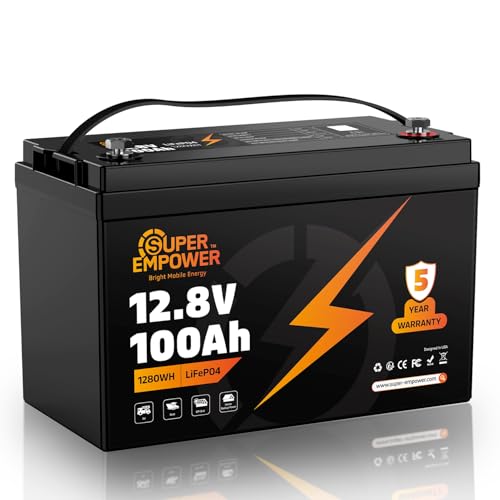
SUPER EMPOWER 12V 100Ah LiFePO4 Battery, Group 31

Dyness 12V 100Ah LiFePO4 Battery, 2 Pack
More Details On Our Top Picks
That 600Ah capacity puts this one in the heavy-storage lane, so it suits RVs that stay parked with a serious solar array or cabins that need long reserve time. A built-in 200A BMS, the battery-management system that protects charge and discharge flow, gives you a clearer path for high-demand gear than smaller 100Ah models like the CHINS unit below.
The trade-off is obvious: size and weight matter here, so cabinet space and mounting access need real planning. For large boondocking setups, that’s the point, but smaller trailers will usually find the Litime mini 200Ah easier to place.
Strong Points
- Huge 7200Wh capacity supports longer shore-power-free stretches.
- 200A BMS suits heavier inverter loads and broader house use.
- LiFePO4 chemistry usually holds up well in daily cycling roles.
- Good fit for home backup or a fixed storage bank.
Things To Consider
- Physical size can make placement harder in compact bays.
- Installation planning matters more than with smaller Group 31 options.
- Large banks reward organized cable routing and tidy maintenance.
Feature Rundown
Who Should Grab It
You get the most from this pick in a large RV, a fixed solar shed, or a home backup bank where space is already set aside for battery storage.
A Better Fit Elsewhere
Litime 12V 200Ah Mini Bluetooth Battery fits better for campers who need a tall capacity number but still have tight Group 31 space.
24V systems usually make sense for more efficient inverter setups, and this battery speaks directly to that crowd. The built-in low-temperature protection matters for cold climates, where charging habits can get awkward, while the 100A BMS keeps the current path clear for moderate power use.
Compared with the 12V dumfume 600Ah model, this one trades raw storage for a more system-specific voltage. That makes it a smarter fit for a 24V RV electrical plan, marine use, or an off-grid build that already runs on 25.6V architecture.
What We Like
- 24V output fits systems built around higher-voltage wiring.
- Low-temperature protection adds useful cold-weather peace of mind.
- 100A BMS supports practical everyday load management.
- The form suits RV and marine builds that already use 24V gear.
Room For Improvement
- It only makes sense in a 24V setup, so compatibility matters.
- Storage capacity is smaller than the larger 12V units here.
- System planning still matters for wiring, charging, and inverter match.
Details At A Glance
Who It Suits Best
You should look at this one first for a 24V RV, boat, or solar setup where voltage alignment matters more than oversized capacity.
Where A Sibling Pick Shines
SUPER EMPOWER 12V 100Ah Group 31 fits better for simpler 12V replacement jobs and smaller electrical refreshes.
This is the familiar 12V, 100Ah shape many RV owners already understand, so the swap logic is straightforward. The low-temperature protection is useful for shoulder-season camping, and the 100A BMS keeps the battery in a sensible middle ground for trolling motors, marine electronics, and light solar loads.
It feels less ambitious than the larger dumfume and ECO-WORTHY units, and that’s part of the appeal. You get a simpler entry point without moving into oversized capacity or extra app features you may not need.
Bright Spots
- Easy-to-grasp 12V 100Ah format for common upgrades.
- Low-temp protection helps in colder camp or storage conditions.
- Works across RV, boat, and solar use cases.
- Good starting point for modest power needs.
Minor Gripes
- Capacity is modest beside the 200Ah and 600Ah options.
- No Bluetooth or app-style status display is listed.
- Longer boondocking stays may call for a larger bank.
Core Details
Built With In Mind
You get the most out of this battery for straightforward RV swaps, trolling motors, or a first lithium step-up from lead-acid.
Swap It Out When
Dyness 12V 100Ah 2 Pack suits you better for parallel growth, since the pair gives more layout flexibility from the start.
Space is the story here, and Litime handles it well by fitting a 200Ah class battery into a Group 31-sized footprint. That matters in RV bays, marine compartments, and backup closets where a standard full-size pack would feel like trying to fit a suitcase into a daypack.
The Bluetooth support gives you visibility that the CHINS battery does not, so checking state of charge feels more immediate. You also get low-temperature protection and an IP65-rated enclosure, which helps in dusty storage areas or wetter travel environments, though the app side will only matter to you if you actually want to monitor the battery.
Upsides
- Group 31 fit eases replacement in tighter trays.
- Bluetooth adds easy status checking from your phone.
- Low-temp protection is useful in cool climates.
- IP65 enclosure supports tougher travel and storage conditions.
- Compact shape can simplify installation and reduce strain.
Softer Spots
- App features matter more for hands-on monitoring users.
- Compact size helps installation, but cable planning still counts.
- The higher-capacity format may be more than small weekend rigs need.
Feature Card
Whose Shelf It Belongs On
You should look at this pick for an RV or camper where bay space is tight but runtime still matters.
Look Elsewhere When
dumfume 12V 600Ah LiFePO4 Battery fits better for a true high-storage bank that can sit in a fixed large compartment.
This one sits apart from the rest because it’s built around 48V conversion work, not a standard 12V RV battery swap. That makes it useful for golf carts and special power systems, though it’s the sort of pick that only fits a planned electrical layout.
The built-in Bluetooth BMS adds visibility, and the stated peak current makes it sound like a serious short-burst option for demanding starts. The trade-off is simple: it’s not the casual choice for a typical camper, and the match has to be right from the outset.
Reasons To Buy
- Built for 48V conversion projects rather than generic use.
- Bluetooth support gives you easier system visibility.
- Peak current headroom helps with demanding starts.
- Useful for golf carts and special RV power plans.
Points To Note
- Only makes sense in a 48V electrical setup.
- Less useful for standard 12V RV replacement work.
- Installation fit depends heavily on the system you already have.
Spec Overview
Perfect Match For
You get the best fit here for a golf cart conversion or a 48V solar system that already has its wiring and charging plan sorted out.
Another Choice May Suit
CHINS 12V 100Ah LiFePO4 Battery makes more sense for standard RV owners who need a simpler 12V battery replacement.
This battery looks a lot like the first dumfume pick on capacity, but the IP65 enclosure changes the practical story. IP65 means it’s sealed against dust ingress and water spray, so it’s a more reassuring choice for storage compartments that can see dirt, damp, or rough travel conditions.
The low-temp cutoff is another useful touch for cold camps or winter storage, and the 200A BMS gives it broad everyday utility. That said, you still need enough room for a pack this large, and the physical scale will matter more than the spec sheet in most RV bays.
Best Bits
- IP65 housing adds a tougher feel for travel storage.
- 600Ah capacity suits long off-grid stretches.
- Low-temp cutoff helps in colder conditions.
- 200A BMS supports heavier house loads well.
Areas To Watch
- Large size still needs a committed mounting spot.
- More than many small RVs need for weekend use.
- Installation is easier in organized battery compartments than cramped trays.
Feature Rundown
The Right Fit
You should consider this battery for a large RV or home storage setup where enclosure protection matters as much as sheer capacity.
Skip It When
SUPER EMPOWER 12V 100Ah Group 31 is a more sensible move for smaller replacement jobs and lighter cabinets.
The SOC LEDs and Bluetooth combine into a very practical monitoring setup, especially for campers who want a quick status check without opening a panel. SOC means state of charge, and that shorthand matters in real use because it helps you judge remaining power at a glance instead of guessing from voltage alone.
Compared with the Litime mini 200Ah, this ECO-WORTHY pack gives you a larger 314Ah class reserve and a more visible status interface. That makes it appealing for home backup, RV living, or off-grid cabins where the battery may sit in one place and get checked often.
Highlights
- Bluetooth and LED status create easy everyday monitoring.
- 314Ah capacity gives you a generous working reserve.
- Low-temp protection helps the battery suit colder weather.
- 200A BMS keeps it aligned with higher-demand systems.
Worth Noting
- App features are most useful for users who check status often.
- Size and weight may push you toward a planned mounting spot.
- Large-capacity packs usually demand careful cable routing and ventilation planning.
At A Glance
Made For
You get the best fit here for an RV, home backup corner, or off-grid setup where live battery status matters day to day.
Reach For A Different Pick When
Litime 12V 200Ah Mini Bluetooth Battery is the cleaner match for cramped trays that still need a strong capacity rating.
Group 31 is a familiar footprint for RV and marine replacements, so this battery is easy to place in systems that already expect that size. The 100Ah capacity keeps it in the practical middle range, and the low-temp protection is a useful add-on for shoulder-season travel or cold storage.
Compared with the CHINS battery, this one leans into the same size class but adds the clear Group 31 framing and a strong 10-year lifespan claim from the source data. That makes it a sensible everyday swap for people who want the standard layout without moving into a bigger bank.
Positives
- Group 31 format simplifies many replacement jobs.
- 100Ah capacity suits common RV and marine needs.
- Low-temp protection helps in cooler weather.
- Fits well for straightforward, low-fuss battery upgrades.
Small Caveats
- Capacity stays modest beside larger 200Ah and 314Ah picks.
- No Bluetooth monitoring is listed.
- Routine cable checks still matter in everyday ownership.
Key Specs
Best Suited To
You should choose this battery for a standard RV or marine replacement where Group 31 fit is the main concern.
Swap It Out When
Dyness 12V 100Ah 2 Pack is the smarter move for parallel expansion or a matched pair from the start.
The two-pack format makes this a practical fit for parallel builds, where you want matched batteries from the start instead of piecing a bank together later. Group 31 sizing and low-temperature protection keep the setup familiar for RV and solar use, while the A+ grade cell callout suggests the maker is aiming at consistency inside the pair.
Compared with the single SUPER EMPOWER battery, the appeal here is layout flexibility and a cleaner path to a two-battery system. That can be a smart move for off-grid rigs or home energy storage, though a single smaller battery still makes more sense for very light-duty use.
Plus Points
- Two-pack format supports parallel system planning.
- Group 31 sizing keeps compatibility familiar.
- Low-temp protection helps for seasonal and colder use.
- Good fit for RV, solar, and home energy projects.
Honest Caveats
- Two batteries need more space than a single pack.
- Parallel wiring calls for tidy installation planning.
- Light users may not need a paired setup at all.
Feature Snapshot
Who Will Love This
You should choose this package for a dual-battery RV bank or a small solar system that benefits from matched pair planning.
Another Choice May Suit
SUPER EMPOWER 12V 100Ah LiFePO4 Battery is better for a single-battery replacement where simplicity matters more than expansion.
How To Choose The Right Lithium Battery For Rv Solar System
Match Voltage Before You Match Capacity
Voltage sets the lane for the whole system. A 12V battery suits many RV replacement jobs, while a 24V or 48V option belongs in a system built around that higher architecture. Capacity matters too, but a large Ah number cannot rescue a mismatch in voltage.
That’s why the dumfume 24V pack and the LOSSIGY 48V conversion kit only make sense for very specific layouts. For standard travel trailers and campers, a 12V Group 31 battery is usually the cleaner starting point.
Look Closely At BMS And Protection Features
BMS stands for battery-management system, and it helps control charge and discharge behavior. A higher current rating can support larger inverter loads, but the real benefit shows up in daily use, where power delivery feels steadier and less stressed.
Low-temperature protection also matters more than many people expect. Cold-weather campers, shoulder-season travelers, and stored backup systems benefit from a pack that is designed with temperature limits in mind.
Fit Matters As Much As Raw Output
Physical size can decide the whole purchase. A compact Group 31 battery such as the Litime mini can simplify installation in a cramped bay, while a 600Ah bank is better suited to a fixed compartment with room to spare.
Weight, access, and cable routing all shape the real ownership experience. A battery that fits cleanly is easier to maintain, easier to secure, and less annoying every time you need to inspect the terminals.
Think In Days, Not Just Specs
Daily use patterns matter more than a single headline number. Weekend campers, full-timers, and home-backup users all pull power in different ways, so the right battery is the one that matches how often you recharge and how much reserve you want.
Bluetooth monitoring, SOC LEDs, and IP65-style sealing are not must-haves for everyone, but they add convenience in the right setup. For most people, the best choice is the one that fits the space, the voltage, and the pace of life around it.
Things Worth Knowing First
Traps First Timers Fall Into
Capacity gets all the attention, yet fit and voltage do the real work. A 200Ah battery that cannot fit the tray, or a 48V unit in a 12V system, creates avoidable frustration fast.
Another common mistake is overlooking cold-weather behavior. Low-temp protection is useful in many climates, especially for storage sheds, mountain trips, and early-season travel.
What The Higher Tier Buys
More expensive packs usually pay for smarter packaging, stronger current handling, and more useful monitoring. Bluetooth, tighter form factors, and higher BMS ratings tend to show up as the price rises.
You feel that difference most in daily convenience, not just on paper. A compact 200Ah mini battery or a pair with clearer monitoring can save time every time you check the system or plan a long stay away from hookups.
Frequently Asked Questions
What size lithium battery works best for an RV solar setup?
A 12V Group 31 battery suits many standard RV setups. Larger coaches or heavier off-grid use often call for 200Ah or more.
Is a 24V battery better than a 12V battery?
Neither is universally better, because the right choice depends on your system design. A 24V battery belongs in a 24V setup, while a 12V battery fits most common RV replacements.
Does low-temperature protection matter for camping?
Yes, especially in cold shoulder seasons or winter storage. It gives the battery a better match for chilly conditions and reduces avoidable charging headaches.
Why do some lithium batteries include Bluetooth?
Bluetooth lets you check battery status from your phone. That helps when the battery sits in a compartment that’s awkward to open often.
Should you choose one large battery or two smaller ones?
A single large battery keeps the layout simpler. Two smaller batteries make parallel expansion easier and can give you more flexibility with system planning.
Final Thoughts
You can make this category a lot easier by starting with voltage, then checking fit, then looking at monitoring and protection features. The strongest match is usually the battery that works cleanly in your exact RV layout, not the one with the biggest number on the page. For a compact trailer, a Group 31 pack makes life simpler; for a large off-grid rig, a bigger bank earns its space. Choose around your travel pattern, and the rest of the system tends to fall into place.
