

You want portable solar that folds, travels, and still makes sense once it’s sitting by an RV, a van, or a backyard power station. The right 200-watt panel can keep small power setups moving without turning storage into a puzzle. In this roundup, you’ll see which options lean lighter, which ones bring more output options, and which ones fit better for rougher weather or tighter packing spaces.
Quick Look at the Shortlist

Renogy 200W Portable Solar Panel

EBL 200W Portable Solar Panel

Mesuvida 200W Portable Solar Panels

DOKIO 200W Foldable Solar Panel Suitcase
GRECELL 200W Portable Solar Panel

TWELSEAVAN 200W Portable Solar Panel

ZOUPW 200W Portable Solar Panel
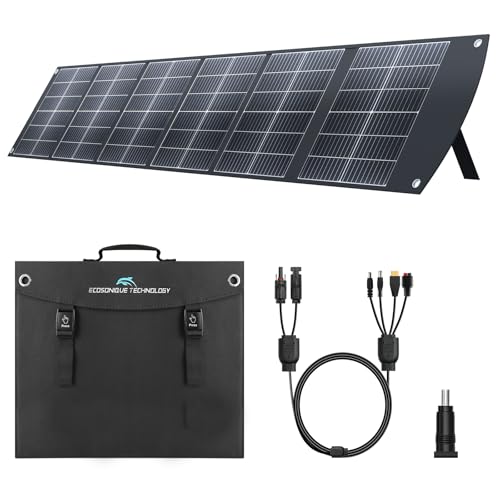
Ecosonique 200W Portable Foldable Solar Panel
More Details On Our Top Picks
Renogy keeps the focus on familiar portable-solar basics, which is exactly why it fits a lot of RV and camping setups. The foldable layout and kickstand support make it easier to angle beside a van, a patio battery station, or a blackout kit without turning setup into a chore.
The USB-A and USB-C outputs are useful for direct device charging, though they won’t replace a larger power station for every job. Its IP65 rating signals resistance to dust and splashes, so it suits outdoor use better than a bare-bones panel, but you still want sensible storage and a dry place after the trip.
Strong Points
- Foldable format stores neatly in an RV or garage.
- USB-A and USB-C outputs handle smaller gear directly.
- Kickstand support helps you aim the panel without fuss.
- IP65 rating adds reassurance for outdoor placement.
Points To Note
- Direct-device charging is useful, but a power station still covers larger needs better.
- The foldable frame means you’ll want a clean, dry storage spot.
Feature Snapshot
Who It Suits Best
You get a strong fit here for camping trips, RV use, and backup kits where portable charging matters more than maximum output.
Where A Sibling Pick Shines
GRECELL 200W Portable Solar Panel suits you better when you want more output options and a more feature-packed layout around the same power class.
EBL leans into connection flexibility, and that matters once your setup shifts between a power station, an RV battery plan, or a backup kit at home. The four kickstands help the panel sit more securely than a simpler fold-out design, which is handy on uneven ground or a driveway.
Compared with Renogy’s direct USB approach, this one pushes harder toward external power station use through its MC4 and Anderson output connector setup. That makes it a practical middle ground for people who already own compatible gear, though it does ask you to keep track of the right cables and ports.
What We Like
- MC4 and Anderson output support helps with broader system matching.
- Four kickstands give the panel a stable stance on rougher surfaces.
- Foldable format keeps transport simple.
- IP65 protection suits outdoor placement better than indoor-only gear.
Small Caveats
- You’ll want to confirm connector compatibility before setting it up.
- The foldable shell needs a tidy place in storage so the panels stay protected.
- It makes more sense with a power station than as a solo charging solution.
Core Details
Whose Shelf It Belongs On
You suit this pick best when your gear already revolves around a power station and you want a panel that connects cleanly into that system.
Swap It Out When
Renogy 200W Portable Solar Panel fits better for you if direct USB-A and USB-C charging matters more than connector variety.
Mesuvida feels built for harder outdoor use, especially with ETFE, a protective fluoropolymer layer that tends to resist wear better than plain panel surfaces. The suitcase format and adjustable kickstands make it appealing for campsites, generator stations, and RV setups where you want a more structured carry shape.
The IP68 rating stands out in this group because it signals a higher level of dust and water resistance than the more common IP65 on some of the other picks. The trade-off is that a tougher build usually brings a more serious carrying presence, so this suits you best when durability matters more than the lightest possible pack.
Highlights
- ETFE surface material is a strong sign of long-term outdoor focus.
- IP68 rating gives extra confidence around dust and water exposure.
- MC4, XT60, and Anderson output options suit varied power gear.
- Suitcase shape makes handling more organized at camp or on the road.
- Adjustable kickstands help you aim the panel with less guesswork.
Room For Improvement
- The more rugged build may feel less convenient for quick carry sessions.
- Suitcase-style storage takes more room than flatter foldable formats.
Technical Sheet
Best Suited To
You get the most from this model in rugged outdoor setups where stronger weather resistance and flexible connector support matter more than packing size.
Look Elsewhere When
EBL 200W Portable Solar Panel is the more straightforward match for you if you want a lighter, simpler connection path around the same watt class.
DOKIO takes a more traditional suitcase route, and the included charge controller makes it feel ready for systems that still rely on 12V battery management. The folded size and 26-pound weight give you a decent sense of the carry profile before you lift it, which is helpful for boats, campers, and emergency storage.
Compared with Mesuvida’s tougher weather story, this one looks more about utility and straightforward setup than heavy-duty shell confidence. That trade-off suits people who want a self-contained starter path, though it does mean you’ll want to think about where you’ll store the controller and panel together.
Upsides
- Charge controller included, which helps simplify a basic solar path.
- Folded size is clear and practical for storage planning.
- Works across several use cases, including RVs, boats, and emergency kits.
- Suitcase format keeps transport more organized than loose-panel setups.
Areas To Watch
- The 26-pound weight may feel noticeable during frequent moves.
- Controller-based setups need a little more attention to cable management.
Details At A Glance
Right Fit For
You suit this panel best when you want a straightforward suitcase setup for 12V batteries, RV storage, or emergency-ready backup.
Reach For A Different Pick When
TWELSEAVAN 200W Portable Solar Panel is the better fit for you if you want built-in USB charging options alongside the panel output.
GRECELL stands out for its mix of output options and a stated 23.5% efficiency figure, which matters to people trying to make the most of a compact solar footprint. The four kickstands help it sit securely during a long afternoon at camp, and the ETFE surface gives the panel a more weather-ready feel than a basic fabric-backed option.
In practice, this looks like a strong fit for power-station owners who want one panel that can handle different connector needs without feeling stripped down. The honest read is that more features also mean more pieces to keep track of, so organized storage helps this one pay off.
Best Bits
- 23.5% efficiency is a useful spec for getting more from the panel area.
- ETFE construction helps the panel feel better suited to outdoor use.
- Four kickstands improve stability and angle control.
- MC4, XT60, Anderson DC, and 4-in-1 output support broaden compatibility.
- Good match for people who move between campsite and home backup use.
Softer Spots
- More output flexibility also means a more complex cable setup.
- The panel makes more sense with a power station than as a casual standalone charger.
Feature Rundown
Made For
You fit this pick well when you want a feature-heavy solar panel for campsite charging, emergency backup, or a home power station setup.
A Better Fit Elsewhere
DOKIO 200W Foldable Solar Panel Suitcase suits you better if a built-in controller and simpler 12V setup matter more than connector variety.
TWELSEAVAN pushes beyond the standard panel-and-cable idea by adding QC3.0, Type-C 60W, and USB support to the mix. That makes it especially convenient for camps, tailgates, or emergency backup spots where you want to top up phones and smaller devices without setting up a separate charger.
The solar angle guide is a small but useful touch, especially for people who move the panel through the day and want a quicker visual reference. Compared with GRECELL, this one feels a little more device-focused, and that’s a real advantage when your setup has a mix of power gear and portable electronics.
What We Like
- 24% efficiency gives it a strong spec for its class.
- Type-C 60W support is handy for modern portable electronics.
- QC3.0 and USB support reduce the need for extra adapters.
- Solar angle guide helps with faster setup in changing light.
- Four kickstands improve placement on uneven ground.
Things To Consider
- Extra charging options are useful, though they add more to manage.
- The mixed-use design suits active setups more than simple backup storage.
Quick Facts
The Right Fit
You suit this panel best when your off-grid kit includes phones, tablets, or USB-C gear alongside a power station.
Another Choice May Suit
ZOUPW 200W Portable Solar Panel fits better for you if weather resistance and brand-specific power station matching matter more than built-in device ports.
ZOUPW feels tuned for people who move their setup often, especially since the product page calls out compatibility with several well-known power station families. The 23.5% efficiency figure keeps it competitive, and the IP67 rating suggests a stronger dust and water defense than some of the other foldables in this group.
That combination makes sense for RV backup, camping, and travel kits that spend time in changing weather. You may find the brand-specific matching helpful, though the real trade-off is that you’ll want to confirm your exact power station model before assuming a plug-and-play fit.
Bright Spots
- IP67 rating offers a stronger weather-resistance story.
- 23.5% efficiency keeps the panel competitive on paper.
- Four kickstands help on uneven campsites or driveways.
- Compatibility notes for several major power station lines make planning easier.
Honest Caveats
- You’ll want to confirm compatibility with your exact station model.
- The travel-first design works best when you have a clear storage routine.
- It leans more toward power-station use than direct device charging.
Core Details
Built With In Mind
You suit this panel best when your travel kit depends on a power station and you want a foldable panel with strong weather resistance.
Where Shoppers Go Wrong
Renogy 200W Portable Solar Panel makes more sense for you if you want direct USB charging and a simpler all-around backup option.
Ecosonique looks like the easiest all-round utility play in this group, thanks to its mix of MC4, XT60, DC, USB-C PD3.0, and USB-A QC3.0 outputs. That kind of spread helps in a home backup box, a camping kit, or an RV where different devices often want different plugs.
The lightweight framing matters too, because a panel you can move without much hassle usually gets used more often than a heavier one. It is not the most weather-focused model here, though the waterproofing and broad connector mix make it a sensible fit for people who want simple versatility over hard-edged ruggedness.
Positives
- Wide connector mix makes it easier to match different power gear.
- USB-C PD3.0 and USB-A QC3.0 help with device charging convenience.
- Lightweight build supports easier carrying and storage.
- Waterproof design gives it a practical outdoor edge.
Minor Gripes
- The broad feature set asks for a little more cable organization.
- It feels more versatility-focused than weather-hardening focused.
Feature Card
Who Should Grab It
You suit this panel best when you want one foldable option that can serve a solar generator, an RV kit, and smaller USB-powered devices.
Skip It When
Mesuvida 200W Portable Solar Panels fits better for you if rugged weather resistance and a suitcase-style build matter more than connector variety.
How To Choose The Right 200 Watt Portable Solar Panels
Match The Panel To The Gear You Already Own
The first thing to sort out is connector match, because a 200-watt panel only helps when it can actually talk to your power station, battery setup, or charger. MC4 is a common solar connector style, while Anderson, XT60, USB-C, and USB-A each serve different gear chains, so the right choice depends on what you already own.
That matters more than marketing phrasing. A panel with the wrong connector mix can leave you buying adapters and making storage more complicated than it needs to be.
Focus On Weather Resistance And Surface Material
Water resistance ratings tell you how much outdoor exposure the panel is built to tolerate, and that matters for camping, RV parking, and emergency storage. IP65 generally means dust protection and resistance to water spray, while IP67 and IP68 point to stronger resistance on paper.
Surface material matters too. ETFE usually signals a tougher outdoor-facing layer than a basic laminate, so it’s worth paying attention to for panels that spend time folded, unfolded, and moved often.
Think In Terms Of Portability, Not Just Wattage
Two 200-watt panels can feel very different in real life, depending on whether they use a suitcase frame, kickstands, or a flatter fold. A 26-pound panel in a van is one thing, but the same weight on a long walk from parking to campsite feels much heavier.
Kickstands also deserve more attention than they usually get. They help with sun angle, stability, and faster setup, which can matter a lot when you arrive late and want power without a lot of fuss.
Decide How You’ll Use The Output
Some panels are aimed at direct device charging, while others are better suited to a power station or battery bank. USB-A and USB-C are handy for phones and small electronics, but a power station usually makes more sense for cooking gear, larger backup loads, or multi-device household use.
That distinction keeps you from overbuying features you won’t use. For most homes and campsites, the best panel is the one that fits your actual charging routine instead of the one with the longest spec list.
A Quick Reality Check Before You Choose
Hidden Buying Traps
Connector mismatch is the easiest mistake to make, and it usually shows up after the panel arrives. Storage is another common miss, since suitcase-style panels, kickstands, and controllers all ask for more space than a simple folded mat.
Another trap is treating waterproof wording as a promise that you can leave the panel anywhere. Outdoor-rated gear still benefits from dry storage, cleaner cable routing, and sensible handling.
The Upgrade Payoff
Higher-tier panels usually cost more because of materials, connector variety, and better weather resistance. ETFE surfaces, stronger waterproof ratings, and extra output options all add practical value in real setups.
The upgrade makes sense when you use solar often, move gear between locations, or rely on the panel for more than occasional backup. For light weekend use, a simpler design often covers the same basic need.
Frequently Asked Questions
What makes a 200-watt portable solar panel a good fit?
A 200-watt portable panel sits in a useful middle ground for camping, RVs, and backup charging. It gives you more headroom than tiny travel panels without getting as bulky as larger portable arrays.
Do you need a power station with these panels?
Not always, because some models include USB outputs for direct device charging. A power station still helps when you want to run a broader mix of gear or store energy for later.
Are waterproof ratings the same across all panels?
No, and that difference matters. IP65, IP67, and IP68 all point to different levels of protection, so the number gives you a better clue than the word waterproof alone.
Which connector type is easiest to live with?
That depends on your existing gear. MC4, Anderson, XT60, USB-C, and USB-A each suit different setups, so the best choice is the one that matches what you already use.
What matters more, efficiency or portability?
Both matter, but not in the same way. Higher efficiency helps you capture more from a given panel size, while lower weight and easier folding make the panel more likely to get used often.
Final Thoughts
A good 200-watt portable solar panel should fit your gear, your storage space, and the way you actually travel. Renogy and EBL make strong everyday sense, Mesuvida leans harder into rugged use, and TWELSEAVAN, GRECELL, and Ecosonique add useful flexibility for mixed-device setups. The best choice is the one that feels easy enough to bring along, because that’s the one you’ll reach for again.
