

Solar charging gets a lot easier once the regulator matches the battery bank, panel size, and environment around it. For a caravan, boat, RV, or a compact backup setup, the right controller keeps the system organized without asking for much attention. The wrong one feels fiddly fast, especially once you add wet weather, limited mounting space, or mixed battery chemistry. This shortlist focuses on the hardware details that matter in real use.
Quick Look At Our Shortlist
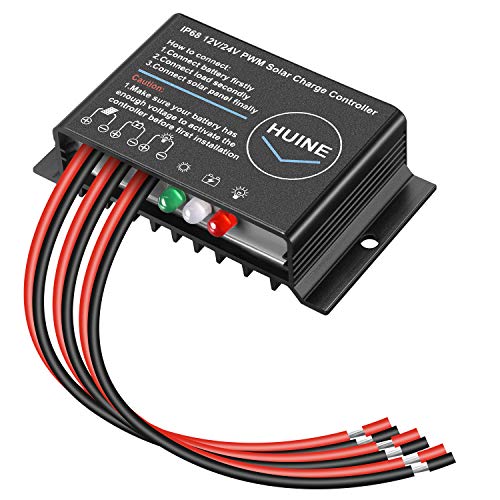
HUINE 20A 12V 24V IP68 Waterproof PWM Solar Charge Controller

Rolokit 30A PWM Solar Charge Controller Dual USB LCD

Bateria Power SunRock 10 MPPT Solar Charge Controller

SOLPERK 8A 12V IP67 Waterproof Solar Charge Controller

ELUSH Upgraded 100A MPPT Solar Charge Controller Dual USB

Anern 30A Solar Charge Controller Dual USB LCD

POWLAND 100A MPPT Solar Charge Controller 150V Input
More Details On Our Top Picks
HUINE keeps the setup focused on the basics, with a 20A PWM layout and automatic 12V or 24V matching. PWM means pulse-width modulation, a control method that trims charge delivery in steady pulses rather than a more complex conversion stage, so the trade-off is simpler hardware instead of maximum harvesting efficiency.
That approach suits a caravan, trailer, or small boat where you want sealed protection and a regulator that can live near spray and damp air. Compared with Rolokit’s LCD-heavy style, this one feels more stripped back, which helps in a tidy utility bay but gives you less live feedback.
Strong Points
- IP68 sealing suits wet or dusty mounting spots.
- Auto 12V and 24V detection reduces setup guesswork.
- 20A capacity fits modest panel and battery pairings.
- Low-profile PWM design keeps the unit uncomplicated.
Points To Note
- PW M control is simpler than MPPT for harvest efficiency.
- You give up the richer screen feedback found on Rolokit and Anern.
- Hard-to-reach installs can make routine checks less convenient.
Feature Snapshot
Who It Suits Best
Caravan owners and small-boat setups get the most from the sealed shell and simple controls.
A Better Fit Elsewhere
Rolokit B0CSD6HGGH suits you better if you want a screen and dual USB ports for a busier cabin setup.
Rolokit leans into control and visibility, not just charging. The LCD display helps you track system status at a glance, while timer settings and multiple load modes make it a stronger fit for a cabin, shed, or campsite setup that powers lights or small accessories.
Compared with HUINE’s closed-up design, this one gives you more interface and more ways to manage loads, but that also adds more menu handling. For most daily-use systems, that trade-off is worth it only when you actually want the extra control points.
What We Like
- LCD readout makes status checks easier.
- Dual USB ports suit phone or accessory charging.
- Timer and load modes support more varied use.
- 30A rating leaves more headroom than HUINE’s 20A unit.
- Auto parameter adjustment helps streamline setup.
Room For Improvement
- More settings can mean a longer first setup.
- PWM design still trails MPPT units in efficiency potential.
- The screen adds another part to keep clean and readable.
Core Details
Made For
You get the most from Rolokit in a setup where load timing and quick status checks matter.
Another Choice May Suit
SOLPERK B0D3HR38QC fits better for you if sealed outdoor mounting matters more than added screen features.
SunRock 10 is the compact MPPT option in this group, and MPPT means maximum power point tracking, a controller style that works to pull more usable energy from the panel than a plain PWM unit. That makes it a sensible fit for a small portable system where panel space matters more than raw amperage.
Its 10A ceiling and 150W, 30Voc limits keep the design tightly aimed at modest builds, so you won’t want it for a larger roof array. Compared with Rolokit’s 30A LCD model, this one is less about features and more about squeezing better use from a small solar source.
Upsides
- MPPT design suits compact panels that need efficient use.
- Portable format helps in small travel or backup kits.
- Battery support covers gel, AGM, lead-acid, and LiFePO4.
- Clear power limits make sizing easier.
Softer Spots
- 10A output stays within a narrow build range.
- It is less suitable for larger battery banks than ELUSH or POWLAND.
- Small portable gear often asks for more careful cable planning.
Details At A Glance
Right Fit For
Portable kit owners and small backup systems get the clearest value from this compact MPPT layout.
Look Elsewhere When
ELUSH B0DK4RFMMW suits you better for larger banks and a broader voltage spread.
SOLPERK is the modest, weather-aware option in this list. Its 8A output and IP67 sealing make sense for a smaller RV, dinghy, or car-based solar setup where you want protection against dust and temporary water exposure without carrying extra bulk.
It covers gel, AGM, lead-acid, and lithium LiFePO4 batteries, so chemistry matching is broad for a small controller. Compared with the HUINE unit, this one gives you slightly different sealing language and a lower amperage ceiling, which makes it more of a specialty fit than a general one.
Bright Spots
- IP67 sealing supports exposed outdoor mounting.
- Battery compatibility spans several common chemistries.
- Compact 8A size fits smaller charging jobs.
- Good match for vehicles and mobile use.
Minor Gripes
- 8A output is narrow for growth.
- Smaller format can feel limiting in a larger cabin system.
- Outdoor installs still need tidy cable routing to stay serviceable.
Core Details
Whose Shelf It Belongs On
You get the best fit here for a small mobile setup that values simple sealing and light-duty charging.
Swap It Out When
Rolokit B0CSD6HGGH makes more sense for you once you want a bigger screen and more load control.
ELUSH moves into a much larger class of controller, and the 100A rating is the headline because it points to serious system headroom. The LCD display and dual USB ports keep it practical, while support for 12V, 24V, 36V, and 48V banks gives you room to scale far beyond the smaller picks above.
Max input of 100V matters for array design, especially in bigger roof or rack layouts where panel stringing changes the equation. Compared with Bateria Power’s compact SunRock 10, this one is the clear step up for a home shed, sizeable RV bank, or off-grid setup that needs far more capacity.
Reasons To Buy
- 100A output suits large battery banks.
- Wide voltage support adds installation flexibility.
- LCD display helps with daily monitoring.
- Dual USB ports add useful convenience.
- Higher input ceiling opens more array options.
Areas To Watch
- Large capacity makes it more controller than casual add-on.
- Higher-end features only pay off in bigger systems.
- Mounting and cabling usually take more planning than with 8A or 20A units.
Feature Rundown
Built With In Mind
You get the best match here for a large battery bank that needs broader voltage support and plenty of headroom.
Where A Sibling Pick Shines
Bateria Power B0BNKGC5SM is the calmer choice for a small portable kit where compact size matters more than raw output.
Anern sits in the middle of the pack in a useful way, with 30A output, an LCD screen, dual USB, and PWM control. That mix makes it a strong everyday controller for a modest cabin, workshop bench, or vehicle power setup where you want visibility without moving into the larger MPPT tier.
It feels closest to Rolokit on paper, though Rolokit adds timer and multiple load modes for more involved control. For most general-purpose installs, Anern is the calmer choice, and the simpler interface can be easier to live with in a space where the controller isn’t the star.
Best Bits
- 30A output suits a broad range of small systems.
- LCD display makes routine checks straightforward.
- Dual USB ports add everyday convenience.
- PWM control keeps the design familiar and easy to understand.
Trade Offs
- It offers less control depth than Rolokit.
- PWM efficiency trails MPPT designs like Bateria Power and POWLAND.
- The practical value is strongest in standard, not expanded, installs.
Quick Facts
The Right Fit
You get a practical middle-ground controller here for a simple, general-purpose solar setup.
Reach For A Different Pick When
ELUSH B0DK4RFMMW is the better move for you once your system grows into a high-capacity bank.
POWLAND is built for a serious array, and the 100A MPPT design makes that clear right away. The 150V input ceiling and support for 12V, 24V, 36V, and 48V systems give you a wider design window than the smaller units in this roundup, especially in bigger off-grid installs.
The display keeps status visible, which helps once the wiring becomes more involved and you want quick checks at the controller itself. Compared with ELUSH, POWLAND stretches the input headroom even further, so it suits you best when panel arrangement flexibility matters as much as charging capacity.
Positives
- 100A output suits demanding power banks.
- 150V input expands array planning options.
- Four system voltages support more build styles.
- LCD display helps with daily oversight.
Honest Caveats
- Large capacity is wasted on tiny systems.
- Higher-voltage planning asks for more careful layout work.
- For simple van setups, a smaller controller may feel easier to live with.
At A Glance
Perfect Match For
You get the strongest fit here for a larger off-grid build that needs both capacity and array flexibility.
Where Shoppers Go Wrong
Bateria Power B0BNKGC5SM is the smarter route for a small portable kit that doesn’t need this much controller headroom.
How To Choose The Right Solar Regulators
Match The Controller To The Battery Bank
The first filter is battery chemistry and system voltage. A 12V or 24V PWM controller works well for compact caravan and boat layouts, while 36V and 48V MPPT units suit larger banks and more ambitious panel runs.
MPPT, or maximum power point tracking, matters most when your panel array has real size or your roof space is limited. PWM is simpler and usually easier to live with, but it gives up some harvesting efficiency.
Size The Amp Rating Honestly
Amp rating should track the charging current you expect, not the biggest number that looks good on the page. A small portable kit can do fine with 8A or 10A, while a mid-size daily setup often benefits from 20A or 30A.
Large banks change the picture fast, and that’s where 100A units like ELUSH or POWLAND make sense. Oversizing wastes money and space, while undersizing can force awkward compromises.
Think About Features You’ll Actually Use
An LCD screen helps in sheds, RVs, and cabin installs where you want quick status checks. Dual USB ports are useful in travel setups, though they matter less in a fixed system that already has separate charging gear.
Timer settings and load modes sound minor, but they help when the controller also manages lights or accessories. For a simple maintenance-free setup, a sealed unit such as HUINE or SOLPERK is easier to keep tidy.
Installation Conditions Matter More Than Marketing
Wet, dusty, or moving environments reward better sealing. IP67 or IP68 ratings matter on boats, trailers, and outdoor cabinets because they reduce worry around spray and grime.
Cable routing, mounting access, and screen readability also shape day-to-day ownership. A controller tucked into a cramped compartment can be annoying, even when the spec sheet looks strong.
Things Worth Knowing First
Traps First Timers Fall Into
The easiest mistake is pairing a controller with the wrong battery chemistry or voltage. Another common slip is choosing too little current headroom, then expecting a bigger array to fit later without replacing the controller.
Some shoppers also overvalue extra screens and ports. Those features help in a busy cabin, but they can add clutter in a simple solar box.
The Upgrade Payoff
Higher-tier MPPT units cost more because they handle more voltage, more current, and more panel flexibility. That extra headroom matters in larger off-grid systems, especially where roof space, wiring paths, or future expansion are part of the plan.
For a tiny setup, the extra spend often brings little benefit. For a serious RV, shed, or multi-battery bank, the upgrade can make the whole system easier to scale.
Frequently Asked Questions
What does a solar regulator do?
A solar regulator controls how charging power reaches the battery bank. It helps the system stay within the controller’s voltage and current limits.
Is MPPT better than PWM?
MPPT usually makes more sense for larger or tighter solar setups because it can use panel output more efficiently. PWM still works well for simpler, smaller systems.
Can you use one controller for lithium and lead-acid batteries?
Only when the controller lists both chemistries as supported. The charge profile needs to match the battery type you use.
How do you choose between 20A and 100A?
Think about panel size, battery bank size, and future expansion. A 20A unit suits a compact setup, while a 100A unit fits a much larger system.
Do dual USB ports matter on a controller?
They matter most in mobile or cabin setups where you want device charging at the power center. In a fixed installation, they are convenient but not essential.
Closing Thoughts
The right solar regulator is the one that fits your panel size, battery chemistry, and mounting environment without overcomplicating the setup. Small portable systems do well with the simpler HUINE, SOLPERK, or Bateria Power choices, while larger off-grid builds need the headroom of ELUSH or POWLAND. Rolokit and Anern sit neatly in the middle for everyday control and visible status. Match the controller to the job you actually have, and the rest of the system becomes much easier to live with.
