

Solar radios earn their keep during outages, storm prep, camping trips, and long power interruptions. You need clear reception, multiple charging paths, and enough light to handle a dark room without turning the unit into clutter. The seven picks below lean on different strengths, from compact carry-friendly bodies to larger-capacity models with broader emergency utility.
Quick Look At The Shortlist

Mesqool Solar Radio Emergency Hand Crank 12000mAh
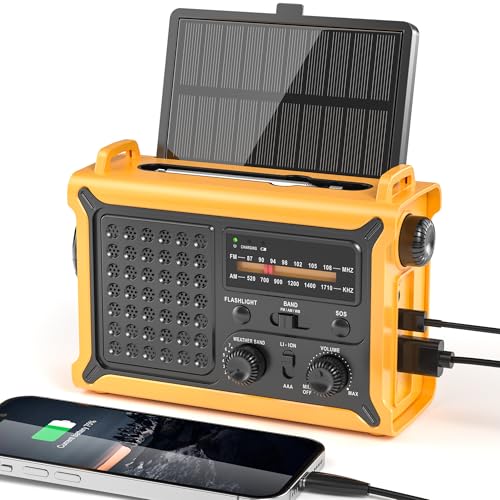
Mesqool Weather Radios Portable AM FM NOAA Alert 12000mAh

Rychi 10000mAh Emergency Radio, Solar Radio, Hand Crank Radio

QAUYYW 74000mWh Emergency Radio with NOAA Weather

Roxicosly Emergency Weather Radio with Large Solar Panel 12000mAh

Roxicosly Emergency Weather Radio with Large Solar Panel 12000mAh

OnLyee Emergency Radio with Hand Crank & Solar 12000mAh
More Details On Our Top Picks
This Mesqool model keeps the essentials close at hand, with a 12,000mAh battery, AM, FM, and NOAA weather support, plus a two-mode LED flashlight. That mix suits a kitchen drawer, glove box, or outage kit without feeling oversized.
The dual outputs and phone-charging function matter most during a long outage, since you can keep one device powered while listening for alerts. The trade-off is plain enough, it’s built around utility first, not a slim carry profile.
Strong Points
- 12,000mAh capacity gives you solid reserve for emergency listening and basic charging.
- AM, FM, and NOAA support covers news, local broadcasts, and weather alerts in one unit.
- Two lighting modes help in a dark room without forcing you to use a bright beam all the time.
- Dual output ports make it easier to share power between devices during an outage.
- The straightforward layout suits households that want a simple grab-and-go radio.
Things To Consider
- The larger battery adds usefulness, but it usually means a bulkier body in storage.
- A feature-heavy layout can feel crowded if you only want a basic radio.
- Like most emergency radios, it works best when you keep it charged and stored in a dry place.
Feature Snapshot
Who It Suits Best
Households that want a do-everything emergency radio with room for basic charging will get the most from it.
Where Another Pick Suits Better
Rychi B0CSJQDGS8 fits you better when a lighter-featured radio with a clear band display and extended antenna matters more than battery capacity.
This Mesqool option leans hard into emergency versatility, with battery backup, fast solar charging, hand crank input, a flashlight, a reading lamp, and SOS support. Compared with the first Mesqool pick, it reads more like a prepared household station than a pocketable backup.
That broader toolkit helps in a family room, workshop, or campsite table where lighting matters as much as radio access. You may find the extra functions useful, though the package makes more sense for someone who wants a central emergency unit rather than a minimal carry piece.
What We Like
- Battery backup adds another layer of flexibility for charging and listening.
- Solar, hand crank, and battery input paths reduce dependence on a single source.
- The reading lamp is handy for maps, notes, or bedside use during outages.
- SOS support gives the unit a clearer emergency focus than a standard portable radio.
- The 12000mAh class capacity supports longer use than tiny backup sets.
Points To Note
- All those functions add complexity, so first-time setup may take a little patience.
- It makes more sense on a shelf or table than in a small jacket pocket.
- Regular charging helps keep a feature-rich radio ready for unexpected outages.
Details At A Glance
Made For
Families and campers who want one radio to cover listening, lighting, and backup charging will appreciate this layout.
A Better Fit Elsewhere
OnLyee B0F5PQJMK9 is the cleaner match for a smaller emergency kit that values clear AM and FM reception over a fuller feature spread.
Rychi takes a more straightforward route than the two Mesqool models, and that simplicity can help in a real emergency kit. The extended seven-section antenna is a notable touch, since a longer antenna often supports better reception in more difficult spots.
The band display also deserves mention because easy tuning matters more than glossy extras when the lights go out. For most apartments, cars, or basic home kits, this one looks like a sensible balance of core functions and usable size.
Upsides
- Four charging methods give you backup paths in changing conditions.
- The polymer battery design supports a lighter, more practical emergency format.
- AM, FM, and NOAA support keeps the core radio job covered.
- The flashlight and reading lamp make it easier to handle both movement and close tasks.
- The SOS alarm adds a clear emergency signal function.
Minor Gripes
- The design is more utilitarian than polished, so it suits function-first storage.
- Battery upkeep still matters, especially for cars and bags that sit unused for long stretches.
- Owners who want a very large power reserve will likely look higher in the list.
Core Details
Right Fit For
Anyone who wants a practical emergency radio with clear tuning and multiple charging routes will find plenty to like here.
Swap It Out When
Mesqool B0F4QVQPH3 makes more sense for campers or households that want a larger emergency feature set with a reading lamp and battery backup.
QAUYYW pushes into higher-capacity territory, and that matters most when you want a radio that can sit in reserve for longer periods between charges. The addition of SW reception, alongside AM and FM, gives it a broader broadcast scope than the earlier picks.
That larger capacity fits extended outage planning, road-trip backup, or a home storage shelf that sees serious use only a few times a year. The honest read is that this one makes sense for you when capacity and band coverage matter more than keeping things compact.
Highlights
- 74,000mWh capacity puts it in the larger-reserve class for emergency use.
- SW, AM, and FM support broadens your listening options.
- Fast-charging capability helps reduce downtime between uses.
- Flashlight, reading lamp, and SOS siren widen its emergency role.
- Solar and hand crank support add backup charging paths for outages.
Room For Improvement
- Higher capacity usually means a bigger unit to store and move.
- More capability can also mean more steps to learn at first.
- It suits dedicated storage better than casual day-to-day carry.
At A Glance
Whose Shelf It Belongs On
Prepared households and frequent travelers who want longer reserve capacity will get the most value from this pick.
Where A Sibling Pick Shines
Rychi B0CSJQDGS8 is easier to justify for you when a simpler, lower-capacity radio with a clear display feels like the cleaner fit.
The large solar panel is the headline here, and that’s the kind of feature that matters most in outdoor-heavy use. Compared with the Mesqool models above, this one puts more emphasis on panel surface and straightforward emergency function than on extra layers of gadgetry.
That makes it a strong fit for campsites, backyard kits, and homes that want visible charging hardware rather than a tiny panel tucked into the frame. You may like it most when you want the solar side of a solar radio to feel more central.
Reasons To Buy
- The larger solar panel gives charging a more prominent role in the design.
- 12000mAh capacity supports the needs of a standard emergency backup kit.
- AM, FM, and NOAA coverage keeps the listening basics in place.
- The flashlight, reading lamp, and SOS alarm round out storm prep nicely.
- Hand crank input adds a useful fallback when other power sources are limited.
Worth Noting
- A larger panel can make the body feel more storage-oriented than pocket-friendly.
- It’s a better fit for planned emergency storage than for casual everyday carry.
- As with most backup gear, keeping it charged between seasons helps it stay ready.
Feature Card
The Right Fit
Campers and homeowners who want a solar-forward emergency radio with familiar core features will feel at home here.
Another Choice May Suit
OnLyee B0F5PQJMK9 is the better match for smaller kits where the radio has to stay compact while still covering AM, FM, and weather bands.
This Roxicosly version keeps the same large-panel approach but trims the feature load down to the essentials. That lighter setup can make sense for you if you want the solar emphasis without paying for a more crowded emergency package.
It still covers AM, FM, and NOAA bands, along with a flashlight, reading lamp, and SOS alarm, so the basics remain intact. Think of it as the simpler shelf companion, more like a sturdy flashlight with a radio attached than a full control center.
Best Bits
- Large solar panel keeps the charging emphasis front and center.
- 12000mAh battery capacity covers typical emergency backup needs.
- AM, FM, and NOAA support handles the core listening job.
- Flashlight, reading lamp, and SOS alarm give it practical outage utility.
- The simpler layout can be easier to store and explain to family members.
Small Caveats
- Compared with the prior Roxicosly pick, this one gives up some of the broader feature feel.
- Simple gear still needs occasional checking so it’s ready when needed.
- Its appeal depends on whether you want less complexity or more capability.
Quick Facts
Who Should Grab It
Shoppers who want a simpler emergency radio with the solar panel still playing a major role should start here.
Look Elsewhere When
Mesqool B0F4QVQPH3 is the better fit for you when a fuller emergency package with battery backup and a reading lamp matters more.
OnLyee gives you a compact-feeling emergency radio with an 8500mm² solar panel, which is a useful detail if storage space is tight. The clear AM and FM reception callout also matters, since signal clarity is often the first thing people notice in a noisy room or a remote campsite.
The 5W flashlight, reading light, 120dB SOS, and phone charging support make it a strong small-kit option. Compared with the larger-capacity QAUYYW model, this one is easier to picture in a day pack, hall closet, or glove compartment.
Positives
- The 8500mm² solar panel gives you a defined charging surface in a compact package.
- Clear AM and FM reception focus suits everyday listening during outages.
- 5W flashlight output adds more reach than a tiny status light.
- The reading light and SOS function round out its emergency role.
- 12000mAh capacity keeps it competitive for a compact backup radio.
Softer Spots
- Its smaller profile means it gives up the larger reserve seen in the QAUYYW pick.
- Compact gear is easy to store, but that also means you’ll want to keep track of it.
- The feature spread is practical rather than expansive.
Feature Rundown
Built With In Mind
Small-space households, travel kits, and anyone building a compact emergency setup will appreciate this model.
Reach For A Different Pick When
QAUYYW B0DN4YR5MB is the stronger match for you if a much larger battery reserve and SW band coverage matter more than compact storage.
How To Choose The Right Solar Radios
Start With Power Paths
A good solar radio gives you more than one way to recharge. Solar panels help in daylight, hand cranks cover dead-battery moments, and rechargeable batteries give you a stored reserve for the next outage.
That mix matters most during storms, camping weekends, or long utility interruptions. A unit with only one charging route can become frustrating fast, especially in gray weather or after repeated use.
Match Capacity To Real Use
Battery size tells you how long the radio can stay useful between charges, but bigger is not always better. A 12,000mAh class model suits a household shelf or car kit, while a much larger reserve makes sense for longer outages and less frequent charging.
The trade-off is size and weight. Higher capacity often means more bulk, so the right call depends on whether you want something easy to stash or something that can sit ready for longer stretches.
Check The Band Coverage
AM and FM cover everyday listening, while NOAA weather support gives you a stronger emergency angle. Some models also add SW, or shortwave, which can expand broadcast reach in certain situations.
For city apartments, AM/FM/NOAA is usually enough. For remote travel or a serious storm kit, broader band support can be worth the extra complexity.
Look At Light And Signal Tools
Flashlights, reading lamps, and SOS alerts change the radio from a listening device into a more useful emergency tool. A reading lamp helps with maps or notes, while a brighter flashlight helps you move around during a blackout.
The trade-off is added controls and a busier layout. You get more utility, but you also need to keep the unit charged and stored where you can reach it quickly.
A Quick Reality Check
Wrong Turns To Avoid
Plenty of shoppers focus on battery size alone and ignore the rest of the package. That’s how you end up with a radio that lasts longer, but still feels awkward to tune, store, or carry.
Another common miss is overlooking the charging method mix. A radio without solar and hand crank support can leave you stuck with one more thing to keep plugged in.
The Upgrade Payoff
Higher-tier models usually justify themselves through larger batteries, broader band coverage, and better emergency lighting. Some also add stronger solar panels or faster charging support, which helps in homes that depend on backup gear often.
Spending more makes sense when the radio needs to serve a family, a cabin, or a long-duration kit. For a drawer backup or a car emergency bag, a simpler model is usually the cleaner call.
Frequently Asked Questions
What do solar radios actually do?
They combine radio reception with backup charging options and emergency lighting. That makes them useful during outages, travel, and storm prep.
Is NOAA support important?
NOAA weather bands help you follow weather updates and emergency notices. For storm-prone areas, that feature carries real value.
Does battery capacity matter more than solar panel size?
Battery capacity affects how long the unit can run between charges. Solar panel size affects how quickly you can recover power in daylight.
Are hand cranks useful or just a backup?
Hand cranks are a backup, but they matter when other power sources are unavailable. They’re especially useful in long outages or travel kits.
What size solar radio fits a home emergency kit?
A mid-size model with AM, FM, NOAA, and a flashlight suits most home kits well. Larger capacities make more sense for extended outage planning.
Closing Thoughts
The right solar radio depends on how much backup time, lighting, and broadcast coverage you want in one box. Mesqool and Roxicosly cover the broader emergency side, Rychi keeps the basics clean, and OnLyee stays compact without feeling stripped down. For a family shelf, a car kit, or a camp box, the best choice is the one that matches your storage space and your outage habits. Keep it charged, store it where you can reach it, and it’ll be there when the lights go out.
