

Solar-powered cameras make sense once you want fewer battery swaps and less ladder work. For driveways, side yards, garages, and farms, the right pick depends on how much motion tracking, storage flexibility, and network independence you need. Some models stay simple on home Wi-Fi, while others keep working with cellular service or a larger local storage setup. The shortlist below separates the practical choices from the overbuilt ones.
Quick Look At Your Shortlist
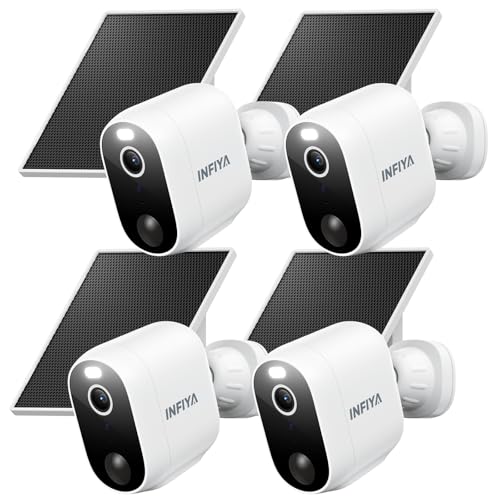
INFIYA Security Cameras Wireless Outdoor 4Pack
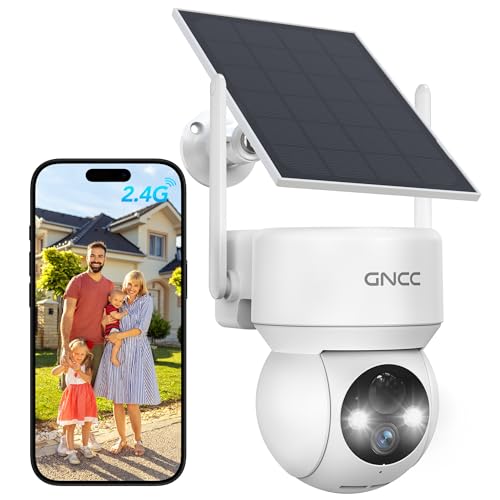
GNCC Solar Security Cameras Wireless Outdoor 2.4G WiFi

eufy Security SoloCam E42 4-Cam Kit

GALAYOU Solar Camera Outdoor Wireless R6 1Pack

REOLINK 2K+ 4G LTE Cellular Security Camera

eufy Security eufyCam C37 2K

Solar Security Cameras Wireless Outdoor 2K Pan/Tilt
More Details On Our Top Picks
Four cameras in one package make this a practical starting point for a home that needs coverage at more than one door or corner. The mix of solar and battery power reduces the usual maintenance burden, and the 2.4G Wi-Fi support keeps setup aligned with many standard home networks.
The real value shows up in everyday routines, like watching a driveway, side gate, and back patio without juggling separate systems. Human detection, instant alerts, light, siren, color night vision, two-way talk, and SD storage give you a broad feature set, though the trade-off is a busier app experience than a simpler single-camera setup.
Reasons To Buy
- Four-camera bundle covers more ground from day one.
- Solar assistance helps reduce charging chores over time.
- Human detection narrows alerts better than generic motion alone.
- Color night vision improves low-light identification around entrances.
- Two-way talk suits front-door check-ins and quick warnings.
Areas To Watch
- 2.4G Wi-Fi support means it skips 5G network use.
- Four cameras can take more planning during installation.
- SD storage keeps things local, so card management matters.
Feature Snapshot
Who It Suits Best
Homeowners covering several entrances or outbuildings will get the most from the four-camera layout and the lower-maintenance power setup.
Where A Sibling Pick Shines
eufy Security SoloCam E42 suits you better for a higher-detail setup with pan and tilt control across fewer but more capable units.
This GNCC model leans into coverage, not just recording. The 360-degree view, PIR motion detection, spotlight, siren alarm, and color night vision suit a driveway or patio where movement can come from several directions.
Compared with the INFIYA four-pack, this is the cleaner fit when you want a single rotating camera instead of a wider bundle. SD and cloud storage give you flexibility, and the IP65 housing is the part that matters most outdoors, though the camera still depends on a steady 2.4G network for normal use.
What We Like
- 360-degree coverage reduces blind spots around open spaces.
- PIR motion sensing helps focus alerts on movement that matters.
- Spotlight and siren add visible, audible response tools.
- SD and cloud options give you storage flexibility.
- IP65 housing fits exposed exterior mounting points.
Softer Spots
- 2.4G Wi-Fi only, so newer network bands are out.
- A single camera leaves less total coverage than a multi-pack.
- Pan-and-scan movement can still depend on placement and angle.
Core Details
The Right Fit
You get the best match here for patios, driveways, or side lots where one camera can cover a broad sweep.
Swap It Out When
GALAYOU Solar Camera Outdoor Wireless R6 1Pack makes more sense for a setup that needs a detachable panel and a more compact install path.
Once you move from basic coverage to a more advanced feature set, the SoloCam E42 stands out for its 4K capture, pan and tilt control, and motion tracking. Facial recognition adds another layer of sorting, which matters on a busy property where delivery activity and family movement can blur together.
The four-camera kit is a serious setup for larger homes, and built-in local storage up to 16TB is the kind of capacity that suits people who want control without a recurring storage plan. The trade-off is obvious: this is more camera than a small porch needs, but for multi-zone coverage it feels appropriately scaled.
Highlights
- 4K resolution gives you more detail than 2K models.
- Pan and tilt tracking follows movement across the frame.
- Facial recognition helps sort familiar activity from strangers.
- Local storage up to 16TB supports large recording libraries.
- Four-camera kit suits wider properties and multiple entry points.
- Strobe light adds a visible deterrent response.
Points To Note
- The feature set is richer, so setup takes more attention.
- Four cameras make placement planning more involved.
- Local storage capacity helps, but storage management still matters.
Details At A Glance
Who Will Love This
You should look here for a larger home, long driveway, or mixed indoor-outdoor perimeter that needs higher-detail coverage.
Another Choice May Suit
INFIYA Security Cameras Wireless Outdoor 4Pack is the easier fit for shoppers who want broad coverage first and fewer advanced tracking features.
The detachable solar panel is the feature that makes this GALAYOU model easier to place than many fixed-panel cameras. That matters in a garage, barn, or awkward corner where the best sun exposure and the best camera angle are not the same spot.
The 2K image level, color night vision, and SD or cloud storage keep it squarely in the practical middle ground. Compared with the GNCC rotating camera, this one feels simpler and more installation-friendly, though it gives up some of that sweeping 360-degree coverage.
Upsides
- Detachable solar panel gives you more mounting flexibility.
- 2K resolution suits everyday perimeter monitoring well.
- Color night vision helps preserve scene detail after dark.
- SD and cloud storage offer a straightforward split.
Room For Improvement
- Single-camera coverage works best for smaller zones.
- 2.4G Wi-Fi only, so network planning still matters.
- Outdoor placement may need a tidy cable route for the panel.
Feature Rundown
Best Suited To
You get the most from this one in garages, small farms, or side entrances where the panel needs to sit apart from the camera.
Look Elsewhere When
REOLINK 2K+ 4G LTE Cellular Security Camera is the better route for a site without reliable Wi-Fi.
For cabins, job sites, outbuildings, and rural installs, the big advantage here is obvious, no home Wi-Fi dependency. The included SIM and 32GB SD card make it useful right out of the box, and the 360-degree pan-tilt design helps cover a broad area from a single mounting point.
The honest read is that cellular cameras ask more from the network side, so the service plan and signal strength deserve attention before you commit. Compared with the Wi-Fi-focused GNCC and GALAYOU models, this one suits remote placement better, but it asks for a more deliberate setup.
Best Bits
- 4G LTE support works without a home Wi-Fi network.
- SIM and 32GB SD card reduce setup friction.
- 360-degree pan and tilt broadens the covered area.
- Color night vision helps with after-dark identification.
- Smart AI detection reduces generic movement clutter.
Honest Caveats
- Cellular use depends on signal quality at the site.
- Service planning matters more than with Wi-Fi models.
- The broader feature set deserves careful initial setup.
Feature Card
Who Should Grab It
You should look here for a remote property, workshop, or lot where cellular service is stronger than Wi-Fi.
Where A Sibling Pick Shines
eufy Security eufyCam C37 makes more sense for families who want local control and a lower-latency Wi-Fi setup.
This eufyCam C37 sits in a useful middle zone, with 2K resolution, 360-degree pan and tilt, and AI tracking that follows human, pet, and vehicle movement. That mix suits a household where you want more context than a fixed-angle camera gives, without jumping all the way to the heavier SoloCam E42 kit.
The flexible solar panel is a practical touch for awkward rooflines or shaded eaves, and the no monthly fee note will matter to anyone who wants to avoid another recurring service line. The trade-off is straightforward: you get strong everyday flexibility here, but not the deeper multi-camera capacity of the four-unit eufy kit.
Positives
- 2K resolution gives solid everyday image detail.
- Pan and tilt cover a wider zone than static cameras.
- AI tracking follows people, pets, and vehicles separately.
- Flexible solar panel helps with tricky mounting spots.
- No monthly fee note suits a leaner ownership setup.
Small Caveats
- Single-camera coverage still limits total property reach.
- Local placement matters for the solar panel to stay efficient.
- You won’t get the larger multi-camera spread of the SoloCam E42 kit.
At A Glance
Perfect Match For
You should favor this pick for everyday home monitoring where flexibility and local control matter more than a huge camera array.
Consider Something Else When
Solar Security Cameras Wireless Outdoor 2K Pan/Tilt is a better fit if you want the compact, simpler single-unit format from SEHMUA.
SEHMUA keeps the formula familiar but useful: 2K capture, 360-degree pan and tilt, solar and battery power, plus Wi-Fi connectivity. That combination suits a small yard, porch, or townhouse frontage where you want broad coverage without moving into a multi-camera system.
The spotlight, two-way audio, siren, SD or cloud storage, and IP65 housing round out the package with the features that matter most outside. Compared with the eufy C37, this one feels more straightforward and less specialized, which is exactly why some homes will prefer it.
Bright Spots
- 2K resolution gives a useful jump over basic entry-level imaging.
- 360-degree pan and tilt help cover a wider exterior zone.
- Solar plus battery power reduces recharging chores.
- Spotlight and siren add visible response tools.
- SD and cloud storage offer flexible recording paths.
Trade Offs
- Single-unit coverage is best for smaller outdoor areas.
- Wi-Fi dependence keeps network placement important.
- Outdoor hardware still needs a sensible mounting spot and routine cleaning.
Technical Sheet
Whose Shelf It Belongs On
You should consider this one for compact exterior spaces where a single rotating camera is enough.
Reach For A Different Pick When
GNCC Solar Security Cameras Wireless Outdoor 2.4G WiFi fits you better when you want a 360-degree camera with more of a motion-triggered alarm focus.
How To Choose The Right Solar Powered Security Cameras
Power, Placement, And Sun Exposure
The panel placement matters just as much as the camera lens. A fixed solar panel works well on open eaves and south-facing walls, while a detachable panel helps in shaded corners or awkward garage lines.
Battery backup changes the routine too, since it gives you a cushion during dull weather. For cabins, farms, and side yards, that reserve is often the difference between steady coverage and a camera that needs attention too often.
Resolution, Tracking, And Night View
2K is the practical floor for most homes, since it gives more usable detail than softer low-resolution units without pushing storage as hard as 4K. 4K, like the SoloCam E42, makes sense when you want finer identification across longer driveways.
Pan and tilt help more than a static lens when one camera must cover a broad corner. Color night vision, strobe lights, and spotlight functions each serve a different purpose, so you should match them to how active your exterior really is after dark.
Storage And Network Fit
SD storage suits you when you want local control and simple access, while cloud storage helps if you prefer remote retrieval. Cellular cameras such as the REOLINK model step around home Wi-Fi entirely, which matters at remote sites where internet service is weak or absent.
Home Wi-Fi models still cover most properties well, but 2.4G support is the common denominator here. That band reaches farther than 5G in many homes, though it can also be busier, so placement near the router or extender still counts.
Fit For The Property, Not Just The Spec Sheet
Multi-camera kits suit houses with several doors, a garage, and a backyard. Single rotating cameras work better for smaller exteriors where one mounting point can see most of the action.
That’s the cleanest way to avoid overspending on features your layout won’t use. Match the camera to the property first, then decide how much tracking, storage, and alarm output belongs on top.
A Quick Reality Check Before You Commit
Hidden Buying Traps
A common miss is buying a solar camera without checking for actual sun exposure. A shaded porch or deep overhang can leave a fixed panel underfed, so panel position matters as much as the sensor count.
Another easy miss is overlooking storage and network fit. A camera with local storage or cloud access sounds flexible, but the useful choice depends on whether you want on-site files, remote access, or both.
The Upgrade Payoff
Higher-tier models usually spend the extra money on resolution, tracking, and storage depth. That matters most on larger properties, where better detail and broader pan-and-tilt control cut down the need for multiple mounts.
You also tend to get more refined handling, such as AI sorting for people, pets, or vehicles. For a busy front drive or a property with several access points, that extra precision is often worth it.
Frequently Asked Questions
Do solar cameras still need battery charging?
Yes, many of them use a battery alongside the panel. The panel helps keep the battery topped up, but shade and weather still affect how often attention is needed.
Is 2.4G Wi-Fi enough for outdoor cameras?
For most homes, yes. It’s the common band for many cameras, and it usually reaches farther than 5G through walls and exterior barriers.
Does local storage work better than cloud storage?
Local storage gives you direct control over footage on the device or card. Cloud storage is useful when you want access away from home without handling memory cards.
What matters more, resolution or motion tracking?
Resolution helps you see detail, while motion tracking helps you keep moving activity in frame. A home with long driveways or shifting traffic usually benefits from tracking first.
Are cellular cameras useful outside cities?
Yes, they make sense where Wi-Fi is weak or unavailable. The trade-off is that cellular signal quality and service planning matter more than with standard networked cameras.
Closing Thoughts
You get the best results from solar-powered security cameras when the camera fits the property instead of just chasing the longest feature list. For a multi-door home, the INFIYA four-pack brings coverage depth. For remote locations, the REOLINK cellular model stands out, while the eufy SoloCam E42 and eufyCam C37 suit you when tracking and storage control matter more. Match the power setup, storage path, and mounting style to your real space, and the rest becomes easier.
