

Solar charging gear earns its keep when outlets are scarce and the day runs long. You get the most value from these picks on camping trips, road travel, outage prep, and workdays that keep you away from a wall socket. The list leans from small foldable panels to full home-backup power stations, so your match depends on how much power you need and how much weight you can carry.
Quick Look At Our Shortlist

Ryno Tuff 21W Portable Solar Charger
Aivica 20000mAh Emergency Radio

Jackery HomePower 3600 Plus Power Station

Ecosonique 30W Foldable Solar Panel Charger
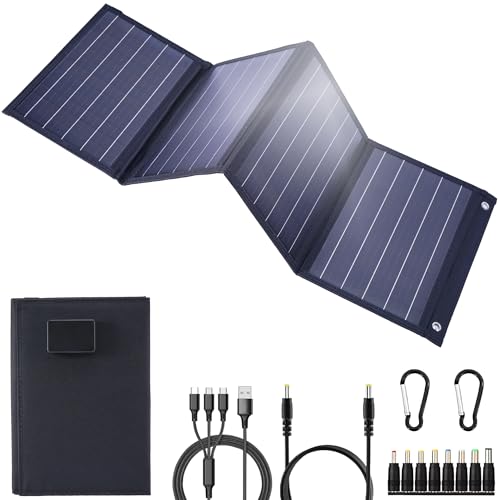
2026Upgrade 40W Foldable Solar Panel Charger

45W Portable Solar Panel Charger

ZeroKor 300W Portable Solar Generator
More Details On Our Top Picks
Ryno Tuff keeps the format simple, a foldable panel with two USB ports and a light enough build for a pack. For day hikes, fishing trips, and base-camp charging, that matters more than fancy extras because you can spread it out and top up phones or battery packs without dragging along a larger station.
The trade-off is obvious: 21W is a modest output, so you should treat it as a support charger, not a high-demand power source. Compared with the bulkier Jackery HomePower 3600 Plus, this one is for carrying, not for running a house, and that makes it a cleaner fit for casual outdoor use.
Strong Points
- Foldable design tucks into a daypack without much fuss.
- Two USB ports let you charge more than one small device.
- Lightweight format suits hikers who count every extra ounce.
- Works well as a backup top-off source for battery packs.
Things To Consider
- 21W output is better for light charging than heavy loads.
- Fold-out panels need a little care during packing and storage.
- You may want a separate power bank for steadier overnight use.
Feature Snapshot
Who It Suits Best
Outdoor commuters, campers, and anglers who want a compact solar charger will get the most from this one.
A Better Fit Elsewhere
ZeroKor 300W Portable Solar Generator suits you better for cabin stays or outage prep, where AC outlets and stored energy matter more than portability.
This Aivica unit is less about raw solar output and more about resilience in a compact form. You get SW, NOAA, AM, and FM radio bands, hand-crank backup, a built-in flashlight, SOS signaling, and enough battery capacity to serve as a useful emergency hub during outages or long road delays.
That combination makes sense in a kitchen drawer, go-bag, or storm kit, especially for households that want one device covering several basics. Compared with the Ryno Tuff panel, this one is more self-contained, but it also asks you to accept a bulkier shape and a narrower focus on emergency use.
Highlights
- Multiple radio bands help you follow weather and local updates.
- Hand-crank input adds a backup charging path without outlets.
- Flashlight and SOS mode make it useful for storm kits.
- 20,000mAh capacity gives the unit a solid reserve for phone top-offs.
Minor Gripes
- The shape is less packable than a slim solar panel.
- You may not want it as your only travel charger.
- Radio-first design means it serves a narrower role than a solar station.
Details At A Glance
Made For
You’ll appreciate this most for emergency prep, apartment outage kits, and vehicle storage where one device needs to cover more than charging.
Where A Sibling Pick Shines
GEYOTO 45W Portable Solar Panel Charger is the better match for commuters and backpackers who want a lighter solar-first setup instead of a radio-led unit.
The Jackery HomePower 3600 Plus sits in a different class from the compact panels above it, with a 3584Wh LFP battery and 3600W AC output. LFP means lithium iron phosphate, a battery chemistry known for stable storage characteristics, and that scale matters for households that want to keep refrigerators, tools, or essential electronics running during extended outages.
Compared with the smaller solar chargers in this roundup, this one is built for placement, not carrying. You can also expand capacity to 21kWh, which is a serious amount of headroom for RV trips, workshop use, or backup planning, though the size and complexity mean it’s clearly not the casual grab-and-go option.
Upsides
- High AC output supports more demanding household equipment.
- LFP battery chemistry suits long-term storage-minded use.
- Expandable capacity gives you room to scale later.
- Two 200W panels add meaningful solar input from the start.
- Works well for RVs, home backup, and serious outage planning.
Areas To Watch
- Size and weight make it far less portable than the smaller picks.
- The setup asks for more space and more attention.
- It’s more than most casual campers need.
Core Details
Right Fit For
Households, RV owners, and home-workshop users who want a large solar power station will get the clearest benefit here.
Skip It When
Ecosonique 30W Foldable Solar Panel Charger is a smarter match for light travel, since it stays simpler and easier to carry.
Ecosonique leans into the practical middle ground, with USB-C and USB-A outputs, a foldable layout, ETFE panel material, and a waterproof build. ETFE is a durable fluoropolymer film used on solar panels to help with surface wear, so that detail matters for travel gear that gets opened, folded, and packed often.
That makes it a sensible choice for campers and road trippers who want a straightforward panel for phones or power banks. Compared with the Ryno Tuff 21W model, this one gives you more output and a cleaner port mix, though it also brings a slightly more gear-heavy feel.
Best Bits
- USB-C and USB-A ports cover common charging cables.
- Foldable frame makes storage easier in a trunk or pack.
- ETFE surface adds a tougher finish for outdoor handling.
- Waterproof build helps it suit changeable weather on trips.
Softer Spots
- The panel is still a support charger, not a full station.
- Folding hinges and cables need routine care during packing.
Quick Facts
Whose Shelf It Belongs On
Travel-heavy shoppers who want a compact solar panel for personal electronics will find this easy to work with.
A Better Fit Elsewhere
Jackery HomePower 3600 Plus Power Station fits households that need stored backup energy, not just a portable charging panel.
Dongindar takes a more performance-first angle with a 40W foldable panel, MPPT charging, and a mix of USB-C, USB-A, and DC12V outputs. MPPT stands for maximum power point tracking, a charge-control method that helps the panel aim for more efficient energy transfer as conditions change, which is useful on variable outdoor days.
The 25% efficiency claim and IP67 waterproofing put it ahead of simpler travel panels in durability and charging ambition. The trade-off is that more advanced charging hardware usually comes with more to think about, so it fits organized outdoor users better than someone who wants the simplest possible setup.
Reasons To Buy
- 40W output gives you more headroom than entry-level panels.
- MPPT support helps the charging system stay efficient.
- USB-C, USB-A, and DC12V widen device compatibility.
- IP67 rating suits rougher weather and dusty conditions.
- Strong pick for travel kits that need faster replenishment.
Points To Note
- More capability usually means a bit more setup attention.
- The foldable format still needs dry, careful storage.
At A Glance
Built With In Mind
You’ll get the most from this model as a serious camping or emergency-prep panel where portability and charging speed both matter.
Another Choice May Suit
Ecosonique 30W Foldable Solar Panel Charger is the calmer option for lighter travel, especially for short trips and simpler charging needs.
GEYOTO brings together a 45W foldable panel, dual USB-C, USB-A, 25W PD, and an IP68-rated build in a 1.7 lb package. PD means power delivery, a charging standard that helps compatible devices take in power more efficiently, which matters when you’re topping up phones or power banks on a schedule.
That mix makes it the most port-flexible of the smaller solar panels here, and the light weight helps on backpacking trips. Compared with the Dongindar 40W model, it offers a slightly different balance, emphasizing portability and port variety over the more control-heavy charging setup.
Plus Points
- Light 1.7 lb build is easy to carry all day.
- Dual USB-C plus USB-A broadens cable compatibility.
- 25W PD helps supported devices charge more efficiently.
- IP68 rating gives you a higher level of dust and water protection.
- Good fit for backpacking, trail use, and phone top-offs.
Room For Improvement
- The light build helps portability, but you still need careful handling.
- More ports don’t change the fact that it’s still a panel, not a power station.
Spec Overview
The Right Fit
Backpackers and travelers who want a light solar panel with a broad port mix will find this especially useful.
Swap It Out When
Jackery HomePower 3600 Plus Power Station is the better call for house backup, where stored energy matters more than trail weight.
ZeroKor gives you the broadest small-station setup in this roundup, combining a 300W power station, a 40W foldable panel, and a 100W portable battery pack with AC outlet support. You also get multiple output types, including two AC outlets, a DC port, several USB ports, and a QC3.0 USB port, so the station suits mixed-device households and campers who need a little of everything.
Its built-in battery management system adds short-circuit, over-current, over-voltage, overload, and overheating protection, which is a useful layer of control for regular portable use. Compared with the Jackery HomePower 3600 Plus, this one is much lighter-duty, but it’s also a more approachable first step into solar power storage.
Standout Traits
- Multiple output types help you charge varied gear from one unit.
- Included panel and power station create a ready-to-use package.
- Battery management system adds several layers of circuit control.
- Built-in flashlight with reading and SOS modes adds utility.
- Good fit for camping, RV use, and short outages.
Honest Caveats
- 300W output is modest next to the higher-capacity station above it.
- Long-term storage needs attention, including periodic recharging.
- More ports and components mean more items to keep organized.
Feature Rundown
Perfect Match For
Campers, RV users, and families who want a compact solar generator with multiple outputs will get solid value here.
Where A Sibling Pick Shines
For larger backup needs, Jackery HomePower 3600 Plus Power Station is the stronger long-haul option because it carries far more stored energy.
How To Choose The Right Solar Powered Battery Banks
Match Output To Your Actual Load
Start with the gear you plan to charge, not the headline number on the product page. A 21W foldable panel is fine for phones and small battery packs, while a 300W or 3600W station belongs in a different lane entirely.
For commuting, camping, and weekend travel, lighter output usually keeps the setup simpler and easier to carry. House backup and RV use call for more stored energy, more outlets, and a charger that can keep pace with real demand.
Port Mix Matters More Than It Sounds
USB-C, USB-A, DC, and AC ports each solve a different problem. A phone user wants simple USB output, while a camper with a power bank or small appliance needs more variety.
Power Delivery, often shortened to PD, is useful for supported devices that can take in power more efficiently. MPPT, the charge-control system found on some higher-tier panels, also helps make better use of changing sunlight.
Weight, Foldability, And Storage Change Ownership
A light panel folds into a daypack and stays easy to manage in a car trunk. Heavier stations ask for a permanent or semi-permanent home, which is fine for outage prep but less friendly for spur-of-the-moment travel.
Materials matter too, especially ETFE panel surfaces and higher weather-resistance ratings. They don’t remove maintenance, but they usually handle repeated folding, dust, and outdoor packing better than plain surfaces.
Think About Recovery, Not Just Runtime
A solar charger only helps as much as it can replenish power during the day. That’s where efficiency, panel size, and sunlight exposure determine how useful the setup feels after a long evening of phone use.
For most households, a compact charger is support gear. For a storm kit, a larger station with stored capacity becomes the anchor, and that difference should guide the purchase more than any single feature.
Things Worth Knowing First
Common Shopping Slip Ups
Many people focus on panel wattage and forget port type, which leads to awkward cable mismatches later. A panel with the wrong output mix can feel limiting even when the wattage looks fine on paper.
Storage is another easy miss. Foldable gear still needs dry, careful packing, and power stations need periodic attention so the battery stays in healthy shape for regular use.
The Upgrade Payoff
Higher-tier models tend to cost more because they pack bigger batteries, stronger outlet support, and better charge management. You also pay for tougher materials, more complex internal protection, and larger usable capacity.
That extra spend makes sense for RV travel, home backup, and work setups that can’t tolerate small interruptions. For light camping or day hikes, a simpler panel usually gives you the cleaner fit.
Frequently Asked Questions
What size solar setup works for phone charging?
A compact 21W to 45W panel covers phone top-offs and small power banks well. You’ll want more capacity only when you’re also running larger devices or storing backup energy.
Is a solar panel the same thing as a power station?
No, a panel collects energy, while a power station stores and outputs it through outlets. The panel is lighter, but the station gives you broader use indoors or during outages.
What does MPPT mean on a solar charger?
MPPT stands for maximum power point tracking, a control system that helps a panel work more efficiently as sunlight changes. It matters most on better-equipped models with more charging ambition.
Why do some solar units use LFP batteries?
LFP means lithium iron phosphate, a battery chemistry used in larger portable stations. It’s commonly chosen for stable storage behavior and long service planning.
What should you keep in mind for outdoor storage?
Keep foldable panels clean, dry, and flat enough to avoid stress on the hinges or cables. For larger stations, periodic recharging helps them stay ready for the next outage or trip.
Final Verdict
Your best match depends on whether you need a carry-anywhere panel or a real backup station. Ryno Tuff, Ecosonique, and GEYOTO suit lighter travel, while ZeroKor and Jackery shift into more serious power storage. Aivica fills an emergency-prep niche, and Dongindar is the most technical of the portable panels. Choose the model that fits your gear list, your storage space, and the way you actually spend time outdoors.
