

You want solar gear that fits the way you travel, not just the way a spec sheet reads. Some setups need a soft, curved panel for a van roof, while others need a foldable suitcase you can park beside the rig and move with the sun.
This roundup keeps the focus on RV use, from quick battery maintenance to fuller off-grid charging. You’ll see which picks suit rooftop installs, portable charging, shaded campsites, and tighter storage spaces.
Quick Look At The Shortlist

Renogy Flexible Solar Panel 100 Watt, 240° Ultra Flex Bendable

Renogy 200W Portable Solar Panel, IP65 Waterproof Foldable Solar Panel
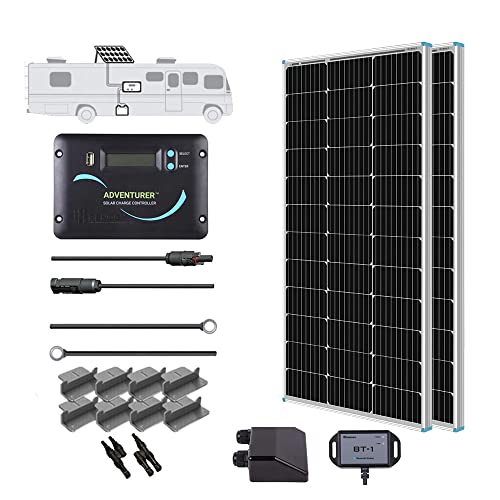
Renogy 200W 12V N-Type RV Solar Panel Kit with Adventurer 30A Controller

SUNER POWER 30W 12V Solar Battery Charger Maintainer

Renogy ShadowFlux Solar Panel 400 Watt, N-Type 25% High-Efficiency

Renogy 400W Portable Solar Panel

N-Type 16BB 400W Bifacial Solar Panel

N-Type 16BB 200 Watt Solar Panel, 2×100W Solar Panels

Renogy Solar Panels 200 Watt N-Type, 200W Solar Panel 16BB
More Details On Our Top Picks
Curved roofs and tricky mounting spots are where this flexible panel makes sense. The 240-degree bend range and slim 0.1-inch profile help it sit closer to marine decks, van skins, and cabin curves than a rigid module would.
The IP68 rating matters for exposed travel, since it signals a sealed build for harsher weather and roadside grime. You may still want a careful install plan, because flexible panels usually depend more on surface prep and attachment quality than a framed rooftop panel.
Strong Points
- Bends to follow curved surfaces without the bulky feel of a rigid panel.
- Low profile suits van roofs where height clearance matters.
- IP68 sealing gives you confidence around spray, dust, and weather exposure.
- Good fit for marine and RV layouts that need a lighter visual footprint.
Points To Note
- Flexible panels usually rely on thoughtful mounting, so surface prep matters a lot.
- Heat can build more easily on close-mounted panels, depending on airflow and roof shape.
- Less friendly for setups that need a carry-and-store panel.
Feature Snapshot
Who It Suits Best
You’ll get the most from this panel on a van, boat, or RV roof that isn’t flat and simple.
A Better Fit Elsewhere
Renogy 200W Portable Solar Panel, IP65 Waterproof Foldable Solar Panel is a stronger match for travel setups that need to move between campsites and storage quickly.
This foldable panel leans into campsite flexibility, especially for RV trips where your parking spot changes often. The kickstand helps with aiming, and the USB-A plus USB-C outputs give you direct device charging alongside power-station use.
Compared with the flexible Renogy option above, this one is easier to move, stash, and point toward better sun. The trade-off is simple, portable gear usually asks more from your storage space and setup routine than a fixed roof panel.
What We Like
- Foldable format is handy for moving between the RV, storage, and campsite.
- Kickstand supports better angle placement in changing light.
- USB-A and USB-C outputs add direct charging flexibility.
- IP65 protection suits outdoor use around dust and splashes.
- Easy to pair with a power station during outages or remote stays.
Small Caveats
- Portable panels need a place to store the folded unit safely.
- You’ll spend more time positioning it than a fixed roof install.
- Best results depend on keeping the panel clean and angled well.
Quick Facts
Made For
You’ll appreciate this most as a travel-friendly power source for campsites, backup use, and moving RV routines.
Swap It Out When
Renogy 200W 12V N-Type RV Solar Panel Kit with Adventurer 30A Controller is the steadier choice for a permanent roof setup.
A complete kit changes the conversation, because you’re not piecing together a controller and mounts separately. The included Adventurer 30A LCD PWM charge controller, plus mounting brackets, makes this a stronger match for first-time rooftop installs on RVs, trailers, boats, and campers.
Compared with the portable Renogy 200W foldable panel, this setup is for a more settled installation. That’s the trade-off, less grab-and-go convenience, more consistency once the system is mounted and wired.
Reasons To Buy
- Kit format reduces guesswork for a rooftop solar setup.
- LCD readout on the controller helps you keep an eye on charging.
- Mounting brackets are already part of the package.
- Works well for RV owners who want a cleaner, fixed system.
- 12V design fits many common vehicle and camping battery setups.
Softer Spots
- PWM means pulse-width modulation, a simpler controller style that’s fine for many basic systems but less flexible than some higher-end options.
- Installation takes more planning than a portable panel.
- Fixed hardware makes storage less of a concern, but less portable too.
Core Details
Right Fit For
You’ll like this most for a first rooftop solar install on an RV or camper where you want a tidy all-in-one path.
Where A Sibling Pick Shines
SUNER POWER 30W 12V Solar Battery Charger Maintainer makes more sense for long-term battery upkeep on a parked vehicle or trailer.
For seasonal RVs, boats, and garage-kept vehicles, a maintainer like this can be the quiet helper in the background. The built-in MPPT controller, meaning maximum power point tracking, is meant to manage charging more efficiently than a basic controller, while the adjustable bracket helps with panel angle.
That smaller 30-watt output tells you the mission clearly, battery upkeep rather than full-scale charging. It’s a smart fit for storage periods and light maintenance, but not the right tool for running bigger off-grid habits.
Positives
- Good match for keeping a 12V battery topped during storage.
- Built-in MPPT controller adds charge-management smarts.
- Adjustable bracket helps you angle the panel more easily.
- Waterproof design suits outdoor mounting on vehicles and trailers.
Things To Consider
- 30 watts suits maintenance, not heavy energy use.
- Best used as a steady helper, not a main RV power source.
- Owners usually benefit from checking dust and debris on a small panel more often, because a little grime matters more at lower output.
At A Glance
Whose Shelf It Belongs On
You’ll like this most for a parked RV, trailer, or boat that needs battery upkeep rather than full household-style solar power.
Another Choice May Suit
Renogy 200W Portable Solar Panel, IP65 Waterproof Foldable Solar Panel is the better call for travel days and campsite charging.
Partial shade is where many rooftop arrays stumble, so this ShadowFlux pair is aimed at a common RV headache. Renogy says the layout is tuned for tree cover, nearby buildings, roof edges, leaves, and even snow, which gives you more breathing room in mixed-light parking spots.
The two 200-watt panels also make the system feel more modular than a single large slab. That can help with roof planning, though the honest read is that you’ll still want enough space and a clean mounting layout to take advantage of them.
Highlights
- Built with partial shade in mind, which matters at campsites and under trees.
- Two-panel setup can be easier to position on some roofs.
- N-type cell design is aimed at stronger efficiency.
- Good rooftop fit for RVs, marine setups, and home arrays that face variable light.
Areas To Watch
- Needs enough mounting room to make the dual-panel format worthwhile.
- Higher-output gear usually asks more from your charge controller and wiring plan.
- Roof placement still matters, because shade tolerance helps most, it doesn’t erase shading altogether.
Details At A Glance
Built With In Mind
You’ll get the most from this on a roof that sees changing light throughout the day.
Look Elsewhere When
Renogy 400W Portable Solar Panel, Premium Materials for Decades of Use fits you better when portability matters more than rooftop planning.
Large portable panels are a different kind of RV companion, and this one is built for bigger power-station habits. The suitcase format, sturdy kickstand, and plug-and-play setup make it easier to deploy beside the rig than a roof-mounted system that never moves.
IP67 waterproofing also matters for outdoor travel, because portable gear gets set down in more places and sees more handling. Compared with the 200-watt foldable pick, this is a bigger, more commitment-heavy option, so storage space and lifting comfort matter.
Upsides
- 400-watt portable format suits larger charging jobs.
- Suitcase style is easier to position near your RV or campsite.
- Kickstand helps you angle the panel without improvising a mount.
- Plug-and-play setup keeps the routine simpler for mobile use.
- IP67 protection adds confidence around dust and water exposure.
Honest Caveats
- Heavier portable gear can be awkward to move often.
- Needs enough storage room in the RV or tow vehicle.
- Best suited to users comfortable handling a larger panel package.
Feature Rundown
The Right Fit
You’ll like this most for a power station setup that needs a strong portable source beside the RV.
A Better Fit Elsewhere
N-Type 16BB 200 Watt Solar Panel, 2×100W Solar Panels suits tighter storage and lighter rooftop planning.
Bifacial means the panel can work with light from both faces, which is why this style often interests rooftop owners with room to plan around reflections. The 16BB cell layout, a busbar arrangement that helps carry current across the panel, points to a more advanced build than simpler 200-watt choices like the earlier Renogy kit.
The dual-module parallel anti-shade design is also worth a look for RV roofs that see uneven light. You’ll still need the right mounting space and wiring plan, though, because higher-output panels tend to reward a more careful system design.
Best Bits
- Bifacial layout may help you capture more available light in the right setup.
- Dual-module parallel design helps soften the impact of partial shading.
- 400 watts gives you serious roof-array potential.
- Fits 12V and 24V systems, which helps with planning flexibility.
Room For Improvement
- Needs enough roof area to make sense.
- Advanced output potential also means you’ll want compatible hardware around it.
- Best results depend on installation quality and surrounding surface reflectivity.
Core Details
Who Should Grab It
You’ll get the most from this on a roomy rooftop where you want a more advanced panel layout.
Reach For A Different Pick When
Renogy 200W Portable Solar Panel, IP65 Waterproof Foldable Solar Panel is easier to live with for frequent campsite changes.
Split panels matter in cramped RV and van spaces because you can work around vents, racks, and skylights more easily. This 2-by-100-watt format keeps the installation flexible, while the monocrystalline PV module, a single-crystal panel style, is a familiar fit for compact off-grid systems.
Compared with the full 400-watt bifacial Callsun panel, this one is far easier to shape around tight roof layouts. The trade-off is plain, you give up total output in exchange for easier placement and a smaller visual footprint.
Positives
- Two smaller panels are easier to place around rooftop obstacles.
- Compact shape suits vans, cabins, and mixed-use RV roofs.
- Monocrystalline module type is a familiar choice for off-grid plans.
- Works with 12V and 24V systems, which helps in multi-use setups.
Worth Noting
- Two-panel planning takes a bit more layout thought than one larger panel.
- Lower total output than the 400-watt models in this roundup.
- Mounting hardware and wire routing still need careful attention on smaller roofs.
Feature Card
Best Suited To
You’ll like this most if your RV roof is crowded and you need a tidier way to place solar around vents or racks.
Where Another Pick Fits Better
Renogy Solar Panels 200 Watt N-Type, 200W Solar Panel 16BB suits a van or cabin owner who wants a similar wattage from a single brand with a simpler roof layout.
This 200-watt Renogy panel sits in the middle of the pack in a useful way, especially for Class B vans, RV roofs, cabins, and small farm setups. The 16BB N-type cell design gives you a more modern panel profile without pushing into the larger footprint of the 400-watt choices.
For many RV owners, that balance is the whole point. You get enough output for a serious start or an added roof bank, while avoiding the storage and mounting demands that come with the heavier portable or dual-panel options.
Bright Spots
- 200-watt format is versatile for many RV roof plans.
- 16BB N-type design suggests a more advanced cell layout.
- Good fit for Class B vans and compact cabins.
- Works across several common off-grid environments without feeling oversized.
Minor Gripes
- Doesn’t offer the portability of the foldable options.
- Lower output than the 400-watt models for larger power needs.
- Best matched to a planned roof install rather than a quick carry-out setup.
Technical Sheet
Made For
You’ll like this most for a straightforward rooftop setup on a Class B van, RV, or small cabin.
Consider Something Else When
Renogy 400W Portable Solar Panel is the better path for travelers who want more output in a movable suitcase-style format.
How To Choose The Right Solar Panels For Rv
Match The Panel To Your Roof And Travel Style
RV solar works best when the panel shape matches the space you actually have. Flexible panels suit curved roofs and low-clearance builds, while framed rooftop panels usually make more sense on flatter, roomier surfaces.
Portable panels are a different category altogether, because you place them on the ground and move them with the sun. That helps during campground stays, but it also means more lifting, more storage, and more setup time.
Think In Watts, Not Hype
Wattage tells you how much charging potential you’re working with, and it should line up with your battery habits. A 30-watt maintainer is for keeping a stored battery healthy, while 200 watts fits modest RV charging, and 400 watts moves into larger off-grid setups.
The real choice is about routine. Light weekend use, long boondocking stops, and full-time travel each demand a different amount of headroom.
Controller Type Changes The Experience
A controller manages the flow from panel to battery, and the style matters. PWM, meaning pulse-width modulation, is a simpler and often more affordable approach that works well for basic systems, while MPPT, meaning maximum power point tracking, usually suits users who want stronger charge management.
That difference shows up most in steady use, especially on systems where sun conditions change through the day. You do not need the fanciest controller for every RV, but you do want one that matches the rest of the setup.
Shade, Storage, And Maintenance Matter More Than People Expect
Shade-tolerant panels help on wooded sites, near tall rigs, or beside buildings, but no panel ignores shade completely. Storage matters just as much for portable gear, because a suitcase panel that rattles around in a bay stops being convenient fast.
Cleaning is simple but important, especially for smaller maintainers and portable panels that lose usefulness quickly under dust or road film. The best pick is usually the one that fits your routine without making every departure feel like a project.
What To Weigh Before You Commit
Mistakes Worth Dodging
One common mistake is choosing wattage by size alone. A small maintainer and a 400-watt roof array solve completely different problems, so you want the output to match your battery use, not your wish list.
Another slip-up is forgetting about installation style. Portable panels need storage room, roof panels need mounting space, and flexible panels need a clean surface that stays secure over time.
The Upgrade Payoff
Higher-tier panels usually cost more because they pack in more output, better cell design, stronger weather protection, or more refined shading behavior. In this category, those extras matter most for full-timers, frequent boondockers, and rigs that see changing light.
You feel the upgrade most when your day depends on steadier charging and less fuss. For casual weekends, a simpler panel often makes more sense, because the premium path only pays off when your setup will really use it.
Frequently Asked Questions
What size solar panel works for a small RV?
A 200-watt panel is a common starting point for modest RV charging needs. A 30-watt maintainer fits battery upkeep rather than daily power use.
Are flexible solar panels worth it on curved roofs?
Flexible panels make the most sense on curved van and boat roofs where rigid frames are awkward. The trade-off is that careful mounting matters more than it does on a framed panel.
Do portable panels make sense for camping?
Portable panels work well when you want to move them toward better sun and store them after use. They also suit campsites where rooftop space is limited or already crowded.
What does MPPT do in a solar charger?
MPPT stands for maximum power point tracking, and it helps manage charging more efficiently than a basic controller. That matters most on systems that see changing light through the day.
Should you choose one large panel or two smaller ones?
Two smaller panels are easier to place around vents and other roof obstacles. One larger panel can be simpler to wire and mount when you have a clear, open roof area.
Final Thoughts
The right RV solar panel is the one that fits your roof, your storage space, and your travel rhythm. A flexible panel works for tricky curves, a portable panel suits changing campsites, and a 400-watt rooftop setup serves more demanding off-grid routines. For battery upkeep, the small maintainer is enough; for more serious power use, the higher-output picks make more sense. Choose the setup that matches how you actually travel, and you’ll live with it more easily.
