

Roof-mounted solar gets practical fast, whether you’re backing up a cabin, trimming grid use at home, or building power for an RV. The right panel shape, wiring range, and frame style matter more than flashy marketing, because your roof space is fixed and your mounting plan usually isn’t forgiving.
This roundup keeps the focus on fit. You’ll see higher-output bifacial panels, smaller 200W choices, and a kit with a controller for simpler off-grid planning, so you can match the panel to your roof, not the other way around.
Quick Look At The Shortlist

JJN 550 Watt Bifacial Solar Panels 2PCS

Renogy Solar Panels 200 Watt N-Type
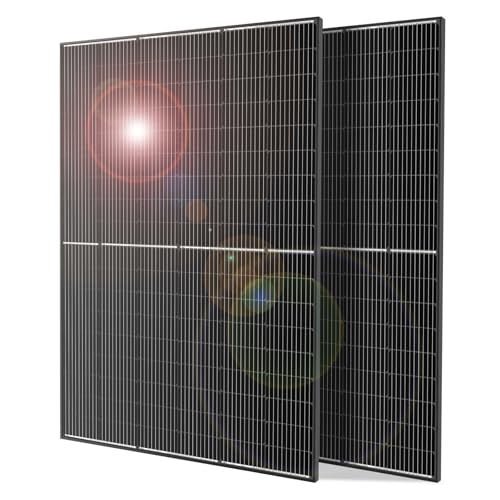
DOKIO 800W Solar Panel Set 2 x 400W

JJN Bifacial 425 Watt Solar Panel

DOKIO 800W Solar Panels 2-Pack of 400W

ECO-WORTHY 200 Watt Solar Panel Kit

Renogy ShadowFlux Solar Panel 400 Watt

N-Type 16BB 400W Bifacial Solar Panel

More Details On Our Top Picks
Roof space is where this JJN panel makes its case, because the 550W format gives you more output per panel than the smaller 200W choices below. The bifacial design means the rear side can also contribute under the right mounting conditions, so open-frame roof setups and ground-adjacent installs may get more from the layout than a flat, tightly boxed roof. It’s a strong fit for cabins, farm buildings, and larger RV builds that can carry a heavier panel footprint.
The trade-off is simple, size and system planning matter more here than with compact panels like the Renogy 200W units. You’ll want to map roof area, mounting rails, and inverter or battery match carefully, since a bigger panel can be awkward on cramped roofs. For someone building around fewer, larger modules, though, the math looks tidy.
Strong Points
- High wattage per panel helps you cover more roof energy needs with fewer modules.
- Bifacial construction can make sense on bright surfaces and open mounting setups.
- Monocrystalline cells suit owners who want efficient use of limited roof space.
- Works across 12V, 24V, and 48V system designs, which broadens planning options.
- Good fit for larger cabins, farms, and RV roofs that can handle bigger panel formats.
Points To Note
- Large-panel sizing asks for careful roof measurements before mounting starts.
- Bifacial gains depend on placement, so covered or low-clearance roofs may see less value.
- Heavier physical handling can be less friendly for solo installs.
Feature Snapshot
Who It Suits Best
You get the most from this panel when you’re building a larger roof array for off-grid living, farm power, or a roomy RV setup.
Where A Sibling Pick Shines
Renogy Solar Panels 200 Watt N-Type suits smaller roofs better, especially when you need easier placement and less demanding handling.
This Renogy panel sits in a very workable middle ground for roof projects that don’t need huge modules. The 200W size is easier to arrange around vents, seams, and tight mounting zones, and the 12V/24V compatibility keeps it useful for van roofs, cabins, and smaller home arrays. In most garage or RV builds, that kind of flexibility saves planning headaches.
The 16BB cell layout, meaning sixteen busbar lines that help move current across the panel, is there to support steadier electrical flow. Compared with the JJN 550W panel, you give up raw output per module, but you gain easier handling and more placement freedom. That makes this a sensible choice for owners who want a cleaner, more modular layout.
Upsides
- Compact 200W size fits around roof hardware more easily than larger panels.
- Works with 12V and 24V systems, which helps with common small setups.
- N-Type cell construction is a useful fit for efficiency-focused roof plans.
- Renogy’s format suits vans, cabins, marine roofs, and modest home arrays.
Minor Gripes
- You may need more panels to reach the output target of a larger array.
- Smaller module size means more mounting pieces and more wiring decisions.
- For very open roofs, a larger bifacial panel can be a simpler route.
Core Details
Built With In Mind
You’ll appreciate this most on a van roof, cabin roof, or home setup where panel placement has to work around vents and seams.
Another Choice May Suit
JJN 550 Watt Bifacial Solar Panels 2PCS makes more sense for larger roofs that can support fewer, higher-output modules.
DOKIO’s 2-panel, 800W setup is aimed at people building serious roof capacity without jumping straight into a custom array. The 9.84-foot cables add breathing room during layout, and the aluminum frame with pre-drilled holes gives you a clearer path for mounting on sheds, yards, or larger off-grid roofs. That kind of hardware support matters more than it sounds like on a real install day.
Compared with the Renogy 200W panel, this set is much more about coverage and expansion than compact placement. You’ll want space and a structured mounting plan, because two large panels can take over a smaller roof fast. For outbuildings and larger stationary setups, the format feels well matched to the job.
Bright Spots
- Two 400W panels give you a high-capacity starting point for off-grid power.
- Long cables help with roof routing and placement around structural obstacles.
- Pre-drilled holes simplify mounting on sheds and similar surfaces.
- Aluminum framing is a practical material choice for outdoor use.
- Built for 24V off-grid systems, which suits larger battery banks.
Areas To Watch
- The large footprint asks for careful measuring before ordering mounts.
- Two-panel setups need more attention to alignment and wiring than a single module.
- Roof space on a home or RV can disappear quickly at this size.
Details At A Glance
Right Fit For
You get the most value from this set on sheds, yards, and larger off-grid rooftops where space and mounting structure are already planned out.
Swap It Out When
DOKIO 800W Solar Panels, 2-Pack of 400W works better than this set for smaller rooftops that need lighter, simpler panels.
For roof systems that want a step down from the 550W JJN panel without losing the bifacial idea, this 425W version sits in a very usable middle lane. The N-Type design and 16BB layout suggest a panel built for efficient current movement, while the 12V, 24V, and 48V compatibility keeps it useful across more system plans. That’s the kind of range that helps when your roof build may change later.
The UL 61730 reference matters because it points to a recognized safety and reliability standard for PV modules, which is reassuring for permanent roof installs. You still need enough roof space for a larger module, though, so this works best where output matters more than ultra-compact sizing. Compared with the Renogy 200W panel, it’s far more suited to fewer-panel, higher-output builds.
What We Like
- Bifacial construction can contribute extra harvest in the right mount setup.
- 425W output makes a cleaner fit for larger roof systems.
- Compatibility with 12V, 24V, and 48V systems widens planning options.
- N-Type and 16BB features point toward a modern, efficiency-minded design.
- Useful for homeowners, RVs, and farm roofs that need stronger per-panel output.
Softer Spots
- Larger panels need measured roof space and sturdy mounting hardware.
- Bifacial gains still depend on the surface and angle around the panel.
- For tiny roofs, the 200W class is easier to place.
Feature Rundown
Best Suited To
You’ll like this most for a permanent roof project where you want stronger output per panel and a more future-ready system layout.
A Better Fit Elsewhere
Renogy ShadowFlux Solar Panel 400 Watt suits roof areas that deal with trees, roof lines, or other shade more often.
This DOKIO pair looks built for roof projects that need size flexibility more than a single huge module. Two 400W monocrystalline panels, each with a 9.84-foot lead, make it easier to separate placement and wiring on cabins, patios, and off-grid structures. That can help a lot on awkward roof lines where one panel simply won’t fit cleanly.
Compared with the DOKIO 800W set above, the overall idea is similar, but this listing is framed more around 12V and 24V systems. That makes it a nice match for people who are building around standard off-grid batteries and want a pair that can be arranged more independently. The honest read is that you still need decent roof area, but you get useful room to work with.
Positives
- Two-panel design gives you more layout options than a single oversized unit.
- 9.84-foot leads help during roof routing and component placement.
- Monocrystalline construction suits efficiency-focused off-grid planning.
- Good fit for yards, sheds, cabins, patios, and similar structures.
Small Caveats
- More panel pieces usually mean more planning during the mount stage.
- Roof maintenance around seams and cable paths matters more on split layouts.
- Large-panel handling is less convenient on narrow roofs.
Key Specs
The Right Fit
You’ll do well with this set on a cabin, patio, shed, or off-grid roof where splitting coverage across two panels makes installation easier.
Look Elsewhere When
JJN 550 Watt Bifacial Solar Panels 2PCS suits larger roofs better when you want fewer modules and more output per panel.
This ECO-WORTHY kit stands out because it includes the 30A PWM charge controller, which saves you from matching that component separately. PWM means pulse-width modulation, a common controller type that helps manage charging between the panels and the battery bank. For RVs, campers, and smaller off-grid vehicles, that bundled approach can make the whole setup feel less complicated.
Compared with the standalone 200W panels from Renogy and Rvpozwer, this is the more guided route. You still get two 100W N-Type panels, but the controller changes the experience for someone who wants a cleaner starter package. The trade-off is less freedom than a fully custom build, though many first-time roof projects benefit from that simplicity.
Reasons To Buy
- Bundle format saves you from sourcing a separate controller right away.
- Two 100W panels keep the roof layout manageable.
- Works with 12V and 24V systems, which fits common mobile setups.
- Good match for RVs, campers, caravans, and other compact off-grid builds.
- N-Type panel design adds a modern efficiency angle to the kit.
Honest Caveats
- A bundle can be less flexible than picking every component separately.
- Controller placement needs dry, accessible storage space near the system.
- Two 100W panels may feel small for larger home roof goals.
Feature Card
Made For
You’ll get the smoothest experience here in an RV, camper, caravan, or vehicle-based setup where a bundled starter kit saves planning time.
Where A Sibling Pick Shines
Renogy Solar Panels 200 Watt N-Type is the cleaner match for shoppers who already have a controller and only need the panel itself.
Shade management is the main reason this Renogy panel belongs in a roof roundup. The listing points to partial-shading optimization from trees, roofs, buildings, leaves, and snow, so it’s aimed at spots where sunlight doesn’t stay clean all day. For a roof under branches or near taller structures, that can be a more realistic fit than a standard panel built only for open sun.
Compared with the JJN bifacial panels, this one is less about rear-side capture and more about dealing with imperfect light. The 400W total across two 200W panels also keeps the format easier to place than a single giant module. That balance makes sense for homes, RV rooftops, and marine installs that live with intermittent shade.
Highlights
- Partial-shade focus is useful on roofs with trees or nearby buildings.
- Two 200W panels are easier to position than one oversized panel.
- N-Type design keeps the efficiency story modern and relevant.
- Good fit for RV, marine, and rooftop home use where shading is common.
Worth Noting
- Shade-tolerant design helps, but it does not remove the effect of heavy shade.
- Two-panel layouts still need careful routing and secure mounting.
- For fully open roofs, a simpler high-output panel may be enough.
Technical Sheet
Whose Shelf It Belongs On
You’ll like this most on roofs that deal with tree cover, chimney shadows, or nearby structures during part of the day.
Skip It When
JJN 425 Watt Bifacial Solar Panel is a better fit for roofs that are open, bright, and ready for a simpler high-output layout.
This Callsun panel leans into a split, dual-module layout with anti-shade design, which makes it interesting for roofs that rarely get perfect sun. The bifacial build gives you a second-side contribution angle, while the parallel anti-shade setup is aimed at reducing the impact of uneven lighting across the array. For RVs, homes, vans, and marine roofs, that can be a practical mix.
Compared with the Renogy ShadowFlux option, this one feels more focused on module architecture than on shade-targeted branding. The trade-off is that all those design features may be more than you need on a wide-open roof. Still, for complex installs with patchy light, it has a lot going on in a useful way.
Standout Traits
- Dual-module parallel layout can help with uneven roof lighting.
- Bifacial format offers another path for light capture.
- 12V and 24V compatibility keeps it friendly to common off-grid plans.
- Fits RV, van, marine, home, and rooftop builds.
Trade Offs
- More design features can mean more planning time during installation.
- Anti-shade layouts make the most sense on roofs with real shading issues.
- Open, unobstructed roofs may not need this much complexity.
Core Details
Who Should Grab It
You’ll get the best use from this on roofs that face broken sun, partial shade, or split-light conditions through the day.
Reach For A Different Pick When
Renogy Solar Panels 200 Watt N-Type is easier to live with on smaller roofs that value straightforward placement over layered design.
Sometimes the most useful roof panel is the one that keeps the plan simple, and this 200W option does exactly that. The 18BB N-Type design, meaning eighteen busbars, gives it a more modern electrical layout, while the monocrystalline PV module format stays friendly to compact rooftops. For trailers, marine setups, farm buildings, and home off-grid additions, the 200W size often feels easy to place.
Compared with Renogy’s 200W panel, this one brings a slightly different cell layout and a similarly straightforward footprint. You won’t get the bigger-iron output of the JJN or DOKIO entries, but you do get a manageable module that suits incremental roof expansion. For many everyday roof jobs, that’s enough and it’s less fussy.
Best Bits
- 200W size works well for modest roof expansions.
- 18BB cell layout points to a current-friendly panel design.
- N-Type monocrystalline format suits space-conscious installs.
- Useful across rooftop, RV, farm, trailer, marine, and home systems.
Room For Improvement
- Smaller output means you may need more panels for larger energy goals.
- Less dramatic than the bigger bifacial and 400W options in this list.
- Roof planning still matters, even with a compact module.
Feature Rundown
Whose Shelf It Belongs On
You’ll appreciate this panel most for small roof additions, trailers, and compact off-grid builds where a 200W module feels easy to manage.
Not Your Match When
DOKIO 800W Solar Panel Set 2 x 400W is the stronger choice for larger roofs that need a more aggressive output jump.
How To Choose The Right Solar Panels For Roof
Match Output To Roof Space
Panel wattage tells you how much energy a module can contribute under ideal conditions, but roof space decides how much you can actually fit. Large formats like the JJN 550W and DOKIO 800W sets work best on roomy roofs, while 200W panels fit around vents, seams, and tight edges more easily.
That trade-off shows up fast on homes and RVs, because fewer larger panels can simplify wiring but demand better planning. Smaller panels can be easier to place, though you’ll often need more of them to reach the same array size.
Think About Light Conditions
Bifacial panels can use reflected light from the rear side, which is helpful on brighter surfaces and open mounts. Shade-aware designs, like the Renogy ShadowFlux panel and Callsun bifacial layout, make more sense where trees, chimneys, or neighboring structures interrupt sunlight.
For a roof that stays open all day, standard high-output panels may be enough. For a roof with patchy sun, shade tolerance can matter more than chasing a slightly bigger nameplate number.
Check System Compatibility Early
Voltage matching matters just as much as panel size. A 12V or 24V rooftop plan is common in RV, van, and cabin builds, while 48V compatibility can help in larger home or farm systems that need more headroom.
Charge controllers matter too, especially in starter kits like the ECO-WORTHY set. PWM controllers are simpler and common in smaller builds, while any roof project still benefits from a clean match between panel output, controller input, and battery bank design.
Balance Mounting Ease And Maintenance
Aluminum frames, pre-drilled holes, and longer leads can make roof work less awkward. Those details matter on a hot roof, where moving panels around is part of the job and access to cable paths is never perfect.
Flat, clean installs are usually easier to maintain later, because dust, leaves, and water pooling are easier to manage. A slightly simpler panel can end up being the more practical choice than a fancier one with awkward dimensions.
What To Weigh Before You Decide
Common Shopping Slip Ups
One common mistake is choosing wattage before measuring the roof. Another is overlooking how panel size affects wiring, clamp spacing, and the path to your charge controller.
You also want to avoid treating all 200W panels the same, because cell layout, shading behavior, and included components can change how the system feels in real use.
On a tight roof, a good layout beats a bigger number on paper. That’s the part many first-time setups miss.
The Upgrade Payoff
Higher-tier panels usually cost more because of cell design, bifacial construction, stronger output per module, or shade-handling features. You are paying for denser engineering, not just a larger label.
The upgrade makes sense on larger roofs, hard-to-reach installs, or shaded locations where more capable modules reduce hassle later. On a small, open roof, the extra spend may not change much day to day.
Frequently Asked Questions
Do bifacial roof panels need special mounting?
They work best with a setup that lets light reach the rear side. Low-clearance, tightly sealed roof mounts usually reduce that benefit.
Are 200W solar panels enough for a roof kit?
They can be enough for small off-grid loads, starter arrays, and incremental expansion. Larger homes or heavier energy use usually call for more total panel capacity.
What does N-Type mean in a solar panel?
N-Type refers to the semiconductor base used in the cell design. In practical terms, it often shows up in efficiency-focused panel builds.
Why does a charge controller matter so much?
A charge controller helps manage power from the panels before it reaches the battery bank. It matters most in smaller kits where every part of the chain needs to work together cleanly.
Is a larger wattage panel always better?
Not always, because roof fit and mounting space decide what you can actually use. A smaller panel that fits cleanly can be more useful than a larger one that creates layout problems.
Closing Thoughts
The right roof panel depends on how much space you have, how much shade your roof sees, and how much system planning you want to take on. Bigger modules like the JJN and DOKIO options suit larger roofs, while Renogy’s 200W picks and the ECO-WORTHY kit feel friendlier for compact or starter builds. Shade-prone roofs benefit from the Renogy ShadowFlux or Callsun designs, and a clean 200W panel still makes sense for simple everyday use. Match the panel to the roof first, and the rest gets much easier.
