

Camping power gets easier once you match panel size to how you travel. A weekend tent setup, a van with a power station, and an off-grid RV all ask for different output, connector types, and carry weight. The right panel keeps phones, lanterns, and small stations moving without turning camp setup into a chore.
The lineup below leans on foldable designs, weather-resistant builds, and a mix of USB and DC output options. You’ll also see where bigger wattage helps and where a smaller panel keeps life simpler. That contrast matters, because the best fit for a long basecamp looks very different from the panel you toss in a daypack.
Quick Look At The Shortlist

Renogy 200W Portable Solar Panel, N-Type Foldable Solar Panel with Kickstand

ZOUPW 100W Portable Solar Panel for Power Station, 23.5% Efficiency Mono Foldable Solar Charger

FlexSolar 100W Foldable Portable Solar Panel Charger IP67 Waterproof

FlexSolar 60W Foldable Portable Solar Panel Charger IP67 Waterproof

Renogy 400W Portable Solar Panel, Foldable Suitcase for Power Stations

SOLUPUP Solar Panels 30W Portable Foldable Solar Charger with USB-A and USB-C

Renogy 100W Portable Solar Panel for Power Stations, N-Type Foldable Solar Panel with Kickstands

110W Portable Solar Panel, Foldable Solar Charger for Power Station 20V
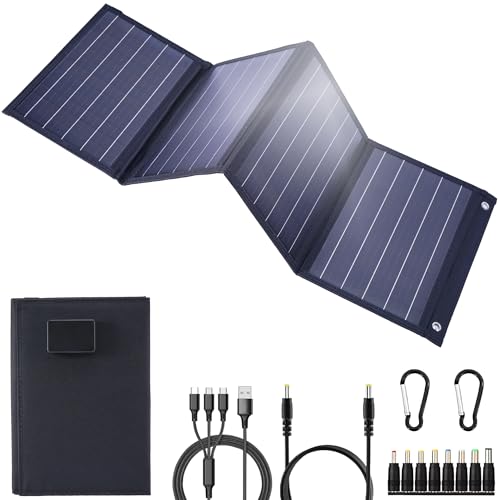
2026Upgrade 40W Foldable Solar Panel Charger, Portable N Type Cell
More Details On Our Top Picks
Two hundred watts gives you room to support a larger power station, which matters on a family campground setup or in an RV that runs lights, fans, and charging gear. The foldable frame and kickstand keep it practical for moving between sun patches, and the lightweight USB-A and USB-C outputs add a little flexibility for smaller devices.
The IP65 rating means it has protection against dust and water spray, so it suits camp weather better than a bare indoor panel. The trade-off is size, since a 200W foldout takes more storage room than the 60W and 30W options below, so you’ll want space in the van, trunk, or storage bay.
Strong Points
- 200W output gives you more headroom for a power station and fewer compromises on a multi-device campsite.
- Kickstand support helps you angle the panel without improvising with rocks, coolers, or camp chairs.
- USB-A and USB-C ports make smaller charging jobs easier without always reaching for a separate adapter.
- Foldable construction helps the panel fit a vehicle-based camping setup more comfortably than a rigid panel.
Things To Consider
- It asks for more storage space than the smaller 100W and 60W choices.
- Portable panels like this usually need regular dust-off and careful folding to keep hinges and fabric panels tidy.
- USB output is handy, though the main value here still comes from pairing it with a compatible station.
Feature Snapshot
Who It Suits Best
RV travelers and basecamp campers who want a single folding panel with enough output to support a real power station will get the most from this one.
Where A Sibling Pick Shines
Renogy 100W Portable Solar Panel for Power Stations, N-Type Foldable Solar Panel with Kickstands is the better fit for lighter packing and a simpler power setup.
This one sits in the sweet spot for campers who want a 100W panel without moving up to a bulkier kit. The mono cell design and 23.5% efficiency rating point to a panel that tries to squeeze more from the same footprint, which is useful on cloudy shoulder-season trips or a short lunch stop at a trailhead.
It’s also built for common portable stations from Jackery, EcoFlow, Anker, and Bluetti, so the fit looks straightforward for many van and tent setups. Compared with the Renogy 200W above, you give up capacity, but you also get a simpler carry and a more manageable size for solo travel.
What We Like
- 100W output is a comfortable middle ground for portable stations and weekend use.
- 23.5% efficiency helps the panel make better use of limited sun exposure.
- Cross-brand compatibility matters a lot for campers who already own a power station.
- Foldable construction keeps it easier to stash than larger suitcase-style panels.
Minor Gripes
- Its capacity is lower than the 200W and 400W Renogy choices.
- Owners commonly need to keep connectors and cables organized so the foldable setup stays neat in a pack.
- The right fit still depends on matching your station’s input needs.
Core Details
Best Suited To
Campers who already own a compatible portable station and want a mid-size solar panel with a lean footprint will appreciate this setup.
Swap It Out When
FlexSolar 100W Foldable Portable Solar Panel Charger IP67 Waterproof fits better for camp setups that also need built-in USB-A, USB-C, and DC output options.
FlexSolar leans hard into versatility, which suits campers who carry more than one type of device. The PD3.0 USB-C port, QC3.0 USB-A port, and DC output mean you can cover phones, power banks, and a small station from a single folded panel, which cuts down on adapter clutter.
The IP67 rating adds useful weather confidence for damp camps or dusty trail stops, and that’s where it pulls ahead of the ZOUPW pick on port variety. The trade-off is that this much flexibility can make the product page feel busier than a simple one-output panel, so you’ll want to know exactly which cable goes where before a trip.
Highlights
- USB-C, USB-A, and DC output options cover a wide spread of camp gear.
- 100W output keeps it relevant for power stations instead of just phones.
- IP67 weather resistance suits rougher outdoor conditions.
- It can reduce the number of separate chargers you need to pack.
- Good fit for mixed-device camps where one panel must do several jobs.
Worth Noting
- All those output paths mean you’ll want to sort cables carefully during storage.
- It makes less sense for campers who only need a basic station hookup.
- The most useful setup depends on the devices you already carry.
At A Glance
Who Should Grab It
Campers with a mix of phones, battery packs, and a small power station get the most value from the extra output options.
Another Choice May Suit
ZOUPW 100W Portable Solar Panel for Power Station, 23.5% Efficiency Mono Foldable Solar Charger makes more sense for shoppers who want a cleaner, more station-first setup.
Sixty watts is modest, and that’s exactly the point here. For solo campers, weekend hikers, or a small table setup outside a tent, the lower output keeps the panel easy to manage while still giving you USB-C, USB-A, and DC options for lighter gear.
Compared with FlexSolar’s 100W model, this one asks for less space and less weight, so packing feels easier. The honest read is that it belongs in a smaller power plan, because it suits phones, tablets, and power banks better than a hungry station.
Upsides
- 60W output keeps the panel in a light-carry range for short trips.
- USB-C, USB-A, and DC outputs let you charge several small devices.
- IP67 water resistance helps it fit outdoor use better than basic indoor gear.
- Its smaller size makes packing simpler for backpack-side camping or car trunk storage.
Small Caveats
- It is not built for larger stations or heavy off-grid demands.
- Smaller foldable panels can still need careful flattening and cable storage after a trip.
- Its best use is light charging, not whole-camp power support.
Details At A Glance
Made For
Solo campers and light packers who mainly top up small electronics rather than run a larger station will feel right at home with this one.
Look Elsewhere When
Renogy 200W Portable Solar Panel, N-Type Foldable Solar Panel with Kickstand suits campers who need much more output for an RV or a fuller power station.
Four hundred watts shifts this from “portable panel” into serious camp power territory. That makes sense for larger stations, longer stays, or RV blackouts, and the suitcase-style fold plus sturdy kickstand helps the panel stay usable without much improvising at camp.
The IP67 rating gives it solid outdoor confidence, and the build is framed around premium materials for long-term ownership. The trade-off is obvious: it’s the heaviest commitment in this group, so you’ll want vehicle access and enough storage space before you choose it.
Best Bits
- 400W output supports bigger power demands than the 100W and 60W models.
- Suitcase folding makes setup more organized than loose-panel camping gear.
- Sturdy kickstand helps with placement on camp ground or driveway use.
- IP67 protection is useful for weather-prone outdoor stays.
- Premium material focus suggests a more durable ownership path for frequent use.
Areas To Watch
- Its size makes it more vehicle-based than backpack-friendly.
- Storage and handling take more planning than with the 30W or 60W options.
- The larger format makes sense only when your station and travel style can use it.
Technical Sheet
The Right Fit
Frequent RV campers and anyone building a higher-output off-grid setup will get the most out of this larger panel.
Where A Sibling Pick Shines
Renogy 200W Portable Solar Panel, N-Type Foldable Solar Panel with Kickstand is the easier carry for campers who want Renogy build quality without the bulk of 400W.
Thirty watts keeps this in a friendly, low-pressure zone for casual camping and travel days. It’s really aimed at phones, tablets, and power banks, and the USB-A plus USB-C layout helps you plug in common devices without hunting for extra gear.
The built-in smart chip is the noteworthy part here, since it identifies the attached device and adjusts charging behavior while it manages overcurrent, overvoltage, and short-circuit protection features. The auto-reconnect function is handy too, because a cloud passing overhead won’t force you to babysit the panel every time sunlight comes back.
Reasons To Buy
- 30W output keeps the panel compact and easy to carry.
- USB-A and USB-C support covers a lot of day-to-day devices.
- The smart chip adds useful charging management for ordinary travel use.
- Auto-reconnect behavior suits camps where sunlight comes and goes.
Softer Spots
- It belongs to small-device charging, not larger station work.
- Compact panels can still be picky about cable storage and folding order.
- The simpler output design leaves less room for broader setup flexibility.
Feature Rundown
Whose Shelf It Belongs On
Casual campers, hikers, and travel packers who mainly need to top up phones and battery packs will find this one easy to live with.
Skip It When
FlexSolar 100W Foldable Portable Solar Panel Charger IP67 Waterproof makes more sense for campers who want a stronger link to a power station.
Efficiency is the headline here, and 25% is the detail that gives this Renogy panel its edge over the other 100W options in the list. For campers with limited sun windows, that kind of efficiency can matter because every hour of usable light pulls more weight.
The N-Type cell format and kickstands make it a sensible match for power-station users who want a cleaner campsite setup. Compared with the ZOUPW 100W panel, this one leans harder into output quality, while still staying in the same easy-to-pack class.
Bright Spots
- 25% efficiency gives it a strong edge for 100W class camping use.
- N-Type cell construction is a modern fit for portable solar gear.
- Kickstands help you angle the panel without extra props.
- USB-A and USB-C outputs broaden its usefulness beyond station charging.
Points To Note
- It still needs enough sun exposure to show its value.
- Foldable gear like this rewards careful packing so the hinge area stays tidy.
- Its value feels strongest for owners who care about efficiency, not just raw size.
Core Details
Best Suited To
Power-station campers who care about squeezing more useful charging from a 100W foldable panel will appreciate this one.
Where A Sibling Pick Shines
ZOUPW 100W Portable Solar Panel for Power Station, 23.5% Efficiency Mono Foldable Solar Charger is the easier match for shoppers who want a simpler, station-first layout.
Some camping setups need one panel that can adapt to different gear, and this MHPOWOS model leans into that idea. The 7-in-1 output connector and adjustable bracket point to a kit built for flexible placement and a wider spread of compatible power-station setups.
The 23.5% efficiency rating and IP67 protection round it out well enough for outdoor use, though the real draw here is the connector flexibility. Compared with the Renogy 100W pick, you get a little more wattage and a more adaptable hook-up path, which should suit campers who juggle several devices.
Standout Traits
- 110W output gives it a little more room than standard 100W panels.
- Seven-in-one connector support increases compatibility across common station styles.
- Adjustable bracket helps with placement on uneven ground or campsite tables.
- IP67 protection makes outdoor handling feel less delicate.
Trade Offs
- Extra connector flexibility can make the setup feel busier at first.
- It makes the most sense for campers who actually need multiple connection paths.
- The bracket adds usefulness, but also another part to keep track of during packing.
Feature Card
Who Will Love This
Campers who want more connector flexibility than a plain folding panel usually offers will get the most from this one.
Reach For A Different Pick When
Renogy 100W Portable Solar Panel for Power Stations, N-Type Foldable Solar Panel with Kickstands suits you better if you want a simpler, more efficiency-led build.
Forty watts makes this a light-duty companion for outdoor travel, emergency kits, and smaller charging jobs. The MPPT fast charging design stands out here, since MPPT, or maximum power point tracking, helps a charger aim for the panel’s most useful operating point as conditions change.
USB-C, USB-A, and DC12V support make it practical for smaller electronics, and the IP67 rating helps it fit rough-weather camping better than a bare-bones travel panel. The trade-off is clear, though, because it belongs to compact power needs rather than larger station work, so it suits small kits more than full camp systems.
Reasons To Buy
- 40W keeps it light and easy to carry on short trips.
- 25% efficiency is strong for a compact foldable panel.
- USB-C, USB-A, and DC12V support cover several small-device needs.
- MPPT charging behavior helps the panel adapt to changing light.
Honest Caveats
- It suits light travel use more than power-hungry camp equipment.
- Small foldable panels reward careful cable management and storage after each trip.
- The right fit depends on how much power your devices actually draw.
Core Details
Built With In Mind
Travelers, emergency-kit planners, and campers with lighter device needs will get the most from this compact panel.
Another Choice May Suit
SOLUPUP Solar Panels 30W Portable Foldable Solar Charger with USB-A and USB-C is a calmer fit for shoppers who want a simple phone-and-bank charging setup.
How To Choose The Right Solar Panels For Camping
Match Output To Your Camp Style
Panel wattage sets the pace for everything else. A 30W or 40W panel suits phones, lanterns, and battery packs, while 100W gives you a much better shot at topping up a portable station during a weekend stay.
200W and 400W panels belong to RVs, basecamps, and longer stays where charging load stacks up. The honest mistake is buying more panel than your storage space or vehicle layout can handle.
Look Closely At Ports And Compatibility
USB-A, USB-C, DC, and station-specific connectors all solve different problems. USB ports are handy for direct device charging, while DC output usually matters more for power stations and compatible gear.
Compatibility matters just as much as wattage, because a strong panel with the wrong plug can leave you underused at camp. Cross-check the station brand, connector style, and cable included before you count on a full setup.
Think About Weather, Weight, And Fold Size
IP67 and IP65 ratings point to better outdoor protection than a basic unsealed panel. That matters on damp grass, dusty trail stops, or a breezy camp table where gear gets moved around a lot.
Weight and fold size decide whether the panel feels portable or merely movable. A suitcase-style 400W unit works for vehicle camping, while a lighter 30W or 40W panel fits the kind of trip where every pound gets noticed.
Efficiency Can Change The Real-World Result
Efficiency tells you how well a panel turns sunlight into usable power relative to its size. A 25% panel can make strong use of limited roof space or a small campsite footprint, which helps on short winter days or in partial shade.
That doesn’t replace good sun placement. Kickstands, adjustable brackets, and foldable supports still matter because a panel aimed poorly can underperform even with strong specs.
Things Worth Knowing First
Common Shopping Slip Ups
Many campers focus on wattage and ignore the gear they already own. That leads to awkward cable mismatches, especially with portable stations that need a specific connector type.
Another common miss is underestimating storage. A large folding panel works well at camp, but it can become a headache in a small hatchback or tightly packed van.
When Paying More Pays Off
Higher-tier panels usually cost more because they bring stronger materials, better weather resistance, higher efficiency, or more refined connector layouts. You’re paying for easier setup and a better fit for repeated trips, not just a bigger printed number.
The upgrade makes sense for frequent campers, RV owners, and anyone depending on solar as a regular power source. For occasional outings, a smaller 30W to 100W panel often covers the real need without extra bulk.
Frequently Asked Questions
What wattage works best for camping?
For phones and battery packs, 30W to 40W usually makes sense. For power stations, 100W is the better starting point, and larger RV setups often need 200W or more.
Do foldable panels handle outdoor use well?
Foldable panels are built for portability, so they suit camp life better than rigid indoor-style gear. Weather ratings such as IP65, IP67, or IPX5 matter because they help you judge how comfortable the panel is around dust and moisture.
Why does efficiency matter so much?
Efficiency affects how much usable power you get from a given panel size. A more efficient panel can be especially useful when your camp spot has limited sun exposure or limited space.
Can you charge devices directly from a solar panel?
Yes, some panels include USB-A or USB-C outputs for direct charging. Others are better suited to a power station, so the connector layout tells you a lot about the intended use.
What’s the biggest mistake campers make?
People often buy a panel that doesn’t match their power station or storage space. A good camping setup starts with your actual devices, your vehicle room, and how often you expect to carry the panel.
Closing Thoughts
The best solar panels for camping depend on how you travel, how much gear you charge, and how much space you can spare. A compact 30W or 40W panel keeps things simple, while 100W hits a practical middle ground for most portable stations. Once you move into 200W or 400W territory, the payoff shifts toward RVs, basecamps, and longer stays. Choose the panel that fits your camp routine, and the rest gets easier.
