

Backpacking turns power into a planning problem. You want something light enough to carry, sturdy enough to survive a packed trail bag, and useful enough to justify the space it takes.
These nine solar panels suit different trip lengths, device loads, and packing styles. Some are better for a pocket-sized backup, while others make more sense for a base camp setup or a group that needs more headroom.
The Shortlist At A Glance

ELECOM NESTOUT Portable Solar Panel 28W 4-Panel
BLAVOR 10W Portable Solar Charger USB-C USB-A Outputs

FlexSolar 15W Foldable Portable 5V USB Solar Panel Charger IP67 Waterproof

BigBlue Ultra-Light Portable 25W Solar Panel Charger USB-A USB-C

FlexSolar 20W Foldable Solar Panel Charger USB-A USB-C Output

SOLUPUP Solar Panels 30W Portable Foldable Solar Charger USB-A USB-C

ELECOM NESTOUT Portable Solar Panel 28W 2-Panel
FlexSolar 25W Portable Solar Panel Charger USB-A USB-C Ports
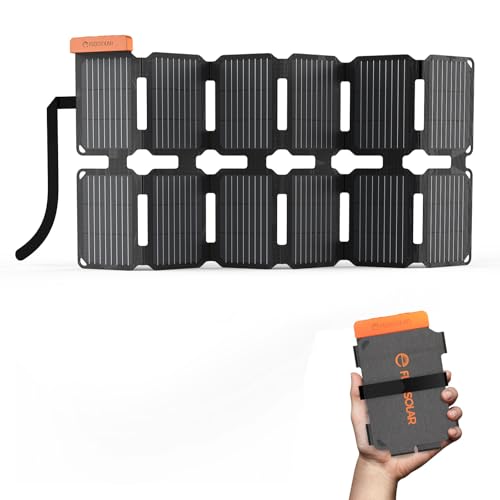
FlexSolar 36W Ultra-Portable Lightweight Solar Panel Charger USB-A USB-C DC Outputs
More Details On Our Top Picks
Trail users who want a sturdier carry piece tend to gravitate toward this ELECOM NESTOUT panel. The ripstop nylon shell gives it a tougher feel than the slimmer fabric builds in this roundup, and the four-panel layout gives it a wider working stance without feeling bulky.
Those adjustable stands matter in camp, because a panel that sits flatter on a pack lid or picnic table is easier to aim toward the sun. The trade-off is obvious enough, more structure usually means a little more fuss when you pack up, so this makes more sense for established camp stops than for constant on-the-go movement.
Strong Points
- Dual USB-A ports let you split charging between two small devices.
- 28W output gives it more breathing room than the 10W BLAVOR and the 15W FlexSolar panel.
- Ripstop nylon adds a tougher exterior for packed trips and rough handling.
- Adjustable stands help you angle the panel more cleanly on uneven camp surfaces.
- Foldable four-panel format suits base camp use without taking over your pack.
Small Caveats
- The wider body can feel less effortless than a pocket-size panel on fast hikes.
- Dual USB-A only means you lose the USB-C convenience that shows up on some later picks.
- More panel structure usually asks for a bit more careful folding and storage.
Feature Card
Who It Suits Best
Backpackers who camp in one place for a night or two and want a sturdier, more adaptable panel will get the most from this pick.
Where A Sibling Pick Shines
BLAVOR 10W Portable Solar Charger USB-C USB-A Outputs suits ultralight hikers better, especially when your priority is trimming pack weight over gaining output.
Small packs, day hikes, and quick rest-stop charging sessions fit this BLAVOR panel nicely. Its 10W output and USB-C plus USB-A mix keep it straightforward, and the IPX4 splash rating gives it a bit more peace of mind in damp trail weather.
Compared with the larger ELECOM picks, this one asks for less space and less commitment, which is exactly why ultralight hikers often prefer panels like it. The trade-off is plain, lower output means slower top-ups, so it suits a phone or small tablet more than a heavier device load.
What We Like
- USB-C and USB-A outputs make cable matching easier on the trail.
- Small foldable format slips into tighter pack pockets than the bigger 25W and 28W models.
- IPX4 splash resistance suits drizzly stops and damp mornings.
- 10W output is enough for light-duty charging needs and backup use.
Points To Note
- Lower power means you need more patience than with the 20W, 25W, 30W, or 36W panels.
- For longer trips with multiple devices, the limited output can feel lean.
- Owners usually need to keep the panel clean and angled well to get the most from a smaller array.
Quick Facts
Who Will Love This
Minimalist hikers who only need occasional phone charging will find the size and port layout easy to live with.
Look Elsewhere When
FlexSolar 20W Foldable Solar Panel Charger USB-A USB-C Output makes more sense for you when a little extra output matters more than the smallest possible footprint.
This FlexSolar panel lands in the useful middle ground. The 15W output gives you more room than the 10W BLAVOR, yet it still stays simpler and lighter than the 25W and 30W options further down the list.
Its IP67 waterproof rating means it’s built with a stronger dust-and-water defense than the IPX4 BLAVOR, which matters on muddy routes or near wet ground. The catch is that it only sends power through one USB-A output, so it fits best as a direct-charge backup rather than a multi-device station.
Bright Spots
- IP67 rating gives it stronger weather confidence for rough outdoor use.
- 15W output is a sensible step up from smaller entry-level panels.
- Works with phones, small power banks, fans, flashlights, smartwatches, and portable Wi-Fi gear.
- Lightweight foldable design stays friendly for pack space.
Areas To Watch
- Single USB-A output keeps it less flexible than the dual-port FlexSolar 20W and 25W models.
- Charging time depends heavily on the device size, so larger devices can feel slow.
- Since it does not store power, you need direct sunlight during use.
At A Glance
Best Suited To
Backpackers who want a simple emergency charger with better weather resistance than basic splash-proof models will appreciate this one.
A Better Fit Elsewhere
BigBlue Ultra-Light Portable 25W Solar Panel Charger USB-A USB-C fits you better when port flexibility and stronger output both sit near the top of the list.
The BigBlue panel is all about keeping mass low while still giving you useful output. At 0.84 pounds, it sits in the kind of weight range that makes sense for hikers who count every ounce, and the USB-A plus USB-C pairing helps cover newer and older cables without adapters piling up.
IP68 waterproofing also places it in a more weather-tolerant class than the IPX4 BLAVOR and the IP67 FlexSolar 15W. The trade-off is that ultralight gear usually asks you to be a little more deliberate with handling, so this looks best for careful packers who want a tidy balance of weight and utility.
Highlights
- 0.84-pound weight is easy to justify on long trail days.
- USB-A and USB-C ports make device matching simpler.
- 25W output gives you more room than the 15W and 20W picks below it in power terms.
- IP68 rating offers a strong weather-resistance signal for outdoor use.
Worth Noting
- Very light gear can feel less forgiving if you toss it around in a crowded pack.
- One panel class still needs direct sun and thoughtful placement to perform well.
- For group travel, a larger-output panel such as the SOLUPUP 30W may feel more comfortable.
Technical Sheet
Who Should Grab It
Ultralight backpackers who still want a practical amount of charging output will get the most from this panel.
Swap It Out When
ELECOM NESTOUT Portable Solar Panel 28W 4-Panel suits you better when a larger working surface and adjustable stands matter more than shaving every ounce.
This FlexSolar lands in a very workable middle lane for weekend trips. The 20W output sits above the 15W model and below the 25W and 30W options, so it feels like a sane step-up choice without moving into heavier territory.
USB-A and USB-C outputs make it easier to share with mixed cables in a camp kit, and the IP67 rating gives it a tougher weather profile than the BigBlue panel’s lighter, more weight-focused approach. The trade-off is that it still needs direct sunlight and some patience, so it suits backpackers who value convenience more than rapid charging.
Reasons To Buy
- 20W output strikes a useful middle point for solo and shared use.
- USB-A and USB-C ports reduce cable juggling.
- IP67 weather resistance helps on damp, dusty, or muddy routes.
- Compact foldable format should pack more easily than the larger 28W panels.
Softer Spots
- It still sits below the 25W, 28W, 30W, and 36W models for sheer output.
- Owners commonly need open sun exposure for the best results.
- For heavier electronics, the 30W SOLUPUP may feel more comfortable.
Core Details
The Right Fit
Backpackers who want one panel that feels neither too tiny nor too bulky will find this size band easy to live with.
Another Choice May Suit
BigBlue Ultra-Light Portable 25W Solar Panel Charger USB-A USB-C makes more sense for you when lower carried weight matters just as much as output.
The SOLUPUP panel moves into a more serious output class, and that matters on longer trips or when you carry a phone, tablet, and power bank together. The built-in smart chip is meant to recognize devices and manage output more intelligently, which should help keep charging more orderly than a bare-bones panel setup.
It also includes automatic reconnection after sunlight returns, so a cloud pass or tree shade doesn’t leave you babysitting the connection as much. The compromise is that 30W gear starts to feel more like a committed carry, so this fits hikers who accept a bit more bulk in exchange for stronger utility.
Upsides
- 30W output gives more breathing room than the 20W and 25W picks.
- USB-A and USB-C support makes it easier to charge mixed gear.
- Smart-chip behavior should help with more consistent device matching.
- Auto-reconnect after sunlight returns is handy around moving cloud cover.
Trade Offs
- More output usually means a less minimalist carry than the 10W and 15W options.
- Its value shows up most clearly on trips where you actually need the extra wattage.
- For the lightest kit possible, the BLAVOR or FlexSolar 15W stays easier to stash.
Details At A Glance
Whose Shelf It Belongs On
Backpackers with several small electronics, or anyone heading out for a longer stay, will get good use from the extra wattage and smart-chip behavior.
Reach For A Different Pick When
BLAVOR 10W Portable Solar Charger USB-C USB-A Outputs fits you better for quick day-use packing where the lightest possible footprint matters most.
This smaller NESTOUT version keeps the same 28W output as the four-panel model, but the two-panel format should suit tighter pack layouts. You still get the dual USB-A setup and the same water-resistant ripstop nylon feel, only in a shape that may tuck away more neatly in a crowded bag.
Compared with Item 1, the main difference is the layout, not the core charging idea. That makes it appealing for backpackers who like ELECOM’s build style but don’t want the broader spread of the four-panel version taking up as much room at camp.
Positives
- 28W output gives strong headroom for a compact panel class.
- Dual USB-A ports keep charging simple for familiar cables.
- Two-panel format should pack more neatly than the four-panel sibling.
- Ripstop nylon exterior supports tougher everyday handling.
Minor Gripes
- USB-A only can feel limiting beside the USB-C-equipped FlexSolar and BigBlue models.
- The format still asks you to manage fold-out pieces and storage with some care.
- For broader surface area and stand flexibility, the 4-panel ELECOM makes more sense.
Feature Rundown
Built With In Mind
Backpackers who like a compacter interpretation of the NESTOUT style will appreciate this one more than the larger four-panel layout.
Skip It When
FlexSolar 25W Portable Solar Panel Charger USB-A USB-C Ports fits better for you when USB-C matters more than sticking with a dual USB-A setup.
FlexSolar’s 25W panel lands in a useful middle-high tier for backpacking kits that carry more than one device. The built-in USB-A and USB-C ports make it easier to plug in whatever cable you already pack, which keeps the setup tidy in camp or at a sunny rest stop.
Compared with the 20W model, you get a bit more output headroom without jumping all the way to the 30W and 36W class. The honest read is that it still rewards deliberate sun placement, so it works best for hikers who don’t mind a little setup time in exchange for a more capable panel.
Best Bits
- Built-in USB-A and USB-C outputs reduce the need for extras.
- 25W output gives you more cushion than the 20W model.
- Ultra-lightweight positioning keeps it attractive for carry-conscious trips.
- Good fit for mixed-device packs, especially phones plus a power bank.
Honest Caveats
- More capable than entry-level panels, yet still not as strong as the 30W and 36W options.
- As with most foldable panels, output depends a lot on placement and sunlight.
- For the lightest footprint, the BLAVOR 10W still feels simpler.
Feature Snapshot
Who It Suits Best
Backpackers who want more charging comfort than an entry-level panel offers, without stepping into heavier kit, will appreciate this mix.
A Better Fit Elsewhere
SOLUPUP Solar Panels 30W Portable Foldable Solar Charger USB-A USB-C makes more sense for you when stronger output is worth carrying a little more panel.
For backpacking setups that pull more power from the panel, this FlexSolar has the most headroom in the group. USB-A, USB-C, and DC outputs widen its compatibility, so you can think beyond a single phone and into broader trail power needs.
That extra flexibility comes with the usual trade-off, a more capable panel tends to belong in more deliberate packing plans. It fits best for campers who want the strongest utility in this list and don’t mind that a larger-output panel asks for a little more attention during storage and setup.
Standout Traits
- 36W output gives the strongest power ceiling in this roundup.
- USB-A, USB-C, and DC ports broaden device compatibility.
- Ultra-portable and lightweight framing keeps it aligned with travel use.
- Good for outdoor emergency kits that need more than one charging path.
Room For Improvement
- More capable panels generally take a little more thought to pack and position.
- For a simpler carry, the BLAVOR 10W or FlexSolar 15W feels easier.
- For smaller solo trips, the extra headroom may be more than you need.
Core Details
Made For
Backpackers who carry more electronics, stay out longer, or want one panel with the broadest utility should start here.
Consider Something Else When
BigBlue Ultra-Light Portable 25W Solar Panel Charger USB-A USB-C is the calmer fit for you when lower weight matters more than the strongest output ceiling.
How To Choose The Right Solar Panels For Backpacking
Match Output To The Trip, Not The Label
Wattage tells you how much charging headroom a panel can bring to camp, but the right number depends on your trip, not your wish list. A 10W or 15W panel usually fits a phone, earbuds, or a small backup battery, while 25W, 28W, 30W, and 36W panels make more sense once you add tablets, power banks, or multiple devices.
Pack weight matters just as much. A lighter panel helps on fast, steep miles, but a bigger panel can save frustration on multi-night trips where you expect several top-ups.
Look Closely At Ports And Compatibility
USB-A is the older rectangular connector, while USB-C is the smaller reversible connector used by many newer devices. A panel with both gives you more flexibility and cuts down on adapters, which is handy when your charging bag already feels crowded.
DC output matters for some larger power setups, but it is less useful for a simple phone-first kit. That’s why the FlexSolar 36W looks more flexible than the BLAVOR 10W, even before you talk about output.
Think About Weather Resistance And Packing Style
Water resistance labels help you judge how well a panel suits damp ground, drizzle, or a dusty trail day. IPX4 handles splashes, IP67 is more resilient around water and dust, and IP68 sits in a tougher protection class for rougher outdoor use.
Build material also changes the feel. Ripstop nylon can hold up well in a pack, while lighter minimalist shells may save space but ask for more care during storage.
Choose The Shape That Matches Your Campsite Routine
Foldable panels with stands make more sense for a settled camp, since you can angle them toward the sun instead of laying them flat and hoping for the best. Smaller two-panel layouts fit tighter bags, while larger four-panel styles feel more stable at base camp.
That’s why the ELECOM 28W four-panel model suits longer stays, while the BLAVOR 10W stays friendlier for day hikes and quick breaks. The right shape is the one that matches how often you stop, unpack, and reset your gear.
What To Weigh Before You Decide
Wrong Turns To Avoid
One common mistake is choosing a panel for output alone and forgetting about weight, cable type, and packing space. Another is treating a small panel like a fast charger, which usually leads to disappointment once you’re off the trail and away from steady sun.
Sun exposure matters too. Panels work best when they sit in direct light, so dense tree cover can matter more than the watt number on the listing.
The Upgrade Payoff
Higher-tier panels usually cost more because they give you more usable surface, more port options, better weather resistance, or more advanced charging behavior. In this category, that often means the jump from a simple 10W model to a 25W, 30W, or 36W panel with USB-C, DC output, or smarter power handling.
You’ll feel that upgrade most on longer trips, in mixed-device kits, or during backup planning for outages and remote travel. For a short solo hike, the extra capacity may sit unused, so it helps to pay for the gear you’ll actually carry.
Frequently Asked Questions
Are Solar Panels For Backpacking Good For Phones?
Yes, especially when you choose a panel with the right connector and enough output for your phone use. Smaller models work fine for light top-ups, while stronger panels help more on multi-day trips.
What Wattage Works Best For Backpacking?
Most solo hikers can stay happy in the 10W to 20W range. Longer trips, tablets, and multiple devices often justify 25W or more.
Does A Waterproof Rating Matter?
It matters a lot on the trail because gear gets handled near dirt, moisture, and sudden weather shifts. Higher water resistance usually gives you more peace of mind during real campsite use.
Should You Pick USB-A Or USB-C?
USB-C is helpful for newer devices, while USB-A still covers many common cables. A panel with both gives you the easiest all-around setup.
What Makes A Panel Easier To Carry?
Lower weight, foldable construction, and a compact folded shape all help. A panel that fits your pack without awkward bulk tends to feel better on long miles.
Closing Thoughts
The right backpacking solar panel depends on how you travel, how much gear you charge, and how much pack space you can spare. A small 10W panel can be enough for light use, while a 28W, 30W, or 36W model makes more sense once your kit gets busier. The ELECOM and FlexSolar options in this roundup cover most practical trail setups without forcing you into one rigid style. Pick the panel that fits your mileage, your devices, and your usual camp routine.
