

Boat power gets tricky fast, especially once you want quiet charging without leaning on the engine or a noisy generator. This roundup focuses on solar setups that fit common dockside, trailer, and offshore-camping routines, from flexible panels that follow curved decks to smaller maintainer kits for batteries that sit for days. You’ll see which picks suit larger house-bank needs, which ones make sense for lighter upkeep, and where the trade-offs show up in mounting, size, and charging style.
Quick Look At Our Shortlist

Renogy Flexible Solar Panel 100 Watt, 240° Ultra Flex Bendable

ECO-WORTHY 2pcs 100 Watt Solar Panels Monocrystalline 2-Pack

FlexSolar 20W 12V Solar Panel Battery Trickle Charger Maintainer Kits

SUNER POWER 30W 12V Solar Battery Charger Maintainer

SUNER POWER Waterproof 30W 12V Solar Battery Charger & Maintainer PRO

30W12V Solar Battery Charger Battery Maintainer + MPPT Controller
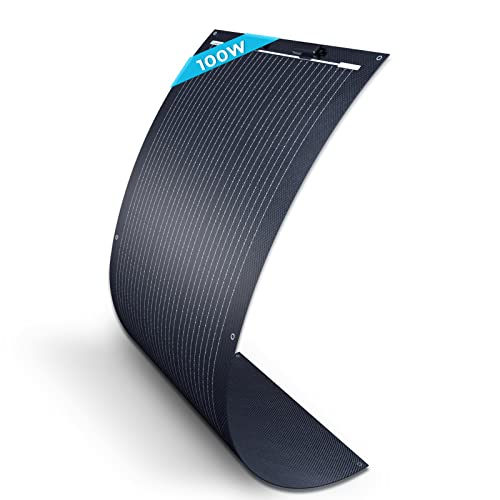
Renogy Flexible Solar Panel 100 Watt, 240° Ultra Flex Bendable Black

SUNER POWER Waterproof 20W 12V Solar Battery Charger & Maintainer PRO
More Details On Our Top Picks
Curved decks and uneven roof lines are exactly where a bendable panel earns its keep. This Renogy option uses a lightweight, 0.1-inch profile, so you can place it where a rigid frame would feel awkward or heavy, and the IP68 rating points to strong dust-and-water resistance. The trade-off is simple, flexible construction usually asks more of your mounting plan than a framed panel does.
That makes it a smart match for cruisers, van-style cabin rigs, and smaller boats with limited flat real estate. You’ll appreciate it most when you want a low-profile setup that hugs the surface instead of standing off it like a small rooftop shelf.
Strong Points
- Bends to follow curved marine surfaces.
- Thin profile keeps deck clutter down.
- Lightweight build helps with placement on awkward spots.
- IP68 rating suits wet, exposed environments.
- Fits nicely on boats where a frame would look bulky.
Things To Consider
- Flexible panels usually depend on careful bonding or fastening.
- Surface prep matters more than with a rigid frame.
- You may need to think through airflow and heat buildup on deck.
Feature Snapshot
Who It Suits Best
You’ll get the most from this pick on a boat with awkward contours, where low profile and surface fit matter more than a framed mount.
A Better Fit Elsewhere
ECO-WORTHY 2pcs 100 Watt Solar Panels Monocrystalline 2-Pack suits you better when your layout has space for a pair of panels and you want broader coverage.
This two-panel set feels aimed at boats that need more than a small maintainer but still want a straightforward monocrystalline layout. Monocrystalline means the cells are cut from a single silicon crystal, which usually helps space-conscious setups make better use of limited roof area. Compared with the single flexible Renogy panel, this route gives you more total panel coverage, though it asks for more mounting room.
Its 12V and 24V battery compatibility broadens the use case for mixed marine and off-grid setups. For cruising boats with a house bank, or a docked vessel that spends long stretches idle, that extra span can make the difference between keeping up and playing catch-up.
Upsides
- Two-panel format expands coverage without a custom build.
- Monocrystalline cell layout suits tighter roof areas.
- Works with both 12V and 24V battery systems.
- IP68 waterproofing fits damp marine conditions.
- 16BB cell design suggests a more modern internal layout.
Minor Gripes
- Two panels usually mean more planning during installation.
- The paired format may feel large on compact cabin tops.
- Cleaning and cable routing take a bit more attention than a single maintainer kit.
Core Details
Built With In Mind
You’ll suit this set best if your boat has enough deck or roof room for twin panels and you want a more capable charging footprint.
Swap It Out When
Renogy Flexible Solar Panel 100 Watt, 240° Ultra Flex Bendable is the better fit for curved surfaces or tighter mounting zones where a rigid pair would feel awkward.
Smaller boats, seasonal storage, and backup batteries are where this FlexSolar kit makes the most sense. A built-in charge controller, meaning the part that regulates panel output before it reaches the battery, helps keep the setup straightforward for basic maintenance charging. Compared with the ECO-WORTHY twin-panel route, this one is far less about building a full solar system and more about keeping a battery healthy between uses.
The plug set is unusually flexible for a maintainer, since you get a cigarette lighter lead, alligator clips, O-rings, and an OBDII connector. That kind of kit is handy for a captain who wants one package for the boat, a tow vehicle, or equipment that sits in storage for stretches.
Highlights
- Built-in controller simplifies basic battery upkeep.
- Multiple connectors cover several common connection styles.
- 20-watt output suits low-draw maintenance use.
- Useful for seasonal boats that sit unused.
Room For Improvement
- 20 watts is modest for larger marine power demands.
- Accessory variety can take a minute to sort out the first time.
- Best suited to maintenance, not heavy charging.
Details At A Glance
Right Fit For
You’ll like this most for a boat that spends time parked, stored, or lightly used between outings.
Look Elsewhere When
SUNER POWER 30W 12V Solar Battery Charger Maintainer suits you better when you want a little more charging headroom and a fixed mounting approach.
This SUNER POWER kit sits in a useful middle ground for docked boats and light marine maintenance. The smart MPPT controller, which stands for Maximum Power Point Tracking, helps the panel work more efficiently by adjusting how it feeds the battery as conditions change. Compared with the FlexSolar maintainer, this feels more set up for a mounted routine than for a grab-and-go accessory bundle.
The adjustable bracket matters because boats rarely give you a perfect flat panel path. That makes this a sensible choice for transoms, rails, or sloped spots where you want the panel aimed cleanly without inventing your own hardware.
Bright Spots
- 30 watts gives a step up from smaller upkeep kits.
- Smart MPPT control helps with efficient battery charging.
- Adjustable bracket supports cleaner positioning on a boat.
- Waterproof build suits exposed marine conditions.
Points To Note
- Bracket mounting asks for a bit more installation time.
- Works best as a maintainer rather than a full house-bank solution.
- You may want to check cable length against your layout before settling on a mount point.
Feature Rundown
Who Should Grab It
You’ll get the best fit here for dockside battery upkeep on a small to mid-size boat with a sensible place to mount a panel.
A Better Fit Elsewhere
SUNER POWER Waterproof 30W 12V Solar Battery Charger & Maintainer PRO suits you more if you want a more refined controller package in the same general size.
People who want a slightly more polished maintainer setup will probably feel drawn to this PRO version. Its UltraSmart MPPT controller suggests a more refined charging approach than the simpler kit above, and the waterproof build is well suited to deck exposure and salty air routines. That balance makes sense on boats that need regular battery care without turning the whole system into a project.
The honest read is that this is still a maintenance-focused 30-watt kit, so you’re paying for smarter control and cleaner day-to-day use rather than raw output. For a boat that sits tied up, or one that only runs its batteries lightly between outings, that trade can make a lot of sense.
Best Bits
- UltraSmart MPPT controller adds a more refined charging layer.
- Waterproof build fits exposed marine storage.
- 30-watt output stays practical for upkeep duties.
- Simple form keeps the setup approachable.
Small Caveats
- Still a maintainer, so it’s not meant for heavy solar demand.
- You may not need the PRO step-up on very small boats.
- Mounting and wiring still deserve careful planning.
Core Details
Perfect Match For
You’ll appreciate this most on a small boat where battery upkeep matters and you want a cleaner controller package.
Where A Sibling Pick Shines
FlexSolar 20W 12V Solar Panel Battery Trickle Charger Maintainer Kits is the easier choice when you want several connector options for portable use.
This SOLPERK kit looks like the sort of package you’d choose for a straightforward boat battery setup with less fuss around parts. The included adjustable mount bracket gives you a practical way to position the panel, and the MPPT controller helps it stay more responsive than a bare-bones trickle setup. Compared with the SUNER POWER PRO, it feels a touch more utility-first than refined.
That can be a good thing for a trailer boat, a motorcycle, or a craft that needs a dependable maintainer more than a feature-rich solar package. The trade-off is that you’re getting a setup aimed squarely at routine charging, so the appeal sits in practicality rather than breadth.
Positives
- Adjustable bracket helps with real-world mounting angles.
- MPPT controller adds smarter charge handling.
- Waterproof design fits marine storage and outdoor use.
- Works for several vehicle and boat setups.
Softer Spots
- The layout feels more utilitarian than polished.
- You’ll want to plan cable placement carefully on smaller boats.
- Best suited to maintenance, not a larger onboard solar role.
At A Glance
Whose Shelf It Belongs On
You’ll fit this well if you want a clean, simple maintainer for a boat or trailer that sees regular but not heavy use.
Another Choice May Suit
SUNER POWER Waterproof 30W 12V Solar Battery Charger & Maintainer PRO is the more polished choice for docked boats that lean toward smarter charging control.
Same flexible 100-watt format as the first Renogy pick, but the black finish gives it a quieter look on darker decks and cabin tops. That can matter more than people expect on a boat, where a low-contrast surface often looks more integrated and less like an add-on. The 0.1-inch profile and 240-degree bend range still keep the focus on fit over frame.
Compared with the original Renogy panel, this version suits anyone who wants the same curved-surface convenience with a more understated appearance. The trade-off is unchanged, flexible panels reward careful mounting and a little patience during installation.
Reasons To Buy
- Black finish blends neatly with dark boat surfaces.
- Flexible 240-degree bend helps on curved layouts.
- Low profile keeps the setup discreet.
- 100-watt format offers a useful charge step for moderate systems.
Areas To Watch
- Needs the same careful mounting approach as the first Renogy pick.
- The dark finish may show dust or salt film more clearly.
- Best for surface-fit flexibility, not framed rigidity.
Quick Facts
The Right Fit
You’ll like this version most when deck appearance matters as much as panel shape and you still need the flexibility of a thin, bendable panel.
Where A Sibling Pick Shines
The original Renogy Flexible Solar Panel 100 Watt, 240° Ultra Flex Bendable fits better for anyone who wants the same format without focusing on color matching.
The smaller 20-watt version keeps the same PRO and UltraSmart MPPT idea, but trims the scale for tighter spaces. That makes sense for a dinghy, a compact cabin top, or a battery that only needs gentle upkeep between outings. Compared with the 30-watt SUNER POWER PRO, this one asks less from your mounting area and less from your available room.
For a boat that lives in a narrow slip or a storage spot with little deck area, that lower footprint can be the point. You give up some charging headroom, yet you gain a tidier fit and an easier place to tuck the panel out of the way.
Standout Traits
- Compact size works well on smaller decks.
- UltraSmart MPPT controller supports careful charging behavior.
- Waterproof build suits exposed marine use.
- 20 watts is enough for light maintenance duties.
Honest Caveats
- Lower output limits how much battery upkeep it can cover.
- Not the right fit for more demanding onboard electrical loads.
- Smaller size may feel too modest for larger boats.
Feature Card
Made For
You’ll get the best fit on a compact boat that only needs a modest, tidy maintainer rather than a larger solar setup.
Consider Something Else When
SUNER POWER Waterproof 30W 12V Solar Battery Charger & Maintainer PRO is the better choice when your battery setup needs more charging headroom.
How To Choose The Right Solar Panels For Boats
Match The Panel To Your Boat’s Shape
Boat decks rarely give you the tidy, flat footprint you see in a catalog photo. Flexible panels suit curved cabin tops, angled covers, and tight walkways, while framed monocrystalline panels make more sense on larger, flatter surfaces with room to spare.
You’ll also want to think about how the panel sits against salt spray, foot traffic, and cleaning access. A low-profile panel can look cleaner and catch less wind, but it usually asks for better surface prep and mounting discipline.
Pick Capacity For The Way You Use The Boat
A 20-watt maintainer fits a battery that mostly needs top-off support during storage. A 30-watt kit gives you a little more breathing room for docked upkeep, and 100-watt panels move into more serious charging territory for boats with larger power needs.
The right choice depends on what you’re actually powering, not just how much roof space you have. A weekend runabout and a liveaboard-style cabin setup can use the same solar category, yet need very different output levels.
Pay Attention To Controls And Mounting
MPPT controllers matter because they help the panel adjust output more intelligently as sunlight changes. That’s especially useful on boats, where shading from rails, masts, or biminis can change hour by hour.
Mounting hardware matters too, especially for fixed panels. Adjustable brackets and strong surface adhesion shape how easy the system is to aim, clean, and keep secure over time.
Think Through Maintenance Before You Install
Marine solar works best when the panel stays clean and the wiring stays tidy. Salt film, dust, and storage grime can reduce usefulness, so a setup you can reach without gymnastics is worth a lot.
You’ll probably feel that most on smaller boats where every inch counts. A simple kit that you can inspect quickly tends to age better in daily use than a setup that becomes a chore to touch.
What To Weigh Before You Buy
Hidden Buying Traps
Shoppers often focus on wattage alone and miss the shape of the install. On a boat, a great panel with the wrong mounting style can be more trouble than a smaller one that sits cleanly in place.
Another common miss is ignoring battery voltage. A 12V maintainer serves a different job from a larger array, so matching the panel to your battery bank matters more than chasing a bigger number.
What The Higher Tier Buys
More expensive boat solar often adds smarter charging control, better waterproofing, or a mounting package that saves you time. Those extras matter most when your boat lives outdoors, gets used often, or needs a more polished install.
Spending up makes the most sense when you want less tinkering and a cleaner daily setup. For a weekend boat that sits in storage, the extra cost can feel unnecessary, but for a frequent cruiser it can pay off in convenience and steadier upkeep.
Frequently Asked Questions
Can You Run Boat Solar Through A Battery Maintainer Kit?
Yes, but a maintainer kit is aimed at keeping a battery topped up rather than powering a larger onboard load. That makes it useful for storage periods, docking, and light usage.
Do Flexible Panels Make Sense On Curved Decks?
They do, especially on boats with uneven surfaces or limited flat space. The trade-off is that installation usually needs more care than a rigid framed panel.
Is MPPT Worth Having On A Boat?
MPPT helps the panel adapt to changing light and can improve charging efficiency. That matters on boats where shade, angle, and weather shift often.
How Much Wattage Is Enough For A Small Boat?
For basic battery maintenance, 20 to 30 watts often covers modest needs. Larger cabins or more active power use usually point you toward higher-output panels.
What Matters More, Panel Size Or Mounting Style?
Mounting style usually wins on boats because deck shape and available space can limit what fits. A well-placed smaller panel often serves you better than a larger panel that sits awkwardly.
Final Thoughts
The right boat solar setup depends on how you use your vessel, not just how much wattage sounds impressive. Flexible 100-watt panels suit curved or space-limited decks, while 20W and 30W maintainer kits are a calmer fit for storage, dockside upkeep, and light charging. Once you match panel shape, controller style, and mounting plan to your boat, the rest gets much easier. Choose the option that fits your space first, and the daily routine tends to follow along smoothly.
