

I spent weeks digging through specs, certifications, and real-world use cases so you don’t have to guess which solar lithium battery actually fits your situation. Whether you’re wiring an off-grid cabin, upgrading an RV, or replacing tired lead-acid banks in a golf cart, the right battery changes how your whole system feels day to day. The ten picks below cover different voltages, capacities, and use cases, and I’ve flagged honest trade-offs so you know what you’re really getting.
Your Options, Compared

ECO-Worthy Cubix100 48V 600Ah Server Rack Battery LiFePO4 (6-Pack Kit)

VATRER POWER 12.8V 300Ah Self-Heating LiFePO4 Battery with APP Monitoring
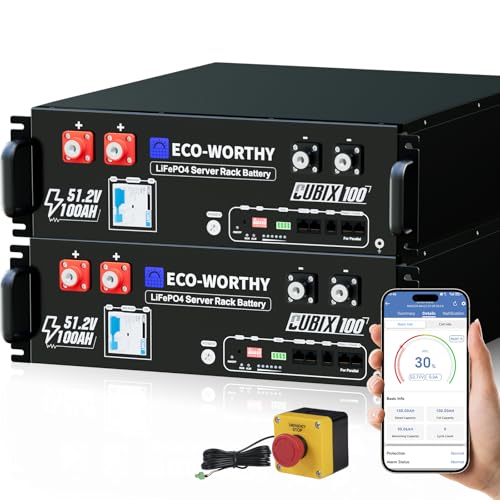
ECO-WORTHY Cubix100 48V 200Ah LiFePO4 Lithium Battery (2 Pack) with Bluetooth

OGRPHY 36V 100Ah Lithium Golf Cart Battery with 200A BMS

OGRPHY 36V 150Ah Lithium Golf Cart Battery with Touch Monitor

MARSENERGY 12V 100Ah LiFePO4 Battery, BCI Group 24, Built-In 100A BMS

Power Queen 12V 100Ah LiFePO4 Battery Group 31 for RV Solar
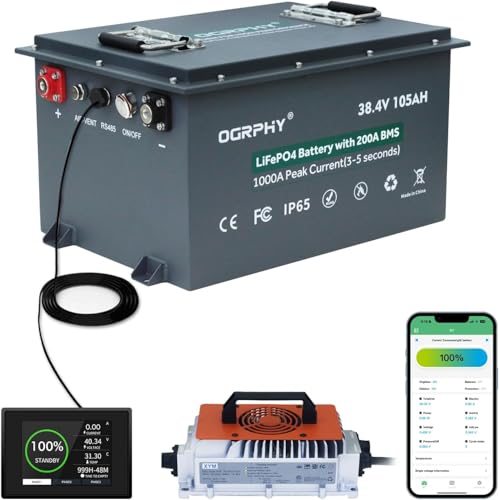
OGRPHY 36V 105Ah Lithium Golf Cart Battery with Touch LCD Monitor
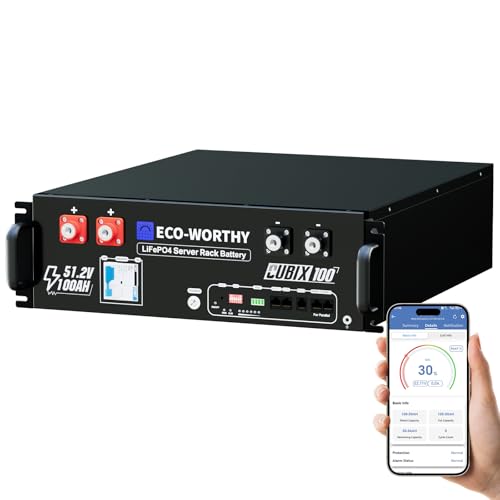
ECO-WORTHY Cubix100 48V 100Ah LiFePO4 UL9540 Server Rack Battery

OGRPHY 36V 102Ah Lithium Golf Cart Battery with 12V DC Interface
The Picks, Examined More Closely
This six-module ECO-Worthy kit lands at the top of the list because it tackles whole-home backup head-on. With 30.72 kWh of stored energy across the 48V 600Ah stack, it covers long outages without the daily rationing that smaller banks force on you. Compared to the 2-pack Cubix100 in slot three, this kit arrives already sized for households running multiple fridges, well pumps, and central air.
The server-rack form factor keeps cabling tidy in a basement or garage, and LiFePO4 chemistry means the cells hold their capacity far longer than flooded lead-acid. For someone serious about energy independence, this is the kit that lets solar do the heavy lifting while keeping the lights on through storms.
Features That Help
- Three North American safety certifications (UL9540, UL1973, and CEC listed) signal genuine third-party testing, not just marketing language
- Modular server-rack design scales from a single bank to multi-pack arrays without rewiring
- LiFePO4 cells typically deliver thousands of deep cycles, so daily solar cycling barely dents lifespan
- Stacked 48V configuration simplifies inverter matching for common hybrid solar inverters
Points To Consider
- Total weight and footprint demand a dedicated, ventilated space, ideally a garage or utility room
- Shipping falls under hazardous-materials rules, so delivery planning matters more than for a single 12V block
Feature Snapshot
Best Suited To
Homeowners with a hybrid inverter and a dedicated battery room who need true whole-home backup rather than partial-load coverage.
Skip It When
The ECO-WORTHY Cubix100 48V 200Ah LiFePO4 Lithium Battery (2 Pack) with Bluetooth suits your needs better if you only need moderate home storage and want a smaller footprint.
The VATRER POWER 12.8V 300Ah stands out for one reason most off-grid shoppers overlook: cold-weather charging. The integrated self-heating function warms them above freezing before accepting charge current, so a winter cabin or northern RV doesn’t brick the bank on a frosty morning. App monitoring adds a modern touch that older 12V lithium blocks lack.
At 300Ah in a single 12V case, this single battery holds roughly the same usable energy as three typical 100Ah RV batteries wired in parallel, with far less cable clutter. Compared to the MARSENERGY Group 24 unit later in the list, it trades a smaller footprint for nearly triple the capacity and smarter cold-climate behavior.
Noteworthy Benefits
- Self-heating cells protect charging performance when temperatures dip below freezing
- Bluetooth app gives real-time voltage, current, and state-of-charge at a glance from a phone
- 300Ah in a single 12V unit simplifies wiring compared to multi-battery parallel banks
- LiFePO4 chemistry supports thousands of deep cycles for long-haul daily use
Worth Noting
- Single 12V form means larger inverters still need series stacking for 24V or 48V systems
- Self-heating draws extra energy from the bank, so sizing should account for winter draw
Made For
Off-grid households, RVers, and cabin owners in cold climates who need reliable winter charging without babying the battery through every cold snap.
Consider Something Else When
The Power Queen 12V 100Ah Group 31 fits better if you want a lighter, drop-in Group 31 swap for an existing RV bay and don’t need cold-weather heating.
This 2-pack sits between the single Cubix100 module and the full six-pack kit. At 10.24 kWh, it covers essential loads (fridge, lighting, comms, well pump) for a typical outage without the size commitment of the larger kit. Bluetooth monitoring comes built in, so you can track state-of-charge without climbing into the battery closet.
For homeowners with modest solar arrays who don’t need whole-home coverage, this is a smarter starting point. Owners commonly expand later by stacking additional packs, and the same UL9540, UL1973, and CEC certifications apply, so inspectors stay happy.
Good Reasons To Consider
- Same safety certifications as the larger six-pack, just at a smaller capacity
- Bluetooth lets you check voltage and remaining capacity from your phone
- 10.24 kWh covers essentials overnight without generator backup
- Modular expansion path lets you add more banks as solar grows
Some Limits To Know
- Not enough capacity for central air or whole-home loads during multi-day outages
- Requires a 48V-compatible inverter, which adds upfront cost for new solar installs
The Right Fit For
Solar shoppers who want a certified mid-scale backup system and plan to expand capacity over time rather than maxing out on day one.
Look Elsewhere When
The ECO-Worthy Cubix100 48V 600Ah LiFePO4 server rack kit suits your needs better if you already know you need true whole-home backup from the start.
OGRPHY’s 36V 100Ah pack is the approachable entry point in the golf-cart lineup, and the 200A built-in BMS (battery management system, the onboard circuit that protects cells from overcharge and over-discharge) handles typical cart motors without breaking a sweat. It includes a 25A charger, so the box has everything needed for a basic swap-out. Owners commonly report a noticeable jump in acceleration compared to tired lead-acid packs of the same voltage.
Compared to the larger 150Ah and 105Ah OGRPHY siblings later on, this one targets shorter routes and lighter carts. It’s also the most cost-effective way for casual users to feel the lithium difference without committing to the higher-output options.
The Practical Payoff
- Drop-in 36V replacement for common lead-acid cart banks
- 200A BMS supports steady draw from standard cart motors
- Included 25A charger removes guesswork about charging compatibility
- 3.84 kWh of usable energy covers a couple of rounds on a single charge
Trade Offs
- Less range than the 150Ah and 105Ah variants, so longer courses may need mid-day top-ups
- No Bluetooth or LCD monitor, so state-of-charge relies on cart gauges or voltmeter checks
Whose Shelf It Belongs On
Casual golfers and small-community cart owners who stick to short routes and want a clean, no-frills lithium swap.
Swap It Out When
The OGRPHY 36V 150Ah lithium golf cart battery suits you better if you regularly play full 18-hole rounds or haul heavier loads around larger properties.
The 150Ah OGRPHY is the long-distance runner of the lineup. The included touch monitor and mobile app give you a real-time readout instead of guessing from a cart’s stock gauge, and the smart 200A BMS handles the heavier continuous loads that come with bigger motors or hillier terrain.
Compared to the 100Ah pick above, you roughly double the runtime and add digital monitoring that makes daily operation less of a guessing game. For owners who treat the cart as transportation rather than a weekend toy, the upgrade is meaningful.
A Strong Showing
- Higher capacity than the 100Ah sibling extends usable range between charges
- Touch monitor and app replace the analog guesswork of stock cart gauges
- 200A BMS still handles peak current draws common with cart motors
- Compatible with common 36V cart platforms and standard charging setups
A Few Limitations
- Higher cost than smaller-capacity cart batteries, though long-term value runs favorable
- Heavier than the 100Ah pack, so small carts may feel the weight difference on turf
Who Will Love This
Frequent cart commuters and property owners who drive longer distances daily and want modern digital state-of-charge feedback.
Reach For A Different Pick When
The OGRPHY 36V Lithium Golf Cart Battery with 12V DC Interface fits better if your cart runs lots of 12V accessories and you want to power them directly from the pack.
The MARSENERGY Group 24 is the battery to reach for when space is the real constraint. The Group 24 footprint fits in tight RV bays and small marine compartments where a Group 31 case just won’t slide in. The 100A BMS is sized appropriately for the 100Ah capacity, so the protection matches the pack.
Compared to the Power Queen Group 31 reviewed next, this trades a bit of capacity and cold-weather tolerance for a noticeably shorter footprint. For camper vans and small trailers where every inch counts, that trade is usually worth it.
Real-World Strengths
- Group 24 footprint opens up install options in tighter battery compartments
- Built-in 100A BMS matches the cell rating for balanced protection
- Standard 12V drop-in replacement for common lead-acid sizes
- LiFePO4 chemistry handles deep discharge without the lifespan penalty of flooded batteries
Honest Caveats
- Smaller case means less capacity than a Group 31, so larger banks still need parallel packs
- No built-in Bluetooth, so remote monitoring requires an external shunt or app-based meter
Who Should Grab It
RVers, van-lifers, and small-boat owners with tight battery compartments who need standard 12V lithium performance in a compact footprint.
Where Another Pick Suits Better
The Power Queen 12V 100Ah LiFePO4 Group 31 fits better if you have the extra bay space and want higher cycle counts plus expansion flexibility.
Power Queen’s Group 31 has earned a following among RVers for one practical reason: it drops into existing battery trays without modification. The 100A BMS gives solid protection for typical RV solar loads, and expansion up to 4P4S means you can scale a parallel-and-series bank as your system grows.
Compared to the MARSENERGY Group 24 earlier, this one carries more usable capacity and supports much larger multi-pack arrays. For an RV solar upgrade where the battery tray already exists, the swap-in ease is hard to beat.
Where It Delivers
- Group 31 case matches standard RV and marine battery trays for true drop-in replacement
- Expansion flexibility up to 4P4S supports larger solar arrays and longer boondocking trips
- LiFePO4 chemistry delivers deep-cycle longevity that outlasts flooded lead-acid by years
- 100A BMS protects against the overcharge and over-discharge that ruin cheaper packs
Worth Noting
- Group 31 footprint won’t fit in tighter Group 24 bays, so measure before ordering
- No Bluetooth on the base model, so a shunt or external monitor helps track state-of-charge
Built With In Mind
Full-time and weekend RVers, marine solar users, and off-grid cabin setups with standard Group 31 battery trays who want a clean swap-in upgrade.
Another Choice May Suit
The VATRER POWER 12.8V 300Ah self-heating battery fits better if you camp in freezing weather and want one larger battery instead of paralleling multiple smaller ones.
The 105Ah OGRPHY sits between the 100Ah and 150Ah siblings, and that middle ground turns out to suit a lot of carts just fine. The included 25A charger and touch LCD monitor are nice touches that older lead-acid setups never had, and the 200A BMS handles the peak current bursts common with hilly neighborhoods.
For owners who found the 100Ah a touch small but didn’t need the full 150Ah, this one fills the gap without much fuss. Compared to the 150Ah pick, you give up a chunk of range but gain a friendlier fit for mid-sized cart platforms.
What Makes Sense
- Mid-capacity balance fits typical neighborhood and resort cart routes
- Touch LCD monitor gives real-time data without needing the mobile app
- 200A BMS handles peak loads from standard cart motors on moderate terrain
- Compatible charger included, so the upgrade arrives ready to install
Things To Consider
- Not enough range for long-distance courses that the 150Ah covers more comfortably
- Slightly heavier than the 100Ah pack, so very small carts may notice the difference
Perfect Match For
Cart owners who want digital monitoring and stronger performance than the basic 100Ah pack, but don’t need the maximum-capacity 150Ah option.
Not Your Match When
The OGRPHY 36V 150Ah Lithium Golf Cart Battery suits you better if longer route coverage outweighs the cost savings of stepping down.
The single 48V 100Ah Cubix100 module is the building block the larger kits are made from. For DIYers building a custom bank or adding capacity to an existing rack, this single unit keeps the same UL9540, UL1973, and CEC certifications as the bigger kits. Buying a single module first lets you test the platform before scaling out.
Compared to the 2-pack in slot three, this single module gives the same per-unit quality with less upfront commitment. For installers who want one certified brick to expand later, this is the practical starting point.
The Good Stuff
- Same UL9540, UL1973, and CEC safety listings as the multi-module kits
- Modular form factor makes future expansion as simple as adding another unit
- LiFePO4 cells support daily deep cycling without rapid capacity loss
- Server-rack design keeps battery rooms organized as the bank grows
Where It May Fall Short
- 5.12 kWh per module means a single pack covers only essential loads
- Requires a 48V-compatible inverter, so adding modules is a bigger project than swapping 12V batteries
Feature Card
Whose Shelf It Belongs On
DIY solar builders and installers who want a certified starter module and plan to grow capacity over time rather than buy a finished kit.
Where A Sibling Pick Shines
The ECO-WORTHY Cubix100 48V 200Ah LiFePO4 2-pack with Bluetooth fits better if you want a turnkey pair with monitoring built in.
The final OGRPHY on the list solves a real cart annoyance: powering 12V accessories like lights and horns straight from a 36V pack. The built-in DC interface handles that conversion internally, so there’s no separate converter to mount or wire. The 25A charger, touch monitor, and 200A BMS round out the rest of the package.
For carts that run a lot of add-ons, this one removes a piece of installation friction the other OGRPHY models leave behind. Compared to the 105Ah sibling earlier, you trade a few amp-hours for a wiring simplification that pays off on every accessory install.
What Pays Off
- Integrated 12V DC port powers accessories without a separate converter
- Touch LCD monitor keeps state-of-charge visible without pulling out a phone
- 200A BMS supports motor loads common with 36V cart platforms
- Cleaner wiring layout simplifies custom builds and aftermarket upgrades
Things To Weigh
- Internal 12V conversion means switching off accessories via the monitor to prevent drain
- Slightly less capacity than the 105Ah sibling, so range takes a small hit
Feature Snapshot
Made For
Golf cart owners running multiple 12V accessories who want a cleaner wiring setup and don’t want to mount a separate converter under the seat.
A Better Fit Elsewhere
The OGRPHY 36V 105Ah lithium golf cart battery suits your needs better if you don’t run many 12V accessories and want the slightly larger capacity without the integrated DC port.
What To Match Before Choosing A Solar Lithium Battery
Capacity versus voltage comes first. A 12V 100Ah pack holds about 1.28 kWh of energy, while a 48V 100Ah server-rack module holds roughly five times that. Higher-voltage banks reduce current draw for the same wattage, which means thinner cables and less heat, but they need a compatible inverter and tend to cost more upfront.
Chemistry matters more than marketing language suggests. LiFePO4 (lithium iron phosphate) holds up to thousands of deep cycles at 80 to 100 percent depth of discharge (the percentage of stored energy actually used before recharging), while lead-acid starts losing capacity once you cross about 50 percent depth of discharge. That difference changes how you size the bank: a 100Ah LiFePO4 pack effectively replaces a 200Ah lead-acid bank.
Physical fit trips up more upgrades than anything else. Group 24, Group 31, and server-rack cases each fit different compartments, and a battery that’s too tall or too wide won’t slide into the tray. Measure the bay, the terminal posts, and the cable reach before ordering.
Cold-weather charging is a real limit for LiFePO4. Cells below freezing can be permanently damaged if you push charge current into them, which is why self-heating models exist for northern climates. For southern installs, plain LiFePO4 works fine year-round.
Expansion paths matter for growing systems. Some 12V batteries parallel and series-stack cleanly up to a 4P4S limit, while server-rack banks expand by adding identical modules. Confirming the expansion protocol before the first purchase saves a costly swap later.
Things Worth Knowing Before Hitting Order
Common Shopping Slip Ups
Skipping the inverter match is the most expensive mistake. A 48V lithium bank paired with a 12V-only inverter simply won’t work, and the reverse wastes money on a battery the inverter can’t use fully. Match voltage before sizing capacity.
Forgetting the BMS rating is the second trap. A 100A BMS (the onboard electronic protector that prevents overcharge, over-discharge, and short-circuit damage) limits continuous draw, so a battery with a low-rated BMS can’t power high-draw appliances even if the cells technically can.
Ignoring weight ratings causes cart and trailer issues. Lithium cuts weight dramatically compared to lead-acid, but it doesn’t remove it entirely. A crowded battery tray or a cart with a strict payload limit still needs the math done.
What The Higher Tier Buys
More certifications show up at the premium end. UL9540 and UL1973 listings require third-party testing that cheaper packs skip, and they matter for residential solar rebates, home insurance, and code compliance. If you’re installing in a permitted home system, the certifications aren’t optional.
Smarter monitoring arrives with the upgraded models. Bluetooth apps, touch LCD panels, and integrated 12V accessory ports all add real convenience during daily operation, not just at install time. The premium isn’t only about longer lifespan; it’s about easier ownership.
Frequently Asked Questions
How long does a solar lithium battery typically last? LiFePO4 packs commonly deliver several thousand charge cycles before noticeable capacity loss, which translates to many years of daily solar cycling under normal use.
Can I mix lithium and lead-acid batteries in the same system? Mixing chemistries in the same bank causes uneven charging and premature wear. Stick to one chemistry per bank, and use separate banks if you must keep older batteries in service.
Do I need a special inverter for a 48V lithium battery? Yes, a 48V battery requires a 48V-compatible inverter or charge controller. Standard 12V inverters won’t accept the higher input voltage.
Are solar lithium batteries safe indoors? LiFePO4 chemistry is thermally stable compared to other lithium types, but proper ventilation, a working BMS, and certified cells are still essential for safe indoor installation.
What size battery do I need for basic home backup? A rough starting point is 1 kWh per day per person for essentials like lighting, comms, and refrigeration. Sizing your bank to cover two to three days without sun is a common planning baseline.
Wrap Up
The right solar lithium battery comes down to matching voltage, capacity, and certifications to how you actually live with the system. Whole-home shoppers get the most from certified server-rack kits, RV and cabin owners typically prefer 12V drop-ins, and golf-cart users lean toward purpose-built 36V packs. Start with the use case, double-check the physical fit, and the rest tends to fall into place.
