

A backyard blackout, a weekend off-grid, or simply trimming the electric bill all point to the same question: can solar actually do useful work around a house without a permanent rooftop install? I’ve spent time digging through the current portable solar lineup, and the short answer is yes, with some honest caveats. The picks below cover foldable panels for topping up a power station and a few station-and-panel bundles that work right out of the box. You’ll find a mix of wattages, weights, and weather ratings so the right match surfaces quickly.
The Picks In Brief

EF ECOFLOW Delta 3 Portable Power Station

BLUETTI AC200L Portable Power Station

TWELSEAVAN 400W Portable Solar Panel

Jackery HomePower 3000 with Hand Truck

Greenmagic 400W Portable Solar Panel
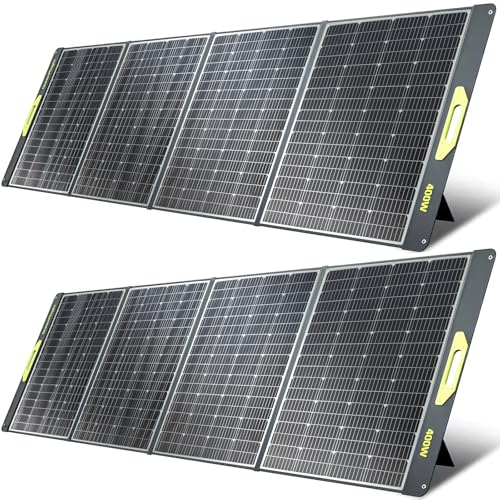
Greenmagic 800W Dual Portable Solar Panels

TWELSEAVAN 200W Portable Solar Panel

TWELSEAVAN 500W Portable Solar Panel

TWELSEAVAN 250W Portable Solar Panel
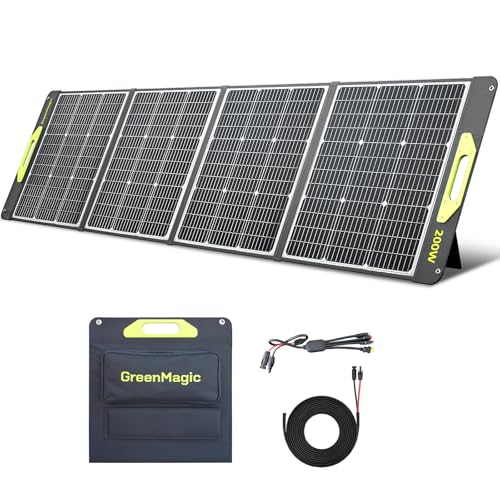
Greenmagic 200W Portable Solar Panel
A Deeper Look At The Lineup
The Delta 3 sits in a sweet spot for households that want one station they can rely on for both daily top-ups and genuine outage coverage. Its 1024Wh capacity is enough to keep a fridge, router, and a handful of lights humming for several hours, and the 1800W inverter handles most kitchen appliances without flinching.
For a household that already owns panels, the AC-input speed is the standout feature. Where the BLUETTI AC200L focuses on raw capacity, this unit focuses on how quickly it tops itself back up when grid power returns. It also plays nicely with expansion batteries, which is worth noting for anyone planning to scale up over time.
Notable Gains
- Sub-hour AC recharging means brief outages barely dent readiness
- 1800W inverter supports heavy kitchen and workshop loads
- Expandable platform grows with household demand
- Compact enough to move from closet to kitchen when storms hit
Things To Consider
- Single-unit capacity may run short for multi-day outages
- Adding expansion batteries adds cost and storage space
Who It Suits Best
Homeowners who want fast-recharging backup for essentials and the option to expand later.
Look Elsewhere When
Shoppers needing multi-day runtime from a single box will find the BLUETTI AC200L a more generous starting capacity.
The BLUETTI AC200L is built for households that treat portable power as a serious utility, not a weekend toy. At 2048Wh with a 2400W inverter and LiFePO4 battery chemistry, it covers longer outages and more demanding tools than the Delta 3 manages alone.
Compared to the EcoFlow unit above, this station is heavier and less nimble, but it also runs longer per charge cycle. The LiFePO4 chemistry is the headline for long-term ownership, since LiFePO4 cells tend to outlast standard lithium-ion in cycle count. For someone powering a workshop, an off-grid cabin, or a full weekend of camping comforts, that longevity matters.
What It Does Well
- 2048Wh capacity handles multi-day essential loads
- 2400W inverter runs heavier tools and appliances
- LiFePO4 chemistry favors long service life
- Modular expansion available for very large setups
Worth Noting
- Heavier and bulkier than mid-size competitors
- Higher upfront cost than smaller stations
- Recharging speed trades off for capacity
Key Product Details
Made For
Off-grid households, workshop users, and preppers who want heavy-duty capacity in one box.
A Better Fit Elsewhere
Anyone prioritizing quick AC turnaround in a smaller footprint should consider the EF ECOFLOW Delta 3 instead.
This 400W panel is aimed at households that already own a sizeable power station and want to refill it faster than a 200W panel allows. With A-grade monocrystalline cells and an ETFE laminate over the surface, it sits in the higher-efficiency tier of portable panels I’ve seen.
The MC4 connector with multiple adapter tips broadens station compatibility, which makes pairing it with either the BLUETTI AC200L or a smaller station practical. For an RV or a backyard setup where real estate matters, a single 400W panel beats running two 200W panels in parallel.
What Pays Off
- 24% cell efficiency ranks high among portable panels
- Single-panel footprint simplifies deployment
- ETFE laminate supports outdoor durability
- MC4 plus adapters fit most major stations
Trade Offs
- Single large panel is harder to reposition than two smaller ones
- Real-world output drops in cloud cover like any panel
Best Suited To
Station owners who want fewer panels doing more work and a tidy single-array setup.
Reach For A Different Pick When
Someone needing maximum total output should consider the Greenmagic 800W dual-panel array instead.
The Jackery HomePower 3000 bundle is the closest thing to a turnkey home backup option on this list. It pairs a 3072Wh station with 3600W of AC output, two 200W panels, and a hand truck for moving the whole rig around. For a household starting from zero, that removes a lot of guesswork.
Compared to the EcoFlow Delta 3, the capacity roughly triples, which means longer runtime for whole-home essentials during a blackout. The included hand truck is a small but practical touch, since at this size the station itself is genuinely heavy. Anyone who needs to wheel it from a garage to a kitchen will appreciate it.
Positive Points
- All-in-one bundle avoids mixing brands and connectors
- 3072Wh covers extended essential-load scenarios
- 3600W AC output handles demanding household appliances
- Hand truck included for moving a heavy station
Honest Caveats
- Bundle price runs higher than buying station and panels separately
- Whole package takes significant storage space
Perfect Match For
First-time buyers who want one cart to wheel out instead of piecing a system together from scratch.
Swap It Out When
Owners who already own panels and just need capacity will do better pairing the BLUETTI AC200L with their existing array.
Greenmagic’s 400W foldable panel targets the practical middle of the market: more power than a typical 200W unit, without the premium price of the higher-efficiency cells in the TWELSEAVAN panels. Monocrystalline silicon cells handle the conversion work, and the panel is built to drop onto most 40V portable stations.
Where the TWELSEAVAN 400W above leans on a 24% efficiency rating, this panel targets a slightly lower bracket at around 21.5 to 23.5%. In real-world terms that gap often translates to a small slice of additional daily harvest, which most households won’t notice unless they’re truly maximizing every sun hour.
Bright Spots
- Strong 400W rating for the price tier
- Compatible with most common 40V stations
- Parallel and series wiring supported
- Foldable design fits in a trunk or garage shelf
Points To Note
- Efficiency slightly trails the top tier
- Single-panel form can be awkward to angle in tight spaces
Quick Facts
Right Fit For
Households assembling a portable solar setup on a tighter budget who still want serious wattage.
Where A Sibling Pick Shines
Those chasing top-tier efficiency in a single panel should consider the TWELSEAVAN 400W model above.
This bundle delivers 800W of total panel output from a matched pair of 400W foldables, paired with SunPower cells at around 23% efficiency. For households that want the fastest refills possible from portable gear, splitting the array across two panels makes angling and repositioning much easier than wrestling one big unit.
Compared to the single-panel TWELSEAVAN 400W earlier, this kit doubles the daily harvest potential and adds an IP67 weather rating for outdoor confidence. The adjustable kickstands and app-assisted sun alignment are useful touches for anyone setting up in a new spot each weekend.
Features That Help
- Two panels make repositioning around the sun easier
- 800W total output suits larger stations and longer days off-grid
- IP67 weather sealing for rain and dust resistance
- Sun-tracking app support simplifies aiming
Some Limits To Know
- Two panels to deploy, store, and transport
- Requires a station that accepts the combined input
Built With In Mind
Off-grid households and RV users running high-capacity stations who want maximum daily refills.
Consider Something Else When
Anyone needing a single, easy-to-carry panel should look at the TWELSEAVAN 200W option later in this list.
This 200W panel is the lighter sibling of the TWELSEAVAN 400W covered earlier. It keeps the 24% cell efficiency and the ETFE laminate, while dropping the total wattage in exchange for a smaller fold and easier carrying. For weekend campers and RV travelers, that balance often makes more sense than maximum output.
It also includes QC3.0 and Type-C outputs, which let the panel charge phones and small electronics directly without going through a station. That’s a small but meaningful perk on a hike-in trip where the power station stays back at camp.
The Helpful Details
- 24% efficiency at a lighter carry weight
- Direct USB ports for phone and tablet charging
- ETFE laminate supports outdoor durability
- MC4 output pairs with most stations
A Few Limitations
- Half the output of the 400W sibling means slower refills
- IP65 rating is solid but trails the IP67 panels above
Whose Shelf It Belongs On
Campers, van-lifers, and weekend travelers who value lighter carry over maximum harvest.
Skip It When
Households needing faster top-ups for a larger station will get more from the TWELSEAVAN 400W option.
The TWELSEAVAN 500W panel steps up into the upper tier of portable output with HPBC cell technology and a 25% conversion rate. HPBC stands for back-contact cells, where the electrical contacts sit behind the cells, which lets more of the front surface capture sunlight. The result is more power per square foot than older cell layouts.
For households targeting RV or stationary backup use, the 42V high-voltage design suits common off-grid battery systems. Compared to the 400W TWELSEAVAN earlier, this panel trades a heavier fold for noticeably more daily harvest in the same sun.
Everyday Advantages
- 25% efficiency at the top of the portable panel class
- 500W output suits larger RV and home backup systems
- HPBC cells improve low-light performance at dawn and dusk
- 42V high-voltage design fits standard off-grid batteries
What To Weigh
- Heavier fold than smaller panels
- Higher cost than mid-tier 200W or 400W options
Feature Snapshot
Who Should Grab It
RV owners and backup-minded households who want the highest single-panel output and are willing to carry the weight.
Where Another Pick Suits Better
Travelers who prioritize lighter carry will find the TWELSEAVAN 200W panel a more packable alternative.
This 250W TWELSEAVAN panel sits between the 200W travel model and the 400W high-wattage option, using the same HPBC cell technology as the 500W flagship. With a 25.8% efficiency and IP68 weather sealing, it targets households that want a durable middle-of-the-road panel for backup or RV duty.
The IP68 rating is a meaningful step up from the IP65 on the 200W model. IP68 means the panel is rated for continuous immersion protection beyond splashes, which is reassuring for anyone leaving panels outside through rainy stretches. The ETFE surface helps light transmittance stay high even after months of sun exposure.
A Few Strong Suits
- 25.8% HPBC efficiency at a moderate wattage
- IP68 rating handles heavy rain and seaside conditions
- ETFE surface resists long-term UV degradation
- Steady low-light output at dawn and dusk
Things To Consider
- Costs more per watt than the budget 200W model
- Doesn’t replace a 400W or 500W panel for maximum output
Who Will Love This
Households wanting a durable mid-size panel that handles weather without jumping to flagship weight.
Another Choice May Suit
Those chasing the absolute highest single-panel output should step up to the TWELSEAVAN 500W.
The Greenmagic 200W panel closes the list with one practical advantage over its rivals: a triple-output connector set covering MC4, XT60, and Anderson plugs. For households with multiple stations or a mix of older and newer gear, that flexibility avoids the adapter shuffle that often comes with single-connector panels.
Monocrystalline silicon cells deliver up to 23.5% efficiency, and the IP67 rating handles outdoor use well. Compared to the TWELSEAVAN 200W earlier, this panel trades the built-in USB ports for that broader connector range, which is the right call for stationary home use where USB charging isn’t needed.
Real-World Strengths
- MC4, XT60, and Anderson outputs in one panel
- Up to 23.5% cell efficiency
- IP67 weather rating for outdoor permanence
- PET laminate adds scratch resistance
Where It May Fall Short
- No direct USB output for device charging
- Lower output than 400W panels on this list
Quick Technical Notes
The Right Fit
Multi-station households that want one panel to cover different brands and connector types.
Not Your Match When
Campers who want direct USB charging should look at the TWELSEAVAN 200W with QC3.0 and Type-C ports.
What To Weigh Before Choosing Portable Solar Panels For Home
Wattage And Real Harvest
Panel wattage tells you the peak rating under ideal lab sun, not what arrives in your yard at 4 p.m. in October. A 400W panel often delivers 250 to 320W in real conditions, depending on angle, shade, and cloud cover. For most households aiming to top up a mid-size station daily, a single 200 to 400W panel is plenty. Larger off-grid or whole-home backup scenarios benefit from 500W and up, or matched pairs.
Battery Chemistry And Inverter Headroom
The panel matters less than what it feeds. Stations using LiFePO4 chemistry, like the BLUETTI AC200L covered above, tend to last more charge cycles than older lithium-ion designs. Inverter wattage matters too: a 1800W inverter handles most kitchen gear, while a 2400W unit covers heavier tools and appliances.
Connector Fit And Cable Clutter
A common trip-up is buying a panel whose connector doesn’t match the station. MC4 has become the de facto standard, but XT60 and Anderson plugs still show up on popular models. Panels with multiple adapters or built-in connector sets, like the Greenmagic 200W, sidestep this neatly.
Portability Versus Output
Higher wattage usually means heavier folds and bigger carrying cases. A single 400W panel is easier to deploy than an 800W dual setup but refills the station at half the speed. Match the panel weight to how often you’ll actually move it.
Smart Considerations Before You Pick
Common Shopping Slip Ups
The biggest mistake I see is buying panels first and a station second, then discovering connector and voltage mismatches. Start with the station or confirm station wattage limits first, since oversizing a panel means wasted solar that the station can’t accept. Another trap is underestimating storage: a 400W foldable is bulky, and a matched pair needs real closet or garage space when not deployed.
What Separates Premium From Basic
The jump from a budget panel to a premium one buys three things: higher cell efficiency (23 to 25% versus the older 17% polycrystalline baseline), better low-light performance at dawn and dusk, and stronger weather sealing for permanent outdoor setups. HPBC cells, like those in the TWELSEAVAN 500W and 250W models, lead the field in all three. For a household that uses portable panels occasionally, mid-tier is usually enough. For permanent backyard or RV duty, the upgrade pays off.
Frequently Asked Questions
How many watts of portable solar do I actually need at home?
For topping up a 1000 to 2000Wh station daily, a single 200 to 400W panel usually covers essential phones, lights, and a router. Whole-home backup scenarios need closer to 800W of panel input to keep a larger station cycling.
Can portable solar panels really run home appliances?
Yes, but through a power station, not directly. Panels feed the station, and the station’s inverter runs the appliances. Pick a station with inverter wattage above the highest-draw appliance you plan to run.
What’s the difference between MC4, XT60, and Anderson connectors?
MC4 is the modern standard for portable solar and most current stations. XT60 and Anderson plugs appear on specific station models and some RV setups. Panels with multiple connector options reduce adapter headaches.
Do portable panels work in cloudy weather?
They produce less, not zero. Higher-efficiency cells like HPBC maintain around 10% of rated output even in low light, which keeps small electronics topped off when full sun isn’t available.
How long do portable solar panels last?
Quality foldable panels typically last several years of regular outdoor use. ETFE laminates resist UV damage better than older PET surfaces, and the cells themselves degrade slowly. Expect noticeable output decline after heavy long-term exposure.
Closing Remarks
Portable solar has grown up. The panels on this list deliver real wattage in foldable forms, and the stations run household essentials for hours or days depending on capacity. Start with the station and inverter headroom that match your outage plan, then choose panels whose connectors, wattage, and weight fit how you’ll actually use them. A weekend camper, a blackout planner, and an off-grid household will each walk away with a different answer.
