

Solar charging gear can feel confusing fast, especially once you start comparing battery size, built-in cables, flashlight extras, and ruggedness. You need something that fits real use, not just a spec sheet, whether that means weekend camping, daily commuting, or keeping phones alive during a blackout. This roundup keeps the focus on practical fit, so you can sort out which pick feels sensible for your bag, your car, or your emergency kit.
Quick Look At Our Top Picks

BLAVOR Solar Power Bank 20000mAh Wireless Charger

Solar Charger Power Bank 49800mAh Portable Solar Phone Charger

Solar Charger Power Bank 49800mAh Wireless Portable Phone Charger

YELOMIN Solar Power Bank Portable Charger 20000mAh
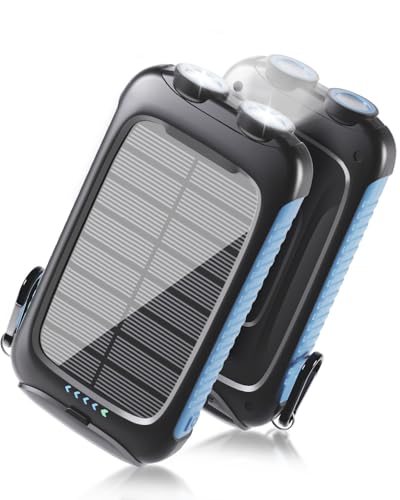
Solar Power Bank 20000mAh Portable Charger 15W

Miady 2-Pack Portable Charger Slim 10000mAh Power Bank

YELOMIN 38800mAh Solar Power Bank Portable Charger
More Details On Our Top Picks
BLAVOR leans into convenience first, with a 20000mAh battery, wireless charging, four cables, and a hand crank for backup situations. That combination makes more sense in a campsite kit or car emergency bag than on a minimalist desk, since the body is doing a lot of jobs at once.
The 20W output gives you faster top-ups than basic low-output packs, and the camping light adds real utility after dark. The trade-off is size and complexity, so you may find it a little busy compared with simpler options like the Miady two-pack.
Strong Points
- Four built-in cables reduce the need to pack extras.
- Wireless charging keeps short stops easier.
- Hand crank backup helps in emergency-minded kits.
- Camping light adds useful night-time coverage.
- 20000mAh capacity supports multiple phone top-ups.
Things To Consider
- The feature set is busy, so the shape may feel less streamlined in a pocket.
- More moving parts usually means more cable management to keep tidy.
- The hand crank is a backup feature, not the main way you’d want to charge.
Core Details
Who It Suits Best
Campers, storm-prep planners, and commuters who like having built-in cable options will get the most from this BLAVOR pack.
Where A Sibling Pick Shines
YELOMIN Solar Power Bank Portable Charger 20000mAh is a tidier fit for hikers who want fewer extras and a simpler grab-and-go shape.
This Luvknit pack is aimed at long-haul use, with a 49800mAh capacity, USB-A and USB-C ports, and a body that still stays under a pound. That makes it a strong fit for road trips, outage kits, or anyone who would rather charge once and keep moving.
The 7 x 3.22 x 1.02 inch footprint gives you a clearer sense of scale than capacity numbers alone, and the included buckle helps with bag carry. The honest read is that a pack this large asks for space in return, so it’s less appealing for ultra-light travel than the slimmer Miady duo.
What We Like
- Very large battery reserve suits multi-day use.
- USB-A and USB-C ports cover mixed cable setups.
- 15W charging keeps the pack useful for everyday electronics.
- The included buckle makes pack attachment easier on the go.
- The weight stays reasonable for the capacity class.
Worth Noting
- The larger body takes more room in a daypack.
- Solar charging is still best treated as backup support, not the main refill method.
- Its bulk makes it less suited to jacket-pocket carry.
Feature Rundown
Who Will Love This
Travelers, campers, and storm-prep shoppers who want a large reserve in one pack will get the most out of this Luvknit option.
Skip It When
YELOMIN Solar Power Bank Portable Charger 20000mAh is the better match for shorter day trips where a lighter carry matters more than maximum reserve.
YOLOSKS pushes hard on connection count, with 6 outputs, 2 inputs, wireless charging, and four built-in cables layered into one 49800mAh shell. That makes it a useful desk-to-travel hybrid for households where several gadgets need attention at once.
The 22.5W QC3.0 figure matters because QC3.0, or Quick Charge 3.0, is a faster charging standard for compatible devices. Compared with the simpler Luvknit pack, this one is the better fit for heavier charging habits, though the extra options also make it a bit more involved to organize.
Upsides
- Six output paths help you power several devices.
- Two input options give you more refill flexibility.
- Wireless charging reduces cable handling for quick stops.
- Four built-in cables cut down on loose accessories.
- 22.5W output suits faster top-ups for compatible phones.
- Large capacity fits families and group travel better than smaller packs.
Areas To Watch
- The feature set is dense, so sorting cables may take a little more effort.
- High-capacity packs are usually better as bag carry than pocket carry.
At A Glance
Built With In Mind
Households, travel groups, and gadget-heavy commuters who want many connection choices in one pack will appreciate this YOLOSKS model.
Another Choice May Suit
BLAVOR Solar Power Bank 20000mAh Wireless Charger is easier to live with for campers who want built-in extras without such a crowded port layout.
YELOMIN keeps the formula straightforward, which helps a lot in outdoor use. You get 20000mAh, 22.5W charging, three built-in cables, and dual LED lighting, so the pack feels aimed at people who want one carry item that covers the basics well.
Compared with BLAVOR’s more layered setup, this one reads cleaner and easier to stash in a weekend bag. The trade-off is that you do not get the same mix of extras, but many hikers and campers won’t miss that clutter in the first place.
Positives
- Three built-in cables reduce the chance of leaving a cord behind.
- 22.5W charging is a solid fit for faster daily top-ups.
- Dual LED lights help around tents, cars, or dim rooms.
- 20000mAh capacity suits short trips and storm kits.
Small Caveats
- The lighting and cable features are handy, but they add some complexity to storage.
- Solar-assisted charging still makes most sense as backup support.
- Outdoor-style gear can take a bit more space than a plain slim bank.
Details At A Glance
Perfect Match For
Weekend hikers, campers, and anyone building a compact emergency kit will get a lot of use from this YELOMIN pack.
Look Elsewhere When
Solar Charger Power Bank 49800mAh Portable Solar Phone Charger makes more sense for long road trips where a much larger reserve matters more than staying compact.
Nymzixt keeps the pitch simple with a 20000mAh battery, USB-A and USB-C ports, and a compact shape that still fits outdoor carry. That’s a useful mix for daily-use bags, since you can handle different cable types without dragging around a bulky pack.
The product page also points to waterproof handling and emergency flashlights, which make it feel more at home in a camping bin than a neat office drawer. You may find it especially handy for short trips where plain practicality matters more than a huge capacity jump.
Highlights
- USB-A and USB-C ports cover common charging setups.
- 20000mAh capacity is a comfortable middle ground.
- The body stays reasonably easy to carry.
- Flashlight support helps with late-night use.
- 15W output suits routine top-ups well.
Points To Note
- The feature list is simpler than the larger high-capacity options here.
- Solar use still works best as a backup source rather than a fast refill method.
- Outdoor-focused extras may be more than you need for a desk-only setup.
Feature Card
Who Should Grab It
Commuters, weekend travelers, and campers who want a plain, useful solar-style pack will feel at home with this Nymzixt choice.
Swap It Out When
YELOMIN Solar Power Bank Portable Charger 20000mAh is the better fit for hikers who want built-in cables and a little more lighting support.
Miady stands out because it’s a two-pack of slim 10000mAh banks rather than one oversized power brick. That makes it a smart choice for couples, shared travel bags, or anyone who wants one charger at home and one in a carry-on.
The dual USB layout, three outputs, and two inputs give it enough flexibility for normal daily charging, and the 37Wh label helps signal that it’s designed with flight-safe portability in mind. Compared with the larger solar-style packs here, it gives up rough-weather extras, but you gain a much easier shape to store and carry.
Best Bits
- Two chargers in one package suit shared use.
- Slim bodies are easier to tuck into luggage or desk drawers.
- 3 outputs provide enough flexibility for everyday charging.
- 37Wh format works well for travel-minded packing.
Room For Improvement
- Smaller capacity means fewer full phone refills than the larger banks in this roundup.
- You do not get the outdoor extras found on the solar-focused models.
- It’s more about travel convenience than off-grid backup.
Core Details
The Right Fit
Travelers, commuters, and households that want two slim banks instead of one heavy unit will get the most out of Miady.
Where A Sibling Pick Shines
Solar Charger Power Bank 49800mAh Portable Solar Phone Charger is the stronger match for long camping stretches where raw reserve matters more than slim carry.
YELOMIN’s 38800mAh capacity makes it a strong middle ground between the lighter 20000mAh picks and the giant 49800mAh units. The three-output design and USB-C fast charging suit multi-device travel, especially when your bag also carries a headlamp or camera gear.
The dual LED flashlight keeps the pack useful in outdoor and outage scenarios, and the larger reserve gives you more breathing room on multi-day trips. The trade-off is simple, though, it’s still a larger carry than the Miady pair, so it fits better in a daypack than a jacket pocket.
Positives
- 38800mAh capacity lands in a useful middle zone.
- USB-C fast charging helps modern phones keep pace.
- Three outputs make it easier to support more than one device.
- Dual LED flashlight adds real camp-and-emergency utility.
Areas To Watch
- The larger shell takes more space than the slim travel pair.
- Outdoor extras are helpful, but they add another thing to keep track of.
Technical Sheet
Whose Shelf It Belongs On
Travelers, hikers, and emergency-kit planners who want a larger reserve without jumping to the bulkiest class will appreciate this YELOMIN pack.
Reach For A Different Pick When
Miady 2-Pack Portable Charger Slim 10000mAh Power Bank is the easier choice for carry-on packing and split-use convenience.
How To Choose The Right Solar Cell Phone Chargers
Start With Capacity And Real Use
Battery capacity, measured in mAh, tells you how much stored power a pack can hold. A 10000mAh model like the Miady pair suits light travel and shared carry, while 38800mAh or 49800mAh models suit longer trips, storms, or family use.
The right number depends on how far you stay from a wall outlet. A commuter who just needs evening top-ups can live with less, while a camper with phones, lights, and maybe a GPS device will appreciate a much larger reserve.
Match The Port Layout To Your Gear
USB-C is now the cleanest fit for many newer phones, but plenty of households still carry USB-A cables. Packs with both, like the Luvknit and Nymzixt options, make mixed-device charging less awkward.
Built-in cables change the story again. BLAVOR and YELOMIN cut down on loose cords, which helps in a crowded backpack, though that convenience usually means a busier body and a little more to keep organized.
Look Past The Solar Label
Solar charging helps most as backup support, especially on short camping stops or during outages. It rarely replaces a wall charge quickly, so the better buying question is whether the pack still makes sense as a power bank even before you think about the panel.
That’s why capacity, ports, and charging speed matter more than the solar label alone. A solid power bank that can also catch some sun is usually more useful than a weak one that leans too hard on the panel.
Think About Carry Style And Extras
A slim two-pack like Miady works well for luggage, desk drawers, or split household use. Larger packs with flashlights, wireless charging, or hand cranks fit better in emergency bins, camping kits, or car storage.
Extra features can be helpful, but they also add weight, thickness, or setup steps. The best match is the one that feels easy enough to carry that you’ll actually keep it with you.
What To Weigh Before You Choose
Hidden Buying Traps
Some shoppers focus on mAh alone and ignore size, which can leave you with a pack that sounds impressive but feels awkward in a day bag. Others overlook port types and end up with a charger that doesn’t match the cables already in the house.
Solar charging also gets overread. A panel is useful for slow backup support, but it doesn’t replace a proper high-capacity bank, especially for regular travel.
The Upgrade Payoff
Higher-tier models usually cost more because they pack in larger batteries, more ports, built-in cables, wireless charging, flashlights, or rugged backup features. Those extras make sense for campers, road trippers, and outage kits where convenience matters just as much as raw capacity.
Paying up tends to be worth it when one charger has to handle several jobs at once. For lighter travel, a slim two-pack or a simpler 20000mAh unit often feels more sensible.
Frequently Asked Questions
Are solar cell phone chargers reliable for everyday use?
They can be reliable as power banks, especially for regular phone top-ups. The solar part is better treated as backup support rather than the main charging source.
How much mAh should you look for?
A 10000mAh pack suits light travel and spare carry. For camping, outages, or family use, 20000mAh and above usually feels more comfortable.
Do built-in cables really help?
Yes, built-in cables reduce the chance of forgetting a cord. They also make packing simpler in a backpack or glove box.
What charging ports matter most?
USB-C is important for many newer phones and accessories. USB-A still matters because plenty of older cables and small gadgets use it.
Is a flashlight feature useful on these packs?
It’s useful for campsites, cars, and emergency kits. For desk or commute use, it matters less than battery size and port layout.
Final Thoughts
Your best solar cell phone charger depends on how you actually carry power, not on the flashiest feature list. BLAVOR and YELOMIN make sense for outdoor kits, Miady works well for slimmer travel, and the bigger Luvknit and YOLOSKS options suit long stretches away from outlets. A compact, easy-to-carry pack often gets used more than a heavy one that stays in a drawer. Choose the shape that fits your routine, and you’ll be much happier with it later.
