

Solar battery maintainers make sense when your vehicle sits more than it drives. You get a slow, steady way to support a 12V battery in a garage, at a marina, beside an RV pad, or on a trailer that spends long stretches parked. The right pick depends on panel size, connector style, and how much space you have for setup.
This roundup keeps the focus on real use, not glossy extras. Some options are tiny helpers for occasional storage, while others bring enough panel area and connector flexibility for heavier seasonal use.
Quick Look At Our Shortlist

Renogy 10W Solar Panel Car Battery Trickle Charger & Maintainer

20Watt 12V Solar Car Battery Trickle Charger & Maintainer

FlexSolar 20W 12V Solar Panel Battery Trickle Charger Maintainer Kits

ECO-WORTHY 2.5W Solar Car Battery Charger Maintainer 12V

SUNER POWER Waterproof 30W 12V Solar Battery Charger & Maintainer PRO

ECO-WORTHY 10W 12V Solar Battery Charger Maintainer OBDII for Car

FlexSolar 28W 12V Foldable Solar Panel Trickle Charger Maintainer Kits
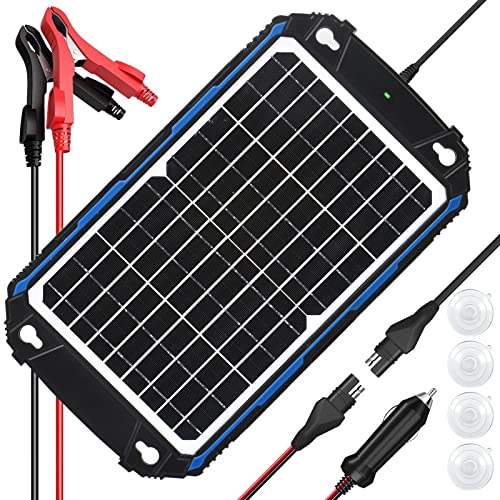
SUNER POWER Waterproof 12W 12V Solar Battery Charger & Maintainer Pro
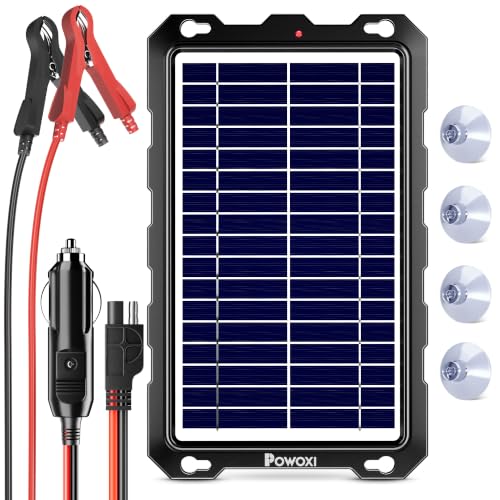
POWOXI 7.5W 12V Solar Battery Charger Trickle Maintainer Kit for Car
More Details On Our Top Picks
Renogy keeps this one simple, which suits storage duty on a car, motorcycle, boat, or RV that sits still for stretches. The 10W panel gives you a modest, steady maintenance option, and the included lighter plug plus alligator clips make it easier to match different setups without buying extra parts.
That flexibility matters in a garage where one battery is easy to reach and another sits in a tighter corner. The trade-off is obvious, the lower wattage makes this a maintenance tool rather than the pick for faster recovery, so it fits people who want gentle support more than aggressive charging.
Strong Points
- 10W output keeps the focus on battery maintenance instead of bigger charging demands.
- Lighter plug support helps on vehicles with a 12V outlet nearby.
- Alligator clips and battery cables widen compatibility across common storage situations.
- Small panel size stays manageable in crowded garages or on compact dashboards.
Small Caveats
- Lower output means you should expect slow, supportive charging, not quick turnaround.
- Cable management matters, since loose leads can feel messy during repeat storage use.
- Owners with larger batteries may want more panel headroom.
Feature Snapshot
Who It Suits Best
It suits you best when you keep a car, motorcycle, or small boat parked for long stretches and want a low-fuss maintainer.
Where A Sibling Pick Shines
SUNER POWER Waterproof 12W 12V Solar Battery Charger & Maintainer Pro fits you better when you want more output for a broader maintenance cushion.
The flexible panel design makes this one feel well suited to curved or less forgiving surfaces, such as a boat cover area or an RV storage spot with limited flat space. The built-in smart controller matters because it helps manage charging behavior more cleanly than a bare panel setup, which is a real plus for long parking periods.
Compared with Renogy’s simpler 10W option, this 20W kit gives you more output and a more specialized panel shape. The catch is that flexible gear can be a little more application-specific, so you want to think about mounting surface, cable routing, and how often you plan to move it.
What We Like
- 20W output gives more room for maintenance on larger 12V batteries.
- Flexible panel construction suits curved or awkward mounting spots.
- Smart controller helps keep charging behavior more orderly.
- Good match for boats and RVs that sit outside.
Areas To Watch
- Flexible panels need thoughtful placement to stay secure and neat.
- Owners with compact dashboards may prefer a smaller rigid panel.
- The setup asks a bit more attention than a plug-and-play maintainer.
Core Details
Made For
It’s made for you when you store a boat or RV in a spot where a flexible panel makes mounting easier.
Skip It When
FlexSolar 20W 12V Solar Panel Battery Trickle Charger Maintainer Kits fits you better when you want several connection choices in one package.
This is the kind of kit that makes sense for a garage with more than one vehicle type, because it bundles a built-in controller with several connection paths. Cigarette lighter, alligator clips, O-rings, and an OBDII connector give you a wide net, so you’re not boxed into one mounting style or one battery access point.
That broad kit feel sets it apart from the simpler Renogy and ECO-WORTHY entries. The honest read is that more accessories also mean more pieces to sort and store, which is fine for organized setups but less appealing for someone who wants the shortest possible routine.
Highlights
- Built-in charge controller adds useful control in a ready-to-use kit.
- Multiple connectors suit cars, trucks, tractors, and boats.
- OBDII connector helps on vehicles that support that plug style.
- Good fit for owners who want one kit for several machines.
- 20W output gives more maintenance support than the smaller wattage picks.
Softer Spots
- Several included parts mean more to keep track of in storage.
- The wider accessory set may feel like extra setup for simple jobs.
Feature Rundown
The Right Fit
You’ll appreciate it most if you keep a mixed fleet and want one kit that can move between vehicles without much fuss.
Look Elsewhere When
20Watt 12V Solar Car Battery Trickle Charger & Maintainer fits you better when you want a more flexible panel shape for awkward mounting spots.
At 2.5W, this ECO-WORTHY model is the smallest, most restrained option in the group, and that tells you a lot about its role. It suits light maintenance on a parked car, mower, trailer, or utility vehicle more than any kind of demanding battery recovery.
Compared with the 10W and 12W picks, it takes up less space and asks for less budget commitment, but it also gives you less charging headroom. That trade-off is fine for seasonal storage and small batteries, though owners of larger vehicles may want to step up to something stronger.
Reasons To Buy
- Very small panel size is easy to place and store.
- Low-output design suits gentle upkeep during long parking periods.
- Waterproof build language makes it a sensible outdoor maintenance choice.
- Works for several vehicle types, including mowers and trailers.
Points To Note
- 2.5W is a modest output, so expectations should stay modest too.
- Longer storage periods on larger batteries may call for a bigger panel.
- Small size is convenient, but it also means less power margin.
Quick Facts
Whose Shelf It Belongs On
It belongs on your shelf if you want a tiny maintainer for a seasonal vehicle or a small utility machine.
A Better Fit Elsewhere
POWOXI 7.5W 12V Solar Battery Charger Trickle Maintainer Kit for Car suits you better when you want a little more output without jumping to a much larger kit.
Thirty watts puts this SUNER POWER unit in a more serious lane than the smaller maintainers above. The UltraSmart MPPT controller matters here, because MPPT stands for maximum power point tracking, a control method that helps the panel work more efficiently as sunlight changes through the day.
That kind of headroom helps for larger batteries, heavier seasonal use, or storage situations where you want a stronger buffer. The trade-off is size and expectation, since this sits closer to a premium maintainer than a casual add-on, and it makes more sense on vehicles that truly need the extra capacity.
Best Bits
- 30W output gives the most headroom in this lineup.
- MPPT controller supports more efficient solar use as light changes.
- Good fit for bigger vehicles and more demanding storage schedules.
- Waterproof design suits outdoor exposure on boats and trailers.
Honest Caveats
- More output is useful, but only when the battery setup benefits from it.
- The higher-capacity build makes this less of a casual grab-and-go choice.
- Storage space matters a bit more than it does with the smaller panels.
Technical Sheet
Built With In Mind
It’s built with in mind the owner who keeps a boat, trailer, or RV in storage and wants a stronger solar maintainer.
Swap It Out When
Renogy 10W Solar Panel Car Battery Trickle Charger & Maintainer fits you better when your priority is a simpler, lighter maintenance setup.
The OBDII connector is the headline here, and that matters because it can make connection feel more direct on compatible modern cars. OBDII means on-board diagnostics, the common port used for vehicle data and service tools, so using it for a maintainer can simplify the physical hookup in a daily driver that sits during travel.
Compared with the Renogy 10W kit, this ECO-WORTHY version leans harder into a single connection path instead of a broader accessory mix. That makes it tidy for storage use, though the OBDII approach is only a good fit when your vehicle and your parking setup make the port easy to access.
Upsides
- 10W output gives a sensible middle ground for storage maintenance.
- OBDII connection can simplify the setup on compatible vehicles.
- Waterproof build suits outdoor parking and seasonal storage.
- Portable design keeps the kit easy to move between vehicles.
Minor Gripes
- OBDII fit depends on how your vehicle is laid out.
- That single-port style may not suit every garage routine.
- Owners who want more connection choices may prefer a multi-lead kit.
Details At A Glance
Right Fit For
This fits you well when your car stays parked for stretches and you want a cleaner OBDII hookup.
Another Choice May Suit
FlexSolar 20W 12V Solar Panel Battery Trickle Charger Maintainer Kits suits you better when you want more connection hardware in the box.
Foldable solar gear earns its keep when you want maintenance power that still packs away cleanly in a trunk, cabinet, or RV storage bin. This FlexSolar kit also adds QC3.0 USB output, which is a fast-charge protocol for compatible devices, so the panel can serve more than one roadside or campsite job.
That makes it more versatile than the dedicated maintainer picks above, especially for travelers and weekend campers who move between vehicles and small electronics. The compromise is that a multi-purpose design usually asks for more attention during setup, and foldable gear makes the most sense when portability matters as much as battery upkeep.
What We Like
- Foldable format stores neatly and travels well.
- 28W output gives a strong maintenance cushion.
- QC3.0 USB output adds extra usefulness beyond battery care.
- Included connectors cover several hookup styles.
- Built-in controller supports a more managed charging setup.
Trade Offs
- Foldable construction adds moving parts to manage and store.
- Multi-use gear can feel less dedicated than a simple maintainer.
Core Details
Who Should Grab It
You should grab it if your charging kit needs to move easily between travel gear, vehicle storage, and campsite use.
Where Shoppers Go Wrong
SUNER POWER Waterproof 30W 12V Solar Battery Charger & Maintainer PRO suits you better when battery support matters more than portability.
This 12W SUNER POWER model sits in the middle of the wattage range, which can make it feel like the calm center of the lineup. The UltraSmart MPPT controller gives it the same smarter power-management approach as the 30W version, but in a size that still feels reasonable for common garage and driveway storage.
It is the kind of pick that works for everyday vehicle upkeep without feeling oversized. Compared with the 30W PRO, it gives up some output headroom, yet that trade-off often makes sense for smaller batteries or for anyone who wants a more balanced mix of size and capacity.
Positives
- 12W output lands in a comfortable middle zone for upkeep.
- MPPT controller helps the panel make better use of changing light.
- Good fit for everyday battery maintenance across common vehicles.
- Waterproof construction suits outdoor storage and parking.
Worth Noting
- Not as compact as the smallest maintainer options.
- Doesn’t bring the extra capacity of the 30W SUNER POWER PRO.
- Storage layout matters, since a mid-size panel needs a bit more room.
At A Glance
Best Suited To
It’s best suited to you if you want a middle-ground maintainer for routine storage without jumping to a larger 30W panel.
Reach For A Different Pick When
ECO-WORTHY 2.5W Solar Car Battery Charger Maintainer 12V fits you better when the smallest footprint matters more than extra headroom.
POWOXI keeps the formula straightforward, with 7.5W output, a smart controller, waterproof construction, and a compact maintainer layout. That combination makes sense for light upkeep on a parked car, motorcycle, trailer, or boat that does not need a larger solar footprint.
It sits just above the tiniest options in this roundup, so you get a little more cushion without moving into bulkier territory. The trade-off is still output, plain and simple, because this is built for gentle support and not for a battery that needs stronger solar help.
Bright Spots
- 7.5W output gives a modest step up from the very smallest panel.
- Smart controller helps keep the charging path more orderly.
- Waterproof build suits outdoor parking and seasonal storage.
- Works well for small vehicles and lighter maintenance needs.
Room For Improvement
- Still a low-output option, so it suits upkeep more than recovery.
- Owners of larger RV or marine batteries may want extra capacity.
- Small-panel maintenance works best when placement stays clean and unobstructed.
Feature Card
Perfect Match For
It’s a perfect match for you if you want a light-duty maintainer for a car, motorcycle, or trailer that sits unused for stretches.
Not Your Match When
SUNER POWER Waterproof 12W 12V Solar Battery Charger & Maintainer Pro suits you better when you want a little more panel capacity.
How To Choose The Right Solar Car Chargers
Match Output To Storage Time
Output wattage tells you how much solar help the panel can deliver, and that matters more than shiny extras. A 2.5W or 7.5W maintainer fits light upkeep on a vehicle that sits for weeks, while 20W or 30W gives more breathing room for larger batteries or longer parking stretches.
You’ll usually feel the difference most on RVs, boats, and trucks with bigger battery banks. Smaller cars and motorcycles often do fine with less wattage, especially in sunny parking spots.
Choose The Connector Style That Fits Your Routine
Connection options shape daily use. Alligator clips work for direct battery access, lighter plugs suit vehicles with a live 12V socket, and OBDII connectors can make sense on newer cars where the port stays easy to reach.
More connectors sound handy, but extra parts also mean more storage pieces and more setup choices. Simpler kits feel calmer for one-vehicle households, while multi-connector kits suit mixed garages.
Consider Panel Style And Placement
Rigid panels tend to feel straightforward on a flat dashboard, fence, or parked car roof area. Flexible panels fit curved spots better, and foldable panels help when your charger needs to move between home, travel, and campsite duty.
The trade-off shows up in handling and storage. Flexibility can help you mount in awkward places, yet it usually asks for a bit more attention during setup and cleanup.
Look At The Controller Before Anything Else
A built-in controller helps manage charging behavior, and MPPT is the smarter version that adjusts for changing light conditions. That matters on cloudy days, in partial shade, and anywhere sunlight isn’t perfectly steady.
Basic maintainer panels can still make sense, especially for simple seasonal storage. Higher-end controllers tend to cost more because they add control, not just raw panel size.
A Quick Reality Check Before You Decide
Common Shopping Slip Ups
One common mistake is matching the charger to the vehicle instead of the battery and parking pattern. A tiny panel can be fine for a weekend car, but it may feel too light for an RV that sits for months.
Another slip-up is overlooking connector access. OBDII, lighter plug, and alligator clip setups each fit different routines, so the neatest choice is the one you can actually use without rearranging the garage every time.
What The Higher Tier Buys
Higher-tier units usually spend more on panel area, better controller logic, and broader connector kits. That extra cost shows up in smoother ownership, especially for boats, trailers, and larger vehicles that need more consistent upkeep.
For a small car stored in a bright driveway, a basic maintainer often does enough. For mixed fleets or tougher storage conditions, stepping up can make the whole routine feel less fiddly.
Frequently Asked Questions
Can solar car chargers replace a wall charger?
They’re better thought of as maintainers or trickle chargers, not full replacements for heavy charging jobs. They work best for keeping a 12V battery supported during storage.
Do I need a bigger panel for an RV?
Larger batteries usually benefit from more panel output. A 20W or 30W option is easier to justify for an RV than a tiny 2.5W unit.
What does MPPT mean?
MPPT stands for maximum power point tracking, a controller method that helps a solar panel work more efficiently as light changes. It’s especially useful in mixed weather or partial shade.
Is a flexible panel better than a rigid one?
Flexible panels suit curved or awkward surfaces better than rigid panels. Rigid panels are often simpler to place and store.
How do you pick the right connector?
Choose the connector that matches how you reach the battery, the lighter socket, or the diagnostic port. The best option is the one that fits your parking routine with the least hassle.
Final Thoughts
The best solar charger for your vehicle comes down to two things, how long it sits and how easy it is to connect. A small maintainer can be plenty for a weekend car, while a stronger MPPT-based kit makes more sense for an RV, trailer, or boat that spends real time in storage. Once you match output, connectors, and panel style to your setup, the choice gets much easier. Pick the one that fits your parking routine, and the rest tends to fall into place.
