

RV solar setups live or die on the hardware under the panels. A solid mount keeps your layout tidy on curved roofs, flat metal tops, boats, and trailer shells, while the wrong one turns installation into a headache you keep revisiting.
These nine picks focus on bracket style, rail length, panel compatibility, and roof fit, so you can match the parts to your rig instead of forcing a mismatch. You’ll also see where a simple Z bracket makes more sense than a full rail kit, and vice versa.
The Shortlist At A Glance

Renogy 4 Sets of Solar Panel Mounting Z Brackets

16 Units per Set Solar Panel Mounting Z Brackets

BougeRV Mountng Z Bracket for 100W 150W 200W 300W 400W Solar Panel 8 Units

ECO-WORTHY 16 Units Solar Panel Mounting Brackets
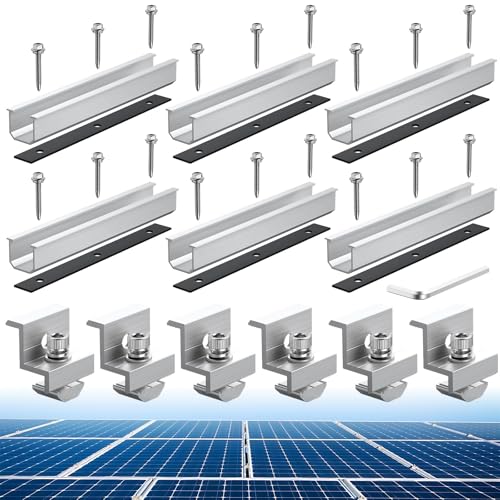
Anbte Solar Panel Roof Mounting Kit 7.87 in Rail
Solar Panel Mounting Brackets ABS Corner Bracket Kit 7PCS
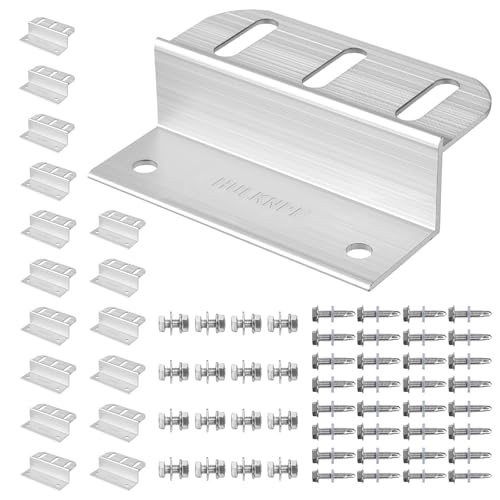
Z Brackets Solar Panel Mounting Kit 16 Pack

Solar Panel Mounting Brackets Mid and End Clamps and Rails Kit

Anbte Solar Panel Mounting Kit for 4 Panels 4.72 in Rails
More Details On Our Top Picks
Renogy’s four-set layout keeps the footprint simple, which helps on smaller RV roofs or trailer tops where clean spacing matters. The lightweight aluminum body and stainless hardware make sense for damp coastal parking, and the curved-roof compatibility is a practical detail, not just marketing fluff.
That smaller count also keeps the install less cluttered than full rail systems like the Anbte kits later in the list. You may find it especially handy for a single panel or a compact pair, though it’s not the most expansive choice for a larger array.
Strong Points
- Aluminum construction keeps added weight low on the roof.
- Stainless hardware helps the fasteners feel better suited to outdoor use.
- Curved-roof fit opens the door to more RV and trailer layouts.
- Four sets keep the install straightforward for a modest panel setup.
Things To Consider
- Four sets suit smaller jobs more than wide multi-panel runs.
- Z brackets leave less room for adjustment than rail-based kits.
- Hardware still needs careful sealing and inspection around roof penetrations.
Feature Snapshot
Who It Suits Best
You get the most from this pick on a compact RV, trailer, or boat setup where simple mounting matters more than a sprawling rail system.
Where A Sibling Pick Shines
The Anbte Solar Panel Mounting Kit for 4 Panels 4.72 in Rails suits you better when you want a neater rail-based layout and more panel organization.
This SUNMAK set leans into volume, which is useful for a roof project that needs more attachment points without moving to a full rail system. The aluminum build keeps the weight down, and the 16-unit count gives you room to map out a more ambitious layout than Renogy’s four-set pack.
For a DIY solar install on an RV, yacht, or trailer, that bigger bracket count can save you from piecing together extras later. The trade-off is simple, though, because Z brackets are still a more fixed approach than rail kits like the Link Solar option below.
Highlights
- Sixteen brackets give you more room for larger layouts.
- Lightweight aluminum keeps roof load manageable.
- Works across several vehicle and roof types.
- The simple format suits basic, no-frills installs.
Minor Gripes
- Z bracket mounting leaves less adjustability than rails.
- More pieces means more planning during layout.
- Sealant and periodic fastener checks still matter on road rigs.
Details At A Glance
Who Should Grab It
You’re in the right lane here when your RV or trailer project needs a broader set of brackets without adding rail complexity.
Swap It Out When
Link Solar’s Mid and End Clamps and Rails Kit makes more sense for you when alignment and panel spacing matter more than a fixed Z style.
BougeRV gives you a useful middle ground, because the bracket set is tied to a wider solar panel range, from 100W up through 400W. That makes it easier to match a panel you already own, especially on an RV roof or off-grid roof where parts compatibility matters as much as the mount itself.
Compared with the simpler Renogy and SUNMAK packs, this one reads like a better fit for a setup that may grow or shift over time. The honest read is that Z brackets stay pretty fixed, so you still want a clean layout plan before you drill.
Reasons To Buy
- Panel range gives you broader compatibility.
- Eight units work well for a modest solar array.
- Useful on roofs, boats, and off-grid builds.
- The set format keeps the mounting plan easy to follow.
Room For Improvement
- The name has a typo, which is mildly distracting.
- Z brackets are less adjustable than rail-and-clamp systems.
- Layout planning still matters before installation begins.
Core Details
Built With In Mind
You’ll appreciate this set most on a roof project that already has a known panel size and needs a straightforward mounting match.
Look Elsewhere When
Renogy’s 4 Sets of Solar Panel Mounting Z Brackets works better for a compact roof layout that needs fewer parts and a lighter hardware footprint.
ECO-WORTHY follows the same general Z bracket path as SUNMAK, but it leans into the same broad-use idea for RVs, trailers, boats, and wall installs. That makes it feel like a safe, unspectacular hardware set for a project where you care more about fit and function than extra parts or a fancy mounting style.
For most backyard or driveway installs, the 16-piece count gives you enough hardware to organize a small array without feeling short on parts. The trade-off is predictable, since this style still gives you less fine-tuning than the rail systems later in the shortlist.
Upsides
- Sixteen units suit compact and mid-size roof layouts.
- Aluminum construction keeps the mounting kit light.
- Works across several common outdoor install surfaces.
- The setup stays simple for DIY installation.
Small Caveats
- Z bracket style limits layout flexibility.
- You still need careful sealing around any roof holes.
- Not as adjustable as clamp-and-rail hardware.
At A Glance
Whose Shelf It Belongs On
This fits you well when you want a plain, dependable Z bracket kit for an RV, trailer, or boat roof.
Another Choice May Suit
The Anbte Solar Panel Roof Mounting Kit 7.87 in Rail is a smarter route for you when a rail system would make layout and alignment easier.
This Anbte kit moves away from Z brackets and into rails, which gives you a more organized way to line up panels across a roof. The 7.87-inch rail pieces and the clamp setup make it a stronger match for metal, tin, flat, or sheet roofs where straight runs and even spacing matter.
The panel-thickness support for 30 mm and 35 mm frames is the real anchor here, because that’s the kind of detail that saves you from a mismatch later. The catch is that rail systems usually ask for more planning and parts handling than a simple corner bracket kit like CMYYANGLIN.
Best Bits
- Rail format helps create a cleaner panel line.
- Works with common 30 mm and 35 mm panel frames.
- Useful on several roof types, including metal and tin.
- Clamps and rails bring more installation structure.
Worth Noting
- Rail systems usually take more planning than Z brackets.
- More parts can mean a slower install.
- The longer layout may feel excessive for a tiny roof.
Technical Sheet
Perfect Match For
You’ll get the most value here on a roof project that needs a tidier rail-based layout and a more structured panel run.
Skip It When
Renogy’s 4 Sets of Solar Panel Mounting Z Brackets makes more sense for a lighter, simpler install on a smaller roof.
CMYYANGLIN takes a different route by leaning on ABS corner brackets, so it suits you best when drilling is the bigger concern or the roof layout is small. ABS, or acrylonitrile butadiene styrene, is a common plastic used in outdoor parts, and the drill-free pitch makes this set feel aimed at lighter-duty rooftop placements.
That design is handy for camper vans, boats, and sheds where a low-profile corner solution can be enough. Compared with the aluminum Z brackets earlier in the list, this set is more about convenience than metal hardware heft.
Bright Spots
- Drill-free approach keeps installation simpler.
- ABS corner pieces suit lightweight rooftop setups.
- Useful for RVs, caravans, vans, sheds, and boats.
- The small kit size keeps storage easy.
Areas To Watch
- Plastic corner hardware is less substantial than metal mounts.
- Best suited to lighter-duty applications.
- Long-term exposure still calls for regular inspection.
Feature Rundown
Right Fit For
This suits you well for a smaller roof project where quick mounting matters more than a full metal bracket system.
Reach For A Different Pick When
BougeRV Mountng Z Bracket for 100W to 400W Solar Panel 8 Units is a better fit for you when you want aluminum hardware with broader panel compatibility.
HULKNPE leans toward the sturdier end of the Z bracket group, with a 16-pack that makes sense for a broader roof layout or a multi-panel off-grid setup. The corrosion-resistant aluminum angle matters in real use, because solar hardware spends its life near rain, road spray, and sun without much sympathy.
That puts it closer to the ECO-WORTHY and SUNMAK picks than to the small CMYYANGLIN kit, though the heavier-duty angle may suit you better when the array has to stay put. It still keeps the installation style familiar, so you’re not stepping into a complicated rail system.
Standout Traits
- Sixteen brackets support bigger or repeated installs.
- Corrosion-resistant aluminum is a sensible outdoor choice.
- Works across RV, boat, roof, and off-grid use.
- The Z bracket style stays straightforward for DIY setups.
Softer Spots
- Z brackets still offer less adjustability than rails.
- Large layouts need careful measurement before drilling.
- Hardware checks remain part of routine upkeep.
Quick Facts
Who Will Love This
You’re the right match for this kit when your roof install needs plenty of metal hardware and a familiar Z bracket approach.
Where A Sibling Pick Shines
Link Solar’s Mid and End Clamps and Rails Kit fits you better when your build needs more rail-based alignment than this fixed Z format.
Link Solar is the most clearly rail-focused option in the group, and that matters for anyone who wants a cleaner row of panels on a roof. Mid clamps sit between panels, end clamps lock down the outer edges, and the rails create the structure, so the whole setup feels more organized than a Z bracket pack.
That structure suits roof arrays where panel sizes vary or where the final layout needs a more finished look. Compared with the easier CMYYANGLIN or Renogy sets, this takes more planning, but it gives you more control over how the run comes together.
What We Like
- Mid and end clamps help manage a full rail run.
- Rail support suits larger rooftop layouts.
- Useful for PV module fixing on roofs.
- The system feels more orderly than fixed corner mounts.
Honest Caveats
- Rail systems ask for more planning and measuring.
- Small one-panel jobs may not need this much hardware.
- Installation takes more parts than a basic Z kit.
Feature Card
The Right Fit
You should look at this kit when your roof array needs a rail-based layout with more attention to alignment and spacing.
A Better Fit Elsewhere
Renogy 4 Sets of Solar Panel Mounting Z Brackets is easier to live with for a compact RV roof that only needs a handful of mounts.
This Anbte kit feels complete in a way the smaller Z bracket sets don’t, because it’s built around four panels and includes rails, end clamps, center clamps, and a wrench. That makes it a useful match for someone building a tidier roof array on an RV or boat, especially when the goal is to keep the pieces organized from the start.
Compared with the simpler Renogy and SUNMAK options, this one asks for more setup attention but gives you a more polished result once the layout is set. You may find the 4.72-inch rail pieces especially helpful on a four-panel run that needs a repeatable spacing pattern.
Best Bits
- Made for a four-panel layout.
- Includes rails, clamps, and a wrench.
- Black and silver finish looks tidy on a roof.
- Rail structure helps keep panel spacing orderly.
Points To Note
- The setup is more involved than a basic Z bracket kit.
- Smaller jobs may not use the full hardware set.
- Rail systems reward careful measuring before assembly.
Core Details
Made For
You’re a good match for this kit when you want a compact but fully organized four-panel roof setup.
Where Another Pick Fits Better
BougeRV Mountng Z Bracket for 100W to 400W Solar Panel 8 Units fits you better when you want a simpler Z bracket route with less rail hardware.
How To Choose The Right Rv Roof Solar Brackets
Start With Roof Shape And Panel Count
Your roof shape decides a lot before brand ever enters the picture. Curved RV roofs and mixed-surface installs often favor simple Z brackets, while flatter roofs and more orderly panel runs usually fit rail-based kits better.
Panel count matters just as much. A single panel or compact pair rarely needs a full rail system, but four-panel or larger layouts benefit from the extra alignment that clamps and rails provide.
Match The Mount Style To Your Build
Z brackets keep the install small, direct, and usually easier to handle in tight spaces. They work well for quick layouts on trailers, boats, and RVs where less hardware is a relief.
Rail systems ask for more planning, yet they give you cleaner spacing and a more structured finish. That trade-off often makes sense for campers and roof arrays that need a neater, more expandable setup.
Check Materials And Fastener Quality
Aluminum is common because it keeps weight down, and stainless steel hardware is useful where moisture and road spray are part of everyday life. ABS corner kits can serve lighter-duty jobs, but they do not carry the same feel as metal hardware.
Maintenance matters too. Roof mounts usually need routine checks around fasteners and sealant, especially after long drives or seasonal weather shifts.
Think About Installation Comfort
Some kits are built for simple placement, while others reward patient measuring and a steadier afternoon. If you want less fuss, the smaller bracket packs make sense, but a more complete rail kit can pay off in layout control.
Choose the hardware that matches your patience as much as your roof. That keeps the install from feeling like a compromise you notice every time you climb up there.
Things Worth Knowing First
Hidden Buying Traps
Shoppers often focus on quantity and ignore the mounting style. A large bracket count means little when the roof needs rails, or when the panel frame thickness does not line up with the kit.
Another common miss is underestimating layout time. Drill-free corner kits sound simple, but they still need careful placement, and rail systems need measurement even more.
The Upgrade Payoff
Higher-tier kits usually cost more because they include more complete hardware, better layout control, or a cleaner clamp-and-rail structure. In this category, you often pay for easier alignment and less guesswork during installation.
That upgrade makes the most sense for larger roof arrays, four-panel builds, or rigs where you want the final setup to look tidy and stay organized. For a small single-panel job, the extra hardware can be more than you need.
Frequently Asked Questions
Are Z brackets good for RV roofs?
Yes, Z brackets work well on many RV roofs because they keep the mounting profile simple. They suit smaller panel setups and curved surfaces especially well.
Do rail kits work better than corner brackets?
Rail kits give you more alignment control and a more structured layout. Corner brackets are simpler and usually make more sense for smaller installs.
What material should you look for?
Aluminum is a common choice because it stays light on the roof. Stainless steel hardware helps round out the kit for outdoor use.
Does panel thickness matter?
Yes, it matters a lot with clamp-based kits. A frame that matches the clamp range helps the installation fit the way it should.
Do drill-free corner kits suit every setup?
No, they fit lighter-duty jobs better than large or highly structured arrays. A bigger roof project usually benefits from metal brackets or rails.
Final Thoughts
The right Rv Roof Solar Brackets depend on roof shape, panel count, and how tidy you want the finished layout to look. For a small RV or trailer, a simple Z bracket kit keeps things manageable. For a four-panel roof array, a rail system starts to earn its keep. Pick the hardware that fits your roof first, then match the rest of the kit around that choice.
