

Boats reward gear that bends with the deck, sheds bulk, and keeps working in real weather. Flexible panels fit that job well, especially on curved cabins, narrow rails, and rooftops where rigid glass feels awkward. You’ll see a clear spread here, from compact 50-watt options to larger 200-watt choices, so you can match output to your battery setup without overbuilding the system.
Quick Look At Our Shortlist

Renogy Flexible Solar Panel 100 Watt, 240° Ultra Flex Bendable

100W 12V Flexible Solar Panel 9BB Monocrystalline Cell

Renogy Flexible Solar Panel 50 Watt, 240° Ultra Flex Bendable
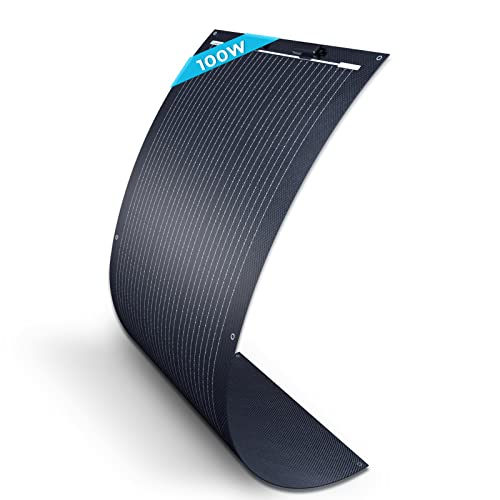
Renogy Flexible Solar Panel 100 Watt, 240° Ultra Flex Bendable

2PCS 100W 12V Flexible Solar Panel 9BB Monocrystalline Cell

BougeRV Arch Pro 200W Anti-Shading N-Type Fiberglass Flexible Solar Panel

12 Volts 50 Watts Flexible Solar Panel for RV Boat
More Details On Our Top Picks
Renogy’s 100-watt panel lands in the sweet spot for many boat owners who want useful output without crowding the roof. The 0.1-inch profile helps on curved decks and cabin tops, and the IP68 rating points to sealed construction for damp environments and spray-prone mounting spots.
Compared with the 50-watt Renogy panel below, this one gives you more room to cover fridge loads, electronics, or a small battery bank. The trade-off is simple: more output usually means you plan the layout more carefully, so narrow rails and tight hatches deserve a tape-measure check first.
What We Like
- 100 watts suits many day-cruiser charging setups.
- The thin build sits neatly on curved surfaces.
- IP68 sealing fits splashy marine conditions better than basic panels.
- Easy to place on cabin tops, vans, or RV roofs.
- Solid middle-ground option for owners who want one panel to do a lot.
Areas To Watch
- The larger size asks for careful planning on smaller decks.
- Flexible panels still need a clean, well-prepped mounting surface.
- Higher output can tempt overpacking a cramped roof.
Feature Snapshot
Who It Suits Best
Boaters with room for a full-size panel and a mid-range battery setup stand to benefit most from this one.
A Better Fit Elsewhere
Renogy Flexible Solar Panel 50 Watt, 240° Ultra Flex Bendable suits compact skiffs, dinghies, and owners who need a lighter rooftop footprint.
This Topunive panel targets a straightforward need, steady 12-volt charging on uneven marine surfaces. The 9BB monocrystalline cell layout means the solar cells use nine busbars, which can help current move more evenly across the surface, and that matters most for basic off-grid charging where every bit of consistency helps.
It sits close to the Renogy 100-watt pick in raw output, but the fit leans more toward budget-conscious setups that still need a workable marine shape. You may find it especially sensible on a trailer boat or cabin roof where a single panel keeps the system simple.
Bright Spots
- 100-watt output fits common 12V charging needs.
- Monocrystalline cell design suits compact roof layouts.
- Works across marine, van, trailer, and cabin use cases.
- Good choice for keeping a battery topped between outings.
Worth Noting
- Single-panel coverage may feel modest for larger electrical loads.
- You’ll want to plan mounting hardware with care on flexing decks.
Technical Sheet
Made For
Weekend boaters and van owners who want a simple 12V panel without overcomplicating the install will get the most from it.
Another Choice May Suit
BougeRV Arch Pro 200W Anti-Shading N-Type Fiberglass Flexible Solar Panel makes more sense for larger battery banks and heavier onboard loads.
The 50-watt Renogy panel makes sense when roof space is precious and weight matters. At 0.1 inch thick with the same 240-degree bendable design as the 100-watt version, it can tuck into smaller zones on a boat or van where a bigger module would feel awkward.
Compared with Item 1, this is the gentler option for topping up smaller batteries, running modest electronics, or experimenting with solar on a compact hull. It’s not the panel you choose for a heavy electrical appetite, but for tight layouts it feels clean and practical.
Highlights
- Small footprint suits narrow boat roofs and cabin edges.
- Lower output keeps the system easy to size.
- The thin profile helps preserve headroom and sightlines.
- Good entry point for modest solar needs.
Small Caveats
- 50 watts will not cover larger onboard demand.
- Owners seeking broader charging coverage may outgrow it quickly.
- Like all flexible panels, it rewards a smooth mounting surface.
Core Details
Right Fit For
Small boat owners, solo travelers, and anyone working with limited roof area will appreciate the modest footprint.
Where A Sibling Pick Shines
Renogy Flexible Solar Panel 100 Watt, 240° Ultra Flex Bendable is the stronger call for boats that need more daily charging headroom.
This version keeps the same 100-watt format as Item 1, but the black finish gives it a quieter look on darker decks and cabin roofs. In a boat where visual clutter matters, that finish can feel tidier, almost like the panel is trying to stay in the background.
For owners who want the stronger output of the 100-watt class without a bright visual presence, this is the neatest fit in the group. The honest read is that style alone won’t change charging behavior, yet the cleaner finish can matter more than people expect on exposed top surfaces.
Best Bits
- 100-watt output gives you practical charging headroom.
- Black finish suits darker or more understated deck layouts.
- The flexible build works across curved boat surfaces.
- Good match for owners who want a discreet look.
Points To Note
- The finish changes appearance, not charging capacity.
- Full-size placement still needs careful measurement on small hulls.
Details At A Glance
Whose Shelf It Belongs On
Boat owners who care about a lower-contrast look and still want 100-watt coverage should feel comfortable with this one.
Swap It Out When
Renogy Flexible Solar Panel 100 Watt, 240° Ultra Flex Bendable is the better choice for anyone who wants the same output in a more standard finish.
This two-panel Topunive set makes sense for wider roofs, larger battery needs, or owners who want to spread coverage across more than one spot. Because the panels are sold as a pair, you get more layout flexibility, which can help on a boat where vents, rails, and curves break up the available space.
Compared with the single 100-watt options, this setup is easier to think about as a small array rather than one isolated sheet of solar material. That’s useful on cabin cruisers or trailer boats that already have enough surface area to support a broader plan.
Reasons To Buy
- Two panels give you more placement options.
- 100-watt modules suit small-to-mid charging plans.
- 9BB monocrystalline construction supports a clean power-focused design.
- Can suit 12V or 24V battery charging setups.
Room For Improvement
- Two panels mean more planning and more mounting work.
- Storage takes a bit more space than a single module.
- The pair makes the most sense on larger surfaces.
Feature Rundown
Who Will Love This
Boaters with enough deck or roof space for a small pair of panels will get the most value from this format.
Look Elsewhere When
Topunive 100W 12V Flexible Solar Panel 9BB Monocrystalline Cell is the easier pick for compact boats that only need a single panel.
This BougeRV panel stands apart because it pushes into a higher-output class while using a fiberglass build and an anti-shading design. Anti-shading means the panel is structured to handle partial shade more gracefully, which matters on boats where rails, antennas, and roof gear throw moving shadows through the day.
Compared with the 100-watt options, this is the one that makes sense for more demanding electrical habits or a larger battery bank. The trade-off is size and system planning, so owners with limited roof real estate may find it more panel than they need.
Upsides
- 200 watts gives you more charging headroom.
- Anti-shading design helps on partly blocked surfaces.
- Fiberglass construction suits a sturdier-feeling install.
- 16BB mono cell layout points to a more advanced panel structure.
- Useful for boats that support heavier onboard loads.
Things To Consider
- The larger format needs more roof space than smaller picks.
- Higher output often means a more careful electrical plan.
Key Specs
Built With In Mind
Owners running larger battery banks or higher draw gear on a roomy boat deck will appreciate this panel most.
Skip It When
Renogy Flexible Solar Panel 100 Watt, 240° Ultra Flex Bendable is the easier match for smaller craft that do not need 200 watts of coverage.
XINPUGUANG keeps this panel narrow and light, which makes sense for boats, vans, and small off-grid setups where every inch counts. The 23 percent monocrystalline cells point to a high-efficiency cell layout, meaning the panel is designed to make more of the sunlight it gets, a useful trait on cramped decks or mixed-use roofs.
Compared with the other 50-watt Renogy option, this one’s narrow format can be easier to thread into awkward spaces along a cabin line or roof edge. The honest read is that it suits trimmed-down installs better than ambitious power systems, but that’s exactly why many small-craft owners will like it.
Plus Points
- Narrow shape helps on tight mounting runs.
- 23 percent cell efficiency supports compact solar goals.
- Lightweight build suits smaller boats and travel setups.
- 240-degree bendability improves placement around curves.
Softer Spots
- 50 watts is a modest output level for larger systems.
- The narrow format helps placement, but not total power capacity.
- Smaller arrays may need more than one panel.
Feature Card
Perfect Match For
Owners of small boats, vans, and narrow roof layouts will get the cleanest fit from this panel.
Where Shoppers Go Wrong
BougeRV Arch Pro 200W Anti-Shading N-Type Fiberglass Flexible Solar Panel is the stronger move for people who need more power than a compact 50-watt module can give.
How To Choose The Right Flexible Solar Panels For Boats
Match Output To Your Actual Load
Start with what you want the panel to support, not just the roof space you have. A 50-watt panel suits light charging, while 100 watts gives you more room for battery upkeep, and 200 watts starts to make sense for heavier daily use.
The right number depends on your battery size, electronics, and how often you stay off dock power. Boats with a fridge, lights, and devices usually benefit from more headroom than a weekend day boat.
Pay Attention To Shape And Thickness
Flexible panels matter most where rigid glass would feel awkward, such as curved cabin tops, slight crown roofs, and narrow deck sections. Thin builds around 0.1 inch are easier to place low and keep out of the way.
That said, flexibility does not remove the need for a smooth mounting area. A panel that bends well still performs best when it sits flat enough to keep contact even and movement under control.
Look At Cell Layout And Shade Tolerance
Terms like monocrystalline describe solar cells made from a single crystal structure, which is commonly used when space is limited and efficiency matters. More busbars, such as 9BB or 16BB, spread current across the cell in a more segmented way, which can support steadier performance.
Shade tolerance matters on boats because masts, rails, and gear can cast moving shadows. Panels built with anti-shading ideas are worth a closer look when partial cover is part of daily life.
Think About The Surface You’re Mounting To
Fiberglass, sealed edges, and low-profile builds suit marine use because decks and cabin tops face moisture, vibration, and constant exposure. A panel that looks neat on paper still needs a realistic plan for cable runs and fastening points.
For smaller craft, a compact panel often feels easier to live with than a bigger sheet that crowds the roof. For larger boats, two smaller panels can sometimes fit more cleanly than one oversized piece.
Things Worth Knowing First
Mistakes Worth Dodging
Many people focus on wattage and forget the shape of the mounting area. On a boat, a panel that fits the curve cleanly is usually more useful than a larger one that sits awkwardly.
Another common miss is ignoring how much room the wiring and hardware will need. A tidy solar setup starts with measuring the panel path, not just the panel itself.
The Upgrade Payoff
Higher-tier panels usually bring stronger output, better shading tolerance, or sturdier materials like fiberglass. Those extras cost more because they aim to keep performance steadier in awkward, shadow-prone marine spaces.
The upgrade makes sense when you rely on solar more often, charge a larger battery bank, or need better use of limited roof space. For light weekend use, a simpler panel often stays the more sensible route.
Frequently Asked Questions
Are flexible solar panels a good fit for boats?
Yes, they suit curved surfaces and low-clearance mounting areas very well. They also help you keep the top of the boat looking cleaner than a bulky rigid panel can.
How much wattage makes sense on a small boat?
Fifty watts works for light charging and smaller battery upkeep. One hundred watts gives you more room for electronics, while 200 watts fits larger power needs.
What does IP68 mean on a solar panel?
IP68 is a sealing rating that points to strong protection against dust and water exposure. On a boat, that matters because spray and weather are part of daily life.
Why do some flexible panels use 9BB or 16BB cells?
Those numbers refer to busbars, the thin metal pathways that move current across the cell. More busbars can help spread electrical flow and support more consistent output.
Should you choose one large panel or two smaller ones?
Two smaller panels often fit better around vents, rails, and curved roof sections. One larger panel can be simpler, but it needs a cleaner stretch of usable space.
Closing Thoughts
For boats, the right flexible solar panel is the one that matches your roof shape, your battery needs, and how much space you can spare. The Renogy 100-watt panels make a strong middle ground, the compact 50-watt picks suit smaller craft, and the BougeRV 200-watt option serves larger systems that need more headroom. Take a careful look at your mounting area first, because good fit usually matters just as much as raw output.
