

Choosing a battery for solar panel setups gets easier once you match capacity, voltage, and protection features to the way you actually use power. A weekend camper needs a different setup than a cabin, trail camera, or full off-grid bank, and the wrong match usually shows up as short run times or awkward wiring.
The eight picks below cover small AA solar light batteries, compact 12V packs, and larger LiFePO4 banks for RVs, marine use, and home backup. You’ll see where each one fits best, along with the trade-offs that matter once it’s sitting in your shed, trailer, or power closet.
Quick Look At The Shortlist

dumfume 24V 100Ah LiFePO4 Battery Built-in 100A BMS

JiajaX Ni-MH AA 600mAh 1.2V Rechargeable Solar Batteries 4-Pack

Stealth Cam Sol-Pak 5000mAh Lithium-Ion Solar Battery

NERMAK 2 Pack 12V 12Ah LiFePO4 Deep Cycle Battery

dumfume 12V 100Ah LiFePO4 Battery Group 31 Lithium Battery 100A BMS
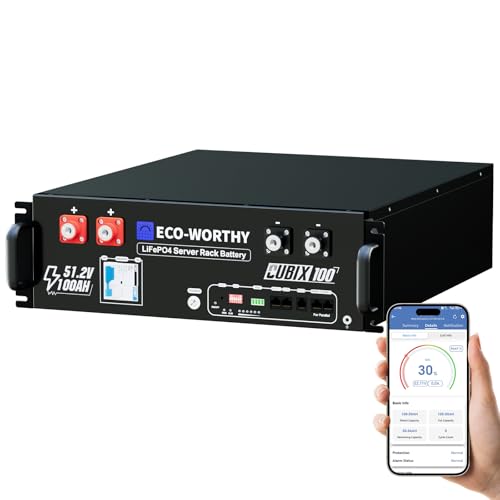
ECO-WORTHY Cubix100 48V 100Ah LiFePO4 Lithium Battery w/Bluetooth

yeagulch 12V 300Ah (314Ah) LiFePO4 Lithium Battery with 200A BMS

VEMDIA 12V 100Ah LiFePO4 Lithium Battery Group 31
More Details On Our Top Picks
A 24V bank like this suits bigger solar setups that need steadier delivery across longer wire runs. The built-in 100A BMS, or battery management system, matters because it helps manage charging and discharging without you adding another layer of hardware.
The low-temperature protection is useful in garages, trailers, and cabins that get chilly at night, and the 2560W power figure points to more serious loads than a small lantern or camera. The trade-off is size and commitment, so this makes sense for people already working around 24V equipment or planning a fuller off-grid layout.
Strong Points
- 24V setup can support larger inverter-based systems with less current draw than a similar 12V arrangement.
- Built-in BMS simplifies the pack-side protection you’d otherwise have to plan around separately.
- Low-temperature protection helps in shoulder-season storage and colder climates.
- The 100Ah capacity gives you room for larger appliances, not just basic lighting.
Small Caveats
- 24V gear asks for compatible chargers, inverters, and wiring, so it’s not the casual plug-in option.
- The pack is a better fit for fixed installs than frequent hand-carry moves.
Feature Snapshot
Who It Suits Best
You’ll get the most from this battery if your solar setup already lives in the 24V world and you want a solid block of storage for RV, marine, or cabin power.
A Better Fit Elsewhere
dumfume 12V 100Ah LiFePO4 Battery Group 31 Lithium Battery 100A BMS suits people building a simpler 12V system with easier compatibility and less planning overhead.
Garden lights and small solar décor usually need a basic, dependable AA-size cell, and that’s the lane this four-pack fills. Ni-MH means nickel-metal hydride, a rechargeable chemistry that’s common in small outdoor fixtures because it’s easy to drop into standard battery compartments.
At 600mAh, it’s a modest-capacity pack, so it fits low-drain lights better than anything power-hungry. The honest read is that you’re trading raw runtime for simple replacement convenience, which works well in patios, paths, and porch lanterns.
What We Like
- AA sizing keeps compatibility simple for many outdoor solar light housings.
- Pre-charged cells make setup faster out of the package.
- Low self-discharge suits fixtures that sit idle between uses.
- Four-pack format matches small clusters of lights without wasting extras.
Areas To Watch
- 600mAh is modest, so bright or long-running fixtures may need more frequent rotation.
- Outdoor battery compartments still need periodic cleaning and dry storage checks.
- Battery-only packaging means you’re replacing cells, not getting a full light kit.
Core Details
Who Should Grab It
You’ll like this pack most for outdoor solar lamps, accent lights, and small fixtures that use AA rechargeables.
Another Choice May Suit
Stealth Cam Sol-Pak 5000mAh Lithium-Ion Solar Battery fits trail-camera setups much better, because it’s built for a very different kind of power demand.
Trail-camera power is a different animal from garden lighting, and this Sol-Pak setup speaks to that niche clearly. The 12V DC jack, USB charging port, LED indicator, and adjustable T-swivel brackets make sense for people mounting gear outdoors and checking status without guesswork.
Because it’s aimed at wireless and cellular cameras, the practical win is convenience in remote setups where recharging or swapping batteries gets old fast. The trade-off is specialization, so it’s less compelling for broad home solar storage than the larger LiFePO4 packs in this list.
Highlights
- Designed around trail-camera power needs rather than generic small electronics.
- LED indicator helps you read charge status at a glance.
- USB port adds flexibility for charging-related use cases.
- Adjustable brackets make mounting easier on uneven field setups.
Honest Caveats
- Its purpose-built design is less useful outside camera-based installs.
- Outdoor mounting still calls for routine checks on alignment and cable routing.
Details At A Glance
Who Will Love This
You’re the right match for this battery if you run wireless or cellular trail cameras and want a neater, easier outdoor power setup.
Swap It Out When
dumfume 24V 100Ah LiFePO4 Battery Built-in 100A BMS makes more sense for RV or cabin power, where storage capacity matters more than field mounting.
Two 12Ah LiFePO4 batteries make a tidy middle ground for smaller solar projects, mobility gear, and backup circuits. LiFePO4 stands for lithium iron phosphate, a chemistry known for stable daily cycling in setups that get used often.
This pair is especially sensible for people who want a lighter, cleaner alternative to older lead-acid styles in scooters, fish finders, or compact lighting systems. The main compromise is capacity, so this is more about practical portability than deep whole-house storage.
Positives
- Two-battery pack gives you more layout flexibility than a single small battery.
- LiFePO4 chemistry suits repeated charge cycles in everyday use.
- 12V format works with a wide spread of small solar and mobility equipment.
- Built-in 12A BMS helps manage the pack without extra add-ons.
Points To Note
- 12Ah is modest, so larger inverters or longer runtimes call for something bigger.
- Pair installations need neat wiring and proper spacing to stay organized.
At A Glance
Perfect Match For
You’ll get the most from this set in small solar jobs, compact mobility gear, or backup power for modest devices.
Look Elsewhere When
VEMDIA 12V 100Ah LiFePO4 Lithium Battery Group 31 is the smarter step up for anyone who needs much longer runtime from a single 12V battery.
This one hits a very practical sweet spot for RV, marine, and off-grid use, because the Group 31 footprint fits many common battery trays. Group 31 is a case size category, so the main value is easier replacement planning and cleaner physical fit, not just raw capacity.
The IP65 rating, which points to dust resistance and low-pressure water protection, matters in real life when a battery lives in a storage bay or near damp gear. Low-temperature protection adds another layer of peace of mind, though the trade-off is that a weather-ready battery still deserves thoughtful mounting and regular inspection.
Upsides
- Group 31 sizing helps with fit in many RV and marine battery compartments.
- IP65 rating suits dusty bays and occasional splash exposure.
- Low-temperature protection is a plus for seasonal storage and colder mornings.
- 100Ah capacity gives you real runtime for camping and solar use.
- Built-in 100A BMS keeps the pack self-contained and easier to manage.
Softer Spots
- Group-size batteries still need you to check exact tray dimensions before swapping.
- The battery is best treated as a fixed-install component, not a casual carry item.
Core Details
Right Fit For
You’re the best match for this battery if you want a 12V solar pack that feels at home in RV, marine, or cabin hardware spaces.
A Better Fit Elsewhere
yeagulch 12V 300Ah (314Ah) LiFePO4 Lithium Battery with 200A BMS suits heavy off-grid setups that need much more stored energy from a single unit.
Home backup systems and larger solar arrays often need a rack-style battery, and this 48V unit sits firmly in that lane. Bluetooth and WiFi support matter because they let you check status without opening up the whole installation, which is handy in a utility room or energy cabinet.
At 5120Wh, or watt-hours, the storage level is aimed at serious energy management rather than light weekend use. The trade-off is that you’re dealing with a larger system, so it suits people who already know they want a more structured install.
Bright Spots
- 48V format works well for larger solar and home backup layouts.
- Bluetooth and WiFi add convenient monitoring options.
- Server-rack style design fits organized indoor power rooms.
- 5120Wh capacity supports bigger storage goals.
Trade Offs
- Rack-style gear asks for more planning than a simple drop-in battery.
- That kind of system usually makes sense only with compatible 48V hardware.
Technical Sheet
Made For
You’ll appreciate this battery most in a structured home power setup where monitoring and storage capacity matter just as much as the cells themselves.
Where A Sibling Pick Shines
dumfume 12V 100Ah LiFePO4 Battery Group 31 Lithium Battery 100A BMS is a gentler starting point for RV or small solar owners who do not need a 48V rack system.
Big off-grid systems reward generous capacity, and this 300Ah-class battery is built for that kind of demand. The 200A BMS gives the pack room to handle heavier current than smaller models, which matters when you run inverters, appliances, or longer duty cycles.
The 4019Wh rating tells you exactly where this unit lives, which is in the serious-storage tier rather than the casual camping tier. The honest caveat is footprint and installation effort, so it’s most sensible when your setup already has space and planning to match.
Reasons To Buy
- Very large capacity suits extended off-grid use.
- 200A BMS gives the pack headroom for heavier current needs.
- 15,000+ deep cycle claim points to long-term cycling focus.
- 12.8V nominal format stays familiar for many solar builds.
Room For Improvement
- High-capacity batteries need more planning around placement and cabling.
- Heavy storage batteries are less convenient for frequent movement.
- It’s overbuilt for simple lighting or light-duty backup tasks.
Feature Rundown
Built With In Mind
You’re the right match for this battery if your solar setup needs a very large 12V reserve for RV living, marine systems, or deep off-grid work.
Reach For A Different Pick When
NERMAK 2 Pack 12V 12Ah LiFePO4 Deep Cycle Battery fits compact projects much better, especially where two smaller batteries are easier to place than one large block.
This VEMDIA battery sits in the familiar 12V, Group 31 lane, which makes it easier to visualize in RV compartments, home energy cabinets, and off-grid setups. The 8000+ deep cycle claim and built-in BMS point to a battery made for repeated use rather than occasional backup alone.
The low-temperature protection adds practical value in garages, sheds, and cooler storage spaces, and the 1280Wh rating gives you a clear sense of usable energy. It’s a straightforward pick for people who want a long-life 12V battery without moving up to a more complex rack system.
Best Bits
- Group 31 sizing helps with familiar fit planning.
- 8000+ deep cycle claim suggests long-term daily use.
- Built-in BMS reduces the need for extra pack-side parts.
- Low-temperature protection adds useful cold-weather flexibility.
- 1280Wh gives a clearer storage picture for solar planning.
Points To Note
- Like other Group 31 batteries, exact compartment fit still needs checking.
- It’s a steady all-rounder, not the largest-storage option in this roundup.
Core Details
The Right Fit
You’re looking at a strong match for solar homeowners, RV owners, and off-grid setups that want a familiar 12V battery with long-cycle intent.
Another Choice May Suit
ECO-WORTHY Cubix100 48V 100Ah LiFePO4 Lithium Battery w/Bluetooth makes more sense for larger home backup projects that benefit from higher-voltage rack-style storage.
How To Choose The Right Battery For Solar Panel
Start With Voltage And System Match
Voltage is the first filter, because a battery has to fit the system you already own or plan to build. A 12V battery suits many RV, marine, and small solar layouts, while 24V and 48V options usually make more sense as your power draw grows. Matching voltage early saves you from buying extra conversion gear and reduces wiring clutter.
That’s why the dumfume 24V pack and the ECO-WORTHY 48V rack battery feel like different tools, not just different sizes. One serves bigger off-grid or cabinet-style systems, the other fits a more structured home energy plan. Your job is to pick the voltage that keeps the rest of the setup simple.
Read Capacity In Real Use Terms
Amp-hours tell part of the story, but watt-hours and actual appliance habits matter just as much. A 100Ah battery can be enough for steady lighting, small electronics, and modest inverter use, while a 300Ah unit fits much heavier daily demand. Capacity should match the way you live, not just the biggest number you can find.
Think in terms of run time and recovery time between charges. The NERMAK 12Ah pair works for light-duty gear, while the yeagulch 300Ah unit is closer to a long-haul storage solution. That gap is exactly why a solar battery shortlist needs real-world context, not just spec rows.
Don’t Skip Protection And Build Style
Built-in BMS protection is worth paying attention to because it keeps charging and discharge management inside the battery. Low-temperature protection helps in cold garages, cabins, and shoulder-season camping, while IP65-style protection can matter in dusty or damp storage areas. These features don’t make a battery magical, they just make ownership less fussy.
Build style matters too. A Group 31 case is easier to picture in a standard battery tray, while a server-rack battery suits a more permanent indoor install. The right enclosure usually feels like a glove, while the wrong one turns into a weekend of rework.
Choose For The Job, Not Just The Number
Small solar lights need simple AA cells, trail cameras need specialized compact power, and RV or home systems need larger LiFePO4 banks. A good battery for solar panel use is the one that fits the device, the climate, and the way often you recharge. That’s the real shortcut.
When you line up the device type with the battery format, the decision gets cleaner fast. After that, the rest is about how much reserve you want and how much installation effort feels reasonable.
Things Worth Knowing First
Wrong Turns To Avoid
Many people start with capacity and forget voltage, which usually creates compatibility trouble later. Another common slip is assuming a weather-tough battery will ignore poor mounting, loose terminals, or cramped airflow. Good fit still matters.
Another easy miss is buying more battery than the rest of the system can support. A large pack paired with the wrong charger or inverter just adds complexity. Keep the whole setup in view, not just the battery label.
What The Higher Tier Buys
More expensive batteries usually bring bigger capacity, stronger BMS hardware, monitoring features, or a more installation-friendly form factor. In this category, higher-tier models often spend money on voltage stability, better integration, and packaging that suits permanent systems. That’s why the ECO-WORTHY rack battery and the yeagulch 300Ah unit sit in a different class from the AA solar cells.
The upgrade makes sense when your power needs are steady and your setup stays in place. For occasional garden lights or a small camera, the extra spend can feel unnecessary. For RV living or home backup, it can be the part that makes the whole system behave more calmly.
Frequently Asked Questions
What battery type works best for solar panel setups?
LiFePO4 is usually the most practical choice for larger everyday solar storage. Ni-MH still makes sense for small AA solar lights.
How do you choose between 12V, 24V, and 48V?
Match the voltage to your inverter, charger, and existing equipment. Higher voltage usually suits larger systems with heavier loads.
Why does Group 31 matter?
Group 31 is a battery case size, so it helps you judge physical fit. That makes replacement planning easier in RV and marine compartments.
What does a built-in BMS do?
A BMS helps manage charging and discharge inside the battery. It can simplify setup because the protection logic is already onboard.
Are deep cycle claims useful?
They matter because they point to repeated charge-and-use habits rather than one-time backup. The number still works best as a guide alongside voltage, capacity, and fit.
Closing Remarks
The right battery for solar panel use is the one that matches your system shape, your runtime needs, and your installation space. A small AA cell keeps garden lights simple, while a 48V rack battery belongs in a more serious home backup plan. Once you narrow the voltage and capacity first, the rest gets easier to sort through. That’s usually the cleanest way to avoid a mismatch and end up with something that feels settled in place.
