

Choosing backup power gets easier once you match the battery to the job. A small camping unit, a room-by-room home backup station, and a full solar storage stack all solve different problems, and the wrong size usually feels cramped or overbuilt very quickly.
The eight picks below cover portable emergency power, server-rack style storage, and whole-home systems. You’ll see where compact lithium packs make sense, where high-capacity LFP units earn their keep, and where expandable setups are worth the extra space.
Quick Look At The Shortlist

Jackery Explorer 2000 v2 Portable Power Station 2042Wh 2200W AC Output

Portable Power Station with 40W Solar Panel 100W Solar Powered Generator 146Wh
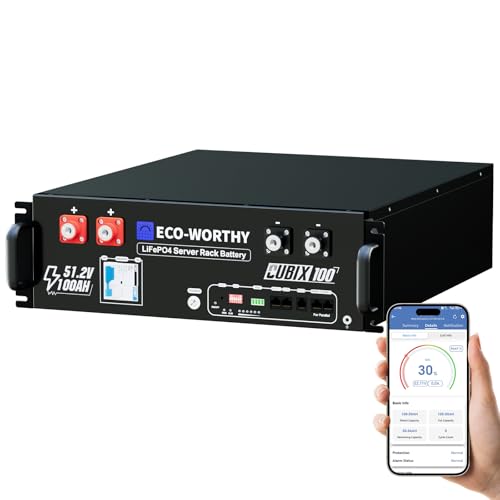
ECO-WORTHY Cubix100 48V 100Ah LiFePO4 Lithium Battery with Bluetooth 5120Wh

ECO-Worthy Cubix100 48V 400Ah 20.48kWh LiFePO4 Lithium Battery 4 Pack

ECO-WORTHY Powermega 48V 314Ah LiFePO4 Energy Storage System with 10kW Hybrid Inverter

Jackery HomePower 3000 and 2x200W Solar Panels 3072Wh 3600W AC Output

EF ECOFLOW 12kWh Power Station DELTA Pro Ultra with Extra Battery

ECO-WORTHY Home Power Station Backup Power 5120Wh LiFePO4 Battery
More Details On Our Top Picks
For a household that wants backup power without stepping into a full rack install, this Jackery lands in a practical middle lane. The 2042Wh capacity and 2200W AC output give you room for essentials, and the LiFePO4 battery chemistry usually earns trust for long-cycle storage use. The 100W USB-C PD port also matters for modern laptops and larger tablets, so you’re not stuck juggling slow wall bricks.
The trade-off is size, both in footprint and ambition, because this is still a serious portable station rather than a tiny grab-and-go pack. Compared with the smaller ZeroKor below, you get much more breathing room for outages at home or longer camping stays. It suits you best when you want one unit to cover several everyday loads instead of a single phone or light.
Strong Points
- 2042Wh capacity gives you meaningful runtime for lights, routers, and similar household basics.
- 2200W AC output opens the door to more demanding appliances than the pocket-size pick can handle.
- LiFePO4 cells are a sensible match for repeated backup use, especially in a home storage role.
- USB-C PD at 100W is handy for newer notebooks and faster charging of larger personal electronics.
Things To Consider
- The unit is still a sizable box, so storage in a crowded closet or vehicle takes planning.
- Portability is real, but not casual, so carrying it up stairs or across camp ground can feel like work.
- Solar panel support is optional, which means your total setup may need extra planning.
Feature Snapshot
Who It Suits Best
Homeowners and frequent campers who want a serious portable station with enough reserve for more than a phone or two will get the most from it.
Another Choice May Suit
Jackery HomePower 3000 fits you better if you want a larger Jackery system with included solar panels for a more home-focused setup.
This ZeroKor kit is aimed at light-duty backup, not whole-room coverage. The included 40W solar panel makes the package more approachable for charging small electronics outdoors, and the 146Wh battery size keeps the unit easy to stash in a truck, RV, or apartment shelf. For short trips or power interruptions that only affect your essentials, that compact scale is the point.
Compared with Jackery Explorer 2000 v2, this one asks for a lot less space and gives up a lot of reserve, so the fit changes fast. The honest read is that it suits phones, small lights, and a few portable accessories far better than kitchen appliances. It works best as a starter option for someone who wants a simple solar-assisted emergency pack.
Upsides
- 146Wh capacity keeps the unit light and easy to store.
- The bundled 40W solar panel makes the setup more self-contained than a bare battery pack.
- Portable AC outlet support adds flexibility for small plug-in gear.
- Good fit for RV stowage, tent camping, and short blackout coverage.
Worth Noting
- Energy storage is modest, so larger devices drain it quickly.
- Owners will likely want to keep expectations narrow, especially for home backup use.
- The small format is convenient, but it also limits how much redundancy you get during longer outages.
At A Glance
Who Should Grab It
Campers, RV owners, and apartment dwellers with light backup needs are the natural match here.
Where A Sibling Pick Shines
Jackery Explorer 2000 v2 suits you better for household outage planning, especially when you want far more stored energy.
Once you move from portable stations into rack-style storage, the Cubix100 starts to make sense for a permanent solar room. Its 48V, 100Ah LiFePO4 pack and 5120Wh storage put it in a different class from the Jackery and ZeroKor units above, because you’re building around expansion rather than carry-around convenience. Bluetooth and WiFi support also help monitoring feel less like guesswork.
The trade-off is obvious: this is a component for a planned system, not a casual weekend box. You’ll appreciate it most in a garage, utility space, or off-grid build where the physical footprint is part of the design. The listed compliance marks also suggest a more serious positioning than the lighter portable options, though installation planning still matters.
Highlights
- 5120Wh storage is a strong base for solar backup planning.
- 48V architecture works well in larger home energy setups.
- Bluetooth and WiFi support make status checks easier from inside the house.
- Server-rack form factor suits fixed installations and tidy equipment rooms.
- Compared with the portable picks, it’s far better for long-term energy storage.
Areas To Watch
- The rack format asks for dedicated space and proper planning.
- This is not a carry-it-anywhere solution.
- System integration can feel technical for first-time solar owners.
Core Details
Built With In Mind
Homeowners planning a fixed solar battery room or an off-grid expansion will get the most from this model.
Skip It When
ECO-WORTHY Home Power Station Backup Power is the easier fit for a simpler all-in-one backup unit with fast charging and inverter support.
This four-pack pushes well past starter territory and lands squarely in large-home or property-scale storage planning. With 20.48kWh of total storage, it gives you room for heavier backup loads and longer autonomy, which is a very different conversation from the Jackery and ZeroKor picks. The rack-battery format also means your setup stays organized, as long as you already have the space and the supporting system.
One thing worth considering is that this kind of capacity is usually about infrastructure, not casual convenience. For a workshop, a larger home, or a solar array with serious overnight needs, that extra reserve can be the whole point. The practical downside is that you’re committing to a more involved install and a more permanent footprint.
Bright Spots
- 20.48kWh storage gives you substantial room for long backup windows.
- Four-pack format supports larger fixed systems.
- LiFePO4 chemistry suits repeated cycling in a home energy role.
- Server-rack layout helps keep a big setup orderly.
Small Caveats
- The system expects dedicated space and a more advanced installation plan.
- Transport and handling are not casual tasks at this scale.
- For small homes, the capacity may simply be more than you need.
Details At A Glance
Right Fit For
Large households, outbuildings, and more ambitious solar builds are the best match here.
Look Elsewhere When
ECO-WORTHY Cubix100 48V 100Ah LiFePO4 Lithium Battery with Bluetooth makes more sense for a smaller rack build with simpler storage needs.
The Powermega starts to look attractive once your backup setup needs a brain as much as it needs a battery. The 10kW hybrid inverter is the key here, because a hybrid inverter can manage more than one power source and help coordinate solar storage in a more complete way than a battery-only module. Active balancing BMS, which means a battery management system that keeps cell voltage spread under control, adds another layer of system discipline.
That extra sophistication brings extra setup weight, and it won’t feel as simple as a portable station. Compared with the Cubix100 rack batteries, this one bundles more of the system together, so the upgrade path is clearer for people who want fewer separate parts. For home backup, emergency power, or off-grid living, that integration can save a lot of piecing things together later.
Best Bits
- 10kW hybrid inverter adds serious system capability.
- 314Ah storage gives the battery section real staying power.
- Active balancing BMS helps the battery pack stay better coordinated internally.
- Bluetooth and WiFi support make system status easier to check.
- Compared with separate battery-only modules, the all-in-one path is simpler to plan around.
Points To Note
- The system is more involved than a portable power station.
- Setup and integration suit a serious home project better than casual use.
- Space, wiring, and installer planning matter a lot at this level.
Technical Sheet
Best Suited To
Homeowners building a more complete solar backup system will get the strongest fit here.
Another Choice May Suit
EF ECOFLOW DELTA Pro Ultra suits you better if you want an even larger expandable platform with 120/240V output.
HomePower 3000 feels like the point where portable backup starts leaning hard toward serious household support. The included 2x200W solar panels are a big part of the value here, because they make the system more complete out of the box than a battery-only station. With 3072Wh of storage, 3600W AC output, and a 7200W surge rating, it’s built for a wider spread of home appliances than the smaller Jackery unit above.
The upside is obvious in a power outage, where you want more headroom and less charging anxiety. The downside is also clear, because a setup with panels and a larger body takes more room and a little more thought about placement. For most homes, that balance lands nicely between compact convenience and fixed-system commitment.
What We Like
- 3072Wh storage gives you a solid reserve for home backup basics.
- 3600W AC output expands the range of appliances you can keep running.
- 7200W surge capacity helps cover starting loads that jump briefly at startup.
- Two 200W panels make the solar side feel much more complete.
Softer Spots
- The included panels add bulk, so storage and placement need attention.
- This is more committed than a compact station, which may matter in tight spaces.
- Whole-home use still depends on how your loads are distributed.
Feature Card
Whose Shelf It Belongs On
Homeowners who want a larger, more complete backup package without stepping into rack gear will find the fit strongest here.
Swap It Out When
Jackery Explorer 2000 v2 makes more sense for you if storage space is tighter and you still want a strong portable station.
Delta Pro Ultra sits at the heavy end of this roundup, and the 120/240V output is a big clue why. You’re looking at a platform meant for more demanding home backup planning, especially when paired with an extra battery and the kind of expandable architecture that can grow much larger than a simple portable unit. The 12kWh figure is the kind of reserve that starts to feel like system design, not just emergency convenience.
That scale is the appeal, but it’s also the reason this won’t suit every garage or utility room. Compared with the ECO-WORTHY rack picks, the EcoFlow setup leans into flexible expansion and household power delivery more directly. It’s a strong match for experienced owners who want room to scale, but it’s overkill for short outages and light travel use.
Positives
- 12kWh storage gives you a deep reserve for serious backup planning.
- 120/240V output broadens the range of home equipment it can serve.
- Expandable design leaves room for future growth.
- Extra battery support helps the system feel more complete from the start.
- Compared with smaller portable stations, it’s built for much larger responsibilities.
Honest Caveats
- The footprint and scope are substantial, so this asks for committed space.
- It makes more sense in a planned home system than in casual emergency storage.
- Setup complexity will be more involved than the simpler Jackery picks.
Quick Facts
Who Will Love This
Experienced homeowners building a scalable backup system with high output needs are the strongest match here.
Where Shoppers Go Wrong
ECO-WORTHY Powermega 48V 314Ah works better for you if you want a more integrated inverter-and-storage package.
This ECO-WORTHY unit sits in the useful zone between a portable station and a full rack-style system. The 5120Wh LiFePO4 battery, 5000W inverter, and Bluetooth plus WiFi support give it the bones of a serious home backup component, while the fast-charge claim points to a system designed to return to readiness quickly. For a solar room, garage, or utility setup, that combination can feel very practical.
It differs from the Cubix100 rack battery because it leans more like a complete home power station than a standalone storage module. The trade-off is that you still need to think through placement and integration, but the payoff is a cleaner path for someone who wants more than a simple battery box. It suits a household that wants substantial backup capability without jumping straight to the most complex expandable platform here.
What We Like
- 5120Wh storage gives you serious backup room for household essentials.
- 5000W inverter supports a wide span of equipment.
- Bluetooth and WiFi make day-to-day checking more convenient.
- Fast charging is useful after an outage, especially in a home backup routine.
Room For Improvement
- The system still needs proper space and planning.
- It is more involved than a simple portable generator-style station.
- For very large homes, the 12kWh EcoFlow setup offers more room to grow.
Core Details
The Right Fit
Homeowners who want a sizable all-in-one backup station with modern monitoring features will appreciate this path most.
A Better Fit Elsewhere
Jackery HomePower 3000 makes more sense for you if you want included solar panels and a more familiar portable format.
How To Choose The Right Backup Battery For Solar System
Match Capacity To The Load You Actually Plan To Run
Start with the appliances and devices you care about during an outage, then work backward from there. A 146Wh pack is fine for light travel and phones, while 2042Wh or 3072Wh starts to make sense for routers, lights, and modest household support. A 12kWh system belongs in a much larger plan, where the goal is to keep a house moving instead of charging a few essentials.
Battery capacity, usually shown in watt-hours or kilowatt-hours, tells you how much energy is stored. Bigger numbers mean longer runtime, but also more weight, more space, and a more deliberate install. That trade-off matters because backup gear should fit your home, not force your home to bend around it.
Choose The Right Inverter And Output Type
The inverter changes stored battery power into usable AC electricity, which is what most household plugs need. A 2200W station can handle more than a tiny pack, while 5000W, 3600W, or 7200W output ranges open up more demanding gear. For homes with 120/240V needs, that split output becomes especially important.
Higher output helps with starting loads, especially motors and compressors that briefly ask for extra power at startup. The catch is that serious output usually comes with serious size and a more complex installation. That’s why a portable station feels easy, but a larger inverter system suits you better for fixed backup planning.
Look At Chemistry, Monitoring, And Expansion
LiFePO4, short for lithium iron phosphate, is a battery chemistry commonly chosen for backup storage because it’s built for repeated cycling. That makes sense for home solar use, where you may charge and discharge often rather than only during rare outages. Bluetooth and WiFi monitoring also help, since you can check system status without opening the cabinet or guessing from a tiny display.
Expansion matters just as much as raw size. Some setups, like the ECOFLOW DELTA Pro Ultra, are built to grow, while rack batteries like the ECO-WORTHY Cubix100 are meant to slot into a planned storage stack. Your best fit depends on whether you want a single unit today or a system that can grow with your property later.
Things Worth Knowing First
Hidden Buying Traps
Many shoppers focus on watt-hours alone and miss the installation side completely. A battery that looks huge on paper can still be the wrong fit for a small utility room, while a compact station may fall short the first time you try to run real household loads.
Another common mistake is ignoring whether the system includes panels, an inverter, or just storage. A bare battery is only one piece of the puzzle, and a solar system often needs the rest to become useful in daily life.
What The Higher Tier Buys
More expensive systems usually pay for higher output, deeper storage, better monitoring, and more complete integration. That’s why rack batteries, hybrid inverter setups, and expandable home stations sit above the simpler portable units.
The upgrade makes sense when you want fewer compromises, more runtime, or a cleaner path toward a permanent backup setup. For light travel use, that extra spend can feel unnecessary, but for a house with frequent outages, the added headroom is often the part you notice most.
Frequently Asked Questions
What size backup battery works for a small home?
A small home often fits well with something in the 2000Wh to 3000Wh range for essential backup. That gives you a practical buffer without jumping straight into rack-style storage.
Is LiFePO4 a good match for solar backup?
LiFePO4 is widely used in solar storage because it suits repeated charge and discharge cycles. That makes it a sensible fit for homes that want regular backup readiness.
Do you need solar panels with a backup battery?
You do not always need panels, but they make the setup much more useful during longer outages. A battery alone stores energy, while panels help replace it during daylight.
What is a hybrid inverter?
A hybrid inverter can work with more than one power source and help manage a solar backup system more flexibly. It matters most in a home setup where you want the battery, solar input, and household load to work together.
Can a portable power station replace a home battery system?
A portable station can cover essentials, but it usually won’t match the capacity or integration of a fixed home system. It works better as a stopgap or light backup tool than as a whole-house solution.
Final Thoughts
The right backup battery depends on how much of your home you want to keep running and how permanent the setup needs to be. Portable units make sense for quick relief and light travel, while rack batteries and hybrid systems belong in planned solar rooms and larger backup builds. Jackery gives you a strong middle ground, ECO-WORTHY covers the storage-heavy side, and EcoFlow pushes hardest for expansion. Choose the one that fits your space and your outage routine, and the whole system will feel a lot easier to live with.
