

Choosing a 60 amp solar charge controller gets easier once you match the unit to your battery bank, panel voltage, and how much monitoring you want on hand. That matters in a cabin, RV, workshop, or backup setup, because the wrong controller can make wiring feel cramped and tuning feel fussy. You’ll see a mix of basic LCD models, Bluetooth-enabled options, and higher-voltage picks here, so you can line up the controller with your own system instead of guessing.
Below, you can compare straightforward models against app-connected picks and a few that lean into wider input ranges. The trade-off is simple: more features usually mean more setup choices, while simpler units can feel easier to live with. That’s where the shortlist helps.
Quick Look at the Shortlist

Renogy Rover MPPT Solar Charge Controller 60A 12/24/36/48V
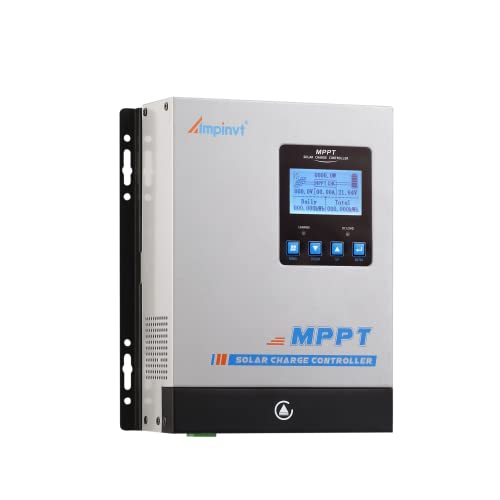
Ampinvt MPPT Solar Charge Controller 60A 12V 24V 36V 48V

Renogy 60A MPPT Solar Charge Controller 12V/24V/36V/48V
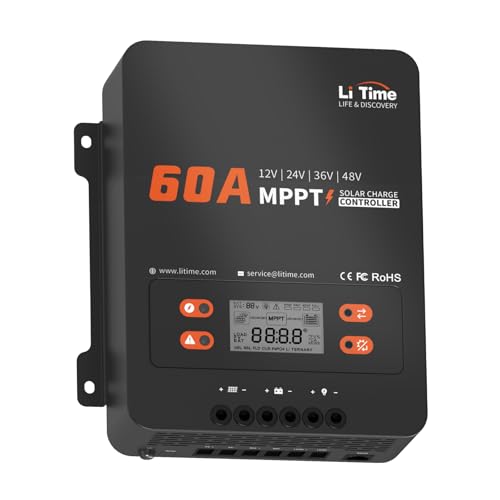
LiTime 60A MPPT Solar Charge Controller (No Build-in Bluetooth)

POWLAND 60A MPPT Solar Charge Controller 12V/24V/36V/48V
ECO-WORTHY 60A MPPT Solar Charge Controller with Bluetooth & WiFi

LiTime MPPT Solar Charge Controller (Bluetooth) 60Amp

PowMr 60A MPPT Solar Charge Controller 12V/24V/48V
Renogy’s Rover lands well for mixed systems, because it handles 12V through 48V battery banks and accepts up to 150V from the panel side. That makes it a practical fit for an off-grid shed, RV, or homestead where the solar array may grow later.
The manual lithium setting is a small but important point, since lithium setups often need a little more attention than auto-detect batteries. Compared with the simpler LCD-only picks later in this list, this one feels better suited to a setup you expect to tune rather than forget.
What We Like
- Wide battery-bank compatibility helps one controller cover more system plans.
- 150V PV input gives extra room for panel wiring choices and longer runs.
- Auto support for AGM, gel, and flooded batteries reduces setup friction.
- Negative-ground design suits many off-grid electrical layouts.
- MPPT tracking, or maximum power point tracking, is aimed at squeezing more usable harvest from changing light.
Worth Noting
- Lithium mode is manual, so setup takes a little more care than a fully automatic battery profile.
- The feature set makes more sense in a permanent installation than in a quick seasonal hookup.
- You may want a tidy mounting spot with enough room for wiring access, since this is not a tiny plug-and-forget box.
Feature Snapshot
Who It Suits Best
Off-grid homeowners and RV owners who want one controller for a flexible, growing solar layout will get the most from this pick.
Where A Sibling Pick Shines
LiTime 60A MPPT Solar Charge Controller (No Build-in Bluetooth) suits you better when higher solar input headroom matters more than the Renogy Rover MPPT Solar Charge Controller 60A 12/24/36/48V feature mix.
This Ampinvt model keeps the setup story straightforward, with automatic support for 12V through 48V battery systems and a 150V solar input ceiling. For a first solar build, that kind of range feels less intimidating than juggling a pile of extra settings.
Compared with the Renogy Rover above, it looks aimed more at the general-purpose owner who wants the core MPPT job done without chasing extra layers. That makes it a sensible fit for a small cabin, workshop bench, or backup system that needs a clear path from panel to battery.
Highlights
- Automatic voltage support across several common battery-bank sizes keeps setup simple.
- 150V input gives you headroom for many residential-style panel strings.
- Works with sealed, gel, flooded, and lithium battery types.
- MPPT operation is well suited to variable light through the day.
Points To Note
- Feature details are more restrained than the Bluetooth and WiFi models later in the list.
- You may prefer a more detailed display or app access for frequent system checking.
- Like most controllers in this class, tidy wiring and solid mounting matter for long-term reliability.
Core Details
Best Suited To
Newer solar owners who want a wide-voltage controller without extra monitoring complexity will appreciate this pick.
A Better Fit Elsewhere
ECO-WORTHY 60A MPPT Solar Charge Controller with Bluetooth & WiFi makes more sense for you when remote checking matters more than Ampinvt MPPT Solar Charge Controller 60A 12V 24V 36V 48V simplicity.
This Renogy version leans into off-grid versatility, especially for home, RV, marine, or workshop use where the system may not stay small forever. The 150V solar input and 12V to 48V battery range give you plenty of room to scale without changing the controller category.
It feels a touch more scenario-driven than Item 2, mainly because the listing points straight at several real-world environments. You may find that helpful when your setup lives in a cabin one month and a trailer the next.
Upsides
- Multiple voltage options make it easy to match different storage banks.
- 150V input suits more ambitious panel layouts.
- Lithium, AGM, and gel support covers common off-grid battery chemistries.
- The off-grid focus fits real installations, not just bench-top planning.
- Renogy’s familiar controller layout usually makes system planning easier to follow.
Small Caveats
- Owners who want app-based monitoring will need to look at a Bluetooth option instead.
- Its broad feature set is useful, though it may be more controller than a very simple solar kit needs.
Details At A Glance
Whose Shelf It Belongs On
This suits off-grid users who want a dependable, general-purpose controller for a home, RV, or small workshop.
Another Choice May Suit
LiTime MPPT Solar Charge Controller (Bluetooth) 60Amp fits better for you if app checking matters more than the Renogy 60A MPPT Solar Charge Controller 12V/24V/36V/48V broader off-grid framing.
The higher PV input ceiling is the headline here, because 200VDC gives you more breathing room on the solar side than the 150V models above. For longer runs, larger arrays, or a layout that may expand later, that extra headroom matters more than Bluetooth.
The trade-off is plain: you get a more serious input range, but you give up built-in Bluetooth. In a fixed installation where you check the controller at the equipment wall anyway, that can be a clean trade.
Reasons To Buy
- 200VDC solar input is unusually generous in this group.
- Works with 12V, 24V, 36V, and 48V battery systems.
- LCD display gives local visibility without needing a phone connection.
- Supports LiFePO4 and lead-acid battery types.
- Good fit for panel layouts where input headroom matters more than wireless features.
Areas To Watch
- No built-in Bluetooth, so app-based checks are off the table.
- The stronger input range makes most sense in a more settled installation.
- You may want careful planning on the PV side, since higher voltage potential deserves tidy wiring.
Spec Overview
The Right Fit
You’ll like this most for a fixed solar system where PV input headroom matters more than phone-based monitoring.
Look Elsewhere When
ECO-WORTHY 60A MPPT Solar Charge Controller with Bluetooth & WiFi fits better for you if remote visibility matters more than the LiTime 60A MPPT Solar Charge Controller (No Build-in Bluetooth) high-voltage ceiling.
POWLAND keeps the focus on useful basics, with automatic battery-system support from 12V through 48V and an LCD display you can read at a glance. In a garage, tiny cabin, or backup cabinet, that straightforward layout is often more useful than extra app features.
Compared with the higher-tech ECO-WORTHY model later on, this one feels more like a direct control panel than a connected device. You may prefer that simplicity, especially when you want to walk up, read the screen, and move on.
Best Bits
- Automatic voltage support makes setup less fussy.
- LCD display helps you check charging status locally.
- 150V maximum input keeps it flexible for common panel strings.
- Works with sealed, gel, AGM, flooded, and lithium batteries.
Trade Offs
- It skips the wireless layer that some later picks bring.
- The display-forward approach is useful, though it means more on-site checking than remote control.
- For a large roof array, the 150V cap may feel less roomy than LiTime’s higher-input option.
Technical Sheet
Made For
Hands-on owners who want a readable, no-fuss controller for a small off-grid system will get along with this one.
Skip It When
LiTime MPPT Solar Charge Controller (Bluetooth) 60Amp suits you better if phone-based monitoring matters more than the POWLAND 60A MPPT Solar Charge Controller 12V/24V/36V/48V LCD-first layout.
Bluetooth and WiFi push this ECO-WORTHY unit into a more connected lane than the earlier picks. For an RV roof, remote shed, or system tucked where you do not want to stand and stare at a screen, that kind of access can feel very convenient.
The 150V PV input keeps it aligned with the middle of this group, so the main draw is really the monitoring layer. That makes it appealing for owners who like quick checks from a phone more than a plain panel display.
Bright Spots
- Bluetooth and WiFi support make remote checking much easier.
- 12V through 48V battery support covers common system sizes.
- 150V maximum solar input keeps the controller broadly usable.
- Useful for RV and solar-system installs where access is not always convenient.
Honest Caveats
- Wireless features add convenience, though they also add one more layer to set up.
- The monitoring focus matters less for a simple fixed setup that’s checked in person.
- As with most connected gear, a clean installation helps keep the whole system easier to live with.
Feature Card
Who Should Grab It
This suits RV owners and remote-system owners who want wireless checking without moving up to a much more complicated setup.
Reach For A Different Pick When
POWLAND 60A MPPT Solar Charge Controller 12V/24V/36V/48V fits better if you want a simpler LCD-first unit than the ECO-WORTHY 60A MPPT Solar Charge Controller with Bluetooth & WiFi.
LiTime folds Bluetooth into a 60 amp MPPT controller with 150V input and support for 12V through 48V systems, so it lands squarely in the app-friendly camp. That makes it a neat choice for owners who like a quick status check from a phone without giving up the core solar-control basics.
Compared with ECO-WORTHY’s Bluetooth and WiFi pairing, this one trims the wireless story down a bit, which may be enough for a lot of cabins and vans. The honest read is that simplicity can be a virtue, especially when your charging gear sits near the rest of the power equipment.
Standout Traits
- Bluetooth support adds convenient monitoring.
- 150V input supports a practical range of solar layouts.
- 12V, 24V, 36V, and 48V support keeps it versatile.
- Works with LiFePO4 and lead-acid batteries.
Room For Improvement
- It gives you Bluetooth, though not the WiFi layer seen on ECO-WORTHY.
- The connected features make the most sense for owners who plan to use them regularly.
- Panel placement and controller location still matter, since app access does not replace neat wiring.
At A Glance
Perfect Match For
App-minded solar owners who want Bluetooth without adding WiFi complexity will feel at home with this pick.
Swap It Out When
LiTime 60A MPPT Solar Charge Controller (No Build-in Bluetooth) suits you better if higher PV input headroom matters more than the LiTime MPPT Solar Charge Controller (Bluetooth) 60Amp wireless layer.
PowMr stands out for a more expansion-minded setup, since it supports up to 12 solar regulator connections in parallel. That kind of flexibility helps when you expect to grow the array in stages, such as with a workshop roof or a patchwork cabin install.
Unlike the wireless models above, this one leans on the LCD display and panel-side flexibility rather than app features. The trade-off is clear, though the payoff is useful: more room to build out a solar bank without changing the whole controller strategy.
Best Bits
- Parallel connection support gives you room to scale the solar side.
- LCD display keeps local monitoring simple.
- Works with lead-acid and lithium batteries.
- 12V, 24V, and 48V support covers common system needs.
Minor Gripes
- It skips the wireless convenience seen on the ECO-WORTHY and LiTime Bluetooth models.
- The parallel-support angle is most useful when your array plan is already mapped out.
- Owners who like app alerts will probably want a connected controller instead.
Quick Facts
Built With In Mind
System owners planning a staged solar expansion will appreciate this controller’s parallel-friendly layout.
Where Shoppers Go Wrong
POWLAND 60A MPPT Solar Charge Controller 12V/24V/36V/48V fits better if you want a simpler all-in-one LCD unit than the PowMr 60A MPPT Solar Charge Controller 12V/24V/48V expansion-first approach.
How To Choose The Right 60 Amp Solar Charge Controllers
Match The Controller To Your Battery Bank
The first check is battery voltage, because a controller that supports 12V, 24V, 36V, or 48V has to fit your bank before anything else matters. A controller with automatic battery detection can simplify setup, while a unit with manual lithium settings gives you more control in a custom build.
Battery chemistry matters too. AGM, gel, flooded lead-acid, LiFePO4, and other lithium batteries often benefit from different charging profiles, so the controller needs to support the type you already own or plan to install.
Look Hard At Solar Input Headroom
PV input rating tells you how much voltage the controller can accept from the solar side, and that directly affects how you wire panels together. A 150V ceiling suits many homes, RVs, and small off-grid systems, while 200VDC gives extra room for larger or longer panel runs.
That extra headroom can save you from awkward compromises during an expansion later on. A higher input limit is especially handy for rooftops, remote cabins, and workshop arrays where the layout may change over time.
Decide How Much Monitoring You Actually Want
LCD-only controllers are usually easier to live with in a fixed setup, since you can read the screen at the equipment wall and move on. Bluetooth adds phone-based checking, which helps in a van, on a roof, or in a shed that sits farther from daily foot traffic.
WiFi moves things another step, but that extra convenience only pays off when you really want remote access. For many setups, Bluetooth is the middle ground that feels useful without making the system fussy.
Match The Build To Your Routine
Frequent travelers, weekend cabin owners, and workshop users all need different levels of convenience. A rugged, plain controller can make sense for a set-and-forget installation, while a more feature-rich model suits someone who checks charge status often.
Also think about installation space, wiring access, and whether you want to check the unit in person or from a phone. Small details like screen visibility and cable layout often matter more than glossy feature lists.
A Quick Reality Check Before You Order
Mistakes Worth Dodging
Many people focus on amperage alone and miss the battery type or input voltage limit. That mismatch can turn a promising controller into a headache during setup.
Another common slip is overlooking monitoring style, then realizing later that a plain LCD was fine or that Bluetooth would have saved time. The cleaner move is to match the controller to how you actually check your system.
The Upgrade Payoff
Higher-tier controllers usually cost more because they add stronger input ceilings, app connectivity, or more flexible configuration. Those features matter most in larger systems, mixed-use setups, or places where access is awkward.
Spending up also makes sense when your solar array is likely to grow. A controller with wider voltage headroom or better monitoring can reduce the need to replace the unit later.
Frequently Asked Questions
What does MPPT mean?
MPPT stands for maximum power point tracking, a control method that helps a solar controller work more efficiently with changing light. In plain terms, it helps the system make better use of what the panels are producing.
Can a 60 amp controller work with lithium batteries?
Yes, many models in this group support lithium or LiFePO4 batteries. You still need to match the controller’s battery profile to your battery type.
Do you need Bluetooth on a solar controller?
No, Bluetooth is useful but not required. It helps most when the controller is hard to reach or you want quick checks from a phone.
Why does PV input voltage matter so much?
PV input voltage affects how many panels you can wire in series. A higher limit gives you more flexibility for the solar side of the setup.
What kind of setup suits a 60 amp controller?
It fits medium-size off-grid systems, including RVs, cabins, and workshop backups. The right match depends on battery voltage, panel layout, and how much monitoring you want.
Final Thoughts
The best 60 amp solar charge controller for you is the one that fits your battery bank, panel voltage, and daily routine without forcing extra work. Renogy and LiTime lean toward broader flexibility, while ECO-WORTHY and the Bluetooth LiTime model make remote checking easier. POWLAND, Ampinvt, and PowMr keep things practical in different ways, especially for systems that value clear displays or expansion room. Match the controller to your setup now, and your solar gear will feel a lot less like a puzzle later.
