

A 400-watt setup can steady a cabin, RV, shed, or backup corner without taking over your space. You’re usually choosing between a full kit, a portable foldout, or a panel-only route, and that split matters more than brand polish. The right pick depends on how you plan to mount it, move it, and pair it with batteries or a power station.
Quick Look At Our Shortlist

Renogy 400 Watt 12 Volt Premium 4 Pcs 100W Panel Kit

DOKIO 400W Solar Panel 31V Monocrystalline
DOKIO 400W 31V Monocrystalline Solar Panel

Renogy 400W Portable Solar Panel Foldable Suitcase

N-Type 16BB 400W Bifacial Solar Panel 2Pcs 200 Watt
Renogy 400W Portable Solar Panel Blanket

ECO-WORTHY 400 Watt 12 Volt Premium Solar Panel Kit

ECO-Worthy 1.6KWH Complete Solar Panel Kit 400W 12V
More Details On Our Top Picks
You’re looking at the most complete route in this group, since the Renogy package bundles four 100W panels with a 40A MPPT controller, Bluetooth module, fuse, Z brackets, adaptor kit, and tray cables. MPPT means maximum power point tracking, a charge-controller style that adjusts to pull usable power more efficiently than simpler controllers, so it suits a fixed setup where every part is meant to work together.
That kind of bundled layout helps in a garage, on a shed roof, or in a small off-grid cabin where you want fewer separate purchases. The trade-off is obvious, though, because the kit is less flexible than a bare panel and it asks for more planning during installation, so it fits steady systems better than casual weekend use.
What We Like
- The 400W split across four 100W panels makes layout planning easier on tighter roofs.
- The included 40A MPPT controller gives you a cleaner all-in-one starting point.
- Bluetooth monitoring is handy for checking system status without standing beside the controller.
- The fuse, brackets, adaptor kit, and tray cables reduce the number of extra parts you need to source.
Things To Consider
- The full kit asks for a more committed install than a portable folding panel.
- The included hardware is useful, but mounting still takes time and basic comfort with wiring.
- You may find the box of parts a bit much for a quick campsite setup.
Feature Snapshot
Who It Suits Best
This fits you best when you’re building a fixed 12V off-grid system and want the parts to arrive in one box.
Where A Sibling Pick Shines
Renogy 400W Portable Solar Panel Foldable Suitcase suits campers who want power they can move and stow fast.
This DOKIO panel strips the setup down to the panel itself, which is useful when you already have mounting plans and just need a 400W source with a 31V output. The aluminum frame and pre-drilled holes make it friendlier for a shed, yard structure, or cabin roof where you want a clean, fixed attachment point.
The 9.84 ft cable gives you some placement slack, though the real limitation is the same one that comes with many panel-only choices, since you still need the rest of the system matched properly. Compared with the Renogy kit above, this is far less bundled and much better suited to a shopper who prefers to build around existing gear.
Bright Spots
- Panel-only design keeps the purchase focused on one core component.
- Pre-drilled mounting points make rooftop or frame installation more straightforward.
- The aluminum frame gives the panel a sturdy, familiar construction style.
- The included cable helps with positioning on a fixed site.
Small Caveats
- You still need compatible charging gear, wiring, and mounting plans.
- A panel-only path can take more planning than a bundled kit.
- The 31V output may call for a system that’s already sized with care.
Details At A Glance
Made For
You’re the best fit here when your off-grid setup already has the rest of the hardware sorted and you want a direct panel replacement or expansion piece.
Look Elsewhere When
Renogy 400 Watt 12 Volt Premium 4 Pcs 100W Panel Kit suits you better when you want controller, brackets, and cabling in one package.
Compared with the 24V-focused DOKIO panel above, this one is easier to slot into either 12V or 24V systems, which gives you more room to match it to your existing gear. The 9.84 ft MC4 cable is another practical touch, because MC4 connectors are the standard plug style many solar setups use for quick, tidy linking.
That flexibility makes sense for gardens, yards, greenhouses, sheds, patios, and cabins where the load and layout can change over time. The honest read is that you still need to know your system plan before you install it, but for mixed outdoor use it feels less restrictive than a panel that leans only one way.
Upsides
- Works with both 12V and 24V systems.
- The MC4 cable format fits many common solar connections.
- Useful for several outdoor structures, not just one fixed setting.
- Flexible voltage matching helps you plan upgrades with less guesswork.
Points To Note
- You still need proper system sizing and compatible charging gear.
- More flexibility also means more planning before installation.
Core Details
Who Will Love This
You’ll like this most if you want one panel that can move between different off-grid plans without locking you into a single voltage path.
Swap It Out When
DOKIO 400W Solar Panel 31V Monocrystalline suits you better when your setup is strictly 24V and you want a simpler, more direct fit.
This Renogy pick shifts the whole category toward portability, with a foldable suitcase style that makes more sense for power stations than for permanent roof mounting. The kickstand matters because it helps you angle the panel without extra rigging, which is a real convenience at a campsite or during a power outage at home.
IP67 waterproofing is the kind of detail that helps in messy outdoor weather, since that rating points to strong dust resistance and short-term water exposure handling. Compared with the fixed kits earlier in the list, this one gives you less installation fuss and more carry-anywhere convenience, though you’ll give up the tidy permanence of a mounted array.
Highlights
- Foldable suitcase design makes transport and storage easier.
- The kickstand helps with fast, practical panel positioning.
- Pairs naturally with power stations and mobile setups.
- IP67 rating adds confidence for rough outdoor conditions.
- Good fit for RV travel, blackouts, and temporary backup power.
Room For Improvement
- Foldable gear usually takes more handling than fixed panels.
- The suitcase format is less suited to permanent roof installs.
- You may want a dedicated storage spot to keep it neat between trips.
Technical Sheet
The Right Fit
You’re the best match here when you move between campsites, vehicles, and temporary backup roles more often than you build permanent arrays.
Another Choice May Suit
Renogy 400 Watt 12 Volt Premium 4 Pcs 100W Panel Kit is the smarter route for fixed installations that stay put all season.
Two 200W panels can be easier to place than one oversized slab, and that layout is a real plus for vans, marine decks, and roof sections with awkward spacing. Bifacial means the panel can use light from both sides, while the anti-shade layout is meant to keep output steadier when part of the surface gets blocked.
That makes this Callsun option feel more technical than the simpler DOKIO panels earlier in the list. The trade-off is that you’ll appreciate it most in setups where placement, reflections, and partial shade are part of everyday life, not in a basic plug-and-forget install.
Strong Points
- Two-panel format can simplify placement on irregular spaces.
- Bifacial construction gives the panel more ways to gather light.
- Anti-shade design helps when partial shadow is hard to avoid.
- Works with both 12V and 24V systems.
- Well suited to RV, marine, rooftop, and off-grid builds.
Softer Spots
- The more technical design asks for careful placement.
- Benefits depend heavily on the light around the panel.
- Two modules can mean a little more wiring thought during install.
At A Glance
Whose Shelf It Belongs On
You’ll get the most from this choice when your RV, boat, or rooftop setup has enough room for thoughtful panel placement.
Reach For A Different Pick When
Renogy 400W Portable Solar Panel Foldable Suitcase suits you better when moving and storing the panel matters more than output strategy.
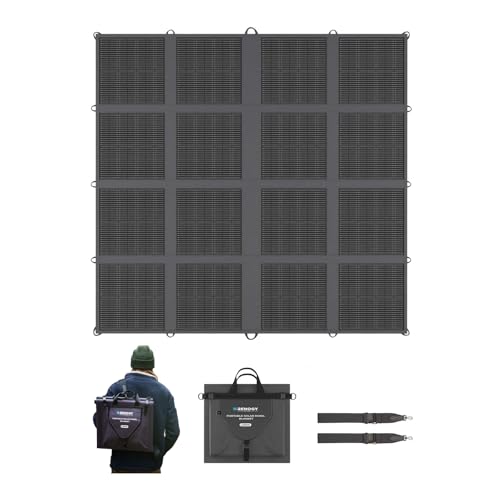
This is the space-saving Renogy option, and the backpack-size foldable form is the point. You’re looking at a panel blanket rather than a rigid panel, so it works best when storage room is tight and you want a setup that packs down neatly for camping, pickups, or marine use.
The 25% high-efficiency claim puts it in the more advanced end of the portable group, though you’ll still want to think about handling because soft-folding gear is less carefree than a fixed frame. Compared with the suitcase-style Renogy above, this one feels easier to tuck away, while giving up some of the stiff, grab-and-go structure that some people prefer.
Reasons To Buy
- Backpack-size foldability makes it easy to store.
- Good fit for tight vehicle and travel spaces.
- Designed around power stations and mobile power routines.
- The blanket-style format saves space over rigid panels.
Areas To Watch
- Soft-folding gear usually needs a bit more care in daily handling.
- The more compact form is less rigid than a framed panel.
- It fits travel use better than permanent mounting.
Feature Rundown
Built With In Mind
You’re the right fit here when storage space is tight and you want a portable solar setup that stays easy to carry.
Consider Something Else When
Renogy 400W Portable Solar Panel Foldable Suitcase suits you better if you want a firmer structure and a kickstand in the same package.
This ECO-WORTHY kit sits close to the Renogy bundle in structure, with four 100W panels, a 40A MPPT controller, Bluetooth module, and mounting Z brackets. The big difference is that it’s framed as a more straightforward off-grid package for home, RV, or boat use, which can appeal to you if you want fewer decisions at the start.
That kind of setup makes sense for a camper or vehicle build where the basic parts list needs to stay orderly. The compromise is that you’re still stepping into a fixed-install style kit, so it asks for the same kind of planning and cable management that comes with any mounted solar array.
Positives
- Includes panels, controller, Bluetooth module, and mounting brackets.
- Built around a 12V off-grid layout.
- Fits home, RV, and boat applications well.
- Keeps the install parts list fairly tidy.
Worth Noting
- The bundled format still asks for a real install plan.
- You’ll want to account for wiring and mounting time.
- It’s less portable than the suitcase-style picks in this roundup.
Quick Facts
Whose Shelf It Belongs On
You’re the right fit here when you want a straightforward 12V kit for a camper, vehicle, or small stationary build.
Where A Sibling Pick Shines
Renogy 400W Portable Solar Panel Foldable Suitcase suits you better if your solar gear needs to move as often as you do.
This ECO-WORTHY bundle goes beyond the panel kit idea and starts acting like a compact power system, because it adds two 12V 100Ah lithium batteries and a 2000W inverter to the 400W solar array and 40A MPPT controller. That changes the conversation from simple charging to stored power for an RV or off-grid space, which is a much bigger step.
For campers who want a ready-made energy stack, that extra hardware is the whole point. The trade-off is size, cost, and installation complexity, so this is less about convenience and more about building a serious system with storage already included.
Best Bits
- Includes batteries and inverter, not just panels.
- Useful for people building a more complete off-grid setup.
- The Bluetooth module adds easier system monitoring.
- Works well as a fuller RV energy package.
- Gives you solar generation plus storage in one directionally matched bundle.
Honest Caveats
- The larger bundle brings more parts to place and wire.
- Storage hardware makes this less portable than the simpler kits.
- You’ll want room and planning for a more involved install.
Core Details
Who Should Grab It
This fits you best when you want solar input, battery storage, and inversion in a single off-grid plan for RV life or a compact backup setup.
Skip It When
ECO-WORTHY 400 Watt 12 Volt Premium Solar Panel Kit is the easier route when you only need panels, controller, and brackets without the battery layer.
How To Choose The Right 400w Solar Panel Kits
Match The Kit To Your Power Plan
A 400W kit sounds simple, but the right version depends on whether you want a fixed array, a portable backup, or a bundled system with storage. A panel-only choice works well when your charger, inverter, and mounting pieces already exist, while a full kit saves you from piecing together parts one by one. Portable foldable models fit better for RV travel, camping, and emergency use at home, where storage and setup speed matter.
Voltage also deserves attention. A 12V system is common for small off-grid builds, while 24V support can give you more flexibility in larger setups or when the rest of your gear already leans that way. The key is matching the panel or kit to the system you already have in mind, not the other way around.
Pay Attention To Hardware, Not Just Wattage
Wattage tells only part of the story. MPPT charge controllers, mounting brackets, pre-drilled holes, MC4 connectors, and cable length all shape how smooth the install feels and how tidy the finished setup looks. A well-sorted bundle can save time on a roof or shed wall, while a bare panel can leave you hunting for extras.
Build style matters too. Rigid aluminum-frame panels suit permanent installs, and foldable suitcase or blanket formats suit travel and temporary placement. The trade-off is familiar: rigid panels are steadier, while portable ones are easier to store and move.
Think About Where The Power Will Live
The setting should guide the pick as much as the specs do. A cabin roof, greenhouse, boat deck, and pickup bed all ask for different handling, mounting, and storage habits. That’s why a bifacial panel, a panel with anti-shade design, or a suitcase-style portable model can each make sense in different spaces.
You’ll also want to think about maintenance. Fixed panels usually need basic cleaning and secure mounting checks, while portable gear needs careful folding, packing, and storage so cables and hinges stay tidy. For most setups, the best choice is the one that matches your actual routine, not the one with the flashiest feature list.
What To Weigh Before You Decide
Mistakes Worth Dodging
A common slip-up is choosing a 400W kit just by total output and ignoring the rest of the system. That can leave you with a panel that doesn’t match the controller, battery bank, or mounting plan. Another frequent miss is forgetting the difference between portable gear and hard-mounted gear, then ending up with more handling than you wanted.
Cable length and connector style also trip people up. A panel can look right on paper and still feel awkward on the roof if the run is too short or the connector type doesn’t match the rest of your setup. Reading those small details first saves a lot of frustration later.
The Upgrade Payoff
Higher-tier kits cost more because they usually add more than bare generation. You’re often paying for MPPT control, Bluetooth monitoring, stronger mounting hardware, bifacial construction, or battery storage, and each of those changes how the system behaves day to day. That extra spend makes the most sense when you want fewer loose parts and a smoother install.
The upgrade is most worth it for RV owners, off-grid cabins, and anyone building a long-term setup. If your need is temporary or light-duty, a simpler panel-only path can be the smarter fit. You usually feel the difference most in convenience, system organization, and how much extra gear you need to source later.
Frequently Asked Questions
Are 400W solar kits enough for an RV?
They can handle a useful slice of RV needs, especially for lighting, charging small devices, and light appliance use. Your exact result depends on battery size, inverter choice, and how much sun your parking spot gets.
What’s the difference between monocrystalline and bifacial panels?
Monocrystalline panels use a common high-output cell format. Bifacial panels can gather light from both sides, which can help in reflective or open placements.
Do you need an MPPT controller?
An MPPT controller is a strong match for many 400W kits because it helps the system charge more efficiently. It matters most in fixed setups where you want better use of the panel’s output.
Is a portable solar panel harder to manage?
Portable models are usually easier to move, but they ask for more handling than rigid panels. You’ll also want a clean place to store them so the folding hardware stays in good shape.
Should you choose 12V or 24V?
A 12V setup works well for many smaller off-grid systems. A 24V setup can make more sense for larger or more specific gear layouts, especially when the rest of your system is already built around that voltage.
Final Thoughts
You’ve got a lot of good directions here, and the right one comes down to how you plan to live with the system. The Renogy full kit fits a fixed install, the DOKIO panel-only options work better for custom setups, and the portable picks make life easier on the move. ECO-WORTHY’s battery-backed bundle pushes the category into full system territory, which suits a more committed off-grid plan. Choose the format that matches your space, your wiring comfort, and how often you want to move the gear.
