

I keep a mental map of every awkward outlet I’ve ever needed and didn’t have: a tailgate in a state park, a driveway with a dead battery, a cabin where the nearest power line is half a mile off. That’s the world a portable solar panel unlocks, and 200 watts is the sweet spot for serious off-grid work without dragging around a suitcase-sized array. The seven panels below cover most of the realistic setups, from rooftop rigs on vans to foldable mats for camping weekends.
An Overview Of The Picks

Callsun N-Type 16BB 400W Bifacial Solar Panel, 2-Pack 200W

ECO-WORTHY 200W Solar Panel Kit with PWM Controller
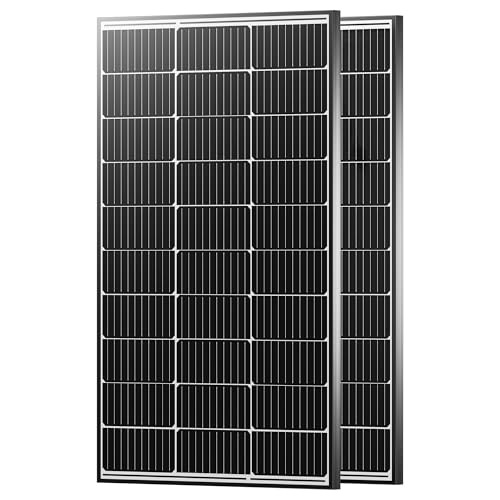
JJN 200W Solar Panels, 12V 100W 2-Pack Monocrystalline

TWELSEAVAN 200W Portable ETFE Foldable Solar Panel

TWELSEAVAN 500W Portable Solar Panel with HPBC Cells

Renogy 640W N-Type 18BB Solar Panel Array

TWELSEAVAN 250W Portable HPBC Solar Panel
The Details Behind The Selections
Rigid glass panels are a different beast than foldable mats, and the Callsun N-Type 16BB 400W Bifacial 2-Pack is built for someone who wants to bolt solar to a roof and forget about it. Bifacial means the panel collects light from both sides, so light bouncing off a white RV roof or pale deck actually contributes to the output. The N-type cell architecture (a newer silicon formulation with lower degradation than older P-type cells) helps justify the panel’s place at the top of the efficiency charts.
For a van or fixed off-grid cabin, two 200W rigid panels wired in parallel give serious daily harvest, especially when mounted with airflow underneath to keep the cells cool. Owners running 12V battery banks for lighting, fans, and a fridge should see reliable trickle-to-moderate charging through most of the day.
Practical Advantages
- 25.6% conversion efficiency is among the higher figures in this category, meaning more watts per square foot of roof space.
- 16BB busbar design (the thin metal strips that collect current from each cell) reduces hot spots and micro-crack risk over years of thermal cycling.
- Bifacial gain can add meaningful output on reflective surfaces like white RV roofs.
- Parallel-ready dual-module layout simplifies wiring into a single 12V or 24V bank.
- Glass-and-aluminum construction handles hail and road vibration better than foldable PET laminates.
Points To Keep In Mind
- Rigid panels require permanent mounting hardware and a flat surface; they’re not the choice for backpackers or weekend renters.
- Heavier than portable alternatives, so rooftop installs need a second pair of hands and careful planning around weight distribution.
Key Specs
Made For
Full-time RVers and cabin owners with a fixed roof or ground-mount frame who want the highest daily yield per square foot.
Skip It When
You camp light and need a foldable mat instead; reach for the TWELSEAVAN 200W Portable ETFE Foldable Solar Panel for that use case.
The ECO-WORTHY 200W Solar Panel Kit is the answer to the question “I want solar but I don’t want to learn charge controller wiring tonight.” It bundles the panel, a 30A PWM charge controller (a basic device that regulates voltage from the panel to the battery to prevent overcharging), and the cables needed for a complete first install. Monocrystalline cells keep the form factor reasonable and the efficiency respectable.
This setup suits someone charging a small 12V or 24V battery for weekend camping or a shed workshop. Expect roughly 800Wh of daily harvest under four hours of full sun, which is enough to top off a portable power station and run a few lights and a fan. Compared to the rigid Callsun panel above, this kit trades efficiency for portability and bundled simplicity.
Where It Delivers
- All-in-one package removes the guesswork around matching a charge controller to panel output.
- Monocrystalline cells hit a solid efficiency tier for the category.
- Works for RVs, campers, caravans, and basic off-grid cabins out of the box.
- 30A PWM controller handles common 12V and 24V battery banks without modification.
Honest Caveats
- PWM controllers waste some potential energy compared to MPPT (a more efficient controller type that adjusts voltage for maximum harvest); owners chasing every watt may want to upgrade later.
- Daily output assumes strong direct sun; overcast days will cut harvest significantly.
- Bundle cables and mounting hardware are functional but not heavy-duty, so permanent rooftop installs may need aftermarket upgrades.
Right Fit For
First-time solar shoppers who want a complete kit with documentation rather than sourcing parts individually.
A Better Fit Elsewhere
Experienced installers chasing maximum efficiency should consider the Renogy 640W N-Type 18BB Solar Panel Array instead.
The JJN 200W package arrives as two 100W rigid panels, which sounds modest until you realize that’s enough wattage to keep a small battery bank topped off for most weekend adventures. Each panel uses 10BB monocrystalline cells (Grade A+ per the manufacturer), and the listed 23% conversion rate is a comfortable step above entry-level off-brand panels without reaching the efficiency tier of the Callsun above.
This is the panel I picture on a backyard shed, a small farm outbuilding, or the roof of a pop-up camper. EL-tested cells (electroluminescence inspection that catches internal defects invisible to the eye) help weed out microcracked units before shipping, which is the kind of detail that matters when a panel is going to bake on a roof for years.
Practical Pluses
- Two 100W panels give installation flexibility, since two smaller panels fit more roof shapes than one big one.
- 10BB busbar layout keeps resistive losses low for a panel in this category.
- EL-tested cells reduce the odds of receiving a damaged or underperforming unit.
- Works for RV, home, farm, boat, and caravan battery banks.
Trade-Offs To Consider
- The kit ships panels only; you’ll need to source a charge controller and wiring separately.
- 23% efficiency is solid but trails the N-type and HPBC panels from Callsun and TWELSEAVAN.
- Rigid format means mounting hardware is required, which adds to total install cost.
Feature Snapshot
Best Suited To
DIYers and budget-conscious shoppers building a multi-panel array who don’t mind sourcing their own controller.
Reach For A Different Pick When
You want a single foldable panel for camping trips; the TWELSEAVAN 200W Portable ETFE Foldable Solar Panel fits that scenario better.
The TWELSEAVAN 200W Portable ETFE Foldable Solar Panel is the one I’d toss in the trunk for a dispersed camping trip. It folds down like a briefcase, weighs far less than a rigid setup, and the ETFE laminate (a durable fluoropolymer surface that resists UV and abrasion better than older PET coatings) shrugs off the kind of rough handling a portable panel actually sees in real life.
Built-in QC3.0 and 60W Type-C outputs are the practical surprise: charge a phone, a laptop, or a small power station directly from the panel without a separate inverter. The MC4 output connector (the standard solar connector used across the industry) ties into a portable power station for bigger loads. For someone running a Jackery-type station at a base camp, this panel pulls real weight without taking up the whole cargo area.
Notable Upsides
- 24% cell efficiency is strong for a foldable panel, where efficiency usually lags rigid designs.
- ETFE surface transmits more light and resists scratching better than older PET laminates.
- Built-in USB ports mean one less cable and adapter to pack.
- IP65 rating handles rain and dust during roadside and trail use.
- Folds compact enough for a car trunk or storage bin between trips.
Worth Noting
- Foldable panels typically need repositioning every hour or two to track the sun; flat rooftop panels do this automatically.
- 200W is the rated peak; real-world harvest on cloudy days drops meaningfully.
- USB ports are handy for small devices but won’t replace a proper inverter for AC loads.
Who It Suits Best
Campers, overlanders, and emergency-prep folks who want grab-and-go power without a permanent install.
Not Your Match When
You need a permanent rooftop array; the Callsun N-Type 16BB 400W Bifacial 2-Pack is built for that.
Strictly speaking, 500 watts puts this TWELSEAVAN panel outside the 200W category, but it’s worth including because the same HPBC cell technology (Hybrid Passivated Back Contact cells, a newer architecture that puts all electrical contacts on the back of the cell for more light-receiving surface) trickles down to the 250W model below. For full-time RVers or anyone running a serious off-grid battery bank, the larger panel shows what the platform can do at scale.
The 25% conversion rate and 42V high-voltage design make this a match for modern power stations and inverter chargers that expect higher input voltages. Low-light performance is the selling point most relevant to campers: HPBC cells reportedly keep roughly 10% output even in dawn, dusk, and overcast conditions, where conventional mono panels essentially go to sleep.
Features That Help
- HPBC cells push the conversion rate to 25%, near the top of the consumer panel category.
- 42V open-circuit voltage pairs cleanly with high-voltage MPPT charge controllers and modern portable power stations.
- Strong low-light output extends usable charging hours around sunrise, sunset, and cloudy weather.
- 500W output fills large battery banks meaningfully faster than a 200W panel.
Some Limits To Know
- Higher wattage in a portable format means more weight and bulk; this is a two-person carry.
- Price per watt is higher than the smaller TWELSEAVAN 200W foldable above.
- Requires a charge controller or power station rated for the higher input voltage.
Who Should Grab It
Full-time RVers and cabin owners who want maximum harvest from a portable footprint and have a compatible high-voltage power station.
Consider Something Else When
You only need weekend charging and want lighter gear; the TWELSEAVAN 200W Portable ETFE Foldable Solar Panel handles that job at lower cost and weight.
Renogy is one of the more recognized names in residential and RV solar, and the 640W N-Type 18BB array reflects that. The 25% efficiency rating and 18BB busbar design sit at the top end of the rigid-panel category. Two panels at 320W each combine for a daily harvest around 3.2kWh under good sun, which is meaningful capacity for a small home backup circuit or a full-time RV electrical system.
The multi-layered encapsulation and EL certification (electroluminescence testing that confirms cell integrity before shipment) are the kind of build details that matter when a panel sits on a roof for the next 20 years. For someone planning a permanent install and not just an experiment, Renogy’s track record is part of the value.
What Stands Out
- 25% efficiency pairs with 18BB busbars for low-loss current collection.
- Multi-layer encapsulation is built for long-term UV and weather exposure.
- EL-tested cells reduce the risk of receiving a panel with hidden defects.
- Renogy’s brand recognition helps with long-term warranty support and replacement parts.
A Few Limitations
- Rigid glass panels require solid mounting and aren’t portable.
- Higher upfront cost than the budget-tier rigid panels from JJN or ECO-WORTHY.
- Full output assumes optimal sun angle and minimal shading.
Quick Facts
Whose Shelf It Belongs On
Homeowners and full-time RVers planning a permanent install who value brand reputation and long-term support.
Look Elsewhere When
You want portable power for camping; the TWELSEAVAN 200W Portable ETFE Foldable Solar Panel is the right tool for that job.
The TWELSEAVAN 250W Portable HPBC panel slots between the 200W foldable and the 500W heavy-hitter above, and the IP68 waterproof rating is the detail that caught my eye. Where IP65 (resistant to low-pressure water jets) handles rain, IP68 means the panel survives submersion and seaside spray, which matters for anyone living aboard or camping near saltwater.
HPBC cells at 25.8% efficiency put this among the higher-efficiency portable panels available. The ETFE surface and hot-spot shield design add another layer of durability for owners who leave panels out in variable weather. For coastal RVers and salt-air environments, this is the spec sheet that actually matches the use case.
Positive Takeaways
- IP68 sealing is the real differentiator: heavy rain, splashes, and salt mist are within spec.
- 25.8% efficiency ranks at the top of the portable-panel category.
- HPBC architecture maintains output during dawn, dusk, and cloudy conditions.
- ETFE laminate resists UV degradation and scratching.
Small Caveats
- 250W rating is the peak; real-world output drops under partial shade.
- Larger than the 200W foldable above, so storage space in a small car is tighter.
- Higher price per panel than basic 200W options without HPBC cells.
The Numbers That Matter
Who Will Love This
Coastal RVers, liveaboard boaters, and anyone storing gear in salty or humid air who needs a panel that won’t flinch at the weather.
Swap It Out When
You mostly camp in dry climates and want maximum wattage; the TWELSEAVAN 500W Portable Solar Panel delivers more peak output.
What To Weigh Before Choosing 200 Watt Portable Solar Panels
Match The Panel To The Mounting Style
The first fork in the road is rigid versus foldable. Rigid glass panels like the Callsun N-Type 16BB 400W Bifacial 2-Pack and the Renogy 640W N-Type 18BB Solar Panel Array belong on a permanent mount: a van roof, a cabin roof, or a ground frame. They deliver higher efficiency and longer service life, but they need hardware, drilling, and a flat surface. Foldable panels like the TWELSEAVAN 200W Portable ETFE Foldable Solar Panel live in a trunk or storage bin, get pulled out at camp, and pack down small. The trade-off is lower peak efficiency and the need to reposition every hour or two to chase the sun.
Read The Controller Spec, Not Just The Wattage
A 200W panel without the right charge controller is leaving watts on the table. PWM controllers, like the one in the ECO-WORTHY 200W Solar Panel Kit, are simple and affordable but waste energy when the panel voltage is much higher than the battery voltage. MPPT controllers (Maximum Power Point Tracking) extract significantly more energy under the same conditions and pair better with high-voltage panels like the TWELSEAVAN HPBC models. For permanent installs, MPPT is usually worth the upgrade.
Pay Attention To Connector And Output Types
MC4 is the standard solar connector across the industry, and most power stations and charge controllers accept it. Built-in USB ports, like those on the TWELSEAVAN 200W ETFE foldable, are convenient for phones and laptops but won’t run AC loads. If you want to plug directly into a portable power station, confirm the connector type before buying.
Consider Weather Sealing For Your Environment
For most inland campers, IP65 (resistant to rain and dust) is plenty. Coastal and marine users should look for IP68, which the TWELSEAVAN 250W Portable HPBC Solar Panel offers. Salt air corrodes connectors and frames faster than inland weather, and that extra sealing pays back over years of use.
Smart Choices Across These Picks
Wrong Turns To Avoid
A common trap is buying the highest-wattage panel without checking whether the charge controller or power station can accept that input voltage. The TWELSEAVAN HPBC panels run at 42V open-circuit, and a basic PWM controller will throttle them severely. Another frequent mistake is underestimating how much roof space a “portable” foldable actually unfolds into; measure the deployed footprint before assuming it’ll fit at the campsite. Finally, panels without EL testing or known brand backing can ship with microcracked cells that underperform from day one, so the test certification is worth looking for.
Where The Extra Money Goes
The premium tier buys N-type or HPBC cells, more busbars, and ETFE or glass encapsulation that lasts 20+ years instead of 8 to 10. It also buys efficiency: a 25% panel produces meaningfully more power in the same roof footprint than a 21% panel, which matters when space is limited. For permanent installs, the premium usually pays back in extra harvest over the panel’s lifetime. For occasional weekend use, a budget rigid panel or mid-tier foldable often makes more sense.
Frequently Asked Questions
How many watts do I really need from a portable solar panel?
For a small power station and weekend phone or laptop charging, 100 to 200W is usually enough. For RV fridges, fans, and lighting running daily, 200 to 400W gives a more comfortable buffer. For full-time off-grid living, plan on 600W or more.
What’s the difference between monocrystalline and N-type cells?
Monocrystalline is the standard silicon panel format. N-type is a newer silicon formulation with lower degradation over time and slightly higher efficiency. For long-term installs, N-type panels age better.
Can a portable solar panel run a regular appliance?
Through an inverter or portable power station, yes, but the panel alone only produces DC power. For AC appliances, the panel needs to charge a battery first, and the battery runs the inverter.
Do foldable solar panels last as long as rigid ones?
Generally no. Foldable panels use laminated surfaces rather than glass, and the daily folding and unfolding wears on the materials over years. A rigid glass panel can last 20+ years, while a quality foldable typically lasts 8 to 12 with reasonable care.
What does IP65 versus IP68 actually mean?
IP65 means the panel resists low-pressure water jets and dust, fine for rain. IP68 means it can handle submersion and heavier water exposure, better for marine and coastal use.
Closing Remarks
The right 200W panel depends almost entirely on how and where you’ll use it. Permanent rooftop setups favor the high-efficiency rigid panels from Callsun and Renogy, while weekend campers get the most from a foldable ETFE design with built-in USB ports. For coastal or humid environments, the IP68 HPBC panel adds real durability. Match the panel to your mounting style, your charge controller, and your weather, and the rest is just logistics.
