

You want a charger that matches the job, not just the label. Some of these picks are built for phones, camping, and emergency top-ups, while others are made to keep 12V vehicle batteries from drifting low during storage.
The useful difference is simple: portable power banks help you keep devices alive on the move, and maintainer panels help preserve a parked battery over time. That split matters more than flashy wattage on a product page.
The Shortlist At A Glance
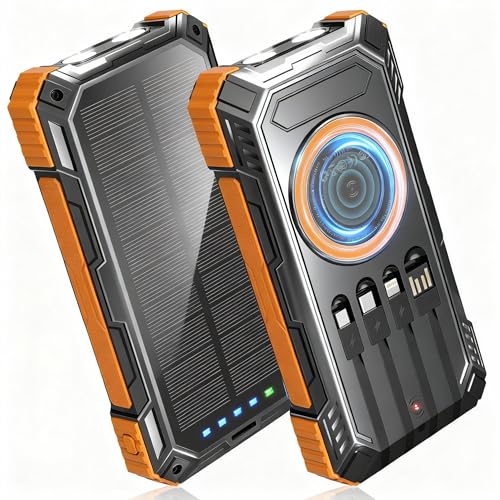
Solar Power Bank 49800mAh Wireless Portable Phone Charger with Built-in 4 Cables

BLAVOR Solar Power Bank with Hand Crank and 4 Cables 20000mAh Wireless Portable Charger

SUNER POWER Waterproof 30W 12V Solar Battery Charger Maintainer PRO
Solar Power Bank 20000mAh Portable Charger with Built-in 3 Cables

SUNER POWER Waterproof 20W 12V Solar Battery Charger Maintainer PRO

ECO-WORTHY 10W 12V Solar Battery Charger Maintainer OBDII for Car

BLAVOR Solar Power Bank 10000mAh Portable Wireless Charger
More Details On Our Top Picks
The appeal here is capacity and convenience in the same shell, with built-in cables reducing the usual cable hunt in a bag or glove box. Wireless charging adds a second path for compatible phones, so you’re not stuck using only the tethered ports.
For camping, road trips, and long workdays away from a wall socket, the large battery reserve gives you more breathing room than a smaller 10,000mAh model like the BLAVOR 10000mAh unit below. The trade-off is size, which usually comes with any high-capacity power bank, so this makes more sense in a backpack than a pocket.
Strong Points
- 49,800mAh capacity supports several device top-ups before you need to recharge the bank itself.
- Built-in cables cut down on packing clutter and reduce the chance of leaving a lead behind.
- USB-C in and out with PD 3.0 support gives you flexible charging and refilling paths.
- Wireless charging helps when you want a quick, cable-light top-up for a phone.
- 22.5W fast charging is a useful pace for everyday carry, especially on busier travel days.
Things To Consider
- Large capacity usually means more bulk, so it’s less friendly for coat pockets or minimalist kits.
- The many built-in leads make the body busier, which can matter when you prefer a cleaner layout.
Feature Snapshot
Who It Suits Best
You’ll get the most from this pick if you travel with several devices and want one packed power source instead of a tangle of separate cords.
Where A Sibling Pick Shines
BLAVOR Solar Power Bank 10000mAh Portable Wireless Charger suits lighter carry and shorter outings more neatly, especially for commuters who want less bulk.
Hand crank support gives this model a practical edge in situations where you want another way to bring the unit back to life. That sits alongside the 20,000mAh capacity, so it’s more compact than the BLASOUL 49,800mAh pick while still feeling useful for a weekend bag.
The camping light is the other useful detail, especially for power cuts, tent setup, or a dark trunk at night. The honest read is that the extra features add utility, but they also make this feel more purpose-built for preparedness than for a sleek desk setup.
What We Like
- Hand crank support adds an extra charging path in low-power situations.
- 20,000mAh capacity lands in a practical middle zone for travel and camping.
- Wireless charging keeps the top of your pack less cluttered.
- Built-in cables reduce the odds of missing the right cord.
- Camping light is handy for outages and outdoor use after dark.
Room For Improvement
- Extra features make the body busier than a simpler carry-first power bank.
- The hand crank is a backup tool, not a main charging strategy.
- Owners who pack light may still prefer a smaller unit for daily commuting.
Core Details
Built With In Mind
You’ll appreciate this most if you camp, lose power occasionally, or want a portable charger with a little more self-reliance built in.
A Better Fit Elsewhere
BLASOUL Solar Power Bank 49800mAh Wireless Portable Phone Charger makes more sense for heavy device users who care more about reserve capacity than backup features.
This is the first pick in the group that belongs to the parked-vehicle side of the category rather than portable phone charging. The built-in MPPT controller, which stands for maximum power point tracking, helps the panel manage charging more intelligently as light conditions change, and that matters for storage use more than for a day pack.
For cars, boats, RVs, and trailers that sit for stretches, a 30W maintainer gives you more output headroom than the 20W version below. The waterproof panel also makes outdoor mounting less delicate, though you still need a sensible place to place it and secure the cable run.
Highlights
- 30W output gives the panel more headroom for maintenance duty.
- 12V compatibility fits common automotive, marine, and RV setups.
- MPPT controller helps the charger respond better to changing sunlight.
- Waterproof construction makes outdoor placement easier to manage.
- Good fit for stored vehicles that need steady attention over time.
Softer Spots
- It’s a maintainer panel, so it’s not the same kind of grab-and-go charger as the power banks.
- Mounting and cable routing take a little planning in a garage, marina, or driveway.
Technical Sheet
Who Should Grab It
You’re the best fit here if you keep a car, boat, RV, or trailer parked for long stretches and want solar upkeep rather than portable phone power.
Look Elsewhere When
BLAVOR Solar Power Bank with Hand Crank and 4 Cables works better for campers who need device charging, a light, and a backup crank in one carry item.
Three built-in cables are the practical story here, because they cover USB-C, Lightning, and Micro-USB without making you pack a separate cord pouch. That’s useful in shared households or for travel kits that need to handle older and newer devices with fewer moving parts.
The listing’s own note about solar use matters: the panel is meant as emergency backup only, not as your main way to refill the bank. That makes this a sensible camping companion for prepared charging, but not the right choice for someone expecting sunlight to do the heavy lifting.
Best Bits
- 20000mAh capacity gives you useful reserve without jumping to the biggest size class.
- Built-in cables cover three common connector types.
- 15W fast charging is enough for everyday phone top-ups.
- Solar fallback is there for emergency situations outdoors.
Points To Note
- The solar panel is a backup path, not the main charging source.
- Because several cables are built in, the body can feel less minimal than a plain bank.
Feature Rundown
The Right Fit
You’ll get the most value here if you want one portable charger that covers several cable types and keeps solar strictly in the backup role.
Another Choice May Suit
BLASOUL Solar Power Bank 49800mAh Wireless Portable Phone Charger fits better for long-haul travelers who want a much larger reserve and wireless charging.
Compared with the 30W SUNER POWER pick above, this 20W version is easier to justify for lighter maintenance jobs. That smaller output can be enough for routine upkeep on a stored car, small boat, or trailer, especially when you want a simpler panel without overcommitting to larger hardware.
The MPPT controller is still the useful technical core, and it’s the kind of detail that tends to matter when daylight shifts through clouds, shade, or partial exposure. It’s a sensible middle-road option for people who want solar maintenance without stepping into a larger, more demanding setup.
Reasons To Buy
- 20W output suits routine battery maintenance.
- 12V design works across common vehicle categories.
- MPPT control helps the panel adapt better to daylight changes.
- Waterproof build supports outdoor placement.
Small Caveats
- It gives up output headroom compared with the 30W SUNER POWER model.
- Still requires installation planning for mounting and routing.
Details At A Glance
Whose Shelf It Belongs On
You’ll likely prefer this model if you want a solar maintainer for a parked vehicle and don’t need the extra output of the 30W version.
Where A Sibling Pick Shines
ECO-WORTHY 10W 12V Solar Battery Charger Maintainer OBDII for Car suits smaller upkeep jobs and simpler storage routines more comfortably.
OBDII support, which means the onboard diagnostic interface used on many cars, makes this feel aimed at straightforward vehicle upkeep. The 10W output is modest, and that’s the point: it suits storage maintenance better than heavier-duty charging jobs.
For a car, truck, boat, RV, or ATV that sits unused, the lighter output and portable format keep the setup approachable. The trade-off is clear, though, because this is the least aggressive maintainer in the group and won’t make sense for bigger battery demands.
Positives
- 10W output is a reasonable fit for lighter maintenance duty.
- OBDII connection suits many car-based storage setups.
- Portable format keeps it easy to move between vehicles.
- Works across several vehicle types, including marine and recreational use.
Areas To Watch
- Lower output makes it less suited to larger or more demanding battery setups.
- OBDII use depends on how your vehicle is arranged.
- Owners who need stronger solar upkeep may prefer the 20W or 30W SUNER POWER models.
Core Details
Best Suited To
You’ll find this most useful for a parked car or light recreational vehicle that needs simple solar upkeep rather than a larger charging setup.
Swap It Out When
SUNER POWER Waterproof 20W 12V Solar Battery Charger Maintainer PRO is the stronger call for owners who want more output and a broader maintenance cushion.
Size is the main reason this one earns a place here, because 10,000mAh fits the kind of carry that lives in a day bag rather than a camping crate. The dual flashlight also gives it a bit more utility than a plain battery pack, especially for short trips or a glove compartment kit.
Compared with the 20,000mAh and 49,800mAh BLAVOR and BLASOUL picks, this model is the lighter, more compact option. The trade-off is obvious, since smaller capacity means fewer device top-ups, but that’s a fair exchange for easier carry.
Bright Spots
- 10,000mAh keeps the unit compact for daily carry.
- Wireless charging adds convenience for supported phones.
- 20W fast charging helps with quicker mobile top-ups.
- Dual flashlight is useful in a bag, car, or campsite.
Worth Noting
- Smaller capacity means less reserve than the larger BLAVOR and BLASOUL models.
- The solar panel is more of an auxiliary feature than a primary charging path.
At A Glance
Right Fit For
You’ll like this most if you want a compact charger for commuting, day trips, or a small backup kit.
Where Another Pick Suits Better
BLAVOR Solar Power Bank with Hand Crank and 4 Cables suits camping users who want a larger feature set and a more preparedness-focused design.
How To Choose The Right Solar Powered Battery Chargers
Match The Charger To The Job
Portable power banks and 12V maintainer panels solve different problems. A power bank keeps phones, tablets, and small electronics alive while you travel, while a maintainer panel supports a parked vehicle battery over time.
That split matters because capacity and output mean different things in each category. High mAh helps a travel pack, while wattage and controller type matter more for a vehicle sitting in storage.
Check Capacity, Output, And Connections
For power banks, mAh tells you how much reserve sits inside the battery, and higher numbers usually mean more recharges before the unit itself needs power. For maintainer panels, wattage gives you a better clue about how much help the battery gets from sunlight.
Connections also matter in daily use. Built-in cables reduce packing friction, USB-C helps with newer devices, and OBDII support makes sense for certain car setups.
Think About Carry Style And Placement
A heavy-capacity power bank suits a backpack, glove box, or travel tote more naturally than a pocket. A slim 10,000mAh unit works better for daily carry, especially for commuting or short trips.
On the vehicle side, waterproof panels and straightforward mounting matter because they live outdoors or in garages. The cleaner the installation path, the easier the upkeep tends to be.
Balance Backup Features Against Simplicity
Hand cranks, flashlights, and wireless charging add convenience, but they also add bulk or complexity. That trade-off is fine for camping and outage prep, while a simpler setup often fits everyday carry better.
For most households, the right choice is the one that matches how you actually store or move the device. The smartest pick is usually the least complicated model that still covers your routine.
Things Worth Knowing First
Traps First Timers Fall Into
One common mistake is treating solar backup like the main charging source for a portable power bank. Another is buying a vehicle maintainer with more output than your storage situation really needs.
Avoid the mismatch by starting with the use case. Travel gear needs capacity and cable convenience, while parked-vehicle gear needs the right voltage, output, and mounting plan.
The Upgrade Payoff
Higher-tier models often cost more because they pack larger batteries, more output, better charging control, or extra hardware like built-in cables and lights. Those parts add usefulness, but they also add weight and size.
The upgrade earns its keep when you travel for long stretches, carry several device types, or maintain a battery that sits unused for weeks. Paying more for features you won’t use only makes the bag heavier.
Frequently Asked Questions
Are solar power banks enough for daily phone charging?
Yes, for travel and backup use, especially when the bank is charged from a wall outlet first. The solar panel is usually a support feature, not the main refill method.
What does mAh tell you in a power bank?
mAh stands for milliamp-hours, a measure of battery capacity. Higher numbers usually mean more stored energy for repeated device charging.
Do 12V solar maintainers work for parked vehicles?
Yes, they suit cars, boats, RVs, and similar 12V setups that sit unused. They are meant for upkeep, not for jumping a dead battery or replacing a full charger.
Why does MPPT matter on a solar maintainer?
MPPT means maximum power point tracking, a control method that helps the panel respond better as sunlight changes. That can matter in partly cloudy or shaded conditions.
Which size is easier to carry, 10,000mAh or 49,800mAh?
The 10,000mAh option is easier to stash in a day bag or glove compartment. The 49,800mAh unit gives you much more reserve, but it usually asks for more space.
Closing Thoughts
Your best match comes down to whether you need travel power or stored-battery upkeep. The portable banks in this list suit phones, tablets, and camping kits, while the SUNER POWER and ECO-WORTHY maintainers are built for parked vehicles. Choose the format that fits your routine, then look at capacity, output, and the extras that actually matter to you. That’s the cleanest path to a sensible pick.
