

Backpacking days get easier when your charging gear disappears into the pack instead of running the show. The right solar charger can keep a phone, GPS, or power bank topped up without adding much bulk, which matters on long trail days, windy campsites, and travel stretches with no wall outlet in sight.
Below, you’ll find nine compact picks with different strengths, from simple foldable panels to charger-and-battery hybrids. Some lean light and lean; others trade a little extra weight for better output, more ports, or added flexibility after sunset.
Quick Look At Our Shortlist

BLAVOR Solar Power Bank with Hand Crank

BigBlue Ultra-Light Portable 25W Solar Panel Charger

SOLUPUP Solar Panels 30W Portable Foldable Solar Charger
FlexSolar 25W Portable Solar Panel Charger
FlexSolar 36W Ultra-Portable Lightweight Solar Panel Charger
GEYOTO 35W Portable Solar Panel Charger

GEYOTO 45W Portable Solar Panel Charger

BigBlue 28W High-Efficiency Solar Panel Charger
More Details On Our Top Picks
BLAVOR keeps the first pick simple, which suits short hikes and pack-light overnight trips. The 10W panel and dual output layout make sense for a phone, a small battery pack, or a tablet that only needs steady top-ups. IPX4 water resistance means it handles splashes better than a bare panel, though it still deserves normal trail care.
You may find the lighter output modest on cloudy days, and that’s the trade-off for a smaller foldable form. For most people carrying a minimal kit, though, that restraint is the point, since it keeps bulk down without adding much fuss.
Strong Points
- Small folded size slips into a daypack without taking much room.
- USB-C and USB-A outputs cover common charging cables.
- IPX4 protection adds a little breathing room in damp camp weather.
- Works well for topping up a phone during a long lunch stop.
Things To Consider
- 10W output is better for light devices than bigger power jobs.
- Wet fabric, mud, and grit still call for careful wiping and storage.
Feature Snapshot
Who It Suits Best
Minimalist backpackers and day hikers who want a light panel for phone maintenance will get the most from it.
A Better Fit Elsewhere
BigBlue Ultra-Light Portable 25W Solar Panel Charger suits you better when a lighter panel still needs more charging headroom.
This BLAVOR choice moves beyond a plain panel and gives you a 20,000mAh battery pack, so charging can continue after sunset. The hand crank and four cables add backup-minded flexibility, which makes more sense for car camping, storm prep, or a backpacking setup shared by two people.
The larger battery makes it less trim than the first BLAVOR panel, so it’s a trade between self-contained convenience and pack weight. The honest read is that you’re paying for redundancy, not featherweight simplicity.
What We Like
- Built-in battery means your devices can charge away from direct sun.
- Four included cables reduce cord sorting in a crowded pack.
- Wireless charging adds another option for compatible gear.
- The camping light helps in tents, vehicle camps, and late setup moments.
- Hand crank backup gives extra peace of mind during long overcast stretches.
Room For Improvement
- Battery-first designs usually weigh more than a bare foldable panel.
- More built-in parts also mean more to keep organized and clean.
Technical Sheet
Who Should Grab It
Campers and hikers who want one rugged battery pack that can cover several charging styles will appreciate this setup.
Swap It Out When
BLAVOR 10W Portable Solar Charger makes more sense for you when the lightest possible trail kit matters more than onboard backup power.
BigBlue’s 25W panel stands out because the weight stays impressively low for its output class, and that matters in a pack where every ounce gets noticed. The pocket-size folding format should suit thru-hikes, weekend treks, and long train rides into a trail town.
Compared with BLAVOR’s smaller 10W panel, this one gives you more charging headroom without jumping into bulky territory. The catch is that small panels still need decent sunlight positioning, so placement matters more than raw optimism.
Highlights
- 0.84 lb weight keeps carried load very manageable.
- USB-A and USB-C ports fit common cables and power banks.
- IP68 rating points to strong dust and water resistance for outdoor use.
- 25W output offers a more practical middle ground than tiny backup panels.
Minor Gripes
- Small folding panels still need thoughtful sun angle and clearing shade.
- Dust and trail grit can build up, so a quick wipe helps it pack cleanly.
At A Glance
Whose Shelf It Belongs On
You get the most from this panel when your pack needs a light solar option that still feels serious enough for regular backcountry use.
Another Choice May Suit
FlexSolar 36W Ultra-Portable Lightweight Solar Panel Charger fits better for hikers who want more output and don’t mind a little extra panel size.
SOLUPUP is the more control-focused option in this group, thanks to the smart chip and auto-reconnect behavior. That matters on trail breaks, because sunlight rarely stays perfect for long, and a panel that restarts itself can be less annoying to babysit.
Its 30W output places it above the lighter 10W and 25W picks, so you get a stronger lane for phones, power banks, and mixed-device camp setups. The trade-off is the usual one: a bit more capability often means a little more to manage in the pack.
Bright Spots
- Smart chip helps match charging to connected devices.
- Built-in safeguards for overcurrent, overvoltage, and short-circuit concerns.
- Auto-reconnect behavior is handy when clouds move in and out.
- USB-A and USB-C support broadens cable compatibility.
- 30W output gives more breathing room than smaller trail panels.
Points To Note
- More advanced control can add a little setup attention compared with plain panels.
- Foldable panels still need dry storage and sensible handling after muddy trips.
Core Details
Built With In Mind
Backpackers who want a stronger solar panel with fewer charging interruptions will appreciate this mix of output and control.
Where A Sibling Pick Shines
BLAVOR 10W Portable Solar Charger suits you better when you care more about the smallest possible footprint than extra charging control.
FlexSolar keeps the shape of a trail-friendly panel and focuses on simple utility. The built-in USB-A and USB-C ports make it easier to charge phones and small battery packs without carrying as many adapters, which is handy on quick overnights or weekend loops.
Compared with SOLUPUP’s more control-heavy setup, this one looks built for straightforward emergency use. It’s a calm, low-fuss option, though you’ll still want a stable spot and decent sun to get the most from it.
Reasons To Buy
- 25W output works well for light trail charging tasks.
- Built-in USB-A and USB-C ports reduce cable juggling.
- Ultra-lightweight design suits emergency kits and shorter hikes.
- Simple layout keeps packing and setup straightforward.
Small Caveats
- Less feature-rich than some higher-output picks in this list.
- Foldable panels still need careful storage to avoid wear from dirt and pressure.
- Direct sun matters, so shaded camps can slow things down.
Details At A Glance
Perfect Match For
Weekend backpackers who want a stripped-down solar panel for routine phone and power bank top-ups will like this approach.
Reach For A Different Pick When
BigBlue Ultra-Light Portable 25W Solar Panel Charger is the smarter choice for you when IP68 resistance and a lower stated weight matter more.
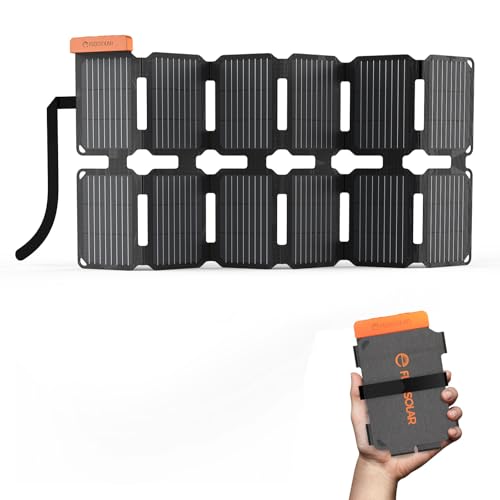
FlexSolar’s 36W panel is the point where “lightweight” starts to meet more serious output. That extra wattage helps on longer trips where you may be charging more than one device over several days, and the USB-A, USB-C, and DC outputs widen the use case nicely.
Compared with the 25W FlexSolar panel, this one gives you more margin, but it also asks for a little more pack space and tolerance for size. In most setups, that trade makes sense for hikers carrying a phone, battery pack, and a small accessory load.
Upsides
- 36W output gives more room for multi-day use.
- USB-A, USB-C, and DC outputs broaden compatibility.
- Still positioned as ultra-portable, so it stays practical for backpacking.
- Useful for emergency kits as well as camp charging.
Areas To Watch
- More output usually comes with a larger folded footprint.
- Moving parts and cables deserve tidy packing to avoid trail wear.
Feature Rundown
The Right Fit
You suit this panel best when you want extra charging headroom without moving into a much heavier solar setup.
Look Elsewhere When
BigBlue Ultra-Light Portable 25W Solar Panel Charger works better for you if shaving pack weight matters more than output margin.
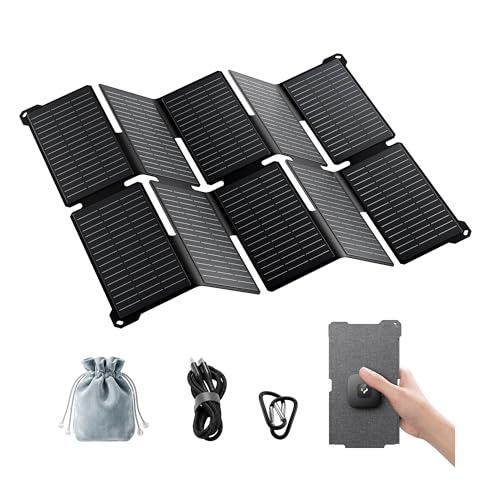
GEYOTO’s 35W panel leans into efficiency, with a stated 25.4% figure that should matter to anyone trying to squeeze more use from limited sun. The 1.5 lb foldable body stays reasonable for backpacking, especially when you want faster recovery for phones and power banks.
It sits in a useful middle space between the smaller BLAVOR and the more output-heavy GEYOTO 45W. The honest trade-off is that stronger performance still asks you to keep the panel aimed well, because compact solar gear rarely rewards sloppy placement.
Best Bits
- 35W output gives good charging headroom for trail electronics.
- 25.4% efficiency is a meaningful spec for sun-limited days.
- USB-C PD and USB-A QC support modern fast-charge cables.
- 1.5 lb weight stays workable for backpack carry.
Honest Caveats
- Solar performance still depends heavily on direct exposure and panel angle.
- Folding panels need neat storage so hinges and fabric don’t get abused.
Feature Card
Who Will Love This
Backpackers who want a performance-minded panel without moving into very heavy terrain will get a lot of use from this one.
Skip It When
BLAVOR 10W Portable Solar Charger fits better for ultralight hikers who are willing to give up output for a smaller carry.
GEYOTO’s 45W panel is the bigger sibling to the 35W version, and you feel that difference most when you’re charging more than one item or trying to recover faster after a cloudy stretch. Dual USB-C, plus USB-A, gives you a flexible hookup for phones and battery banks on longer expeditions.
The 1.7 lb weight is still carryable, but it moves this pick farther from true ultralight territory. You may find it worth the extra ounce count only when the stronger output and dual USB-C layout match the way you travel.
Standout Traits
- 45W output gives the most headroom in this GEYOTO pair.
- Dual USB-C support is handy for modern charging setups.
- 25.4% efficiency helps maximize sun that is available.
- Still foldable, so it packs down for transport.
Worth Noting
- Added output brings a bit more pack weight than lighter panels.
- Trail grit and repeated folding deserve routine care.
Quick Facts
Best Suited To
Backpackers who want stronger output for longer trips and can accept a bit more carry weight will get the most from this panel.
A Better Fit Elsewhere
GEYOTO 35W Portable Solar Panel Charger fits better when you still want efficient charging but prefer a lighter carry.
BigBlue’s 28W panel lands in that comfortable middle lane where size, output, and carry weight stay fairly even. For backpacking trips that need reliable phone or power bank charging without jumping into the heaviest class, that balance can be exactly right.
Compared with the higher-output GEYOTO options, this one is easier to frame as a steady, no-drama pick. It’s not the lightest or the strongest, and that’s the point, since many trail setups work best with gear that doesn’t demand much attention.
Positives
- 28W output gives a sensible middle ground for camp charging.
- Dual USB-C and USB-A support broadens device compatibility.
- Foldable format keeps storage simpler inside a backpack.
- Works well for phones, power banks, and GPS-style gear.
Points To Note
- Midrange output means it won’t feel as quick as the larger panels.
- Folded panels still benefit from careful packing after dusty days.
- Shaded camps can make any solar panel feel slower than expected.
Core Details
Made For
You get the most from this panel when you want a balanced solar charger for steady backpacking use rather than a specialist ultralight or heavy-output setup.
Where Another Pick Suits Better
GEYOTO 45W Portable Solar Panel Charger makes more sense for you when stronger output matters more than keeping the pack a little lighter.
How To Choose The Right Lightweight Solar Chargers For Backpacking
Match Output To Your Trail Routine
Wattage tells you how much charging headroom a panel can offer, but the real meaning sits in your trail habits. A phone-only day hiker can live with a smaller panel, while someone carrying a power bank, GPS, and camera accessories usually benefits from 25W to 45W territory.
More wattage usually helps recover power faster in good sun, yet it also tends to bring more panel area or weight. That trade works fine for basecamp-style overnights, and it feels less friendly on fast-moving alpine routes where every ounce is obvious.
Look Closely At Ports And Backup Options
USB-C, USB-A, fast-charge labels, and DC outputs all change how easy a charger feels in real use. USB-C matters for newer phones and battery packs, while USB-A still helps with older cables and some accessories.
Hybrid gear, such as a power bank with a solar input, suits trips that include evening charging or patchy sunlight. A bare folding panel stays lighter, though it depends more on weather and daylight timing.
Weight, Folded Size, And Pack Behavior
A panel that looks small in the listing can still feel awkward if it has stiff folds, thick fabric, or long cable tails. The more neatly it tucks into a side pocket or lid pocket, the easier it is to live with day after day.
Weight matters most once your trip stretches beyond a single night. Around the trailhead, an extra few ounces feels minor, but eight hours later on a steep climb, it can matter quite a bit.
Durability And Weather Fit
Water resistance labels, such as IPX4, IPX5, or IP68, tell you how much exposure a panel is built to handle. They do not mean you can ignore care, but they do help you separate a fair-weather travel piece from something more ready for damp camp mornings.
Folding panels should also be checked for tidy stitching, simple hinge behavior, and clean cable storage. Trail dust, pressure in a crowded pack, and repeated unfolding often tell the real story over time.
Things Worth Knowing First
Common Shopping Slip Ups
Plenty of backpackers chase wattage without checking weight, then wonder why the panel stays home. A better move is to match output to the gear you actually carry, not the gear you wish you carried.
Another common miss is ignoring charging ports. USB-C works well for newer devices, but a USB-A port can keep older cables useful and reduce friction in camp.
The Upgrade Payoff
Higher-tier panels usually cost more because they pack in stronger output, better resistance ratings, and more flexible port layouts. Some also include fast-charge support or smarter device matching, which matters once you use the charger beyond a weekend novelty.
The upgrade makes sense for hikers who travel often, stay out longer, or charge multiple devices. For occasional overnights, a simple lighter panel often keeps life easier and the pack happier.
Frequently Asked Questions
What wattage works well for backpacking?
For phone-first trips, 10W to 25W can be enough. For longer outings or multiple devices, 28W to 45W gives you more breathing room.
Is a solar charger enough on its own?
Sometimes, but not always. A power bank or hybrid solar power bank adds a useful buffer for cloudy stretches and evening charging.
Do higher-efficiency panels always charge faster?
Higher efficiency helps make better use of sunlight, especially in less-than-perfect conditions. Panel placement and sunlight quality still matter a lot.
Which ports matter most?
USB-C is the most useful modern connection for many phones and battery packs. USB-A remains helpful for older cables and some accessories.
How do you keep a folding panel in good shape on trail?
Keep it clean, dry, and tucked away from sharp pressure inside the pack. A quick wipe after dusty or muddy days helps it store more neatly.
Closing Thoughts
The best lightweight solar charger for your backpacking kit depends on how you travel, not just how much power sounds attractive on paper. A small 10W panel keeps things lean, while 35W to 45W options make more sense for longer trips with real charging demands. Hybrid power banks help when daylight is unreliable, and simpler foldable panels reward careful packing. Choose the pick that fits your route, your devices, and your tolerance for carry weight, and the trail feels a little more manageable.
