

Flexible solar panels make sense when you want power on curved RV roofs, boat decks, or van tops without adding bulky hardware. You get a lighter, lower-profile setup, which helps when roof space is tight and every pound matters. The trade-off is that fit, heat handling, and mounting style matter more than they do with rigid panels.
That’s why this roundup focuses on shape, build materials, and wattage range, not just headline output. You’ll see smaller 100W options for modest daily use, plus larger arrays for heavier off-grid needs. The right match depends on your roof layout, charging goals, and how much installation flexibility you need.
Quick Look At The Shortlist

Renogy Flexible Solar Panel 100W 240° Bendable

100W 12V Flexible Solar Panel 9BB Monocrystalline Cell
Renogy Flexible Solar Panel 100W 240° Bendable Black

BougeRV Arch Pro 200W Anti-Shading Fiberglass Panel
Callsun 400W Flexible Solar Panel Set 2x200W White

BougeRV Upgrade Arch 200W N-Type Flexible Solar Panel

BougeRV Upgrade Arch 100W N-Type Flexible Solar Panel

Viewsun Flexible Solar Panel 2PCS 100W Fiberglass Panels
More Details On Our Top Picks
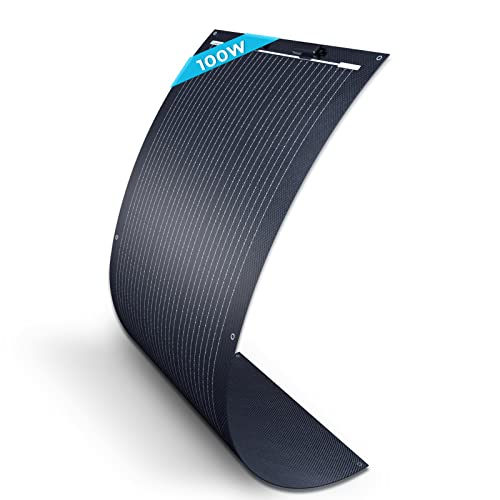
Renogy’s 100W panel fits the kind of RV roof that never seems quite flat, and that 240-degree bend range gives you more layout freedom than a stiffer sheet. The 0.1-inch profile keeps it discreet, which helps on rooflines where vents, racks, and skylights already eat up space.
For weekend trips, small vans, or a marine setup, that lighter build makes the install feel less awkward. The trade-off is straightforward, since a single 100W panel suits modest charging needs better than a full boondocking setup.
What We Like
- Thin profile helps reduce roof clutter.
- Flexible shape suits curved panels and uneven sections.
- 100W size works well for modest battery support.
- Lightweight construction is easier to handle on install day.
- Black finish blends into darker roof surfaces cleanly.
Things To Consider
- A single 100W panel may feel modest for heavy appliance use.
- Flexible panels often need careful surface prep for the best bond.
- The very slim build asks for thoughtful cable routing.
Feature Snapshot
Who It Suits Best
Weekend RV travelers and van owners with curved roof sections will get the most practical use out of this one.
Where A Sibling Pick Shines
BougeRV Arch Pro 200W Anti-Shading Fiberglass Panel suits larger electrical loads better, especially for full-time travel rigs.
This Topunive panel keeps the setup very direct, with a 12V format that lines up neatly with common RV battery systems. The 9BB cell layout, meaning nine busbar pathways that help carry current across the panel, is a useful technical detail because it points to a more current-conscious design than basic entry-level sheets.
That matters most for simple charging jobs, like topping a house battery while you’re parked for the day. The honest read is that this looks aimed at practical, not flashy, ownership, and that suits a lot of starter rigs just fine.
Highlights
- 12V design fits common RV battery setups.
- 9BB cell layout adds a more technical build approach.
- Semi-flexible format helps on uneven mounting surfaces.
- Good match for straightforward charging needs.
Room For Improvement
- Single-panel output may feel limited for larger cabins or trailers.
- Flexible mounting usually rewards careful surface cleaning before installation.
- The simpler build leaves less room for advanced system planning.
Core Details
Made For
Starter RV systems and weekend campers get the best fit from this simple 12V panel.
Another Choice May Suit
Callsun 400W Flexible Solar Panel Set 2x200W suits large rigs that need broader charging headroom.
You get the same curved-surface-friendly shape as the earlier Renogy panel, but the black finish makes this version easier to blend into darker roof lines. That detail matters more than it sounds, because a panel that disappears into the roof can feel less intrusive on a clean van build.
For most travel rigs, this is the kind of pick that looks tidy without giving up the low-profile, flexible format. Compared with the Topunive option, it reads more polished in finish, though the power class stays in the same everyday range.
Upsides
- Black finish helps it sit quietly on darker surfaces.
- 240-degree bend range gives you installation freedom.
- Low thickness supports a streamlined roof profile.
- Good match for rooflines with vents and curves.
Small Caveats
- Still a 100W panel, so output stays modest.
- The low-profile design rewards careful sealing around mounting points.
- Owners who want a bigger energy cushion may want more than one panel.
Quick Facts
Whose Shelf It Belongs On
RV owners who care about a cleaner visual match on dark roofs will appreciate this version most.
Swap It Out When
BougeRV Arch Pro 200W Anti-Shading Fiberglass Panel fits better for longer trips with higher power demand.
This one steps up in size and ambition, so it makes sense for RV owners who want more roof-based power without jumping straight to a rigid array. The fiberglass body and anti-shading design point to a build meant to cope better with partial shade, which is useful when vents, rails, or roof gear cast awkward patches.
Compared with the 100W Renogy panels, this feels aimed at heavier use, especially for camping styles that lean on lights, fans, and charging gear throughout the day. One thing worth considering is that larger flexible panels deserve careful placement, since their usefulness depends a lot on roof shape and open space.
Reasons To Buy
- 200W output suits more demanding RV power plans.
- Anti-shading design is helpful around roof hardware and partial shade.
- Fiberglass construction adds a sturdier feel for a flexible panel.
- 24V setup can fit more advanced electrical layouts.
Areas To Watch
- Higher output needs more roof room than the 100W panels.
- Installation planning matters more because placement affects real-world usefulness.
- Its larger footprint may be more than small vans need.
Details At A Glance
Built With In Mind
Travel rigs with larger power demands and enough roof space for a 200W panel suit this model well.
A Better Fit Elsewhere
BougeRV Upgrade Arch 100W N-Type Flexible Solar Panel makes more sense for smaller roofs and tighter installations.
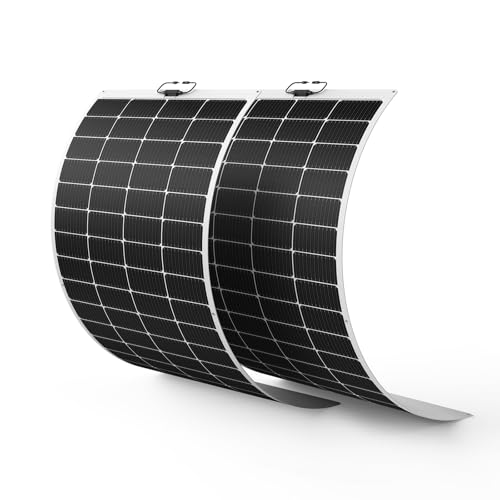
Two 200W panels change the conversation fast, because you’re no longer shopping for a light helper panel but for a substantial roof array. The white ETFE surface, a tough fluoropolymer top layer used on many premium flexible panels, also gives the set a cooler visual profile than dark modules on a sunbaked roof.
That makes sense for large RVs, catamarans, or shed-mounted systems where you want broader coverage from the start. The trade-off is simple: you get more output and more roof commitment, so this is less forgiving of cramped layouts.
Best Bits
- 400W total output fits bigger electrical plans.
- Two-panel set offers broader roof coverage.
- White ETFE surface helps the array look less heavy on light roofs.
- Useful for larger RVs and boat setups.
Honest Caveats
- Large coverage needs more mounting space and careful planning.
- Two panels mean more wiring to organize neatly.
- It may be more than a small camper really needs.
Core Details
Who Should Grab It
Large RV owners and off-grid setups with real roof space will make the most of this set.
Reach For A Different Pick When
Renogy Flexible Solar Panel 100W 240° Bendable fits better for compact roofs and lighter charging plans.
This BougeRV panel leans into the curved-roof problem with a 270-degree bend range, which is broad enough to matter on more unusual shells and arched surfaces. The N-type cell design and 16BB layout give it a more technical profile than the simpler 100W options, so it feels built for owners who want a step up without moving to a bulky rigid module.
For campers, boats, and home roof sections with unusual contours, that extra shaping freedom is the main attraction. The catch is that a 200W flexible panel still wants planning, because the best result depends on surface fit and clean cable routing.
Bright Spots
- 270-degree bend range suits more demanding curved surfaces.
- 200W rating gives you stronger daily charging headroom.
- N-type and 16BB design signal a more advanced panel build.
- Fiberglass format keeps it in the flexible category while feeling structured.
Worth Noting
- It asks for more careful placement than a smaller 100W panel.
- Higher output can be wasted on poorly matched roof space.
- Its value makes the most sense in fuller travel or camp setups.
Technical Sheet
Right Fit For
RV and boat owners who need a stronger flexible panel for unusual curves will find this model especially relevant.
Look Elsewhere When
100W Renogy Flexible Solar Panel 100W 240° Bendable suits smaller roof spaces and lighter daily use better.
The 100W version of the BougeRV Arch line keeps the curved-surface idea but trims it down to a friendlier footprint. That makes it a smart fit for tighter roof sections, especially on vans or smaller RVs where every square inch has a job.
The 270-degree bend range gives you more placement freedom than many plain flat sheets, and the N-type 16BB build makes it feel more current-aware than a basic entry model. You may find it hits a sweet spot between shape flexibility and simple power needs.
Best Bits
- 100W size is easier to fit on compact roofs.
- 270-degree bend range helps with tighter contours.
- N-type 16BB design adds a more technical build profile.
- Good middle-ground choice for small travel systems.
Minor Gripes
- 100W output suits light charging more than heavy appliance use.
- Flexible mounting still calls for patient surface prep.
- It may feel too small for larger trailers or full-time rigs.
Feature Rundown
The Right Fit
Small RVs, compact vans, and roof spaces with tricky curves are the best home for this panel.
Where Another Pick Shines
Callsun 400W Flexible Solar Panel Set 2x200W suits larger rigs that need a stronger energy cushion.
Two separate 100W panels make this Viewsun set appealing for split installs, since you can spread them across a roof, balcony, or boat surface instead of depending on one large sheet. The fiberglass body and ultrathin build point to a flexible setup that should be easier to place around awkward edges and uneven sections.
For RV owners who want modular placement, that can be a real advantage. The compromise is that the system asks you to think in pairs, so planning the wiring and available mounting spots matters more than with a single panel.
Positives
- Two-panel set gives you layout flexibility.
- 100W modules are easier to place than a single large array.
- Fiberglass construction supports a practical flexible form.
- Works well for uneven surfaces and split mounting zones.
Trade Offs
- Two panels mean more planning for wiring and placement.
- Each 100W section suits lighter charging needs.
- It can feel less straightforward than a single-panel install.
Spec Overview
Perfect Match For
Owners who want to distribute solar coverage across several smaller roof spots will get the most value here.
A Better Fit Elsewhere
Renogy Flexible Solar Panel 100W 240° Bendable suits a simpler single-panel install with less layout juggling.
How To Choose The Right Flexible Solar Panels For Rv
Start With Roof Shape And Mounting Room
Curved RV roofs, cab roofs, and boat tops reward panels that bend without fighting the surface. A 240-degree or 270-degree bend range helps more than a basic semi-flexible sheet, especially around vents, rails, and skylights.
Profile matters too, because a panel that sits close to the roof is easier to place in crowded spots. Lower thickness usually means a cleaner install, but you still need enough flat contact area for secure mounting.
Match Wattage To Your Daily Load
100W panels suit light charging, weekend travel, and smaller battery banks. 200W panels make more sense once you start running fans, lights, device charging, or a fuller off-grid routine.
Big arrays, like the 400W set here, fit larger RVs with more roof area and heavier power habits. The real question is not just output, but whether your roof can support that output in usable space.
Pay Attention To Cell Design And Materials
Monocrystalline cells, meaning single-crystal silicon cells, are common in these panels because they support compact, efficient designs. N-type cells and 16BB layouts suggest a more technical build, with more attention paid to current flow across the panel.
Fiberglass and ETFE also matter. Fiberglass helps flexible panels hold their shape, while ETFE is a durable top layer often used for weather exposure and long service on roof-mounted gear.
Think About Ownership, Not Just Installation Day
Flexible panels usually reward clean surfaces, careful cable routing, and sensible storage when the rig sits unused. A panel that is easy to bend can still suffer from poor placement if roof heat, shade, or grime are ignored.
For frequent travelers, the easier choice is often the one that matches your roof and routine, not the one with the biggest watt number on the label. That’s the difference between a tidy setup and a frustrating one.
Things Worth Knowing First
Common Shopping Slip Ups
Many RV shoppers focus on wattage and skip the roof layout check. That’s how a panel ends up oversized for the available flat space or awkwardly placed around vents and rails.
Another common miss is ignoring the difference between a single panel and a two-panel set. A modular pair can be easier to place, but it asks more of your wiring plan.
Where The Extra Money Goes
Higher-tier flexible panels tend to use more advanced cell layouts, tougher top layers, and more structured backing materials. Those details can help the panel feel better suited to heat, shade, and long roof exposure.
You also pay for fit refinement. A 270-degree arch design or a more advanced N-type build usually makes the panel easier to place on unusual surfaces, which matters on RVs that are rarely perfectly flat.
Frequently Asked Questions
Are flexible solar panels a good fit for RV roofs?
They are a strong match for curved or uneven RV roofs. The low profile helps when roof space is shared with vents, racks, and skylights.
What wattage makes sense for a small RV?
100W panels suit lighter charging needs and simpler power use. Larger rigs or fuller off-grid routines usually benefit from 200W or more.
Does panel color matter?
Color mostly affects visual blend, not just appearance. Black panels tend to fade into darker roofs, while white panels can look lighter on pale surfaces.
Why do some flexible panels use fiberglass?
Fiberglass adds structure while keeping the panel within a flexible format. That mix can help the panel feel more stable on curved surfaces.
What should you check before installing one?
Measure the usable roof area and note vents, antennas, and roof seams. Clean mounting surfaces and cable routes matter just as much as panel size.
Closing Thoughts
The best flexible solar panel for your RV is the one that matches your roof shape, power needs, and mounting space without turning the install into a puzzle. The 100W Renogy and Topunive options suit lighter setups, while BougeRV and Callsun step in when you need more output and more advanced shaping. If you want a clean, practical setup for travel, start with the panel that fits your roof honestly. The right match usually feels obvious once you line up space, wattage, and daily use.
