

12-volt solar gear can feel simple on paper, yet the right pick depends on much more than wattage. You might need a small maintainer for a feeder battery, a steadier panel for an RV, or a larger module that makes sense on a cabin roof. This roundup keeps the focus on use case, mounting style, and day-to-day ownership so you can match a panel to the way you actually use power.
Quick Look At The Shortlist

Renogy Solar Panels 50 Watt, 22% High-Efficiency Monocrystalline 50W Solar Panel
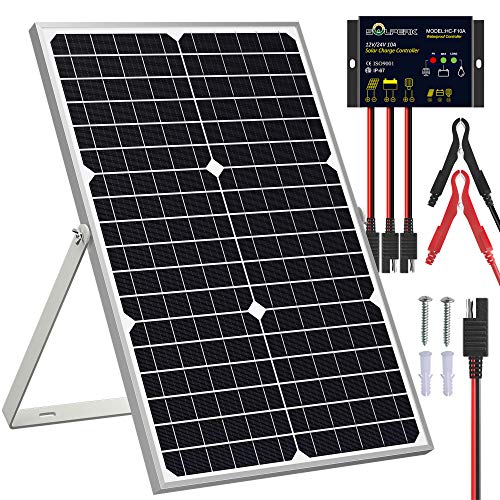
Solar Panel Kit 30W 12V Solar Battery Trickle Charger Maintainer

30W12V Solar Battery Charger Battery Maintainer MPPT Controller

OYMSAE 12W 12V Portable Waterproof Solar Panel Trickle Charger Maintainer

Renogy 100W Solar Panel N-Type 12V 100 Watt Solar Panel

POWOXI 12V 1.7w Deer Feeder Solar Panel with Waterproof Bracket
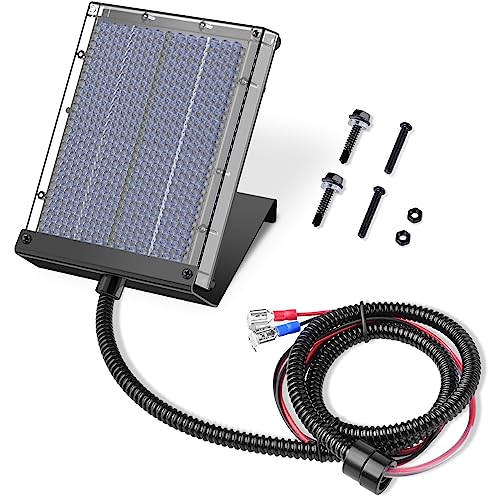
12V Deer Feeder Solar Panel, Solar Battery Charger Waterproof
More Details On Our Top Picks
Renogy’s 50-watt panel fits the kind of setup that needs steady support without taking over the roof or the storage bay. Monocrystalline means it uses single-crystal silicon cells, which usually helps with efficiency, so the footprint stays modest for RV racks, cabins, and small trailer systems.
The honest read is that 50 watts suits lighter loads, not a full power-hungry cabin. That trade-off makes it a sensible match for seasonal use, battery maintenance, or a compact off-grid starter setup where neat mounting matters as much as output.
Strong Points
- 22% efficiency helps the panel make better use of limited roof space.
- Compact size makes placement easier on curved RV or marine surfaces.
- Works well for smaller battery banks that need regular topping up.
- Simple solar-panel format keeps wiring and mounting straightforward.
Points To Note
- 50 watts is modest, so larger appliances need a bigger array.
- Mounting space still matters, especially on crowded roofs.
- You may need to pair it with the right charge controller for your system.
Feature Snapshot
Who It Suits Best
Weekend RV owners, small cabin setups, and trailer users with modest charging needs get the most from this panel.
Where A Sibling Pick Shines
Renogy 100W Solar Panel N-Type 12V 100 Watt Solar Panel suits you better when your roof space can support a larger daily energy budget.
This SOLPERK kit leans into convenience, because the 10A PWM charge controller and adjustable bracket do a lot of the setup thinking for you. PWM means pulse width modulation, a common controller style that manages charging in a simple, proven way for smaller 12-volt systems.
For a boat, motorcycle, RV, or parked car, that matters more than flashy wattage. The kit form reduces piecing parts together, though you still need to confirm the mount angle and battery access suit your vehicle layout.
What We Like
- 30-watt output fits routine battery maintenance well.
- Included 10A PWM controller simplifies the basic system layout.
- Adjustable bracket helps you aim the panel more cleanly.
- Useful on vehicles that sit idle between uses.
Small Caveats
- PWM control is practical, though some setups later move up to MPPT.
- Bracket fit depends on your mounting surface and clearance.
- Smaller output means it’s better for upkeep than heavy daily loads.
At A Glance
Built With In Mind
Vehicle owners who want a straightforward maintenance setup without building a custom solar system will find this the easiest fit.
A Better Fit Elsewhere
30W12V Solar Battery Charger Battery Maintainer MPPT Controller suits you better if you want a controller style that leans more toward efficiency-oriented charging management.
Compared with the SOLPERK kit above, this one shifts from PWM to MPPT, which stands for maximum power point tracking. That controller style is built to squeeze better usable energy from the panel, so you get a more efficiency-minded setup for car, RV, boat, or motorcycle maintenance.
That upgrade makes the kit feel more refined for owners who care about making the most of a small panel. The trade-off is familiar, though, because a smarter controller still can’t turn a 30-watt panel into a high-load system.
Reasons To Buy
- MPPT controller supports more efficient charging behavior.
- 30-watt panel suits maintained batteries and lighter seasonal use.
- Waterproof build language suggests better fit for outdoor parking.
- Good option for mixed-vehicle setups with modest draw.
Areas To Watch
- Still sized for upkeep, not for running bigger systems.
- Controller sophistication doesn’t remove the need for proper installation.
- You may need to plan cable routing carefully on tight mounts.
Quick Facts
Right Fit For
Owners who want a compact maintainer with a more advanced controller will appreciate this kit most.
Skip It When
POWOXI 12V 1.7w Deer Feeder Solar Panel with Waterproof Bracket suits you better for a tiny feeder battery that needs only a very small solar load.
OYMSAE keeps the footprint modest, and that makes sense for owners who need a portable maintainer more than a full-size solar panel. The waterproof angle is useful for boats, motorcycles, trailers, and vehicles that may sit outside longer than you’d like.
It also reads as a careful pick for people who want a small, easy-to-place panel with built-in safety-minded language in the listing. The catch is simple, though, because 12 watts is a light-duty figure that suits maintenance jobs better than broader solar ambitions.
Best Bits
- Portable format works well for moving between vehicles or storage spots.
- Waterproof design helps outdoors use feel less delicate.
- 12-watt output is enough for basic maintenance tasks.
- Good match for small batteries and occasional upkeep.
Worth Noting
- Small output keeps it in the trickle-charger lane.
- Portable use can mean more handling and storage between trips.
- Mounting and placement still affect how useful it feels in real use.
Details At A Glance
Whose Shelf It Belongs On
Outdoor equipment owners and part-time vehicle users who want a light maintainer will find this setup very sensible.
Another Choice May Suit
SOLARPERK Solar Panel Kit 30W 12V Solar Battery Trickle Charger Maintainer fits you better for a more complete maintenance kit with a larger panel and controller package.
This Renogy panel is the heavy lifter in the group, and the jump to 100 watts changes the conversation fast. N-type cells use a newer solar-cell approach that generally aims for stronger performance and better energy conversion than basic entry-level panels.
For RV roofs, marine charging, trailer power, and fixed off-grid arrays, that extra output gives you more room to work with. The trade-off is size and mounting commitment, so this is better for people who have a real surface to dedicate rather than a tiny corner to squeeze into.
Highlights
- 100-watt output offers far more charging headroom.
- N-type and 16BB cell design point toward stronger efficiency potential.
- Fits larger roof or frame-mounted solar plans.
- Good step-up for users who outgrow small maintainer panels.
Room For Improvement
- Needs more mounting space than the smaller picks.
- Feels better suited to planned installs than casual carry-around use.
- More output can also mean more system planning around batteries and controllers.
Core Details
Best Suited To
RV owners, boat setups, and off-grid cabins with space for a proper roof install will benefit most from this panel.
Look Elsewhere When
Renogy Solar Panels 50 Watt, 22% High-Efficiency Monocrystalline 50W Solar Panel suits you better for a smaller roof space or a lighter power goal.
POWOXI is clearly built for feeder-timer use rather than general solar chores, and that focus makes the little 1.7-watt rating easier to understand. The panel’s 95% light transmittance language suggests a design aimed at letting as much light through as practical, while the IP65 rating signals a dust-tight, water-resistant enclosure for outdoor mounting.
That kind of setup makes sense around game feeders where long-term reliability matters more than raw output. You may find the tiny power budget perfectly adequate for a timer battery, though it won’t suit broader off-grid loads.
Upsides
- Very small power draw fits feeder-timer use well.
- Bracket included, so mounting feels less pieced together.
- IP65 housing language suits outdoor feeder placement.
- High light transmission fits a panel meant for efficient exposure.
Minor Gripes
- 1.7 watts is extremely limited outside feeder applications.
- Small panels can be easier to misplace during storage or transport.
- Best results depend on clean sun exposure around the feeder site.
Feature Card
Who Should Grab It
Game-feeder owners who need a tiny, weather-aware charger for a timer battery will get the most from this pick.
Reach For A Different Pick When
12V Deer Feeder Solar Panel, Solar Battery Charger Waterproof from VOLT HERO suits you better if you want a feeder panel with an alligator clip and a more general 12-volt battery connection style.
VOLT HERO keeps the formula simple, and that works well for feeder owners who want a no-drama solar charger with a practical mounting approach. The aluminum bracket and alligator clip matter because they give you two useful connection cues, one for mounting and one for tying into a battery setup.
Compared with POWOXI’s feeder-focused panel, this one reads a little more general-purpose for 12-volt battery charging on hunting or game feeders. The honest trade-off is that the listing leaves less room for feature depth, so fit depends heavily on your feeder hardware and battery layout.
Positives
- Waterproof design suits outdoor feeder placement.
- Aluminum bracket offers a sturdy mounting material.
- Alligator clip connection helps with quick battery hookup.
- Useful for hunters and feeder owners who want a simple solar charger.
Honest Caveats
- The listing gives less detail than some of the other picks.
- Hardware fit still depends on your feeder’s battery access.
- You may need to check compatibility with your existing mount style.
Technical Sheet
Made For
Hunting-feeder owners and game-feeder setups that want a simple battery charger with straightforward mounting will fit this well.
Swap It Out When
POWOXI 12V 1.7w Deer Feeder Solar Panel with Waterproof Bracket suits you better if you want the more clearly feeder-specific panel package.
How To Choose The Right 12 Volt Solar Panels
Match Output To Your Real Load
Start with what you actually need to keep alive. A 1.7-watt feeder panel works for tiny timer batteries, while 30 to 50 watts fits light maintenance on parked vehicles or small off-grid gear. A 100-watt panel belongs in a much bigger conversation, because it can support more demanding plans and needs more space to make sense.
Controller Style Changes The Experience
PWM controllers are simple and common, so they fit straightforward maintainer kits and modest systems. MPPT, or maximum power point tracking, is the more efficiency-focused style, and that matters most when you want to coax better use from limited panel area. The trade-off is cost and complexity, so the extra sophistication only pays off when your setup justifies it.
Mounting Matters More Than Most People Think
Bracket style, cable access, and surface shape decide how pleasant a panel feels after the box is open. Adjustable brackets suit boats, cars, RVs, and trailers because they help angle the panel more neatly, while compact portable kits work better for gear that moves around. A panel with great output still feels clumsy when the mount fights the vehicle or feeder you already own.
Choose For The Way You Maintain Gear
Battery maintainers sit in storage lots, marinas, feeders, and driveways for long stretches, so durability and ease of placement matter just as much as power. Waterproof wording, alligator clips, and simpler controller layouts help in those jobs because they reduce fuss during repeat use. For cabin roofs and RV arrays, you should pay more attention to cell type, wattage, and available surface area than to a tiny portable footprint.
Before You Decide
Common Shopping Slip Ups
A lot of mismatches start with wattage that’s too small for the job. Another easy miss is overlooking controller type, which matters a lot once you move beyond the simplest maintainer setup.
Mounting is the other place people slip. A panel can look right on paper, then feel awkward on a curved roof, crowded feeder post, or narrow battery compartment.
The Case For Spending Up
Higher-tier panels usually cost more because of more efficient cell design, stronger controller tech, or larger output capacity. That kind of upgrade makes sense when your system has real daily demand, limited roof space, or a need to get more from each hour of sunlight.
The extra spend also fits better when installation time matters. A more complete kit can save you from collecting brackets, controllers, and connectors one piece at a time, which is a real convenience on boats, RVs, and fixed off-grid builds.
Frequently Asked Questions
What size 12-volt solar panel suits a battery maintainer?
Small maintainer jobs often work well in the 1.7-watt to 30-watt range. Larger batteries or more frequent use usually call for more output.
Is MPPT better than PWM?
MPPT is the more efficiency-focused controller style, especially for setups that need to get the most from limited panel area. PWM still makes sense for simpler, smaller systems.
Do you need a bracket for a solar panel?
A bracket helps with angle, stability, and cleaner placement. That matters a lot on boats, feeders, RV roofs, and parked vehicles.
Can a 12-volt solar panel run a cabin?
A small maintainer panel won’t cover that kind of load. A higher-output panel, like the 100-watt Renogy option, fits that conversation much better.
What matters most for deer feeder panels?
Low power draw, weather resistance, and easy mounting are the big three. A simple connection style also helps when you check the feeder battery by hand.
Final Thoughts
You’ll get the best result from a 12-volt solar panel when you match the panel to the job, not to a headline wattage number. Small maintainers handle parked vehicles and feeders well, while the larger Renogy panel belongs on setups that can use real daily output. That simple distinction saves a lot of frustration later. Choose the size, controller style, and mount that fit your actual space, and the rest gets much easier.
