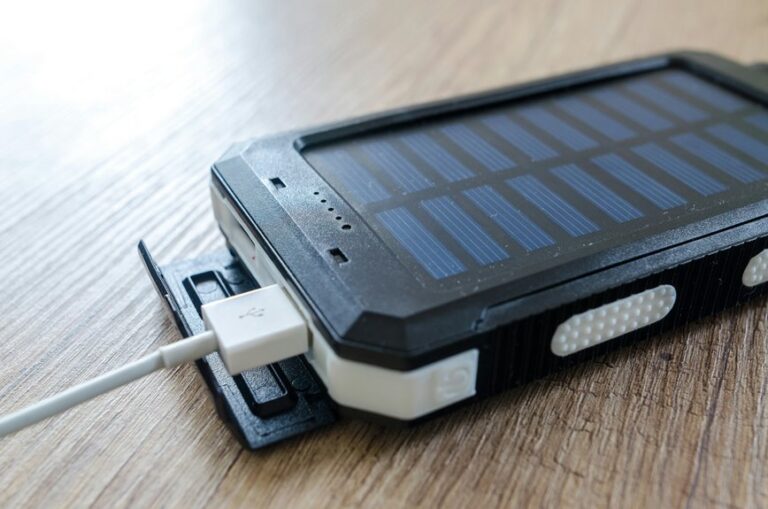
You’d be wise to avoid assuming every port plays nicely with every device. Whenever you match a solar power station’s USB-A, USB-C, AC, or DC outputs to the load’s voltage, current, and surge demand, you reduce waste and protect equipment. The details can look routine, but one mismatch can change what runs, what charges, and what stalls—so the next choice matters more than it initially appears.
Common Solar Power Station Output Ports
XT60 and XT60i dominate EcoFlow and Anker units, while DC7909 and DC8020 serve many Jackery systems.
DC5521 appears on smaller Renogy-style setups, and Anderson ports support Goal Zero.
You should check connector pin types, because an extra sense pin on XT60i can authorize higher charging limits.
Whenever your panel uses MC4 leads, panel to port adapters let you bridge to the correct input without improvising wiring.
Verify polarity, then compare Voc and input current against the station spec before you connect.
Provided the interface, voltage, and amperage line up, you’ll charge safely and stay in the compatible group.
USB-A Ports for Phones, Fans, and Lights
USB-A ports usually give you a simple 5V output for low-power devices, so you can run phones, fans, LED lights, and small accessories without needing an inverter. You plug in gear that fits the port’s current limit, and you keep your setup efficient and familiar.
| Device | Typical Use |
|---|---|
| Phone | Daily charging |
| Fan | Personal cooling |
| LED light | Emergency lighting use |
For low power accessories, check each cable and device label before you connect it. Whenever the station lists multiple USB-A outputs, you can share power across your group more safely, but total draw still matters. These ports suit night use, camp tasks, and backup operation whenever you want reliable, quiet power.
USB-C Ports for Fast-Charging Laptops
Whenever you use a USB-C output for a laptop, you need to confirm the port’s Power Delivery wattage, because low-wattage output won’t sustain fast charging.
You also need to match the laptop’s required voltage and current profile to the station’s USB-C specification.
Provided the values align, you’ll get stable, efficient charging without throttling or shutdowns.
Power Delivery Wattage
For fast-charging laptops, a solar power station’s USB-C Power Delivery output should meet both the laptop’s negotiated wattage and voltage profile, since many systems won’t charge reliably if the port is undersized or limited to a lower PD tier. You’ll get the best results whenever the station offers enough headroom above your laptop’s peak draw, because that reduces negotiation dropouts and improves battery efficiency. Provided that your unit supports output prioritization, assign the highest-PD USB-C port to the laptop so shared loads don’t steal wattage.
A 100W or 140W PD port usually covers modern ultrabooks, while workstation-class machines might need more. Check that the port can sustain the requested power continuously, not just in short bursts. Upon matching wattage precisely, you stay in the group of users who charge quickly and confidently.
Laptop Compatibility Checks
After matching wattage, you still need to verify that the station’s USB-C port fits your laptop’s charging profile, because power alone doesn’t guarantee compatibility.
You should confirm USB-C Power Delivery support, especially the voltage steps your laptop expects, such as 5V, 9V, 15V, or 20V. If the station can’t complete port voltage negotiation, charging may default to a slow rate or stop entirely.
Check whether your laptop needs 45W, 65W, 100W, or more, and make sure the station’s continuous output meets that demand. You’ll also want to review battery charging safeguards, because some laptops limit intake during thermal stress or high state of charge.
When specs align, you can plug in confidently and stay part of the fast-charge ecosystem.
AC Outlets for Household Electronics
You can power household electronics through the station’s AC outlets, but you need to match each device’s wattage and surge demand to the inverter rating.
You’ll typically use standard AC sockets, yet output limits vary by model, so check continuous power, peak load, and waveform compatibility before connecting. This determines whether you can run items like lamps, fans, chargers, or small appliances without triggering overload protection.
Compatible Household Devices
When the solar power station’s AC inverter is active, it can run household electronics that match its continuous wattage and surge limits, including phones, laptops, Wi‑Fi routers, fans, small TVs, CPAP machines, and LED lights. You can also count on kitchen appliance support for low-draw items like blenders or coffee makers, and garage tool backup for chargers, drills, and task lights.
- Check each device’s running watts against the inverter rating.
- Confirm surge demand before startup, especially for motors or compressors.
- Prioritize essential loads so you stay connected, comfortable, and prepared.
You’ll get the best results whenever you group compatible devices via power need and use them intentionally. That way, you protect the station, extend runtime, and stay part of a reliable off-grid routine with confidence.
Outlet Types And Limits
On the AC side, outlet type and inverter limit determine what household electronics a solar power station can actually support. You’ll usually see pure-sine AC sockets sized for 120V or 230V regions, so check outlet voltage limits before you plug in. Match the device load to the inverter’s continuous wattage, not just its surge rating.
| Outlet type | Typical use |
|---|---|
| AC 120V | Lamps, routers |
| AC 230V | Chargers, fans |
| USB-C PD | Laptops, tablets |
| DC barrel | Small appliances |
If your station includes multiple ports, you belong with users who verify port type safety first, then add up total draw. Stay below the inverter ceiling, and you’ll protect efficiency, reduce heat, and avoid shutdowns during real-world use.
DC Car Ports for 12V Devices
DC car ports let a solar power station feed 12V accessories through a standard automotive socket, but the output still has to stay within the device’s voltage and current limits. You can plug into vehicle accessory sockets whenever your gear expects stable DC power, and you’ll feel at ease understanding the fit is familiar.
- Check the label on your 12v appliance connectors for 12V nominal input and amperage draw.
- Compare that draw with the port’s rated output, because overloads can trigger protection.
- Use the correct plug and polarity, then verify operation before you rely on it.
If you’re part of a mobile-power setup, this port helps your equipment stay compatible without adapters. Keep the load modest, and you’ll maintain efficient, predictable delivery.
Solar Power Station Ports for CPAP Machines
Because CPAP units often expect stable low-voltage DC power, you need to match the station’s output port, voltage, and current to the machine’s input spec before you connect anything. Use the manufacturer’s DC cable, then confirm polarity and plug type. Many CPAP systems run cleanly from XT60, XT60i, or DC barrel outputs when the station’s voltage stays inside the device’s range and the current limit exceeds startup draw.
Since you’re building CPAP battery backup, check the display or app for steady output, not just peak wattage. For portable oxygen support, keep the station on a regulated port and avoid adapters that introduce losses. You’ll fit in with prepared users once you verify specs, test runtime, and keep a spare cable ready for the night.
Devices That Should Not Use AC Outlets
When a device already runs on DC, you shouldn’t route it through an AC outlet unless you have no direct-port option. You’d add inverter standby drain and extra conversion losses, and your system would work harder for no gain. Choose the native output whenever you can; that’s the efficient path your group should trust.
- DC electronics: phones, tablets, routers, and CPAP units usually perform best on direct DC ports.
- Low-voltage appliances: anything with a matching barrel, XT60, or USB input should avoid AC conversion.
- Resistive heat devices: kettles, heaters, and similar loads belong on AC only whenever the station explicitly supports them.
Match Wattage To Your Device’s Needs
Check your device’s power draw against the station’s continuous output rating before you connect anything, since the battery can only supply so many watts at once. You should size the battery around the load’s peak and sustained demand, not the label alone.
If your gear pulls 300W continuously, choose a station that can deliver more than that with headroom for startup surges. That same calculation guides battery sizing for longer runtime and solar panel pairing for faster recovery.
A panel array can refill the pack only if the charge path accepts its wattage, so align input limits with your recharge plan. You’ll fit better with a system that matches real demand, because it runs cooler, wastes less energy, and keeps your setup dependable.
Why Output Voltage Matters
Output voltage matters because your solar panel’s Voc and your power station’s input window have to overlap for charging to start safely. You need that match so the controller can manage voltage regulation and keep output stability under changing sunlight. When the voltage sits too low, charging won’t begin; when it rises too high, protection cuts in and you lose usable energy.
In practice, check the label, then compare it with your station’s allowed range.
1. Confirm Voc stays inside the input window. 2. Verify the port type, such as XT60, XT60i, or 8mm. 3. Watch the LCD or app for stable charging feedback.
When you do this, you stay in control, avoid guesswork, and join the group of users who get reliable, efficient solar charging.
Charging Multiple Devices At Once
When you charge multiple devices at once, you have to account for each port’s voltage and current limits so the total load stays within the station’s output budget.
You’ll get the most stable performance when you distribute high-draw devices across separate ports instead of stacking them on one output stage.
If you exceed a port’s rated load, the station can throttle, shut down, or reduce charging efficiency.
Simultaneous Device Charging
Simultaneous charging from a solar power station only works reliably when the station’s total output budget is shared within its rated limits, because each port still has to respect the unit’s voltage, current, and connector specs. You can treat this as battery sharing and parallel output coordination, not unlimited power.
- Check each device’s input range initially.
- Confirm the combined draw stays under the station’s output ceiling.
- Match the port type and cable so every device negotiates cleanly.
When you keep the load inside spec, you and your gear stay in the same performance group: stable, efficient, and protected. If one device demands too much, the station might reduce output or stop charging, so verify the display or app before you plug in.
Port Load Balancing
Balancing multiple ports means you must allocate the station’s available wattage across devices so no single output exceeds its rated voltage, current, or connector limits. You’ll get the best results as soon as you map each load initially, then apply load distribution strategies that reserve high-draw ports for essential gear and shift low-draw accessories to secondary outputs.
Check each port’s per-channel rating, because shared rails can trip protection whenever one device pulls too much current. Use battery reserve prioritization to keep critical tools powered longer, especially while you’re running lights, phones, and a router together.
Watch the display for live wattage, and reduce nonessential loads before the station throttles output. That way, you stay within spec, protect your equipment, and keep your setup stable, efficient, and ready for the group.
Cables And Adapters That Improve Compatibility
Should your panel connector doesn’t match the station input, the right adapter cable can make the connection work without compromising electrical compatibility. You still need to align polarity, voltage, and current so your system behaves predictably and you feel confident in your setup.
Use MC4 adapter compatibility to bridge panels to XT60, XT60i, or 8mm inputs, and choose XT60i charging support whenever your EcoFlow unit needs the extra pin signal for higher PV intake.
- MC4 to XT60: fits EcoFlow, Anker, and Zendure inputs.
- MC4 to XT60i: enables higher-charge negotiation on supported EcoFlow stations.
- MC4 to DC7909 or DC5521: matches Jackery and Renogy-style ports.
Check +/− markings, then verify Voc and Imp before you connect against the station limits.
How To Choose The Right Output Ports
Choose the output port that matches your station’s input first, because the connector type determines whether the panel can charge at all. You should confirm XT60, XT60i, DC7909, DC8020, or DC5521 labels before you connect, since port labeling clarity reduces mistakes and helps you stay in the informed group.
Next, verify Voc and Imp against the station’s limits; over-voltage blocks charging, and excess current can trigger protection. In case you use adapters, match polarity and keep output port safety front and center.
For EcoFlow, XT60i can support higher PV input; for Jackery, an 8mm port fits best. Check the manual, then compare the LCD or app readings after setup. Upon the port, voltage, and current align, you’ll charge efficiently and confidently.
Frequently Asked Questions
Which Output Port Works Best for Gaming Consoles?
XT60 is the best output port for gaming consoles if your power station supports it. Check the voltage and current first. HDMI output still matters for your display setup, not the power port itself.
Can I Use Two USB-C Devices on One Port?
Usually, you cannot safely run two USB C devices from one port without a dual USB C splitter or hub designed for power and data handling. USB C negotiation limits how power is shared, so check that any splitter or hub matches the wattage your devices need.
Do Output Ports Change Charging Speed by Battery Level?
Yes, output ports can seem faster or slower as battery level changes because charging curves and voltage regulation affect current draw. You may see fast charging at first, then a gradual slowdown as the battery gets fuller.
Can I Power a Router and Modem From One DC Port?
Yes, you can power both from one DC port with a splitter if the combined current draw stays within the supply limit. Check that the router voltage matches and that the modem receives steady power, then confirm each device’s input rating first.
Are Output Ports Safe to Use in Humid Outdoor Conditions?
Not unless you confirm the port is rated for humidity and uses weatherproof connectors. Use sealed enclosures, tight fitting plugs, and keep your hands dry; moist air will not shock you like a snake, but condensation can still cause shorts and corrosion.