

A single lightning strike or utility switching event can shove thousands of volts through a home’s wiring in a heartbeat, and most standard outlet strips simply aren’t built for that kind of punishment. The right setup layers protection at the panel and at the outlets that matter most, so the fridge, HVAC, entertainment stack, and home office gear don’t all become casualties of the same afternoon storm. I pulled together ten options that span that layered approach, from heavy-duty Type 1 panel-mount units to everyday power strips, so the list covers both the electrician-installed gear and the plug-in backups.
A Snapshot Of The Selections

Bad Wolf SP240V50KA Whole House Surge Protector 50kA Type 1

Amazon Basics 6-Outlet Surge Protector Power Strip 10-Pack

GE 6-Outlet Surge Protector Power Strip 6ft Cord

Bad Wolf SP240V100KA-A Whole House Surge Protector 100kA

Belkin 12-Outlet Surge Protector 4320 Joules 8ft
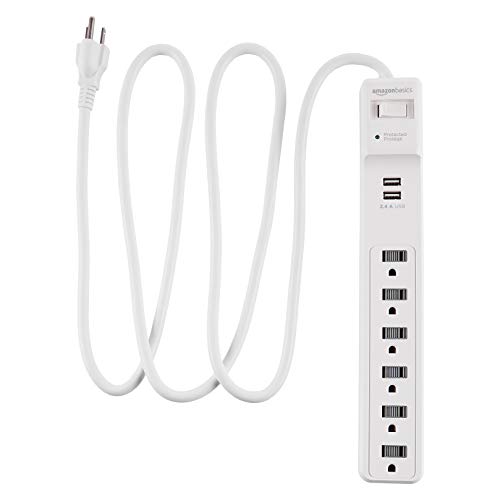
Amazon Basics 6-Outlet Power Strip with 2 USB Ports
Bad Wolf SP240V50KA-A Whole House Surge Protector NPT Mount

Bad Wolf SP240V225KA-A Whole House Surge Protector 225kA EMP

Bad Wolf SP240V200KA Whole House Surge Protector 200kA

Bad Wolf SP240V200KA-A American Made Panel Mount Surge Protector
More On The Choices That Made The List
The SP240V50KA sits at the front door of whole-house protection, which is exactly where most homeowners want to start. It’s a Type 1 SPD, meaning it can be installed on the line side of the main breaker, so surges get stopped before they ever enter the panel. Built around a 120/240VAC split-phase system with a simple three-wire L1, L2, and Ground hookup, it takes the kind of input most residential services already provide.
The 50kA per phase rating handles the vast majority of lightning-induced and utility-switching surges without flinching. Compared to the plug-in strips lower on this list, this unit trades outlet count for genuine panel-level coverage. The NEMA 4X enclosure allows indoor or outdoor mounting, which helps when the breaker panel sits on an exterior wall.
Practical Advantages
- 50kA per phase capacity covers most residential surge threats
- Type 1 installation on the line side of the main breaker stops surges early
- NEMA 4X enclosure supports indoor and outdoor placement
- Three-wire design fits standard split-phase panels
- Made in the USA for those who prioritize domestic assembly
- LED status indicator helps verify protection is active at a glance
Things To Consider
- Requires professional installation by a licensed electrician
- No plug-in outlets, so it’s not a substitute for power strips
- Higher kA options exist for areas with frequent severe storms
Feature Snapshot
Made For
Homeowners upgrading from plug-in strips to true panel-level protection for the first time.
Consider Something Else When
The Belkin 12-Outlet Surge Protector makes more sense for a workstation that just needs clean power at the desk.
For outfitting several rooms at once, the Amazon Basics 10-pack delivers the kind of coverage most homes actually need without making each outlet a budget decision. Six grounded outlets per strip handle lamps, chargers, and small appliances with room to spare, and the 6-foot cord reaches behind furniture without forcing a rearrangement.
The 790-joule rating is modest, which I think suits this product for everyday electronics rather than a high-end home theater. A red LED light signals active protection so a glance tells you the strip is doing its job. The 15-amp circuit breaker adds a second line of defense against overloads, which matters in older homes where wiring wasn’t designed for today’s plug density.
Noteworthy Benefits
- Ten-strip pack covers multiple rooms in one purchase
- 790-joule rating suits everyday electronics and small appliances
- Built-in 15-amp circuit breaker for overload protection
- 6-foot cord reaches behind most furniture
Worth Noting
- Lower joule rating than premium single strips
- No USB ports, so phone chargers still need a brick
Right Fit For
Anyone moving into a new home who wants surge protection in every key room without buying piece by piece.
Look Elsewhere When
The Amazon Basics 6-Outlet Power Strip with 2 USB Ports is a smarter single-room buy when bedside charging matters.
GE has been a familiar name in electrical accessories for decades, and this 6-outlet strip carries that reputation into the surge-protection aisle. The 6-foot cord gives enough slack to place the strip where it’s most useful, and the six grounded three-prong outlets turn a single wall plug into a practical hub for a desk or workbench.
The 800-joule rating sits comfortably above the Amazon Basics strip from earlier, and the simple outlet layout handles a mix of plugs and adapters without crowding. For a workshop, garage, or home office, this is the kind of strip you set up once and forget about.
Strong Points
- 800-joule protection rating exceeds most budget strips
- Trusted brand with a long history in electrical accessories
- Six grounded outlets handle mixed plug sizes
- 6-foot cord provides flexible placement options
- Turns one wall outlet into a centralized power hub
Trade Offs
- No rotating outlets for bulky charging bricks
- No USB ports means separate chargers are still needed
Best Suited To
Home offices and workshop benches that need a reliable outlet hub from a recognizable brand.
Skip It When
The Belkin 12-Outlet Surge Protector with rotating outlets handles dense charging-brick arrangements much better.
The SP240V100KA-A doubles down where the 50kA model starts to feel tight, especially in regions with frequent lightning or unreliable grid switching. The 100kA rating absorbs larger surge events, and the dual ETL listing to UL 1449 5th Edition and CSA C22.2 No. 269.1 and 269.2 covers both U.S. and Canadian code requirements.
Type 1 installation puts protection on the line side, and the NEMA 4X IP67 enclosure shrugs off weather during outdoor panel installations. Compared to the entry-level Bad Wolf earlier, this unit trades affordability for serious capacity.
Everyday Wins
- 100kA capacity handles severe storms and grid events
- UL and CSA dual listing for North American compliance
- Type 1 SPD installs on the line side of the main breaker
- IP67-rated NEMA 4X enclosure handles dust and water jets
- Works with 120/240V split-phase residential services
Points To Note
- Professional installation adds to total project cost
- Higher kA units exist for very high-exposure locations
Quick Facts
Who Will Love This
Homeowners in lightning-prone regions who want verified safety listings and stronger surge capacity than entry-level panels offer.
Reach For A Different Pick When
The Bad Wolf SP240V50KA covers most average-risk neighborhoods without the step up in cost.
The Belkin is the strip I think of when an outlet wall has turned into a charging jungle. Twelve total outlets split between eight rotating positions and four standard ones mean bulky laptop bricks and tiny phone plugs stop fighting for space. The 4320-joule rating is the highest on this list for any plug-in strip, which is the kind of margin you want behind expensive workstations.
An 8-foot cord with a flat pivot plug slides behind desks and furniture without the awkward bend of a traditional wall plug. Compared to the 6-outlet Amazon Basics and GE strips, this one earns its place by solving the layout problem that other strips ignore.
Bright Spots
- 4320-joule rating tops every other strip on this list
- Eight rotating outlets accommodate bulky charging bricks
- 12 total outlets handle full workstation setups
- Flat pivot plug fits tight spaces behind furniture
- 8-foot cord reaches across most rooms
Honest Caveats
- Larger footprint than basic 6-outlet strips
- Premium rating comes at a higher cost per strip
Perfect Match For
Home offices, recording setups, and gaming stations that pile up monitors, laptops, and charging bricks in one place.
Swap It Out When
The GE 6-Outlet Surge Protector is a leaner fit for a small desk that just needs a few grounded outlets.
The Amazon Basics USB strip solves a specific frustration, and it solves it without fanfare. Two USB ports sit alongside six grounded outlets, so phones, tablets, and e-readers charge straight from the strip instead of hogging outlet space with wall bricks. The white finish blends into most bedrooms and kitchens better than the typical black strip.
The 1000-joule rating lands between the Amazon Basics 10-pack and the GE strip, which makes this a sensible bedside or kitchen-counter upgrade. A 6-foot cord gives slack for placement on a nightstand or counter without leaving outlets stranded behind furniture.
What Pays Off
- Two USB ports reduce reliance on wall chargers
- 1000-joule rating exceeds standard budget strips
- White finish blends into bedroom and kitchen decor
- 6-foot cord reaches nightstands and counters
- Six grounded outlets for lamps, clocks, and small appliances
Room For Improvement
- No rotating outlets for oversized plugs
- USB ports charge at standard speeds, not fast-charge rates
Built With In Mind
Bedrooms and kitchens where USB charging and clean aesthetics matter more than outlet count.
A Better Fit Elsewhere
The Belkin 12-Outlet Surge Protector handles workstations that need more ports than this single strip offers.
The SP240V50KA-A is what the original SP240V50KA looks like after an electrician gets involved. A built-in half-inch NPT mounting stud lets the unit thread directly onto a compatible panel or into rigid conduit, which keeps the wiring short and tidy. For installers who care about clean conductor routing, that half-inch detail makes the difference between a tidy retrofit and a tangled one.
The 50kA per phase capacity mirrors the entry-level Bad Wolf, so you get the same surge headroom in a more installer-friendly package. ETL listing to UL 1449 5th Edition backs up the safety claims.
Notable Gains
- Half-inch NPT stud mounts directly to panel knockouts
- Short conductor routing keeps installation clean
- 50kA per phase matches the entry-level Bad Wolf capacity
- Type 1 SPD installs on the line side of the main breaker
- Made in the USA assembly
Small Caveats
- Requires compatible panel knockouts and conduit parts
- Professional installation expected for this model
Technical Highlights
Whose Shelf It Belongs On
Electricians and hands-on homeowners running their own panel work who want a clean NPT conduit connection.
Not Your Match When
The Bad Wolf SP240V200KA-A delivers far more surge capacity for panels serving large homes or generator-fed systems.
The SP240V225KA-A is the heaviest hitter in this roundup, and that word is doing real work here. A 225kA surge capacity dwarfs the 50kA and 100kA Bad Wolf units, and the EMP protection angle adds a layer most residential SPDs don’t claim. For homes in lightning corridors or anywhere a generator or solar array feeds back into the panel, the extra capacity isn’t a luxury.
A four-wire L1, L2, N, and G design provides a true ground reference rather than a chassis-bonded approach, and the NEMA 4X IP67 enclosure handles outdoor panel installations. The half-inch NPT side-mount fitting keeps wiring short, just like the 50kA panel-mount version earlier.
Notable Upsides
- 225kA capacity handles the largest residential surge events
- EMP protection adds resilience beyond standard SPDs
- Four-wire design supports true L1, L2, N, and G routing
- IP67 NEMA 4X enclosure for outdoor panel locations
- ETL listing to UL 1449 backs up the safety claims
Areas To Watch
- Cost is higher than the 50kA and 100kA Bad Wolf units
- Requires electrician installation and panel compatibility checks
- EMP rating is rarely needed in suburban grid environments
Who Should Grab It
Rural homeowners, off-grid setups, and properties with frequent storms or generator backup who want serious surge headroom.
Another Choice May Suit
The Bad Wolf SP240V100KA-A handles most suburban storms without the step up in capacity and cost.
The SP240V200KA is the Bad Wolf unit I’d point to for the widest range of residential and light-commercial uses. The 200kA rating sits just below the EMP-focused 225kA unit while still delivering meaningful headroom for solar, wind, generator, RV, and EV charging applications. Dual UL and CSA listings make it a fit on either side of the border.
The NEMA 4X IP67 enclosure tolerates weather, so it lives happily on exterior panels, irrigation pump houses, or detached workshops. Compared to the 50kA and 100kA models earlier, this one earns its place through application breadth.
Useful Strengths
- 200kA capacity for high-exposure installations
- Works with solar, wind, generator, and EV charging systems
- UL and CSA dual listing for North American projects
- NEMA 4X IP67 enclosure handles outdoor mounting
- Type 1 SPD installs on the line side of the main breaker
Points To Keep In Mind
- Heavier upfront cost than basic residential SPDs
- Requires professional installation and panel verification
Feature Card
Right Fit For
Properties with solar arrays, backup generators, or EV chargers that need high-capacity panel protection in one unit.
Where A Sibling Pick Shines
The Bad Wolf SP240V50KA is the right choice for typical neighborhoods without specialized power sources on site.
The SP240V200KA-A wraps the 200kA capacity from earlier into the panel-mount form factor that electricians actually prefer. A half-inch NPT side-mount fitting drops straight into a standard knockout on the panel or equipment enclosure, which keeps wire runs short and the install tidy. The four-wire L1, L2, N, and G design mirrors the larger 225kA unit.
For pro-grade retrofits on existing panels, the combination of capacity, mounting style, and American assembly is hard to beat. It pairs well with the Bad Wolf SP240V50KA-A on projects where a homeowner wants one high-capacity line-side unit plus supplemental protection downstream.
What Works In Its Favor
- 200kA capacity in a panel-mount form factor
- Half-inch NPT side-mount for direct panel knockout install
- Four-wire design supports true neutral and ground routing
- NEMA 4X IP67 enclosure handles outdoor panels
- American-made assembly for domestic sourcing preference
Factors To Consider
- Higher price than non-panel-mount residential SPDs
- Professional installation required for safe wiring
Best Suited To
Pros and serious DIYers upgrading an existing service panel who want high-capacity protection with a clean mechanical install.
Look Elsewhere When
The Bad Wolf SP240V50KA is the more sensible starting point for a first panel SPD on a typical home.
Picking A Surge Protector That Fits Your Home
A whole-house surge protector only earns its keep when it matches the panel it lives in and the gear it shields. The most useful first question is whether the home actually needs panel-level protection or just better outlet strips, and the honest answer often turns out to be some of each.
For panel-mounted units, three numbers carry most of the decision. The kA rating tells you how big a surge the device can absorb, and 50kA handles most homes while 100kA and above fits lightning-prone regions or generator-backed systems. Type 1 SPDs install on the line side of the main breaker, while Type 2 devices sit on the load side, and that placement difference shapes how much of the home gets protected. Voltage compatibility matters too, and 120/240VAC split phase covers standard North American residential service.
For plug-in strips, joules tell the story. A 790-joule strip handles lamps, clocks, and small electronics, while a 4320-joule unit like the Belkin stands between expensive workstations and a bad day. Outlets and cord length matter more than people expect, especially behind desks and entertainment centers. Rotating outlets save space when charging bricks hog adjacent receptacles, and USB ports remove a layer of clutter from nightstands and counters.
For installers and pros, NPT mounting and conduit-friendly designs shorten wire runs and create a tidier panel. NEMA 4X IP67 enclosures expand the install options to outdoor service equipment, irrigation pump houses, and detached workshops.
Layered Protection And Picking The Right Tier
For most homes, the practical approach pairs a Type 1 panel SPD with a few high-quality outlet strips at the most expensive electronics. Spending more on a higher-kA unit makes sense in lightning-prone areas, homes with generators or solar, and rural properties on long utility lines. In quieter suburban grids, the entry-level Bad Wolf paired with a Belkin or GE strip usually covers the same risks at lower cost.
What To Watch For Before You Buy
Common Shopping Slip Ups
The biggest trap is treating a power strip and a panel SPD as interchangeable. They protect different parts of the electrical system, and a 790-joule strip can’t stop a 30kA lightning-induced surge at the panel. Another common mistake is matching kA ratings to advertising rather than exposure, since a 100kA unit overspec’d for a calm suburb mostly buys unused capacity.
Why Higher-Tier Models Cost More
The premium in 100kA, 200kA, and 225kA units comes from heavier surge components, dual safety listings, weatherproof enclosures, and the extra wiring room a panel-mount form factor requires. The upgrade pays off most in lightning-prone regions, off-grid systems, and homes with solar, generators, or EV charging where surges can come from the utility side and from on-site sources.
Frequently Asked Questions
What kA rating do I need for a typical home?
For most suburban homes without severe lightning exposure, a 50kA Type 1 panel SPD covers the common surge events. Stepping up to 100kA or 200kA makes more sense in lightning corridors, rural areas, or homes with backup generators and solar arrays that can feed surges back into the panel.
Can a power strip alone protect my whole house?
No, a surge protector power strip only shields devices plugged into it. The wiring, panels, and hardwired equipment in the rest of the home remain exposed to surges entering at the service entrance, which is why a panel-mounted Type 1 SPD paired with outlet strips provides layered coverage.
Do I need an electrician to install a whole-house surge protector?
Yes, panel-mounted Type 1 SPDs work on the line side of the main breaker and require working inside the service panel. A licensed electrician handles the wiring safely, verifies compatibility with the panel, and ensures the installation meets local electrical code.
Are Type 1 and Type 2 SPDs interchangeable?
They serve different positions in the system. Type 1 installs on the line side before the main breaker and stops surges at the service entrance. Type 2 installs on the load side and adds a second layer of protection for branch circuits, and many homes benefit from using both.
How long does a whole-house surge protector last?
It depends on how many surges the device absorbs and how large they are. Most modern SPDs include an LED status indicator that shows whether protection is still active, and owners commonly replace the unit when that indicator changes or after a major nearby lightning event.
Bottom Line
The right surge protection strategy pairs a panel-mounted Type 1 SPD with a few well-chosen outlet strips at the gear that matters most. For most homes, the Bad Wolf SP240V50KA and a Belkin or GE strip handle everyday exposure, while lightning-prone and off-grid properties get more headroom from the 100kA, 200kA, and 225kA Bad Wolf units. Match the kA rating to your risk profile, and pick the strips that fit the rooms where you actually plug things in.
