

I’ve spent enough time crawling under desks, wiring up generators, and untangling stiff cords in cold garages to know that not every spool of wire earns its place on a shelf. Some cables flex beautifully in a January worksite; others turn brittle the first time the temperature drops. This list pulls together nine wire and cable options I think most people, whether you’re outfitting a home workshop, rigging a stage setup, or just feeding a finicky Apple charger across the room, will actually find useful. I’ll call out the strengths, the honest trade-offs, and where each one fits best.
The Essentials At A Glance

Carol 50′ 8/4 SOOW Portable Power Cable
Powertronics 50 Ft 10/4 Rubber SOOW Cord

Carol 75 FT 8/4 SOOW Portable Power Cable

Apple Power Adapter Extension Cable
KnuKonceptz Kolossus Flex 1/0 AWG OFC Cable
84100 8/4 SOOW 100 ft Portable Power Cable

AFences 1/8 Inch Stainless Steel Cable 100FT

Carol 50′ 4/4 SOOW Portable Power Cable

Portable Power 25′ 6/4 SOOW Cable
A Breakdown Of The Leading Choices
Carol’s 50-foot 8/4 SOOW cord is the kind of workhorse cable that earns its reputation by being dragged across concrete, coiled in truck beds, and unspooled in freezing rain without complaint. The 8-gauge, four-conductor design handles serious portable loads, and the CPE (chlorinated polyethylene) jacket shrugs off oil, abrasion, and sunlight in equal measure. Inside, the EPDM (a synthetic rubber known for heat and weather tolerance) insulation around fine-stranded copper keeps the cable flexible even when temperatures swing.
SOOW, by the way, stands for Service Oil-resistant Outer/Oil-resistant Weather-resistant jacket, a rating system that basically tells you the cord was engineered for the abuse industrial settings dish out. If you run a fabrication shop, stage events, or simply need a dependable cord for outdoor tools, this one is hard to argue with.
Where It Helps
- 600V rating and +90°C temperature ceiling suit demanding machinery and prolonged high-load runs.
- CPE jacket plus EPDM insulation resist oil, solvents, flame, and UV exposure in outdoor settings.
- Fine-stranded copper keeps the cable pliable for tight bends around equipment or staging.
- UL62 compliance gives contractors a recognized safety baseline for jobsite work.
- 50-foot length balances reach with manageable coil weight for solo transport.
Things To Consider
- 50 feet may fall short on larger sites where you’d ideally want 75 or 100 feet of slack.
- Heavier gauge adds noticeable weight; expect some muscle when carrying the full coil.
Key Specs
Who It Suits Best
Contractors, stage technicians, and serious DIYers who need a flexible, oil-resistant cord for repeated outdoor or shop use.
Look Elsewhere When
The Carol 75 FT 8/4 SOOW is a better match when your setup routinely requires longer reaches without splicing extensions.
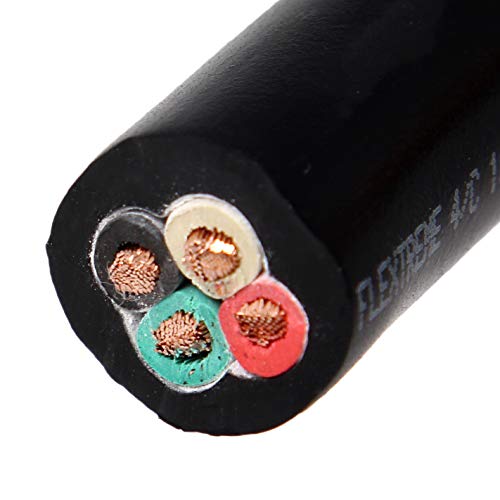
Powertronics’ 50-foot, 10-gauge rubber SOOW cord leans into mobility over maximum current capacity, which is exactly what most RV owners, generator users, and touring event crews actually want. The four-conductor layout is compatible with twist-lock plugs ranging from L14-30 to 18-30, so it slots into a wide variety of common hookups without rewiring.
For tailgating setups, food-truck power feeds, or backup generator connections to a home transfer switch, the lighter 10-gauge profile makes the cord easier to coil and carry than heavier 8-gauge alternatives. The rubber jacket adds water resistance, which matters when you’re running across damp grass or wet pavement.
The Good Stuff
- Compatible with multiple NEMA (National Electrical Manufacturers Association) twist-lock configurations, including L14-30 and 14-30 style plugs.
- Water-resistant rubber jacket holds up to outdoor storage and wet ground runs.
- UL and CSA (Canadian Standards Association) ratings at 600V support portable power equipment.
- 10-gauge construction keeps weight manageable for transport between events or campsites.
Points To Keep In Mind
- 10 gauge is thinner than the 8-gauge Carol cord above, so it isn’t suited for the heaviest continuous industrial loads.
- You’ll need to source compatible plugs separately if you’re terminating it yourself.
Whose Shelf It Belongs On
RV owners, mobile food vendors, and homeowners wiring a generator into a transfer switch who want portable flexibility.
A Better Fit Elsewhere
The Carol 50′ 8/4 SOOW Portable Power Cable suits higher-amperage shop tools better, when 10 gauge feels underbuilt.
This 75-foot Carol cable shares the same 8/4 SOOW DNA as the 50-footer earlier on the list, but adds an extra 25 feet that can be the difference between reaching a distant outlet and rigging up an unsightly chain of extensions. The construction, with fine-stranded copper conductors and a tough CPE outer jacket, mirrors its shorter sibling.
If you’ve ever set up a generator at the far end of a driveway or run power to a backyard workshop, you know 50 feet starts to feel stingy. The 75-foot option is the sweet spot for many residential and light-commercial jobs without stepping all the way up to a 100-foot spool.
What Stands Out
- Extra reach reduces reliance on multiple connected cords, which is both safer and less hassle.
- Same oil- and moisture-resistant build as the 50-foot Carol, so longevity carries over.
- Excellent flexibility at low temperatures makes winter outdoor use more workable.
- Sunlight-resistant jacket protects against UV degradation when stored outside between jobs.
Worth Noting
- The longer coil is bulkier to store; you’ll want a reel or hanger to keep it tidy.
- For purely indoor short runs, much of the length goes unused.
Right Fit For
Homeowners with detached garages or outbuildings, plus event crews running power to distant stages or food booths.
Skip It When
The 25-foot Portable Power 6/4 SOOW Cable is a smarter grab for tight shop spaces where 75 feet is overkill.
Stepping out of the industrial cord world for a moment, Apple’s 1.8-meter Power Adapter Extension Cable solves the very specific, very real problem of Apple’s power bricks having awkwardly short built-in cables. The duckhead-style adapters that ship with MacBooks and iPads rarely reach from a wall outlet to a comfortable desk or bedside position.
It’s a simple AC extension designed to work with MagSafe, MagSafe 2, and a wide range of Apple USB-A and USB-C power adapters from 10W up through 140W. If you’ve ever draped a charging cable across a doorway or balanced a brick on a stack of books, this is the fix.
Positive Points
- Compatible with a long list of Apple adapters, including the higher-wattage USB-C models.
- 1.8-meter length adds flexibility without creating excess slack to manage.
- Designed and tested by Apple, so fit and safety align with first-party expectations.
- Lightweight enough to toss in a laptop bag for travel and hotel use.
Honest Caveats
- Limited to Apple adapters, so it isn’t a universal household extension solution.
- Pricier per foot than generic extension cords; you’re paying for the Apple-specific compatibility.
Made For
MacBook, iPad, and iPhone owners whose wall outlet sits just a little too far from where they actually work or sleep.
Consider Something Else When
The Powertronics Rubber SOOW Cord suits anyone needing 600V portable power rather than a quiet desk-side extension.
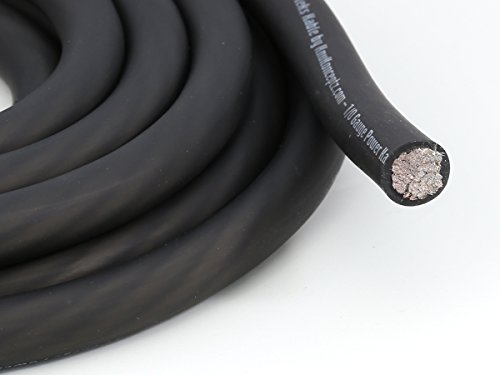
KnuKonceptz’s Kolossus Flex shifts gears entirely: this is a 1/0 AWG (a “one-aught” gauge, very thick, used for high-current runs) oxygen-free copper power cable aimed squarely at car audio, marine, and solar installations where serious current flow is the whole point. The 20-foot pre-cut length suits most vehicle amplifier runs without leaving yards of excess to hide.
What stands out is the strand count: 5,145 individual tinned copper strands packed into a single conductor, all wrapped in a soft-touch matte PVC (polyvinyl chloride) jacket. That combination is meant to deliver maximum current capacity while staying flexible enough to snake through a firewall or under trim panels.
Key Advantages
- Exceeds American Wire Gauge standards, so the 1/0 rating reflects real cross-sectional copper, not marketing fluff.
- OFC (oxygen-free copper) construction supports cleaner current flow for demanding amplifiers.
- Tinned strands resist corrosion, which matters in marine and high-humidity engine bays.
- Matte PVC jacket is genuinely pliable, easing routing through tight automotive spaces.
Trade Offs
- 1/0 gauge is overkill for anything but high-power audio or solar banks; it’s heavy and stiff compared to smaller cable.
- Only 20 feet is included; longer runs require additional purchases.
Best Suited To
Car audio enthusiasts, marine installers, and off-grid solar hobbyists running high-amperage 12V or 24V systems.
Reach For A Different Pick When
The Carol 50′ 4/4 SOOW Portable Power Cable is the right call for 120V/240V AC equipment rather than DC power runs.
The 84100 8/4 SOOW from the 100-foot reel is the cable you reach for when the job demands serious distance plus serious durability. Rated for 600V at 90°C, with strong resistance to oil, abrasion, water, and sunlight, it’s built for contractors running power to remote corners of construction sites or sprawling event grounds.
One caveat worth flagging: this particular cord is marked Non-UL, which means it hasn’t gone through Underwriters Laboratories’ certification process. That doesn’t automatically disqualify it for every use, yet jobs requiring strict inspection sign-offs may push you toward a UL-listed alternative.
Useful Strengths
- 100-foot length covers large sites from a single run, reducing connection points.
- Excellent aging and tensile strength help the cable hold up after years of coiling and uncoiling.
- Weather, ozone, and flame resistance broaden the working environments it can handle.
- Compatible with industrial equipment, hoists, and battery chargers out of the box.
A Few Limitations
- Non-UL listing may not pass inspection on regulated commercial jobs.
- At 100 feet, weight and bulk make a dedicated cable reel almost mandatory.
Quick Facts
Who Should Grab It
Contractors and property owners who need maximum reach for outdoor equipment without juggling multiple cords.
Not Your Match When
Inspected commercial work calls for the UL-listed Carol 50′ 8/4 SOOW Portable Power Cable instead.
This entry breaks from electrical cable entirely: the AFences 1/8-inch stainless steel wire rope is for hanging, rigging, and tensioning, not for carrying current. Built from 304 stainless steel in a 7×7 strand configuration (seven bundles of seven wires each), it offers a useful blend of flexibility and strength for outdoor architectural projects.
The included kit adds genuine value: 100 feet of cable, twelve M3 wire rope thimbles (small metal sleeves that protect the loop from wear), twenty-four aluminum crimping loops, and a cable cutter. For someone hanging string lights across a patio or running a sleek deck railing, that’s a complete starter package in one box.
Well-Handled Touches
- 304 stainless steel resists rust in rain, coastal air, and poolside humidity.
- 7×7 construction is flexible enough to bend around post corners without kinking.
- Thimbles and crimping loops included, so common DIY jobs don’t require a second parts order.
- The included cutter gets you started without tracking down specialty tools.
Possible Compromises
- 1/8-inch diameter suits light to medium loads; structural railing should use thicker cable.
- Aluminum crimps are easy to work with but less corrosion-resistant than steel alternatives in saltwater environments.
Perfect Match For
Homeowners tackling deck railings, garden trellises, string light spans, or other decorative outdoor rigging projects.
Where Another Pick Suits Better
The KnuKonceptz Kolossus Flex serves anyone who actually needs to carry current rather than support weight.
Carol’s 4/4 SOOW cord is a step up in current handling from the 8-gauge options earlier on the list. The thicker 4-gauge conductors are designed for serious equipment: welders, large battery chargers, hoists, and the kind of machinery that makes a thinner cord run hot and worried-looking. Four conductors give you flexibility for three-phase or split-phase wiring setups.
The trade-off is weight and stiffness, which is unavoidable at this gauge. For a stationary workshop where the cable lives on a reel or hanger, that’s fine. For hauling to remote sites every weekend, the lighter 8-gauge Carol cable is easier on the back.
Strengths Worth Knowing
- 4-gauge copper handles the kind of continuous loads that pop breakers on lighter cords.
- Resistance to oils, solvents, water, and sunlight supports indoor and outdoor use.
- Excellent tensile strength and elongation ratings reduce fatigue from repeated flexing.
- 50-foot length is workable for most shop layouts without leaving massive slack to manage.
Small Caveats
- Heavier than 8- or 10-gauge options, which adds effort when transporting the full coil.
- Overkill for household tools; a circular saw doesn’t need this much copper behind it.
Who Will Love This
Workshop owners running welders, large planers, or commercial battery chargers who need sustained high current.
Swap It Out When
The Powertronics Rubber SOOW Cord fits better when mobility and lighter weight matter more than maximum amperage.
Rounding out the list, the Portable Power 25-foot 6/4 SOOW cable lands in a useful middle ground: thicker than 10-gauge household cords, lighter than the heavy 4-gauge workhorses, and short enough to stay manageable for hobbyist use. The 6-gauge conductors handle mid-range power tools and small welders comfortably.
Twenty-five feet isn’t much, so this is the cable to grab when your outlet is close and your project is contained: a garage workshop, a single-room remodel, or a backyard setup within easy reach of a power source. Owners of larger properties will likely want the 50- or 75-foot Carol options for that extra running room.
Where It Delivers
- 6-gauge copper supports small welders, larger table saws, and EV (electric vehicle) charger adapters.
- Compact 25-foot length coils small for shelf or bin storage in a home garage.
- Compatible with industrial equipment, cranes, and portable appliances per spec.
- Lighter than 4-gauge cables, which helps when hauling it out for one-off projects.
A Few Limitations
- 25 feet is restrictive for yard work, detached outbuildings, or generator-to-house hookups.
- Mid-tier gauge won’t sustain the heaviest continuous industrial loads the 4-gauge Carol handles.
Feature Snapshot
Built With In Mind
Weekend hobbyists and homeowners running mid-range tools in a garage or small shop environment.
Another Choice May Suit
The Carol 75 FT 8/4 SOOW Portable Power Cable fits better when you need more reach across a yard or driveway.
What Matters Most Before Choosing Wire And Cables
Wire and cable shopping looks deceptively simple until you’re staring at three spools that all claim to handle your equipment. The first decision is always gauge, which is the thickness of the conductor and the biggest predictor of how much current (measured in amps) the cable can safely carry. Lower gauge numbers mean thicker wire and more capacity, but also more weight and stiffness.
The second decision is environment. Indoor-only cords can use lighter PVC jackets, while outdoor or jobsite runs benefit from CPE or rubber jackets rated for oil, sunlight, and water. SOOW-rated cords handle most industrial and outdoor situations; SJEOOW or SJOOW cords trade some ruggedness for flexibility in lighter-duty portable use.
Third, count the conductors. Four-conductor SOOW is standard for 120/240V split-phase equipment and many twist-lock plugs; you may need three-conductor or five-conductor variants for specialty applications. Finally, confirm listings: UL or CSA certification matters on commercial jobs where inspectors review the installation, and Non-UL cables should only be used where local code permits.
Key Considerations Across These Picks
Common Shopping Slip Ups
The single biggest mistake is underestimating length. Measure your worst-case run, including routing around obstacles, before ordering. Buying a 25-foot cord and then realizing you needed 50 means another purchase and a delay.
Another pitfall is mixing gauge ratings with equipment draw. A 16-gauge extension cord that handles a drill will overheat behind a space heater or small welder. Match the cord’s amp rating to the tool’s nameplate draw, and when in doubt, go thicker.
Where The Extra Money Goes
Higher-tier cables tend to spend the premium on jacket compounds and strand count rather than raw copper. A fine-stranded copper conductor with a CPE jacket costs more than a coarse-stranded cord with basic PVC, but it stays flexible in cold weather, resists jobsite abuse, and lasts years longer under real use. For occasional weekend duty, the entry tier is fine; for daily jobsite or commercial work, the upgrade usually pays for itself in cord-replacement savings alone.
Frequently Asked Questions
What does SOOW actually mean? SOOW is a cord designation where the letters describe the jacket and insulation ratings: S for Service, OO for oil-resistant insulation and oil-resistant outer jacket, and W for weather and water resistance. It’s a useful shorthand for portable cords built for harsh environments.
How do I choose between 8-gauge and 10-gauge cord? Match the gauge to the amperage of your equipment and the length of your run. Longer runs and higher amp draws both push you toward thicker (lower-gauge) wire. For most household tools, 10 gauge is plenty; for heavier equipment or long distances, step up to 8 gauge or thicker.
Is a Non-UL cable safe to use? Non-UL cables may be perfectly functional, but they haven’t been independently tested to UL standards. For inspected commercial work or anywhere local code requires UL listing, choose certified options. For personal projects where code doesn’t apply, the build quality and materials still matter most.
Can I use an outdoor cable indoors? Yes, outdoor-rated cords like SOOW work fine indoors, though they tend to be stiffer than indoor-only alternatives. The reverse, however, isn’t true: indoor cords used outdoors can degrade quickly and create safety hazards.
What’s the difference between cord and cable here? The terms get used interchangeably in casual speech, but cord generally refers to flexible portable power lines with multiple conductors and a jacket, while cable can mean anything from electrical wire to data, networking, or specialty lines like the stainless steel rigging option in this list.
Closing Remarks
Wire and cable shopping rewards a little forethought: matching gauge to load, length to distance, and jacket to environment saves money and headaches down the road. The nine picks here cover most of the common scenarios I run into, from heavy industrial cords to a sleek stainless rigging line for backyard builds. Pick the one that fits your actual project, and you’ll spend less time worrying about your cabling and more time using it.
