

Van power setups live or die on fit, not hype. The right panel or power station has to match your roof shape, battery plan, and the way you actually travel, whether that means weekend parking, full-time road life, or a mixed RV and marine setup.
This roundup keeps the focus on panel form, charge control, space use, and system balance. You’ll see where flexible panels make sense, where rigid kits earn their keep, and where a portable power station can fill the gap when roof space is tight.
Quick Look At The Shortlist

Renogy Flexible Solar Panel 100 Watt, 240° Bendable

Jackery Explorer 2000 v2 Portable Power Station

Renogy 400 Watt 12 Volt Premium Solar Kit
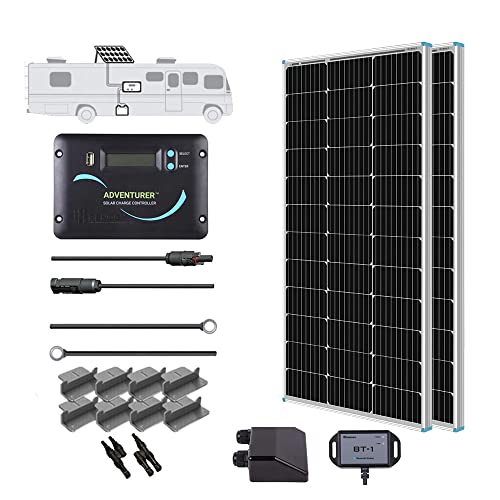
Renogy 200W 12V N-Type RV Solar Panel Kit

Renogy ShadowFlux Solar Panels, 200W N-Type

N-Type 16BB 400W Bifacial Solar Panel

N-Type 16BB 200 Watt Solar Panel, 2×100W Set
More Details On Our Top Picks
Curved van roofs make rigid panels awkward, and that’s where this 100-watt flexible panel earns attention. The ultra-bendable build is meant for marine decks, RV roofs, cabin tops, and other shaped surfaces, so you’re not forced into a flat-panel compromise.
The lightweight profile also matters during installation, especially on a van where every pound and every inch counts. The trade-off is plain: flexible panels usually need careful mounting and airflow planning, so they suit clean, permanent installs more than casual repositioning.
Strong Points
- Flexible construction suits curved roof lines better than a rigid frame.
- Thin, low-profile build helps keep roof height under control.
- Works across marine, RV, van, and cabin setups.
- Lightweight format eases handling during roof installation.
Things To Consider
- Flexible panels usually need careful bonding or mounting for long-term placement.
- Heat management matters, since tight roof contact can limit airflow.
- Best results come from a planned layout, not a casual add-on.
Feature Snapshot
Who It Suits Best
You’re the right fit here if your van roof has curves, trim, or a low-clearance setup that rules out a framed panel.
A Better Fit Elsewhere
Renogy 400 Watt 12 Volt Premium Solar Kit suits van builds that need a complete charging package instead of a single flexible module.
A van solar setup often needs storage as much as generation, and this portable power station fills that gap cleanly. With a 2042Wh battery pack and 2200W AC output, it can handle a broad spread of appliances and charging gear without depending on roof space alone.
USB-C PD 100W fast charging is a practical detail for modern devices, especially on travel days filled with laptops, cameras, or handheld electronics. The honest read is that a unit this size is still a box to store and move, so it fits best where floor space and weight allowance are already planned.
What We Like
- Large battery capacity supports longer gaps between charging sessions.
- 2200W AC output covers a wide range of van essentials.
- USB-C PD 100W charging suits current laptops and accessories.
- Portable format works well for campsites, outages, and backup use.
Room For Improvement
- It takes up storage space that a roof-only system would not need.
- Weight can matter in compact vans with limited cargo margin.
- Solar panel pairing is optional, so the full setup still needs planning.
Core Details
Whose Shelf It Belongs On
You’ll appreciate this most in a travel rig that needs backup power for devices, appliances, and short-term off-grid living.
Another Choice May Suit
Renogy 200W 12V N-Type RV Solar Panel Kit fits you better when you want a more traditional roof-mounted solar path rather than a self-contained power box.
This kit goes far beyond a single panel, and that changes the conversation for van builders. Four 100-watt panels, a 40A MPPT charge controller, Bluetooth module, fuse, Z brackets, adapter kit, and tray cables give you the bones of a more complete 12-volt system.
MPPT means maximum power point tracking, a controller style that adjusts voltage and current to pull more usable energy from the array than a basic controller usually can. That extra control matters in mixed weather and varying sun, though the upside comes with a larger install footprint and more setup work than a simpler kit.
Upsides
- Four-panel layout supports larger roof coverage than a single-module setup.
- MPPT controller improves system control in changing sun conditions.
- Bluetooth module makes monitoring easier from inside the van.
- Included mounting and cabling parts reduce parts hunting.
- Better suited to a planned, permanent build than a casual add-on.
Points To Note
- The full kit takes more time to mount than a standalone panel.
- Roof space needs to be measured carefully before committing.
- Works best for people comfortable with a fuller electrical layout.
Feature Rundown
Built With In Mind
You’re the right match here if your van build is headed toward a full roof array and you want the controller and mounting pieces in one package.
Swap It Out When
Renogy Flexible Solar Panel 100 Watt, 240° Bendable is the easier fit for curved roofs where a framed multi-panel layout would be awkward.
Some van setups need less complexity, and this 200-watt kit speaks directly to that use case. The Adventurer 30A LCD PWM charge controller keeps the system easier to grasp than a more advanced controller stack, while the included mounting brackets point it toward RVs, boats, trailers, campers, and marine use.
PWM means pulse width modulation, a simpler controller style that manages battery charging with less complexity than MPPT. That simplicity helps beginning installers and smaller systems, though the trade-off is lower adaptability in harsher or more variable light compared with the previous Renogy kit.
Highlights
- Controller and mounting hardware are already part of the kit.
- 200-watt size suits modest van loads and lighter roof plans.
- LCD display helps you check controller status at a glance.
- Broad vehicle and marine fit makes it versatile across rigs.
Small Caveats
- PWM control is simpler, though less advanced than MPPT.
- Two hundred watts can feel modest for high-demand off-grid living.
- Roof layout still needs careful measuring before mounting.
Details At A Glance
The Right Fit
You’ll get the most from this kit in a straightforward RV or van setup that values simplicity and a compact solar footprint.
Look Elsewhere When
Renogy 400 Watt 12 Volt Premium Solar Kit suits you better when your roof plan needs more output and a more advanced controller.
Partial shade is a real nuisance on van roofs parked under trees, near racks, or beside taller structures. This ShadowFlux panel is built for 12-volt and 24-volt systems and uses an anti-shading design, so it targets the problem more directly than the simpler setups above.
The 25% high-efficiency PV module wording points to an emphasis on stronger conversion per surface area, which matters in compact roof plans. The trade-off is that shade-handling features only pay off when your parking and mounting situation actually creates shadow, so this one fits a more specific kind of owner.
Bright Spots
- Anti-shading design helps in mixed-light parking conditions.
- 12V and 24V compatibility gives system flexibility.
- High-efficiency module focus is valuable in limited roof space.
- Good fit for van roofs with occasional obstruction.
Areas To Watch
- The shade-focused design matters most in the right parking conditions.
- Setup still depends on your controller and battery plan.
- Cleaning and panel placement still affect long-term output.
Core Details
Who Will Love This
You’re a strong match here if your van often sits in mixed sun and shade, or if your roof space is too tight for wasteful panel placement.
Where A Sibling Pick Shines
Callsun N-Type 16BB 400W Bifacial Solar Panel is the better route when your priority is raw rooftop output rather than shade-tuned behavior.
Bifacial panels can earn their keep on reflective rooftops, light-colored surfaces, or setups where rear-side exposure isn’t wasted. This Callsun pair is built as two 200-watt modules for 12V and 24V systems, so it suits larger van or rooftop arrays that want more than a compact starter footprint.
16BB refers to a busbar layout, the conductive strips that move electricity across the panel, and more busbars can help with current handling and shading tolerance. The trade-off is practical: bifacial gains depend heavily on placement and surroundings, so the real benefit shows up only in a layout that lets the back side do useful work.
Standout Traits
- Dual-panel format gives you a strong 400-watt total output.
- Bifacial design can make use of reflected light.
- 12V and 24V support makes system matching easier.
- Two-module setup can spread out across larger roof areas.
- Well suited to bigger van or rooftop power plans.
Worth Noting
- Bifacial value depends on where and how the panels are mounted.
- Two panels mean more planning than a single-module install.
- Roof reflectivity affects how much you gain from the rear side.
Technical Sheet
Best Suited To
You’re the best fit for this panel pair if your van, home roof, or off-grid setup can give the rear side room to benefit from reflected light.
Reach For A Different Pick When
Renogy 200W 12V N-Type RV Solar Panel Kit is the calmer choice for simpler installs that don’t need bifacial behavior or a higher ceiling.
Two smaller panels can make roof planning easier, especially in a van where vents, skylights, and racks already compete for space. This 200-watt monocrystalline set leans into that spacing advantage while still aiming for a modern 25% efficiency claim and 12V or 24V compatibility.
The split-panel layout gives you more placement flexibility than a single large module, which helps on awkward roof shapes or in tighter cabins. The obvious trade-off is total output, since 200 watts is a lighter lift than the 400-watt options higher up this list.
Best Bits
- Two 100-watt panels are easier to place around roof hardware.
- Compact format suits vans, cabins, and marine spaces.
- 12V and 24V support broadens system compatibility.
- Monocrystalline PV module design fits a modern solar layout.
Minor Gripes
- Lower total output than the larger 400-watt options.
- Split layout means two mounting areas to manage.
- Roof sealing and cable routing still need care during install.
Feature Card
Perfect Match For
You’re the right fit here if your van roof is crowded and you need two smaller panels instead of one larger slab.
Where Shoppers Go Wrong
N-Type 16BB 400W Bifacial Solar Panel is the stronger route when you can give up more roof space and want a higher output ceiling.
How To Choose The Right Van Solar Panels
Match The Panel Type To Your Roof
Flexible panels make sense on curved or low-clearance roofs, while framed panels suit flatter surfaces that can support more structure. That distinction matters more than brand name, because the wrong shape creates mounting headaches long before output becomes the issue.
Two smaller panels can also be easier to place around roof vents, skylights, and racks. A single larger module looks cleaner, but it can force awkward compromises on a crowded van roof.
Balance Output Against Real Space
Higher wattage is attractive, yet roof area and charge storage still decide how useful that wattage really is. A 400-watt array helps a larger battery bank, while a 200-watt setup may suit lighter daily use or a weekend rig.
Think in terms of habits, not just numbers. Long stays off-grid usually call for more panel capacity, while short trips can get by with a smaller, simpler system.
Choose The Controller With The System
MPPT controllers are the more advanced option because they adjust voltage and current to improve energy harvest in changing conditions. PWM controllers are simpler and often easier to live with in smaller or more basic systems.
That choice matters even more than many people expect. A strong panel with a weak controller can leave usable energy on the table, especially in mixed weather or partial shade.
Plan For Storage And Backup Power
A roof array handles generation, but a portable power station can cover storage, interior charging, and backup use when parked in awkward spots. That mix helps van setups that don’t have room for a large battery bank right away.
Portable units do take up cabin space, so they fit best when you already know where they’ll live. For many van builds, the cleanest setup is a roof panel for steady charging and a power station for the jobs that happen away from the roof.
What To Weigh Before You Click
Common Shopping Slip Ups
Panel size gets more attention than roof layout, and that’s where plenty of installs go sideways. Measure around vents, fan housings, and racks before you settle on wattage or module count.
Another common miss is mixing a solid panel choice with the wrong controller. MPPT and PWM serve different system goals, so the controller should match the rest of the build rather than follow a generic rule.
The Upgrade Payoff
Higher-tier panels usually cost more because of cell design, shade handling, bifacial construction, or bundled hardware. Those details matter most in van life, where roof space is scarce and every extra watt has to justify its footprint.
Spending up makes sense when your roof is partially shaded, your battery bank is larger, or you want a more complete kit with less separate sourcing. For a simple weekend setup, a smaller panel or basic kit can be the smarter use of space and money.
Frequently Asked Questions
What size solar setup works for a van?
Smaller travel rigs often start around 200 watts, while more ambitious off-grid builds usually need more roof capacity. Your daily appliance use matters more than a generic number.
Do flexible panels suit van roofs?
They suit curved surfaces and low-profile installs very well. The trade-off is that they usually need careful mounting and airflow planning.
Is MPPT better than PWM?
MPPT is the more advanced controller style and usually offers better energy harvest in changing conditions. PWM can still be a sound choice for simpler, smaller systems.
What does bifacial mean in solar panels?
Bifacial panels can use light from both sides of the module. They work best when the mounting surface and surroundings let the rear side benefit from reflection.
Should you pair a power station with roof panels?
That combination helps when you want stored power inside the van and steady charging from the roof. It also gives you more flexibility during parking, travel, and backup use.
Closing Thoughts
The right van solar setup comes down to shape, output, and how much complexity you want to live with. Flexible panels suit curved roofs, complete kits help full builds move faster, and a portable power station fills the gaps that roof space can’t solve. For most vans, the smartest choice is the one that matches your real parking habits and your actual power draw. Choose for the rig you drive now, not the one you hope to own later.
