

I keep losing count of how many power strips I’ve bought over the years, and most of them were the wrong kind. A flimsy plastic strip from a big-box store won’t save a desktop PC from a lightning-induced spike, and a heavy-duty metal unit feels like overkill behind a bedside lamp. The sweet spot depends on what’s plugged in, where the strip lives, and how much joule protection the gear actually needs.
This roundup covers ten surge protectors for electronics that span home offices, workshops, entertainment centers, and travel bags. Each pick is rated for the workload it claims to handle, and I’ve called out the trade-offs so you can match a strip to your real setup instead of guessing.
How The Shortlist Stacks Up

CCCEI 12 Gauge Long Extension Cord 50FT Yellow

CCCEI Heavy Duty Power Strip with USB Ports
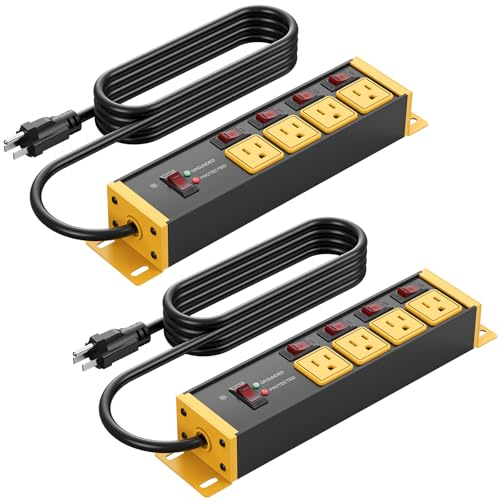
CCCEI 2-Pack Heavy Duty Surge Protector 4FT

NANOLAKE 18-Outlet Surge Protector 4800J
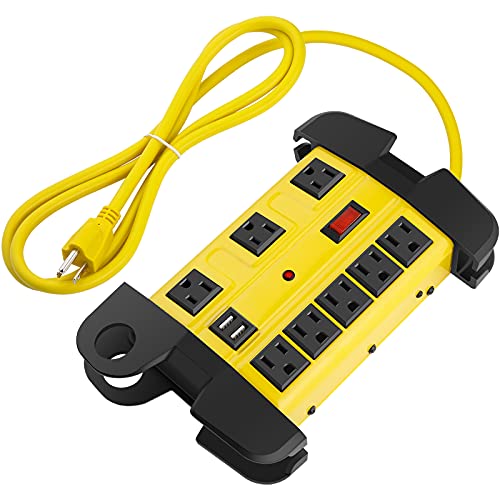
CCCEI Heavy Duty Surge Protector with USB Yellow
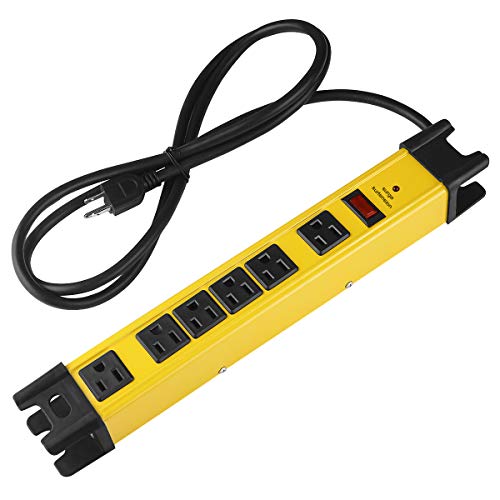
CCCEI Heavy Duty Surge Protector 6FT Yellow

CCCEI 16-Outlet Metal Power Strip 4FT Black

CCCEI Magnetic Heavy Duty Power Strip 15FT

Anker Power Strip 900J with 35W USB-C

CCCEI 12 Gauge Extension Cord with Switches 50FT
Inside Each Recommended Option
Long runs of cord tend to kill performance on cheap indoor strips, so this 50-foot CCCEI unit uses a thicker 12-gauge wire that holds voltage steady across distance. The bright yellow jacket stays visible on a garage floor or job site, and eight outlets sit along a metal strip that handles workshop dust without complaint.
Power tools, a shop vac, and a battery charger can all share one circuit at 15 amps / 1875 watts without tripping early. A dedicated breaker switch lets me kill the whole strip in one motion, and a grounding path keeps the metal housing safer when something goes wrong. Compared to the CCCEI 6-foot workshop strip later in this list, this one trades compactness for reach.
Useful Touches
- 12-gauge wire preserves output across 50 feet
- Eight outlets support tools plus accessories at once
- Built-in circuit breaker cuts power with one flip
- Grounding protection adds a layer of fault safety
Things To Consider
- Bulk of 50 feet can snag in tight walkways
- No USB ports for phone or tablet charging
- Yellow housing shows scuffs in a clean office
At A Glance
Made For
Workshop owners and contractors running power tools across a large space where cord length matters more than USB ports.
Swap It Out When
The CCCEI Magnetic Heavy Duty Power Strip (Item 8) suits anyone who needs to mount a strip on a metal surface rather than stretch cord across the floor.
Desks pile up charging bricks fast, and this CCCEI strip trims that mess by pairing ten AC outlets with two USB-A ports. The grey metal housing looks at home next to a monitor and keyboard, and the wall-mountable back panel lets the strip hide under a shelf or behind a hutch.
At 15 amps and 1875 watts, it accepts the same load profile as a standard wall outlet while adding built-in overload and fire-protective coatings. USB ports push 5V at 2.1A, which is enough for phones and older tablets. Versus the CCCEI 6-foot yellow workshop strip, this one trades outdoor toughness for a quieter look that fits a study.
Practical Pluses
- Ten AC outlets handle full desk setups
- Two USB ports cut down on charging bricks
- Wall-mountable for under-desk installs
- Reset switch recovers after overload trips
Worth Noting
- 5-foot cord may fall short for distant outlets
- USB-A only, no USB-C for newer phones
- Metal shell can scratch adjacent furniture
Best Suited To
Remote workers and students building a tidy charging station at a single desk or shared workspace.
Consider Something Else When
The Anker Power Strip (Item 9) fits travelers better, since it adds USB-C and a slimmer profile for hotel rooms.
Two rooms, two workbenches, two strips: this CCCEI two-pack drops a four-outlet metal strip on each side of a project. Each outlet sits behind its own switch, so a lamp or fan can stay on while a tool powers down, and the wall-mountable back keeps the strips off the benchtop surface.
At 12 gauge and 4 feet, the cord stays flexible without sacrificing current capacity at 1875 watts. Overload and grounding protection come standard, which is what I’d expect from any serious shop strip. The catch is that two strips live in the same box, so the per-strip cost is lower but storage gets bulky if you only need one.
Strengths Worth Knowing
- Individual switches cut idle power draw
- 12-gauge wire handles heavy tool loads
- Wall-mountable design saves benchtop space
- Grounding and overload protection included
Points To Note
- Four outlets per strip may feel limited
- Yellow finish clashes with home decor
- 4-foot cord restricts where each strip mounts
Right Fit For
Anyone outfitting a pair of workspaces, like a garage plus a shed, who wants matched strips with matching specs.
Look Elsewhere When
The NANOLAKE 18-Outlet Surge Protector (Item 4) makes more sense for entertainment centers that need far more outlets in one place.
Entertainment centers stack up devices quickly: TV, soundbar, game console, streaming box, router, and a laptop dock. The NANOLAKE 18-outlet strip absorbs all of that with 4800 joules of surge protection, which is the absorption rating that tells me how much spike energy it can soak before the protection circuit wears out.
Two USB-A ports and two USB-C ports run at 20W PD (Power Delivery, the fast-charging standard), so a phone or tablet charges without a brick. The flat plug and 10-foot cord slide behind furniture without bending. Compared to the smaller CCCEI strips earlier, this one is built for higher-value gear that needs serious joule headroom.
Useful Highlights
- 4800-joule rating suits expensive electronics
- PD USB-C ports charge phones quickly
- 18 outlets handle full entertainment racks
- Flat plug fits behind tight furniture
Honest Caveats
- Larger footprint than compact desktop strips
- Heavy plug head may strain loose outlets
- Black plastic shell shows fingerprints in bright rooms
Feature Snapshot
Perfect Match For
Home theater owners and PC builders who run many high-value devices from one protected source.
Where Another Pick Suits Better
The Anker Power Strip (Item 9) wins for travelers who want USB-C charging in a compact, packable shape.
Yellow aluminum means “I mean it” in a workshop, and this CCCEI strip looks the part on a saw bench. The housing shrugs off shop dust and the occasional drop, while the wall-mountable back keeps it off the floor where sawdust collects.
Eight outlets run alongside two USB ports at 5V / 2.1A, enough for a phone or a low-draw work light. A reset on/off switch and a 15-amp circuit breaker provide standard overload protection. Fire-protective coating is the kind of detail I want in a strip that might sit next to a heat gun. Compared to the longer CCCEI 50-foot cord, this 6-foot model targets the bench itself.
Reasons It Performs
- Metal housing takes shop abuse
- USB ports reduce brick clutter
- Wall-mountable for clean installs
- Reset switch for quick recovery after trips
Trade Offs
- No USB-C for newer fast-charging devices
- 6-foot cord limits reach to far outlets
- Yellow finish stands out in a finished room
Who It Suits Best
Garage tinkerers and woodworkers who want a tough strip on the bench without paying for a 50-foot run.
Not Your Match When
The CCCEI 16-Outlet Metal Power Strip (Item 7) handles bigger setups where one bench needs to power many tools at once.
Not every project needs USB ports or 50 feet of cord, and this six-outlet CCCEI strip covers the middle ground. The 1200-joule surge rating (the absorption capacity of the protection circuit) is modest compared to the NANOLAKE, but it’s plenty for a lamp, a laptop brick, and a phone charger at the same time.
Four compact outlets and two wide-spaced outlets accept chunky wall warts without blocking neighbors, which is the layout most people actually want at home. A 14AWG cord and a single on/off switch keep the design simple. The cord wrap on the back is a small detail that helps when the strip lives in a closet between uses.
Why It Works Well
- Wide-spaced outlets fit bulky adapters
- Cord wrap keeps storage tidy
- Metal shell resists everyday knocks
- Modest price suits basic needs
Minor Gripes
- 1200J rating trails higher-end options
- No USB ports at all
- 14AWG cord is thinner than 12-gauge cousins
Built With In Mind
Households running modest loads from a single wall outlet, like a bedside lamp, laptop, and router.
A Better Fit Elsewhere
The NANOLAKE 18-Outlet Surge Protector (Item 4) makes more sense for entertainment racks that need more joules and more ports.
Some benches outgrow eight outlets fast. The CCCEI 16-outlet rack-mount strip spreads sixteen receptacles across an aluminum housing that bolts under a shelf or against a wall. Wider spacing between outlets means large plugs and transformers sit side by side without crowding.
At 1875 watts, it accepts the same load profile as a wall outlet, and the 4-foot cord is short on purpose, since the strip is meant to mount near where the work happens. The black finish looks at home in a server closet or a dark garage corner. Versus the CCCEI 6-foot yellow strip, this one trades USB convenience for sheer outlet count.
Where It Helps
- Sixteen outlets power complex setups
- Wide spacing accepts large plugs
- Rack-mountable aluminum housing
- Black finish blends into AV closets
Things To Weigh
- 4-foot cord limits placement options
- No USB ports for small devices
- Long housing demands wide mounting space
Who Should Grab It
Hobbyists and IT tinkerers running server racks, lab benches, or AV gear from a single mounting point.
Reach For A Different Pick When
The CCCEI 50-foot yellow extension cord (Item 1) covers ground-level jobs where reach matters more than outlet count.
Magnets on a power strip sound gimmicky until you stick one to the side of a steel tool cabinet and suddenly the strip is exactly where you need it. The CCCEI magnetic strip locks onto metal surfaces without screws, and the flat plug slips behind a fridge or a filing cabinet.
Eight outlets support a work light, a buffer, and a battery charger on the same wall, and a 15-foot cord stretches across a two-car garage. A 15-amp circuit breaker shuts things down cleanly if a tool draws too much. The honest read is that the magnets only work on steel, so this isn’t the right pick for drywall or wood-paneled shops.
The Upside
- Magnetic back mounts without hardware
- Flat plug slides behind furniture
- 15-foot cord reaches across a garage
- Eight outlets handle common loads
Factors To Consider
- Magnet only grips ferrous metal surfaces
- No USB ports for small electronics
- Yellow housing can clash with home decor
Whose Shelf It Belongs On
Auto hobbyists and metal-shop users who want a strip that moves with their workflow instead of bolted to one spot.
Skip It When
The NANOLAKE 18-Outlet Surge Protector (Item 4) fits entertainment setups better where high joule ratings matter more than mounting tricks.
Anker’s 12-in-1 power strip targets the minimalist desk and the hotel-room nightstand. Eight AC outlets, two USB-A ports, and two USB-C ports all live in a slim shell that disappears behind a monitor or slips into a carry-on. The 35W USB-C output is the headline: that’s enough to fast-charge a phone or top off a small laptop.
At 900 joules, the surge rating is on the modest side, which is fine for laptops and phones but light for high-end AV gear. Compared to the CCCEI workshop strips, this one trades raw toughness for portability and USB-C speed. For a desk or a travel bag, it’s a clean solution.
Where It Delivers
- 35W USB-C charges phones fast
- Slim profile fits behind monitors
- Eight AC plus four USB ports total
- Lightweight for travel use
Softer Spots
- 900-joule rating trails AV-focused picks
- Plastic shell less rugged than metal
- Limited outlets for workshop setups
Feature Rundown
Right Fit For
Frequent travelers and remote workers who want USB-C fast charging in a single compact brick.
A Better Fit Elsewhere
The CCCEI Heavy Duty Power Strip with USB Ports (Item 2) suits permanent desk setups that need a tougher metal housing.
Per-outlet switching is the small feature that changes how a strip gets used. The CCCEI 50-foot strip keeps the long 12-gauge cord of Item 1 but adds individual switches to each of its four outlets, so a single tool can stay on while everything else powers down.
That switch-per-outlet design also means lower idle draw: no more unplugging a battery tender to silence a buzzing charger. The same 15A / 1875W rating applies, and a dedicated circuit breaker covers the whole run. The trade-off is that four outlets is sparse for the price, so this makes more sense for far-away single devices than for crowded benches.
Everyday Perks
- Individual switches cut idle power draw
- 50-foot reach covers large spaces
- 12-gauge wire holds voltage across distance
- Dedicated circuit breaker for the whole strip
Possible Compromises
- Only four outlets for the price
- 50-foot cord can snag in walkways
- No USB ports for small charging needs
Best Suited To
Anyone running several distant devices, like yard lights, a pond pump, and a work light, where switching matters more than outlet count.
Swap It Out When
The CCCEI 16-Outlet Metal Power Strip (Item 7) fits dense benches where sixteen outlets beat long reach.
What Matters Most Before Choosing Surge Protectors For Electronics
A surge protector’s joule rating tells me how much energy the protection circuit can absorb before it wears out. For home theater gear and computers, I’d want at least 1000 joules, and serious AV racks benefit from 3000 joules or higher, like the NANOLAKE in this roundup. Cord gauge matters too: a 12-gauge wire carries current more cleanly over long distances than a 14-gauge or 16-gauge wire, which is why the longer CCCEI cords stick with 12 AWG (American Wire Gauge, where lower numbers mean thicker wire).
USB ports have shifted from a luxury to an expectation, but USB-C with Power Delivery charges modern phones and laptops much faster than the older USB-A 5V standard. Outlet spacing is the easiest spec to overlook, and yet it decides whether two wall warts can share a strip. Wide-spaced outlets, like those on the CCCEI 16-outlet strip, prevent the constant shuffle of unplugging one device to fit another.
Finally, the housing shapes how a strip fits the room. Metal aluminum bodies take workshop abuse and dissipate heat, while slim plastic shells look better in living rooms and pack easier for travel. The right pick depends on whether the strip lives in a garage or under a hotel desk.
Key Considerations Across These Picks
Common Buying Slip Ups
Shoppers often grab the cheapest strip on the shelf and assume any power strip protects gear. A plain power strip is little more than a splitter; a real surge protector includes a joule rating and a protection indicator light. Another common mistake is chaining surge protectors together, which can overload one unit’s circuit and create a fire hazard that no rating will offset.
Why Top Tier Costs More
Higher-end strips cost more for three reasons: thicker gauge wire, more joule absorption, and beefier housings. The NANOLAKE in this roundup carries a 4800-joule rating because it needs internal MOVs (metal-oxide varistors, the components that absorb surge energy) rated for bigger spikes. Spending more usually buys faster USB-C, more outlets, and longer lifespans under repeated small surges. The honest read: most home setups don’t need the top tier, but gear with expensive repair bills benefits from the extra headroom.
Frequently Asked Questions
How many joules do I really need?
For a phone charger or lamp, 600 to 1000 joules is enough. For computers, TVs, and gaming consoles, aim for 1500 joules minimum, and high-end AV gear benefits from 3000 joules or more.
Can I plug a surge protector into another surge protector?
No, daisy-chaining surge protectors is a fire hazard. The second strip can mask an overload on the first, and the combined cord length can exceed safe ratings for the wall circuit.
What’s the difference between a power strip and a surge protector?
A power strip is just an outlet splitter with no surge protection. A real surge protector has a listed joule rating and a protection indicator that tells you the absorption circuit still works.
How long do surge protectors last?
Most protection circuits wear out after a few large spikes or several years of small ones. Replace a surge protector every three to five years, or right after a known large surge, even if the strip still powers devices normally.
Do USB-C ports on a surge protector charge laptops?
Some do, but only if the USB-C port supports enough wattage. The Anker strip in this roundup pushes 35W, which charges phones and small laptops, while full laptop charging often needs 60W or higher.
Closing Thoughts
The right surge protector depends entirely on what’s plugged into it and where the strip lives. Workshops want long cords, metal housings, and individual switches. Desks want USB-C and tidy profiles. Entertainment centers want high joule ratings and lots of outlets. Match the strip to the room, and the gear stays protected without overspending on features that never get used.
