

Audio gear tends to be expensive, sensitive, and plugged in for years at a time, which is exactly why a regular wall outlet isn’t always enough. The right surge protector absorbs voltage spikes before they reach your amplifier, turntable, or studio monitors, and the difference shows up the first time a storm rolls through your neighborhood. I’ve put together ten options that cover home stereo racks, project studios, and full home theater setups, so there’s something here whether you’re running a simple bookshelf-speaker system or a multi-component rig.
The Main Contenders
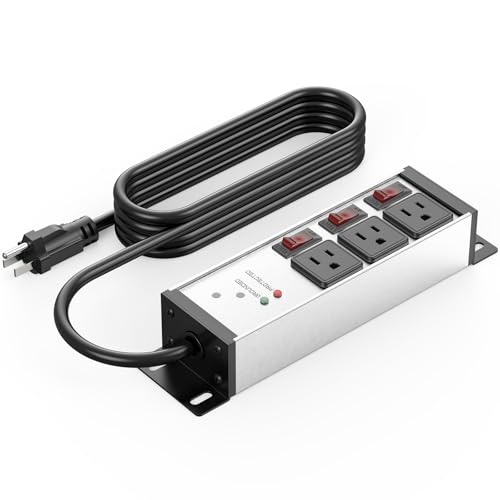
CCCEI 3 Outlets Heavy Duty Surge Protector (Silver, 6FT)
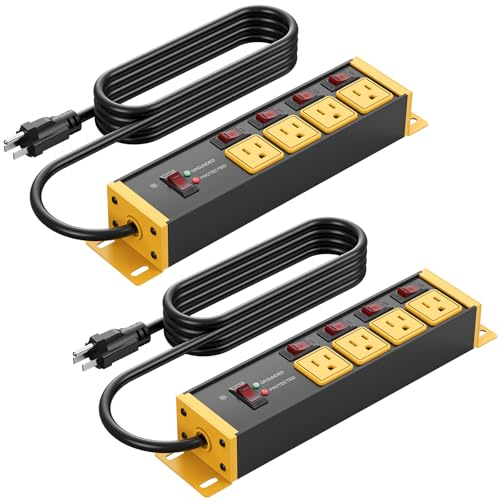
CCCEI 2PCS Heavy Duty Surge Protector (Yellow, 4FT)

NANOLAKE 18-Outlet 4800J Surge Protector Power Strip

SUPERDANNY 22 AC 6 USB Surge Protector, 2100J
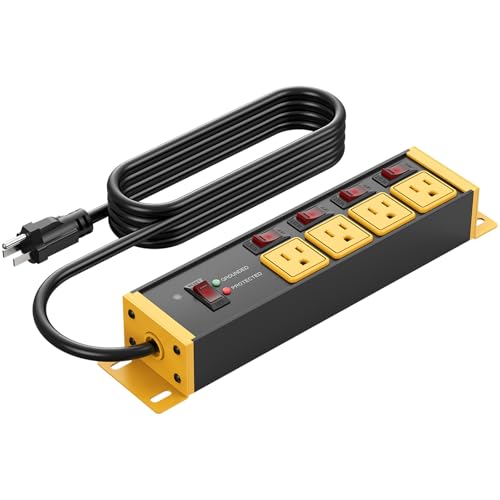
CCCEI 12 Gauge Heavy Duty Surge Protector (Yellow, 6FT)

Furman SS-6B-PRO 15′ 6-Outlet Surge Protector (2-Pack)

Anker 12-Outlet 2100J Surge Protector with USB-C

Amazon Basics 6-Outlet 790J Surge Protector (6ft)

Mifaso 2-Pack 6-Outlet Surge Protector with 4 USB Ports

Belkin 12-Outlet 4320J Surge Protector with Rotating Plugs
A Breakdown Of The Leading Choices
This brushed-silver CCCEI strip is built like a piece of industrial gear rather than a typical home power strip. The 12-gauge cord (that’s a thicker conductor that handles higher current with less voltage drop) and 20A circuit breaker per switch suggest it’s aimed at workshop and rack environments where gear draws real current. For a small audio setup, that kind of headroom translates into steady power delivery to a power-hungry integrated amp or class-D monoblock.
Each of the three outlets gets its own illuminated switch, so you can fully cut power to a source component without unplugging it, a small but meaningful habit for protecting phono stages and DACs. Compared with the multi-USB consumer strips later in this list, this one stays focused on raw AC delivery. You may find the three-outlet count limiting in a full home theater rack, though, which is where later picks earn their keep.
Useful Highlights
- Individual per-outlet switches let you isolate components, which is genuinely handy for power-cycling a DAC or streamer.
- 12-gauge cord and 20A breaker support heavier amplifier loads without noticeable voltage sag at the outlet.
- Brushed metal housing feels sturdier than the plastic shells on most consumer strips and dissipates heat well.
- Six-foot cord reaches behind most equipment racks without needing an extension.
Worth Noting
- Only three outlets, so a full five-component stereo may still need a second strip.
- The exact joule rating isn’t published in the source data, which makes spec-to-spec comparison harder.
- Larger wall-wart plugs may cover neighboring receptacles.
Made For
Listeners running a compact two-channel rig with one power-hungry amplifier who want individual component control.
Look Elsewhere When
The NANOLAKE 18-Outlet 4800J Surge Protector is a smarter match for full home theater racks that need more outlets and a published joule rating.
This two-pack comes with bright yellow housings and a wall-mount design that makes them feel at home on the back of a plywood utility panel. Each strip carries four outlets with their own switches, plus the same 12-gauge construction and 20A breaker logic as the silver CCCEI above. For a home audio install with sources in two rooms, buying a pair in one go keeps the wiring consistent across both locations.
The shorter four-foot cord is more limiting than the six-foot option on Item 1, so plan placement carefully if your rack sits away from the wall. Owners commonly mount these vertically on side panels to keep the bench tidy. For most living-room stereo systems, the wall-mount orientation is overkill, but for a workshop, garage, or basement listening room, it fits naturally.
Real Benefits
- Two-pack lets you protect gear in two rooms without buying separate strips.
- Wall-mountable design keeps cords off the floor, which helps in workshop or garage installs.
- Individual switches per outlet support the same isolation habit that helps sensitive source components.
- Same robust 12-gauge build and 20A protection as the larger CCCEI options.
Trade Offs
- Four-foot cord may not reach distant outlets in larger rooms.
- No published joule figure to compare against higher-rated strips.
- Yellow finish stands out visually, which may not blend into a finished listening room.
Right Fit For
Shoppers with multi-room audio setups, garage studios, or basement listening spaces who want matched protection on both sides of the wall.
Reach For A Different Pick When
The CCCEI 12 Gauge Heavy Duty Surge Protector in Item 5 is the better call for a single-rack install that needs more amp headroom than this yellow pair offers.
For a full home theater or audiophile rack, outlet count and joule rating matter more than fancy switching, and this NANOLAKE strip delivers both. The 4800-joule rating (a measure of how much surge energy the protector can absorb before its MOVs wear out) is the highest published number on this list, and the 18 widely spaced AC outlets plus four USB ports handle even packed component stacks. A 10-foot cord and flat plug round out the practical side.
Where the smaller CCCEI strips focus on individual control, this one trades switches for capacity, with LED indicators that confirm grounded and protected status at a glance. The physical size is genuinely long, so plan for it under a shelf or behind a console. For a movie-and-music setup with a receiver, subwoofer, console, and streamer all sharing one feed, this is the strip I’d reach for first.
Useful Strengths
- Published 4800-joule rating is the strongest protection figure on this list.
- 18 AC outlets plus two USB-A and two USB-C ports cover audio gear and accessories in one strip.
- USB-C port supports 20W PD, which is enough to fast-charge a phone or tablet near the rack.
- 10-foot cord reaches across wide media walls without an extension.
- Flat plug sits flush against the wall behind furniture.
Honest Caveats
- The 18-outlet layout makes the strip physically long, which can crowd shallow shelves.
- No per-outlet switches, so you cannot isolate a single component without unplugging it.
- Wide spacing helps, but the largest power bricks may still cover adjacent outlets.
Who It Suits Best
Home theater owners and audiophiles running big component stacks who want the highest published joule rating they can get at this count.
Consider Something Else When
The SUPERDANNY 22 AC 6 USB Power Strip is the better fit for users who want even more USB charging alongside the AC count.
The SUPERDANNY strip reads like a power station: 22 grounded AC outlets, six USB ports, 2100 joules of surge protection, and a 6.5-foot cord with a flat plug. It is clearly aimed at users with deep racks and a lot of accessories, including streaming bridges, headphone amps, and charging cables all sharing one wall outlet. The 1875W/15A rating matches a standard household circuit, so it slots into any room.
Compared with the NANOLAKE above, you trade a bit of joule headroom for more USB ports and a smaller footprint, which is the right swap for setups that lean on tablets and phones in the listening room. Some users report the long bar can sag between mounting points if not supported at both ends. For a living-room media wall, the layout is generous without being excessive.
What Works In Its Favor
- 22 AC outlets cover ambitious component counts without daisy-chaining.
- Six USB ports handle phone, tablet, and headphone charging alongside audio gear.
- Flat plug and 6.5-foot cord simplify placement behind consoles.
- Safety certifications cover both the unit and the cord, which is reassuring for always-on gear.
Points To Note
- 2100-joule rating is lower than the NANOLAKE 4800J option for similar outlet counts.
- No per-outlet switches for isolating components.
Built With In Mind
Mixed-use racks that combine traditional audio components with phones, tablets, and USB-powered streaming gear.
Skip It When
The NANOLAKE 18-Outlet 4800J Surge Protector in Item 3 is a better fit if you want a higher joule rating and care less about USB quantity.
Where many consumer strips are rated for 15 amps, this CCCEI model pushes to 20 amps with dedicated 20A circuit breakers at each outlet. That is a meaningful upgrade for anyone running a high-current power amplifier, a pair of monoblocks, or a subwoofer plate amp that pulls hard during peaks. The 12-gauge, six-foot cord reaches across most racks without strain, and the bright yellow shell makes it easy to spot in a busy wiring closet.
Independent circuit control on each outlet means you can drop a noisy component out of the chain without yanking cables, similar to the silver CCCEI in Item 1 but with extra amp capacity. For most apartment dwellers, 20A headroom is more than they need, which is the honest trade-off here. Owners in workshop and small-stage setups describe it as a “set and forget” install.
Practical Advantages
- 20A breakers per outlet handle power-hungry amplifiers without tripping on musical peaks.
- 12-gauge cord reduces voltage drop over longer runs compared with lighter 14-gauge cables.
- Independent outlet switches support component-isolation habits that protect source gear.
- Wall-mountable housing suits permanent installs.
Some Limits To Know
- Only four outlets, so larger racks will still need a second strip.
- 20A capacity is wasted on low-power gear like streamers or bookshelf speakers.
- No published joule rating in the source data.
Best Suited To
Owners of high-current amplifiers, subwoofers, or pro-audio gear who need 20A headroom in a single strip.
A Better Fit Elsewhere
The FURMAN SS-6B-PRO 15′ 6-Outlet Surge Protector in Item 6 is a stronger choice for studios that want a recognized pro-audio brand on the rack.
Furman is the name most working studios reach for first, and the SS-6B-PRO brings that reputation down to a sensible price point. The steel chassis, 15-foot cord, and six-outlet layout cover a typical project studio rack from front to back, and the extreme-voltage shutoff feature adds a layer of protection that generic strips usually skip. Buying the two-pack is a tidy way to feed a rack from both ends.
For an apartment hi-fi rig, the Furman may feel like overkill, since you’re paying for a brand reputation that matters more in commercial studios than living rooms. The lack of published joule numbers in the source data is a fair question to ask, though Furman’s reputation in the pro-audio world speaks for itself. Where this strip shines is in a home recording or mastering setup where downtime costs real money.
Practical Pluses
- Furman is widely trusted in recording and mastering studios, which counts for something in a music-focused home setup.
- 15-foot cord reaches across large rooms without an extension.
- Steel construction dissipates heat from always-on gear.
- Two-pack keeps front and rear rack feeds on the same product line.
Room For Improvement
- Six outlets per strip is modest compared with the NANOLAKE and SUPERDANNY options.
- Per-strip pricing reflects the brand more than the spec sheet.
- Heavy steel chassis adds weight if you plan to mount it under a shelf.
Whose Shelf It Belongs On
Home studio owners and serious listeners who want a recognized pro-audio brand in their rack and feed gear from both front and rear.
Swap It Out When
The CCCEI 12 Gauge Heavy Duty Surge Protector in Item 5 is a better value pick if you want 20A headroom at a lower per-strip cost.
Anker brings its charging reputation into the surge-protector category with a 12-outlet strip, a 20W USB-C port, two USB-A ports, and an eight-point safety system that covers surge, overload, and temperature control. The 2100-joule rating sits in the middle of the pack, but the design details, like a slimmer housing and quality USB-C output, give it real-world polish that mass-market strips often lack.
The 20W USB-C port charges an iPhone 15 from low battery to roughly half in about 26 minutes, which is genuinely useful if a phone or tablet lives near the listening chair. Compared with the SUPERDANNY in Item 4, this strip has fewer outlets but a stronger safety story and more refined branding. For a modern streaming-audio rig with Wi-Fi speakers, a soundbar, and a phone dock, it slots in naturally.
Why It Works Well
- Eight-point safety system addresses multiple failure modes, not just surge.
- USB-C port at 20W handles phone fast-charging alongside audio gear.
- Compact housing is easier to hide than the longer NANOLAKE or SUPERDANNY strips.
- Anker’s brand reputation translates to tighter quality control on the safety circuitry.
Less-Strong Areas
- 2100-joule rating is lower than the NANOLAKE and Belkin options.
- No individual per-outlet switches for component isolation.
- Only three USB ports total, fewer than the SUPERDANNY strip.
Perfect Match For
Listeners running modern streaming setups with Wi-Fi speakers, soundbars, and a phone or tablet that benefits from fast USB-C charging.
Not Your Match When
The NANOLAKE 18-Outlet 4800J Surge Protector in Item 3 is a stronger pick for traditional rack owners who prioritize joule headroom over USB convenience.
The Amazon Basics strip is the simplest pick on this list, and that is part of its appeal. Six outlets, a 790-joule rating, a 15-amp circuit breaker, an LED indicator, and a six-foot cord cover the basics without extra features driving up cost. For a bedroom turntable, a small bookshelf-speaker system, or an entry-level soundbar setup, that is genuinely enough.
The joule rating is the lowest on this list, which is the honest trade-off for the lower price. Owners commonly use it for secondary systems where a full power conditioning setup would be overkill. Compared with the CCCEI strips earlier in this list, you give up per-outlet switches, 12-gauge cord, and metal housing in exchange for a price that suits a starter rack.
Everyday Advantages
- Low cost makes it easy to protect secondary systems without stretching the budget.
- LED indicator confirms protection status at a glance.
- 15A circuit breaker handles typical household audio loads without nuisance trips.
- Six-foot cord is enough for most bedroom and office placements.
Points To Keep In Mind
- 790-joule rating is modest compared with the NANOLAKE and Belkin options.
- Plastic housing does not dissipate heat as well as the metal CCCEI strips.
- Only six outlets limits future expansion without a second strip.
Who Should Grab It
Listeners with small or starter audio systems who want honest surge protection without paying for features they won’t use.
Where Another Pick Suits Better
The Mifaso 2-Pack 6-Outlet Surge Protector in Item 9 is a better value if you need protection in two rooms without buying two separate listings.
The Mifaso two-pack trades a bit of audio-specific pedigree for solid general-purpose protection at a friendly price. Each strip offers six AC outlets and four USB ports (5V/2.4A each), a 900-joule rating, and the flat plug that tucks neatly behind furniture. Buying two in one listing makes it easy to protect a stereo system in the living room and a pair of powered monitors in a home office at the same time.
The braided cord and slim plug are a small but appreciated touch for tight cable runs behind a console. Compared with the Amazon Basics strip above, you gain USB ports and a second unit for not much more money. For most casual listening setups, the 900-joule rating is plenty, and the two-pack layout covers multi-room needs without thinking twice.
What Stands Out
- Two-pack covers two rooms or two systems in a single purchase.
- Four USB ports per strip handle phones, tablets, and small accessories.
- Flat plug sits flush against baseboards and furniture.
- Braided cord adds durability against daily flexing.
Practical Considerations
- No per-outlet switches for isolating components.
- 900-joule rating sits in the lower half of this list.
- No published amp rating beyond standard 15A household limits.
Right Fit For
Casual listeners with audio gear in two rooms who want straightforward protection and USB charging without spending on pro-grade features.
Consider Something Else When
The Belkin 12-Outlet 4320J Surge Protector in Item 10 is the stronger pick for a single-room stereo rack with bigger outlet and joule needs.
The Belkin closes the list with one of the most practical layouts in this roundup: eight rotating outlets, four standard outlets, an 8-foot cord, a flat pivot plug, and a 4320-joule rating. The rotating outlets turn to accommodate bulky wall warts without blocking neighboring plugs, which is a daily-quality-of-life win in real stereo racks. The 4320-joule rating puts it just behind the NANOLAKE in raw protection.
Belkin has been in the surge-protector category long enough that the build and safety circuitry feel dialed in, even if the brand isn’t as studio-famous as Furman. For a typical component rack with a mix of slim power supplies and chunky wall warts, this strip handles the mess gracefully. The flat pivot plug is a small touch that makes wall-mounting behind a console much easier than a typical right-angle plug.
Where It Helps
- 4320-joule rating is the second-highest published figure on this list.
- Eight rotating outlets solve the wall-wart crowding problem in real component stacks.
- 8-foot cord is the longest practical length for living-room racks.
- Flat pivot plug keeps the cord close to the wall behind furniture.
Things To Consider
- 12 outlets may be more than a small system needs.
- No USB ports for charging phones or tablets.
- No per-outlet switches, so component isolation requires unplugging.
Best Suited To
Listeners with full stereo racks that mix slim power supplies and bulky wall warts and want strong joule protection without industrial styling.
A Different Pick May Suit When
The Anker 12-Outlet 2100J Surge Protector in Item 7 is the better match for users who value USB-C charging alongside AC outlets.
Matching Surge Protection To Your Audio Setup
Audio gear does not need a “special” surge protector so much as a thoughtfully chosen one. The most important number to look at first is the joule rating, since that figure tells you how much spike energy the protector can absorb over its lifetime. For a modest stereo system, anything in the 600 to 1000-joule range covers everyday grid noise. For a home theater rack with a big receiver, subwoofer, and sources, 2000 joules or more is the sensible floor, and 4000-plus is comfortable for anything pulling serious current.
Next, look at the outlets themselves. Widely spaced receptacles and rotating positions keep bulky wall warts from blocking neighbors, which is the single biggest daily annoyance in real racks. A longer cord, 8 to 10 feet, gives more placement freedom behind consoles and AV cabinets without needing an extension cord. Flat or pivot plugs matter more than they sound, because they let the strip sit flush against baseboards and minimize cable strain.
Finally, consider how the strip handles the gear you actually own. Per-outlet switches make it easy to fully cut power to a phono stage or DAC overnight, which many owners consider a useful habit for component longevity. USB ports are genuinely convenient if your streamer or phone sits in the same room. For high-current amplifiers and subwoofers, a 20A-rated strip keeps musical peaks from tripping a residential-grade breaker. Match those four attributes to your gear list and the right pick tends to surface on its own.
Picking With Confidence Across These Choices
Where Shoppers Go Wrong
The most common mistake in this category is buying the strip with the most outlets, then realizing half the receptacles are too tight for real power bricks. Always picture your wall warts in the layout before adding to cart. Another slip-up is treating joule ratings as permanent: the MOVs (metal-oxide varistors, the components that actually absorb surges) inside a surge protector wear down each time they take a hit, so a strip that has survived a major storm has quietly lost capacity. For areas with frequent brownouts or storm activity, choosing a higher-joule strip from the start buys longer service life.
What The Higher Tier Buys
Stepping up to a higher-joule model, like the NANOLAKE or Belkin options here, mostly buys published longevity in the surge-absorption department rather than daily-use features you can feel. The metal housings on the CCCEI and Furman strips help dissipate heat from always-on gear, which matters in tightly packed racks where a plastic shell can run warm. Premium tiers also tend to add safety extras like extreme-voltage shutoff, overload protection, and temperature control, which show up as much smaller chances of a fault reaching your amp. For most listeners, the upgrade is worth it when the audio gear is expensive, the rack is full, or the local power is unreliable.
Frequently Asked Questions
Do audio components really need a surge protector?
Sensitive analog circuits in amplifiers, DACs, and phono stages can be damaged by sudden voltage spikes that ordinary wall outlets pass straight through. A surge protector absorbs that energy before it reaches the gear.
How many joules are enough for a stereo system?
Around 600 to 1000 joules covers a small bookshelf system. For a full component rack with a powerful amplifier, 2000 joules is a sensible floor and 4000-plus is comfortable headroom.
Will a surge protector improve sound quality?
A surge protector does not directly improve sound. Clean power delivery may let components operate closer to their design intent, but the main job is preventing damage from spikes.
How long does a surge protector last?
The internal surge-absorbing components wear down each time they take a hit, so a strip in a storm-prone area may only last a few years. Higher-joule strips generally outlast lower-rated ones.
Can I plug one surge protector into another?
Daisy-chaining surge protectors is widely discouraged because it can confuse the protection circuitry and overload the first strip. Use a single appropriately sized strip per wall outlet instead.
Final Verdict
The right pick comes down to the size of your rack, the current your amplifier pulls, and how much protection headroom you want in reserve. For most two-channel systems, a strip in the 2000-joule range with a handful of outlets is plenty, while full home theater racks benefit from the NANOLAKE or Belkin options above. Take a quick look at your gear list, match it to the strengths called out in each review, and the choice usually makes itself.
