

Home solar gets practical fast when the lights go out, the RV is parked, or your utility room needs a backup layer that does not feel improvised. This roundup focuses on systems that fit real household use, from compact starter kits to whole-home arrays with larger battery banks and split-phase output. You’ll see clear differences in scale, wiring style, and storage capacity, so you can match the setup to your space instead of overbuying or coming up short.
Quick Look At The Shortlist

Jackery HomePower 3600 Plus Solar Generator

ECO-Worthy 1.6KWH Complete Solar Panel Kit
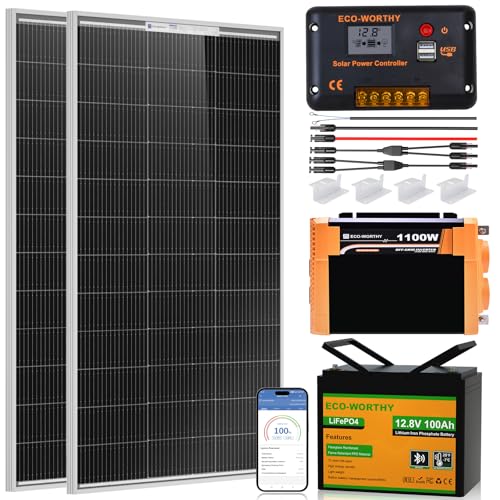
ECO-WORTHY 200 Watt 12V Complete Solar Panel Starter Kit

ECO-WORTHY 4.68KWH Solar Power Complete Kit

ECO WORTHY 10000W Output Complete Off-Grid Solar Panel Kit

Ultra ECO-WORTHY 1200W 24V 5.52KWH Lithium Battery Solar System
PowerMax 1800SE Solar Generator
More Details On Our Top Picks
Home backup gets much more comfortable with a unit like this, because the 3,584Wh LFP battery gives you substantial stored energy without moving into permanent installation territory. The 3,600W AC output also suits heavier household appliances than the smaller kits below, so it reads as a serious emergency anchor for power interruptions, work-from-home continuity, or an RV that needs real appliance support.
The expansion path up to 21kWh matters just as much as the starting capacity, since it leaves room for growth instead of forcing a replacement later. That flexibility is the main reason this sits above the leaner ECO-Worthy options for most households, though the trade-off is a larger, more expensive-feeling system footprint. The honest read is that you’re paying for headroom.
Strong Points
- Large 3,584Wh capacity supports longer backup runtimes for essential household loads.
- 3,600W AC output gives you more room for appliances than the compact kits in this list.
- Expandable storage up to 21kWh helps you scale the system as your needs grow.
- The included 200W solar panels make the package easier to plan around from day one.
Things To Consider
- The size makes it a poor match for very small spaces or light weekend use.
- Expansion makes the system more capable, but it also raises the planning burden.
- For simple phone charging and lights, the capacity is more than many setups need.
Core Details
Who It Suits Best
You’ll get the most from this setup if you want a high-capacity portable backup system for a house, cabin, or RV with heavier electrical needs.
A Better Fit Elsewhere
ECO-WORTHY 4.68KWH Solar Power Complete Kit fits more naturally for a homeowner who wants a more fixed residential setup without the same portable power-station format.
This ECO-Worthy kit feels built for a person who wants a fuller off-grid package without piecing together each component separately. The 400W solar array, 40A MPPT controller, twin 100Ah lithium batteries, and 2000W inverter give you a layered setup that makes sense in an RV, a small workshop, or a modest backup corner.
Compared with Jackery HomePower 3600 Plus, this one leans more into system building than grab-and-go convenience. The Bluetooth module adds monitoring convenience, which matters when the setup lives in a vehicle or a shed and you want quick status checks without opening everything up. The trade-off is that the kit asks for more planning and installation confidence than the portable power-station style pick above.
What We Like
- The bundled parts reduce guesswork for a complete off-grid build.
- Two lithium batteries give you a stronger storage base than a single small battery pack.
- The MPPT controller helps the solar array work more intelligently with changing light.
- Bluetooth monitoring is handy for checking system status from nearby.
Worth Noting
- The fuller parts list means installation takes more attention than a compact generator.
- It fits RV and small off-grid use better than broad whole-house coverage.
- Storage and wiring space matter here, so cramped setups may feel tight.
Feature Rundown
Who Will Love This
You’re the best match for this kit if you want a coordinated off-grid package for an RV, cabin, or compact backup project and don’t mind doing some setup work.
Swap It Out When
Jackery HomePower 3600 Plus is the cleaner choice for someone who wants a portable unit with less wiring and faster day-to-day handling.
This starter kit keeps the scope narrow, which is exactly why it makes sense for small RV loads or a first off-grid project. The 200W solar side, 30A charge controller, 100Ah lithium battery, and 1100W inverter create a modest system that covers basics without asking you to manage a larger energy stack.
Compared with the 1.6KWH ECO-Worthy kit, you give up battery depth and charging headroom, but you also get a setup that feels less intimidating. For a person learning the category, that smaller footprint can be a real advantage. The honest trade-off is obvious: it suits light use far better than sustained, appliance-heavy backup.
Highlights
- Starter-friendly scale keeps the system easier to understand and plan.
- The 100Ah battery gives you a usable base for lights and small electronics.
- The 1100W inverter supports everyday essentials better than bare-bones kits.
- Compact scope works well in a small RV or a tight storage space.
Areas To Watch
- The smaller output ceiling leaves less room for appliance-heavy routines.
- You may outgrow it faster than the larger ECO-Worthy options in this list.
- It rewards simple use, not ambitious whole-home planning.
Details At A Glance
Best Suited To
You’ll appreciate this most as a first solar kit for a small RV, a light-duty cabin, or backup basics in a tight space.
Where A Sibling Pick Shines
ECO-Worthy 1.6KWH Complete Solar Panel Kit suits you better once your loads grow beyond the basics and you want more stored energy.
This is where the list starts to feel more residential than portable. Six 195W bifacial panels, a 48V 50Ah lithium battery, and a 3500W charger inverter point toward a more serious home backup layout, especially for someone who wants a steadier bridge between daytime generation and nighttime use.
Compared with the smaller ECO-Worthy kits, the 48V architecture gives you a cleaner path to larger household needs and usually better current management across the system. Bifacial panels, meaning panels that can collect light from both front and back sides, can make sense in open installations where reflected light is available. The trade-off is that installation and space planning matter more here than on the portable Jackery unit.
Reasons To Buy
- 48V system design fits a more serious home backup setup.
- Six panels give you broader solar collection than the smaller kits in this roundup.
- Bifacial panel design can help in open, reflective installation spots.
- The 3500W inverter-charger offers stronger output headroom for household use.
Softer Spots
- The larger panel count asks for meaningful roof or ground space.
- Setup is less casual than a portable power station.
- It suits a planned install better than a temporary emergency stash.
Feature Snapshot
Made For
You’re the right match for this kit if you want a home-oriented solar setup that feels more permanent than portable and more capable than the smaller ECO-Worthy packages.
Another Choice May Suit
Jackery HomePower 3600 Plus fits better for someone who wants a backup source that moves easily and skips most installation work.
This is the heavyweight in the group, and the split-phase inverter tells you exactly where it belongs. A 10KW inverter with 120V/240V output, 48V 314Ah storage, and 2,950W of solar panel capacity points toward whole-house planning, not a few backup lights and a phone charger.
That scale is useful for households that want a more complete off-grid layout or a serious reserve for large electrical loads. It also means the system asks for space, planning, and a real installation strategy, unlike the plug-and-play feel of the Jackery unit. In practical terms, this is the kind of setup that belongs in a larger home, workshop, or property with multiple power zones.
Best Bits
- 10KW output gives you major headroom for household demand.
- 120V/240V split-phase support fits more demanding home circuits.
- The 48V 314Ah storage package is built for large reserve capacity.
- 2,950W of panel capacity gives the system a strong charging side.
Points To Note
- This is too much system for a light-use cabin or small RV.
- Space, installation time, and planning all rise with the size.
- The heavier build makes routine handling less convenient than portable options.
Quick Facts
Whose Shelf It Belongs On
You’ll want this only when you’re building a large off-grid or whole-house setup and have the space to support it.
Look Elsewhere When
ECO-WORTHY 4.68KWH Solar Power Complete Kit is the easier fit for a homeowner who wants a smaller residential system with less complexity.
This system sits in the useful middle ground between the smaller starter kits and the huge whole-house package. Six 195W panels, two 12.8V 280Ah batteries, a 60A MPPT controller, and a 3,000W pure sine wave inverter create a strong off-grid layout for cabins, backup rooms, or a workshop that needs real endurance.
Compared with the 4.68KWH ECO-Worthy kit, this one leans a bit harder on lithium storage volume, while staying more approachable than the 10KW split-phase setup. Pure sine wave output means the inverter produces a smoother AC form that’s friendlier to many sensitive electronics, which matters in a home office or equipment room. The trade-off is still installation effort, since this is a system, not a simple appliance.
Positives
- 5.52KWH storage gives you a solid reserve for off-grid routines.
- Two large batteries spread the storage across a practical system layout.
- The 60A MPPT controller helps the solar side stay organized.
- 3,000W pure sine wave output is a strong fit for many electronics.
- The six-panel array gives you meaningful charging potential.
Small Caveats
- The system still needs space and planning that a portable unit avoids.
- Cabins and workshops suit it better than casual weekend use.
- Installation and cable management can feel substantial the first time around.
Core Details
Built With In Mind
You’re the best fit for this setup if you want mid-to-large off-grid power with stronger battery depth than a starter kit.
Reach For A Different Pick When
Jackery HomePower 3600 Plus suits you better if portability matters more than building a fixed solar layout.
For travel, tailgating, or quick backup in a smaller home, this generator keeps the footprint easy to manage. The 1,024Wh LiFePO4 battery, three AC outlets, 3,600W surge capacity, and 800W AC charging make it a more flexible portable station than the tiny starter kit, while still staying far lighter in scope than the residential ECO-Worthy systems.
Wi-Fi and Bluetooth app control add convenience for checking status nearby, which matters when the unit lives in a garage, vehicle, or side room. The included 100W panel is useful for basic solar input, though the overall capacity sits well below the larger backup-focused picks in this list. The trade-off is simple: easier handling, less stored energy.
Positives
- Portable format is easy to move between home, RV, and travel use.
- Three AC outlets support multiple devices at once.
- Wi-Fi and Bluetooth control make status checks more convenient.
- The LiFePO4 battery chemistry suits long-term stationary and mobile use.
- 800W AC charging helps shorten wall-charging downtime.
Honest Caveats
- Battery capacity is far smaller than the larger home systems here.
- It makes sense for portable backup, not full residential power planning.
- The included panel is best seen as supplemental solar input.
Feature Card
Who Should Grab It
You’ll like this most if you want a portable solar generator for travel, short outages, or light home backup and don’t need the bulk of a larger install.
Skip It When
ECO-WORTHY 4.68KWH Solar Power Complete Kit is the better call for a homeowner who needs a more permanent, higher-capacity solar setup.
How To Choose The Right Solar Systems For Home
Start With Load Shape, Not Just Wattage
The right system starts with what you actually want to power. A fridge, router, and a few lights call for a very different setup than a water pump, workshop tools, or several rooms running through the night.
Inverter output, battery storage, and solar input need to line up as a set. A large number on one spec sheet can look impressive, but the practical result depends on whether the battery and panels can keep pace.
Match The System Type To Your Space
Portable solar generators suit apartments, RVs, and emergency corners where flexibility matters. Full kits with controllers, batteries, and inverters fit better in cabins, garages, and homes where you can plan a fixed install.
That split matters because the convenience trade-off is real. A portable station is easier to move, while a fixed kit usually offers more room to grow.
Think About Expansion Before You Commit
Some systems stop where they start, while others leave room for extra batteries or larger arrays. That difference matters most for households that expect loads to grow after the first install.
Expansion-friendly gear can feel less tidy on day one, but it avoids a near-term replacement. For most households, that longer view is smarter than buying exactly to the edge of today’s usage.
Check The Practical Details
Controller type, inverter waveform, and panel layout affect how easy the system feels after installation. MPPT controllers are worth attention because they manage solar input more intelligently than simpler charge control approaches.
Pure sine wave inverters also matter for many electronics, since they provide a smoother AC output. That kind of detail rarely sounds exciting, but it’s where a setup feels polished instead of fussy.
A Quick Reality Check
Common Shopping Slip Ups
Many people size a system around a single headline number and ignore the rest of the chain. That leads to weak pairing between panels, controller, battery, and inverter.
Another common miss is underestimating installation space. A compact generator and a six-panel residential kit solve very different problems, even before you get to wiring.
What The Higher Tier Buys
More expensive systems usually buy you capacity, scalability, and better electrical fit for a house. You also tend to get larger batteries, stronger inverter output, and more polished charging hardware.
That upgrade only makes sense when the load justifies it. For small backup needs, extra money can buy headroom you never use, while larger homes often benefit from the buffer.
Frequently Asked Questions
What size solar system suits a small home?
A small home often starts with a portable power station or a modest complete kit. The better choice depends on whether you want emergency coverage or a fixed off-grid layout.
Is a battery necessary in a home solar setup?
A battery matters whenever you want power after sunset or during outages. Without storage, the system depends much more on daylight and direct use.
What does MPPT mean?
MPPT stands for maximum power point tracking, a controller method that helps panels work closer to their useful output range. That matters because charging stays more efficient as light conditions change.
Why choose a split-phase inverter?
A split-phase inverter supports 120V and 240V output, which fits more residential circuits. It’s a better match for larger homes than a simple light-duty portable unit.
Which type is easiest for beginners?
A portable solar generator is usually the least intimidating starting point. It avoids most of the wiring and layout work that comes with a full kit.
Final Verdict
Your best choice comes down to how much of the house you want to cover and how permanent you want the setup to feel. Jackery HomePower 3600 Plus leads for portable backup, while the ECO-Worthy systems step upward in size from starter kits to whole-house capacity. For a smaller footprint, the PowerMax 1800SE stays easy to live with, and for larger homes, the 10KW ECO WORTHY kit gives you the most aggressive scale in this list. Match the system to your actual loads, and the right choice becomes much clearer.
