

Solar security cameras make sense when you want outdoor coverage without running fresh wiring across walls, fences, or outbuildings. They fit driveways, side yards, barns, porches, and garages where power access is awkward and regular charging is a chore. The useful difference comes down to angle control, storage choice, alert quality, and how much light the panel actually gets during the week.
That’s where this shortlist helps. You’ll see simple bullet-style options, 360-degree models, pan-and-tilt units, and higher-end kits with local storage or facial recognition. The right match depends less on marketing language and more on how your property is laid out.
Quick Look At The Shortlist
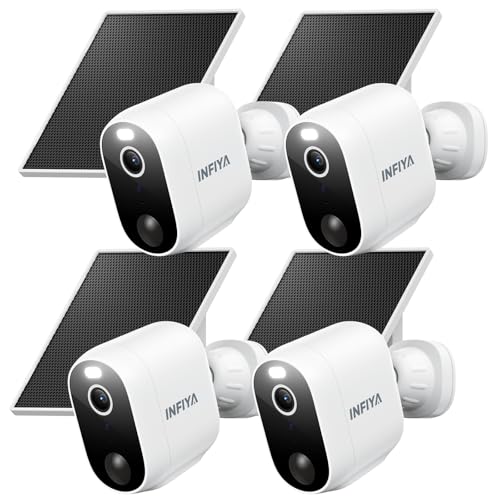
INFIYA Security Cameras Wireless Outdoor 4Pack
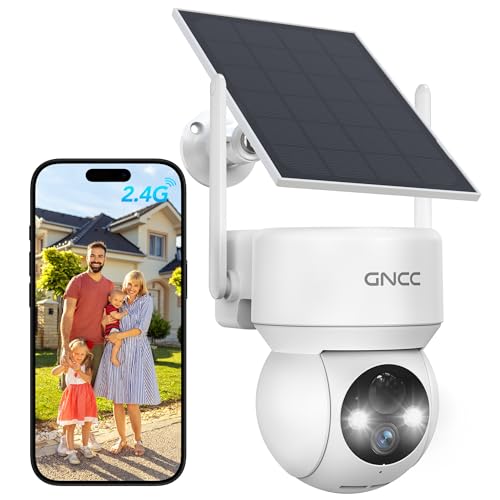
GNCC Solar Security Cameras Wireless Outdoor 2.4G WiFi

SeeVision Solar Security Cameras Wireless Outdoor 2K PTZ WiFi 3MP


GALAYOU Solar Camera Outdoor Wireless R6 1Pack

eufy Security eufyCam C37 2K Resolution

Tapo SolarCam 1080p Security Camera Wireless Outdoor C402 KIT
More Details On Our Top Picks
Four cameras in one package make this a straightforward way to cover several entry points at once. The mix of solar charging and battery power helps with spots that get uneven light, which is common on side yards and shaded fence lines.
The feature mix stays practical, with human detection, color night vision, two-way talk, and light plus siren response. Owners with a long driveway or a detached garage will get more from the four-unit layout than from a single-camera setup like the Tapo SolarCam C402 KIT.
Strong Points
- Four-camera set covers more ground from day one.
- Solar plus battery power reduces charging interruptions.
- Human detection helps narrow alerts to people.
- Color night vision gives fuller overnight context.
- Two-way talk adds a useful check-in option.
Things To Consider
- Four cameras also mean more setup across the property.
- 2.4 GHz Wi-Fi can be less flexible than dual-band systems.
- SD storage works well for locals, though card upkeep matters over time.
Feature Snapshot
Who It Suits Best
You’ll get the most value from this set if you want broad exterior coverage for a typical home, rental, or small property.
A Better Fit Elsewhere
eufy Security SoloCam E42 suits you better if you want a higher-detail four-camera setup with 4K capture and local storage headroom.
The 360-degree viewing angle is the headline here, and it suits open yards or corners that need broader reach from one mounting point. Compared with the INFIYA four-pack, this one leans into coverage from a single camera rather than spreading attention across multiple zones.
Color night vision, PIR motion detection, spotlight, and siren support round out a setup that feels practical for a driveway or gate. The IP65 rating matters too, because it signals dust protection and resistance to water jets, which is a useful baseline for exposed outdoor spots.
What We Like
- 360-degree viewing reduces blind spots around larger spaces.
- Solar plus battery power keeps installation flexible.
- PIR motion sensing is aimed at body heat and movement.
- Spotlight and siren add visible deterrence tools.
Room For Improvement
- 2.4 GHz Wi-Fi can be crowded in dense neighborhoods.
- One-camera coverage still leaves more area to manage than a multi-pack.
- Outdoor hardware usually needs occasional lens cleaning and panel dust checks.
Core Details
Built With In Mind
Homeowners with open outdoor space, such as a front yard, side yard, or corner lot, should find this layout easy to place.
Where A Sibling Pick Shines
SeeVision Solar Security Cameras Wireless Outdoor 2K PTZ WiFi 3MP suits you better if you want more active panning control rather than a fixed 360-degree viewpoint.
This one leans into PTZ, short for pan, tilt, and zoom, which means the camera can shift its view instead of sitting still. That matters on a porch, patio, or workshop entrance where movement happens in more than one direction, and it gives you more control than the GNCC fixed 360-degree approach.
Two-way talk, spotlight support, PIR motion sensing, and SD or cloud storage round out a strong control-first setup. The honest read is that it makes more sense for someone who wants to watch an active area than for someone who just wants basic set-and-forget perimeter coverage.
Highlights
- PTZ movement adds useful viewing flexibility.
- 2K resolution gives a cleaner image than 1080p models.
- Two-way talk helps with quick doorstep interaction.
- Spotlight support adds visibility after dark.
- SD or cloud storage keeps recording choices open.
Points To Note
- PTZ controls can take more app interaction than a fixed camera.
- More features usually mean a steeper learning curve at setup.
- Indoor and outdoor use in the title calls for careful placement planning.
At A Glance
Right Fit For
You’ll appreciate this most in a place where the camera needs to follow motion across a porch, yard edge, or service entrance.
Look Elsewhere When
GNCC Solar Security Cameras Wireless Outdoor 2.4G WiFi makes more sense for a simpler fixed-view yard setup with less app control.
The E42 stands out for 4K capture, which gives you more detail to work with when a face, package, or vehicle needs a clearer look. Paired with facial recognition, motion tracking, pan and tilt, and local storage support up to 16TB, it sits several steps above the simpler INFIYA and Tapo options.
It makes the most sense for a home where footage detail matters and the setup can handle a more involved system. Local storage also appeals to shoppers who prefer to keep recordings on-site rather than split attention between app subscriptions and cloud plans.
Upsides
- 4K capture brings more fine detail into the frame.
- Pan and tilt let you re-aim the view in-app.
- Facial recognition and motion tracking support smarter review.
- Local storage expansion up to 16TB gives you room to grow.
Softer Spots
- A four-camera kit takes more planning than a single-unit install.
- Higher-end features usually ask more from your network and app setup.
- Local storage means you’ll want a clear backup and maintenance habit.
Technical Sheet
Who Will Love This
You’ll benefit most here if you want detailed exterior monitoring for a larger home, a long driveway, or a property with multiple key angles.
Skip It When
Tapo SolarCam C402 KIT is the better fit for someone who wants a simpler, lower-detail camera with easier everyday setup.
The detachable solar panel is the practical feature here, because it gives you more freedom on walls, posts, and garage lines where the camera body and panel won’t share the same best angle. That flexibility matters more than it sounds, and it separates this from fixed-panel options like the GNCC model.
2K video, color night vision, and SD or cloud storage make it easy to fit into a garage, small farm setup, or backyard edge. The trade-off is simple, this is still a single-camera solution, so it’s best when you know exactly which spot needs coverage.
Best Bits
- Detachable panel helps solve awkward sun angles.
- 2K video keeps more detail than 1080p.
- Color night vision improves overnight scene readability.
- SD or cloud storage supports different recording habits.
Minor Gripes
- Single-camera coverage is better for one focused zone.
- 2.4 GHz Wi-Fi may be crowded in busy neighborhoods.
- External panel placement adds one more component to keep clean.
Details At A Glance
Whose Shelf It Belongs On
You’ll like this most for a single target zone such as a gate, garage door, or barn entrance.
Another Choice May Suit
INFIYA Security Cameras Wireless Outdoor 4Pack works better for you if several entry points need coverage at the same time.
Human, pet, and vehicle detection make this a good fit for homes where the camera sees a lot of everyday movement. Compared with the E42, it stays a little more approachable while still offering 360-degree pan and tilt plus AI tracking, so it feels less like a control room and more like a practical household tool.
The flexible solar panel is useful for corners or overhangs that don’t get ideal light all day. No monthly fee also changes the ownership math in a real way, especially for households that want ongoing recording without another recurring line item.
Reasons To Buy
- AI tracking helps the camera follow moving activity.
- Human, pet, and vehicle detection keeps alerts more specific.
- Flexible solar panel broadens placement options.
- No monthly fee appeals to long-term household planning.
Areas To Watch
- Pan and tilt systems depend on the app for the best control.
- 2K is solid, though the E42 offers even more detail.
- Flexible panels still need a clean, sun-friendly position.
Feature Rundown
The Right Fit
You’ll get the most from this model if you want a smart, household-friendly camera for a driveway, walkway, or side entrance.
Where Shoppers Go Wrong
eufy Security SoloCam E42 suits you better if detailed footage and larger local storage matter more than a simpler everyday setup.
The clearest appeal here is simplicity, with local storage and optional cloud access giving you two clean recording paths. For households that want a straightforward front-door or patio camera, that’s easier to manage than a feature-heavy kit like the eufy E42.
Person detection and support for Alexa and Google Assistant make it fit neatly into a basic connected home. 1080p resolution is the trade-off, though, so it suits practical coverage better than detail-hungry monitoring at long distance.
Best Bits
- Local storage reduces reliance on a subscription model.
- Optional cloud access gives you a second recording path.
- Person detection is useful for front-door activity.
- Works with Alexa and Google Assistant for easier smart-home tie-ins.
Small Caveats
- 1080p resolution is less detailed than 2K or 4K models.
- Basic coverage is great for entry points, less so for wide grounds.
- Solar and battery setups still need occasional panel cleaning.
Feature Card
Who Should Grab It
You’ll be happiest with this camera if you want a plain, dependable outdoor option for doors, porches, or compact yards.
Swap It Out When
GALAYOU Solar Camera Outdoor Wireless R6 1Pack suits you better if 2K detail and a detachable solar panel matter more.
How To Choose The Right Solar Security Cameras
Match The Camera To The Space
A small porch needs less coverage than a long driveway or split-level backyard. Fixed-view cameras work well for doors and gates, while pan-and-tilt or 360-degree models help in open areas where movement spreads across more than one angle.
Mounting height matters too, since a camera aimed too high can miss faces and a low mount can invite tampering. You get the cleanest setup when the camera’s field of view lines up with the space you actually want to watch.
Check Power And Sun Exposure
Solar cameras still depend on light, so panel placement is part of the purchase, not an afterthought. Detached or flexible panels help on shaded walls, while integrated panels suit open spots with steady daylight.
Battery backup matters during poor weather or heavy night activity, because real homes do not always offer perfect sun. The trade-off is simple: more solar freedom usually means more planning during installation.
Choose Storage With Your Habits In Mind
Local SD storage keeps recordings on the device side, which appeals to shoppers who want direct control. Cloud storage makes remote access easier, but it changes how you think about ongoing service and app management.
Look at how often you review clips, not just how many you want saved. A camera for a rental property, garage, or side entrance often works fine with local recording, while a busier home may justify a system with more storage flexibility.
Prioritize Alerts That Help, Not Annoy
Human detection, PIR sensing, pet detection, and vehicle detection each narrow alerts in different ways. PIR means passive infrared sensing, which looks for heat-related movement and often performs better than plain motion triggers in everyday outdoor use.
That detail matters in driveways, porches, and lawns where trees, shadows, and passing cars can create noise. The best fit is the camera that matches your property’s traffic pattern, not the one with the longest feature list.
What To Weigh Before You Click
Traps First Timers Fall Into
Many shoppers focus on resolution and miss the basics, like whether the camera can actually reach the sun or the Wi-Fi signal. A high-detail feed won’t help much if the panel sits in shade or the mount points at the wrong angle.
Another common miss is overbuying features for a simple doorway. A basic entry-point camera often does the job better than a complex system that takes too long to set up.
What The Higher Tier Buys
Higher-tier models usually spend the money on sharper video, smarter tracking, broader view control, and larger storage options. That extra cost also tends to buy better app polish and more flexible placement hardware.
The upgrade makes the most sense for larger homes, busy driveways, and places where you need to identify people or vehicles more clearly after dark. For a quiet side gate or small patio, a simpler camera can be enough.
Frequently Asked Questions
Do Solar Security Cameras Need Direct Sun All Day?
No, but they do work best with regular daylight on the panel. Shade, winter angles, and dirt on the panel can all reduce charging headroom.
Is 2K Better Than 1080p For Outdoor Monitoring?
Yes, 2K usually gives you more detail for faces, packages, and distance. 1080p still works well for basic entry-point coverage.
Do Local Storage Cameras Make Sense?
They do, especially for homes that want recordings kept on-site. You give up some convenience, but you keep the setup straightforward.
What Does PTZ Mean?
PTZ stands for pan, tilt, and zoom. It means the camera can move its view to cover more than one direction.
Which Model Fits A Simple Front Door Setup?
Tapo SolarCam C402 KIT is the easiest fit for that kind of use. It keeps the feature set lean and the storage choices straightforward.
Closing Thoughts
The best solar camera for your home depends on the shape of the space more than the headline feature list. A multi-pack suits broad coverage, a 360-degree or PTZ model fits active corners, and a simpler 1080p unit works well at a front door or compact patio. Storage preference matters too, especially when you want recordings kept local rather than tied to a service. Pick the setup that matches your property layout, then let the hardware do the quiet work.
