

Solar charging banks earn their keep on road trips, camping weekends, and long days away from outlets. The useful ones do more than sit in a pack and look rugged, they carry enough capacity, cable options, and output speed to keep phones and small devices moving without constant wall charging.
That’s the lens here. You’ll see which models suit travel, emergency backup, and everyday carry, plus where each one asks for a trade-off in size, charging speed, or solar realism.
Quick Look At The Shortlist
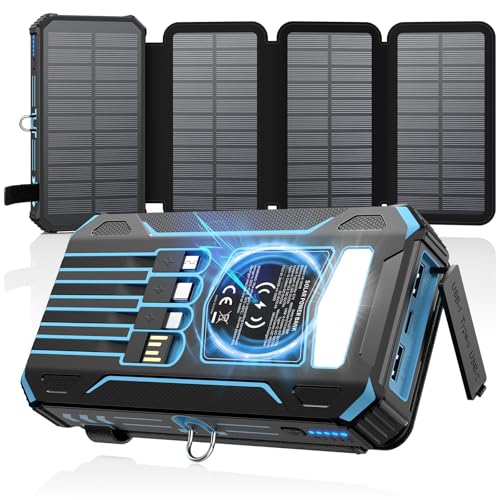
SOARAISE Solar Power Bank 48000mAh Wireless Battery Pack
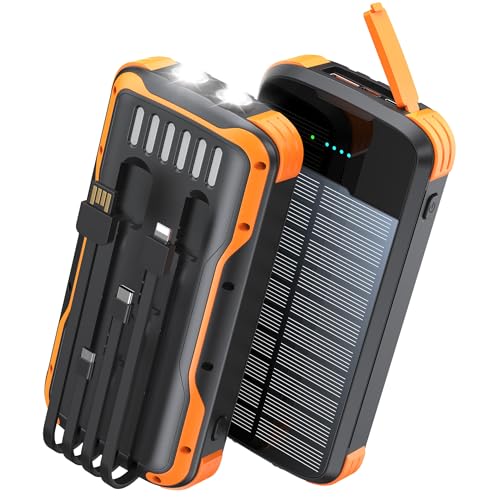
Solar Power Bank 40000mAh PD20W Fast Charging Portable Solar Charger
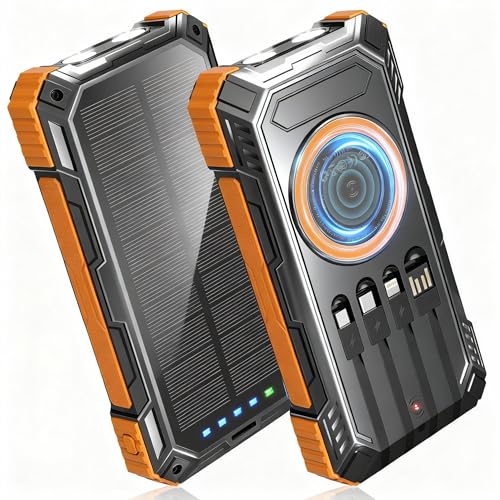
Solar Power Bank 49800mAh Wireless Portable Phone Charger

BLAVOR Solar Power Bank with Hand Crank and 4 Cables
Solar Power Bank 20000mAh Portable Charger with Built-in 3 Cables

Solar Charger Power Bank 49800mAh Wireless Portable Phone Charger
Solar Power Bank 49800mAh Portable Charger Wireless Charging
More Details On Our Top Picks
SOARAISE leans into capacity first, which makes sense for road trips, group outings, or a pack that stays in the car. Four built-in cables reduce the cable hunt, and the wireless charging option gives you a cleaner setup for short top-offs.
The four-panel solar layout and rugged build point toward outdoor use more than desk duty, though solar input still fits backup use better than daily wall charging. Compared with the smaller Luvknit and BLAVOR picks, this one suits you when runtime matters more than pocketability.
Strong Points
- 48000mAh capacity supports longer stretches between wall charges.
- Built-in cables cut down on packing extras.
- Wireless charging helps when you want a fast, tidy top-up.
- Four solar panels suit emergency replenishment outdoors.
- Rugged styling fits camping kits and vehicle storage.
Things To Consider
- That much capacity adds bulk, so pocket carry is unrealistic.
- Solar input remains a backup path, not a main charging plan.
- The many built-in parts deserve careful storage to avoid clutter in a bag.
Feature Snapshot
Who It Suits Best
You’ll get the most from this on long trips, camping weekends, or in a trunk kit where size matters less than reserve power.
Where A Sibling Pick Shines
BLAVOR Solar Power Bank with Hand Crank and 4 Cables fits better for campers who want a smaller pack with a manual backup feature.
SOXONO sits in the middle of the pack with 40000mAh capacity, three ports, and built-in cables, so it reads as a tidy travel companion rather than a suitcase anchor. The orange finish also makes it easier to spot in a crowded campsite or backpack.
Its 20W PD output, meaning Power Delivery, gives compatible devices a more efficient wired charge path than basic low-output banks. Compared with the SOARAISE model, you give up some reserve capacity, but you gain a cleaner size-to-speed balance for weekend use.
What We Like
- 20W PD output suits everyday phone charging.
- 40000mAh capacity feels substantial without going as large as the biggest picks.
- Three ports let you share power across a few devices.
- Built-in cables reduce clutter in carry bags.
Room For Improvement
- The orange finish is practical, though it won’t suit every setup.
- Solar use still belongs in the backup bucket.
- Three ports cover a lot, but not the full port spread of the more output-heavy models.
Core Details
Who Will Love This
You’re in the sweet spot here if you want a camping-ready charger that still feels manageable in day bags.
Another Choice May Suit
YOLOSKS Solar Charger Power Bank 49800mAh Wireless Portable Phone Charger fits you better if you want more output variety and a larger capacity ceiling.
BLASOUL is the speed-first option in this group, with 22.5W charging and USB-C in and out support for modern phone setups. That matters on work trips or camping weekends where you want less waiting and more turnaround.
Its four built-in cables also reduce the usual tangle, and the 49800mAh capacity puts it in the same high-reserve lane as the SOARAISE pick. The trade-off is size, which you’ll feel in a daypack, but the output mix makes that easier to accept.
Highlights
- 22.5W output is the strongest wired speed in this lineup.
- USB-C in and out broadens compatibility.
- Four built-in cables help you cover multiple device types.
- 49800mAh capacity keeps it useful for extended travel.
Softer Spots
- The larger shell asks for more pack space.
- High capacity can tempt overreliance on solar input, which still belongs in backup use.
- The many integrated parts are handy, though they deserve neat storage.
Feature Rundown
Built With In Mind
You’ll appreciate this most on busy travel days, especially when you carry several devices and care about recharge speed.
Skip It When
SOXONO Solar Power Bank 40000mAh PD20W Fast Charging Portable Solar Charger suits you better if you want a lighter balance of size and output.
BLAVOR takes a different route from the larger 48,000mAh and 49,800mAh picks, focusing on emergency-friendly extras rather than sheer reserve. The hand crank is the standout, because it gives you a manual charging path when a wall outlet and strong sun are both out of reach.
You also get wireless charging, four cables, USB-C, and a camping light, so it behaves like a compact field kit more than a simple battery pack. The honest read is that the 20000mAh size suits shorter trips better, but the added functions make it easy to justify for backup-minded use.
Positives
- Hand crank support gives you a manual backup option.
- Wireless charging keeps quick phone top-offs simple.
- Four cables help cover common device types without extra packing.
- Camping light adds practical value around tents or parked cars.
Areas To Watch
- 20000mAh leaves less reserve than the largest picks here.
- The extra features are useful, though they make the unit feel more complex.
- Manual charging is a backup path, not a routine power source.
Technical Sheet
Whose Shelf It Belongs On
You’ll get the best fit from this around camping gear, emergency kits, or a vehicle glove box where backup features matter.
Look Elsewhere When
Luvknit Solar Power Bank 20000mAh Portable Charger with Built-in 3 Cables suits you better when simplicity and lighter packing matter more than manual charging extras.
Luvknit is the least fussy option here, and that simplicity helps in a backpack, a carry-on, or a desk drawer. Three built-in cables cover USB-C, Lightning, and Micro-USB, so you can leave more cords at home.
The product page is unusually direct about solar use, saying it’s meant for emergency top-ups rather than primary charging. That honesty matters, because it keeps expectations realistic and makes this a sensible pick for backup-minded shoppers instead of sun-only adventurers.
Reasons To Buy
- Three built-in cables cover the most common legacy and modern plugs.
- 15W fast charging is suitable for routine phone top-offs.
- 20000mAh size stays easier to pack than the largest options.
- Clear backup-first positioning helps set the right expectations.
Points To Note
- The solar panel is for emergency use, not primary charging.
- You’ll want to precharge it from a wall adapter before travel.
- The smaller reserve makes it less suited to multi-day, high-drain use.
Details At A Glance
Right Fit For
You’ll like this most if you want a straightforward travel charger that keeps cable packing to a minimum.
Where Shoppers Go Wrong
SOARAISE Solar Power Bank 48000mAh Wireless Battery Pack suits you better when longer reserve time matters more than a simpler build.
YOLOSKS is the most port-rich option in this list, so it makes sense for households or travel groups that juggle several devices at once. Six outputs and two inputs give you a lot of routing flexibility, which matters more than it sounds when everyone wants a cable at the same time.
QC3.0, meaning Quick Charge 3.0, adds another layer of speed for compatible devices, and the built-in cables keep the bundle from turning messy. Compared with the BLASOUL model, this one puts more weight on connection count than peak charging speed, which is a fair trade for shared use.
Upsides
- Six outputs handle group charging with less shuffling.
- Two inputs add flexibility when you recharge the pack.
- QC3.0 support helps compatible phones charge efficiently.
- Wireless charging keeps short top-offs easy.
Small Caveats
- More ports mean more to manage in a bag.
- The feature count helps, though it makes the unit feel busier than simpler picks.
- Wireless convenience does not replace a fast wired connection for longer sessions.
Core Details
Who Should Grab It
You’ll get the most value from this in a shared home, group trip, or travel bag where more connection points matter.
Swap It Out When
BLASOUL Solar Power Bank 49800mAh Wireless Portable Phone Charger fits you better if charging speed matters more than port count.
TRASHBINEAN blends a large 49800mAh reserve with wireless charging and USB-C support, which makes it flexible for modern carry-on setups. The built-in cables help you avoid packing a separate cord pouch, and that’s a small relief on flights or packed weekends.
The LED flashlight adds another layer of utility, though the 15W charging speed keeps it below the faster BLASOUL and SOXONO picks. For travel-first use, though, the mix of capacity, cable integration, and wireless convenience lands in a sensible place.
Best Bits
- 49800mAh reserve works well for travel-heavy routines.
- Wireless charging offers a tidy top-off option.
- USB-C support fits current cables and devices.
- Four built-in cables cut down on loose accessories.
Trade Offs
- 15W output trails the faster models in this roundup.
- The larger format is better for bags than pockets.
- The built-in parts are convenient, though they call for careful stowing.
Core Details
The Right Fit
You’ll like this best for travel days, backup kits, and carry-on bags where convenience matters as much as reserve.
Reach For A Different Pick When
BLASOUL Solar Power Bank 49800mAh Wireless Portable Phone Charger suits you better if faster wired charging sits higher on your list.
How To Choose The Right Solar Powered Portable Chargers
Capacity, Output, And Real-World Use
mAh, short for milliamp-hours, tells you how much charge reserve a bank can hold. Higher numbers suit longer trips and bigger device stacks, while smaller packs are easier to carry every day.
Output matters just as much. A 20W or 22.5W bank is a better match for modern phones than a basic low-output unit, especially during travel layovers or camping weekends.
Built-In Cables And Port Layout
Built-in cables reduce the chance you’ll forget the one cord that matters. They also make a bag simpler to pack, which helps on road trips and in emergency kits.
Port count becomes important when more than one device needs power at once. A simple two-port bank works fine for solo use, while six outputs make more sense for families or group travel.
Solar Claims Versus Backup Reality
Solar panels on these products are best treated as backup support, not the main charging path. That matters in cloudy weather, during winter trips, or anywhere sunlight is inconsistent.
The better question is how the bank performs from a wall outlet first, then how the solar feature helps in a pinch. That approach keeps expectations grounded and avoids disappointment.
Extra Features Worth Paying For
Wireless charging, flashlights, and even hand cranks can make sense in the right setting. They add convenience during outages, roadside stops, and campground setups.
Those extras also add size, complexity, or both, so they make the most sense for people who’ll actually use them. A simpler bank often wins for carry-on travel.
What To Weigh Before You Decide
Common Shopping Slip Ups
A common mistake is treating solar as the main charging method. That’s a fast path to disappointment, because these packs usually work better when you start from a full wall charge.
Another trap is chasing capacity without thinking about carry size. A 49,800mAh model sounds generous, but it feels very different in a day bag than a 20,000mAh pack.
When Paying More Pays Off
Higher-tier models usually cost more because they pack more cells, more ports, and more charging features into the shell. Wireless charging, built-in cables, and faster outputs all add convenience and hardware complexity.
The upgrade makes sense for frequent travelers, camping-heavy routines, or shared households. For light backup use, a simpler and smaller bank often does the job with less bulk.
Frequently Asked Questions
Do Solar Power Banks Charge Well From Sunlight?
They can recharge from sunlight, but that path is slow and best treated as backup support. A wall outlet or cable is still the practical way to start from full power.
Is A Bigger mAh Number Always Better?
No, because a larger capacity usually means more weight and a larger footprint. Your best match depends on how long you stay away from outlets and how much you want to carry.
Are Built-In Cables Worth It?
They’re handy for travel because you pack less and forget less. The trade-off is that the unit has more fixed parts to store carefully.
What Does PD Mean On A Charger?
PD means Power Delivery, a charging standard that can send power more efficiently to compatible devices. It matters most when you want a faster wired charge on a newer phone.
Which Pick Fits Emergency Kits Best?
BLAVOR Solar Power Bank with Hand Crank and 4 Cables makes the most sense for backup kits because it adds a manual charging path and a light. For pure reserve capacity, SOARAISE Solar Power Bank 48000mAh Wireless Battery Pack gives you more stored power.
Closing Thoughts
Your best match depends on how you travel and how much cord management you want to avoid. The large-capacity picks suit long weekends and shared use, while the simpler 20,000mAh models fit lighter packing and easier storage. Solar support is useful here, but the real value comes from reserve capacity, output speed, and how neatly the bank fits into your routine. Choose the one that matches your bag, your devices, and the kind of outage you actually plan for.
