

You want solar that fits the way you travel, not just the spec sheet. Some rigs need a foldable panel you can stash after camp, while others need roof-mounted panels that stay put through long miles and mixed weather. The right setup can keep a power station topped off, support a 12V system, or help a parked RV feel less dependent on hookups.
This roundup focuses on that real-world split. You’ll see portable options, rigid roof panels, flexible panels for curved surfaces, and smaller maintainer kits for keeping batteries steady between trips. Each pick solves a different part of RV power life, so you can match the panel to your parking habits, roof space, and wiring comfort.
Quick Look At The Shortlist

Renogy 200W Portable Foldable Solar Panel
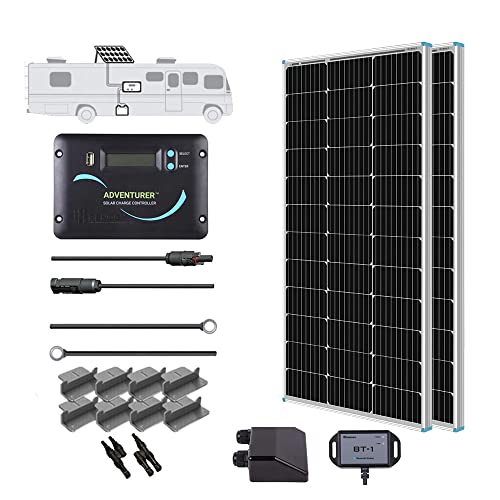
Renogy 200W 12V N-Type RV Solar Panel Kit

Topunive 100W 12V Flexible Solar Panel

Renogy ShadowFlux 200W N-Type Solar Panel

Callsun N-Type 16BB 400W Bifacial Solar Panel

SOLPERK 30W 12V Solar Battery Charger Kit

Renogy 200W N-Type 16BB Solar Panel

Rvpozwer 200 Watt N-Type 18BB Solar Panel
More Details On Our Top Picks
A foldable panel like this suits RV life that changes from one stop to the next. The kickstand setup helps for campsite angles, and the USB-A plus Type-C outputs make it easier to top up small devices directly, which is handy during a blackout or at a boondocking site.
The IP65 rating signals dust resistance and protection against water spray, so it feels better suited to outdoor storage than a bare-bones portable panel. The trade-off is simple: you gain mobility, but you still need to set it out, angle it, and put it away after use.
Strong Points
- Foldable design stores easily in a compartment or tow vehicle.
- Kickstand support helps you angle it toward the sun without much fuss.
- USB-A and Type-C outputs support smaller gear alongside a power station.
- IP65 protection gives you more confidence around outdoor dust and splashes.
- Useful for shore-power gaps, roadside stops, and brief camp setups.
Things To Consider
- You still have to move and position it each time you want output.
- Portable panels usually ask for more day-to-day handling than roof panels.
- Storing it dry and unfolded cleanly helps keep the hinges and surface in good shape.
Feature Snapshot
Who It Suits Best
You travel often, camp off-grid, and want a panel you can pack away after setup.
Where A Sibling Pick Shines
Renogy 200W 12V N-Type RV Solar Panel Kit with Adventurer 30A Controller suits a fixed roof install better for RV owners who want one place to leave the hardware.
This kit makes sense for a roof-mounted RV setup because it bundles the panel with an Adventurer 30A LCD PWM charge controller and mounting brackets. A PWM controller, short for pulse width modulation, is the budget-friendly style that manages charging in a straightforward way, and that simplicity often suits first-time roof installs.
The bundled hardware takes some guesswork out of getting started, which matters when you’d rather spend a weekend camping than chasing individual parts. The honest read is that this sort of kit feels built for convenience first, not for campers who want maximum modularity.
What We Like
- Panel, controller, and brackets arrive as one matched setup.
- LCD controller makes basic charge monitoring easier from inside the rig.
- Mounting hardware helps shorten the parts list for a roof install.
- Works well for RVs, trailers, boats, and other fixed systems.
- Good fit for you when a tidy all-in-one box matters more than custom sourcing.
Room For Improvement
- Roof mounting takes more planning than a portable panel.
- PWM control is simple, though some setups may want a different controller style later.
- Bracket placement and cable routing still need careful attention during installation.
Core Details
Made For
You want a roof-ready kit for a camper, trailer, or van and prefer fewer separate purchases.
A Better Fit Elsewhere
Renogy 200W Portable Foldable Solar Panel suits travelers who need to move their panel between campsites instead of fastening it to the roof.
Flexible panels suit curved roofs, lighter builds, and spots where a rigid frame would feel awkward. The semi-flexible format matters on RV shells, boat decks, and uneven surfaces because the panel can follow the shape better than a standard glass module.
That flexibility comes with a trade-off, though, since installation usually depends more on the mounting surface and adhesive or fastening plan. For travelers with limited roof clearance or unusual contours, that compromise can be worth it, especially compared with the bulk of a rigid panel like the Renogy roof kits.
Highlights
- Thin, bend-friendly build fits curved or uneven mounting areas.
- 100-watt size works well for smaller 12V charging jobs.
- Monocrystalline cell construction is a familiar choice for compact solar layouts.
- Light form factor can suit boats, cabins, vans, and small RV roofs.
Softer Spots
- Installation quality depends heavily on how well the surface is prepared.
- Flexible panels usually need thoughtful mounting to stay secure over time.
- A 100-watt panel is modest for larger RV electrical demands.
At A Glance
Who Will Love This
You need a lighter solar piece for a curved roof, small van, or marine setup.
Look Elsewhere When
Renogy ShadowFlux 200W N-Type Solar Panel fits better for a rigid roof mount where shade tolerance matters more than flexibility.
Partial shade is the headache that catches a lot of RV roofs, and this panel is aimed squarely at that problem. The ShadowFlux design and N-Type PV module layout give it a more advanced feel than the simpler Renogy kit earlier in the list, especially for roof spots that see branches, vents, or antenna shadows.
The 200-watt size still keeps it in a familiar range, so you are not stepping into a bulky array just to get better light handling. One thing worth considering, though, is that a more capable module only pays off when the roof location truly sees mixed lighting.
Reasons To Buy
- Anti-shading design helps in roofs with patchy sun exposure.
- 25% efficiency rating points to strong output potential for its size.
- Works with both 12V and 24V systems.
- Well suited to RVs parked near trees or other shade sources.
Points To Note
- Shade resistance matters most in mixed-light parking spots.
- Fixed-panel mounting still takes planning and roof space.
- You may not need this much feature set for a simple open-lot install.
Details At A Glance
Best Suited To
You park in tree cover, along fence lines, or anywhere roof shade changes through the day.
Another Choice May Suit
Rvpozwer 200 Watt N-Type 18BB Solar Panel is a solid alternative for a more standard roof install where you want a straightforward panel without the same shade-focused angle.
This pair is for RV owners who need more roof output and are comfortable working with a larger solar footprint. Bifacial means the panel can capture light from both sides, so it makes more sense on reflective surfaces, elevated mounts, or other setups where light can reach the rear side too.
Compared with the single 200-watt picks, this set pushes harder for energy-hungry rigs that run more gear away from hookups. The trade-off is obvious enough, since more panel means more space, more mounting care, and more planning around roof layout.
Upsides
- Two 200-watt panels give you a larger overall solar footprint.
- Bifacial design can make use of reflected light around the panel.
- 16BB cell structure points to a more refined cell layout.
- Works with 12V and 24V systems.
- Good fit for bigger RV electrical loads and off-grid stays.
Minor Gripes
- Dual panels need more roof space than a single compact module.
- Installation can feel more involved because of the larger array.
- Best results depend on a layout that lets light reach the rear side.
Technical Sheet
Whose Shelf It Belongs On
You run a larger RV or off-grid setup and want more charging headroom from the roof.
Swap It Out When
Renogy 200W Portable Foldable Solar Panel suits smaller setups better when you need something you can move, store, and deploy without dedicating roof space.
This is the smallest, most upkeep-focused option in the group, and that’s exactly its point. A battery maintainer helps keep a stored RV battery from sitting idle for too long, and the MPPT controller, short for maximum power point tracking, is the more adaptive style that tries to pull useful output from changing light.
For a garage-kept trailer, seasonal rig, or parked boat, that smaller 30-watt setup makes more sense than hanging a big roof array. The trade-off is plain: you are preserving charge, not building a full-time solar power system.
Best Bits
- Low-output format suits battery upkeep rather than full load support.
- MPPT controller adds a more advanced charging approach than a basic maintainer.
- Waterproof kit design helps for outdoor mounting.
- Adjustable bracket gives you more flexibility in positioning the panel.
Areas To Watch
- 30 watts is aimed at maintenance, not heavy RV power demand.
- Regular panel cleaning still matters for steady trickle charging.
- Bracket placement should match the spot where the rig sits most often.
Feature Rundown
Built With In Mind
You keep a vehicle or trailer parked for stretches and want to support the battery between trips.
Reach For A Different Pick When
Renogy 200W 12V N-Type RV Solar Panel Kit suits you better when the goal is a roof-mounted system that handles more daily energy use.
This is the straightforward roof panel in the group, the sort of pick that suits a tidy fixed install without extra frills. The 200-watt rating and 16BB cell layout place it close to the middle of the pack, which is useful for RV roofs that need dependable output without moving into a larger bifacial setup.
That middle-ground character makes it easy to pair with common RV use cases, from van roofs to cabin or farm buildings. In most setups, the appeal is less about flash and more about having a clean, familiar panel size that does its job without fuss.
Strong Points
- Simple 200-watt format suits many RV roof layouts.
- 16BB cell arrangement suggests a more refined internal structure.
- Works with 12V and 24V systems.
- Good fit for owners who want a standard fixed panel without extra complexity.
Worth Noting
- Fixed mounting still requires planning for cable routing and roof access.
- It does not bring the portable convenience of a foldable panel.
- You may want a more shade-focused panel than this one for tree-lined parking spots.
Core Details
The Right Fit
You want a simple, roof-mounted solar panel for a van, RV, cabin, or farm build.
Another Choice May Suit
Renogy ShadowFlux 200W N-Type Solar Panel is the better call for roofs that deal with branches, vents, and changing shade through the day.
This panel sits in the familiar 200-watt roof category, but the 18BB cell layout gives it a more feature-rich profile than a bare-bones module. The monocrystalline construction and N-Type design make it feel like a sensible step-up for a rooftop, especially for RV owners who want a modern fixed panel without moving into a larger array.
It’s a good match for travelers who want straightforward roof coverage and a cleaner install path than a flexible panel usually brings. The catch is that all the usual roof-mount planning still applies, so the value shows up most clearly on rigs that can make steady use of a fixed panel.
Bright Spots
- 18BB cell layout adds a more detailed conductor structure.
- 200-watt rating keeps it in a practical RV panel size.
- Monocrystalline and N-Type design suit modern roof builds.
- Good fit for rooftop, trailer, marine, home, or farm use.
Small Caveats
- Roof installation still takes time and careful placement.
- It lacks the grab-and-go convenience of a portable foldable panel.
- Performance depends on how well the roof stays clear of shade and debris.
Feature Card
Perfect Match For
You want a fixed roof panel for an RV, trailer, marine setup, or small off-grid build.
Skip It When
SOLPERK 30W 12V Solar Battery Charger Kit makes more sense for simple battery upkeep instead of full-time solar generation.
How To Choose The Right Solar Panels For Rvs
Match Panel Style To How You Travel
Portable panels work best for RV life that changes campgrounds often. They are easier to store and aim, which helps when your rig sits in different light from one stop to the next. Roof-mounted panels suit you better when you want a setup that stays in place and runs with less daily handling.
Flexible panels fit curved roofs or unusual surfaces, but they ask more from the mounting surface. Rigid panels bring a cleaner fixed installation, and that usually helps when your roof has the space and structure to support them.
Think About Charge Control Early
A controller manages how solar power reaches the battery, and that piece matters as much as the panel itself. PWM controllers are simple and common, while MPPT controllers adjust more actively to changing light and can suit maintenance kits or more refined systems. Your goal should be a control style that matches the size and complexity of the RV electrical setup.
Smaller battery maintainer kits work for parked rigs and seasonal storage. Larger roof systems need a controller that matches the panel count, battery bank, and daily energy use.
Look At Shade, Roof Space, And Output
Shade tolerance matters a lot on RV roofs because vents, racks, and trees can interrupt sunlight. A panel built for mixed-light conditions earns its keep on routes where parking spots are rarely wide open. For open lots and clear campsites, a simpler panel can be enough.
Roof space also sets the ceiling for what you can install. A pair of 200-watt panels needs more room and planning than a single 100-watt panel, but that extra size can make sense for longer stays and heavier loads.
A Quick Reality Check Before You Order
Mistakes Worth Dodging
One common slip is choosing a panel by wattage alone. A 200-watt panel sounds strong, yet the real fit depends on roof room, controller type, and whether you need portable or fixed mounting. Another mistake is overlooking the shape of the mounting surface, which matters a lot with flexible panels.
It also helps to think about storage and maintenance. Portable panels need a place to live when the rig moves, and roof panels still need routine cleaning to stay useful.
The Upgrade Payoff
Higher-tier solar panels usually cost more because the cell layout, shading handling, or bifacial design adds more engineering. Those features can matter a great deal on an RV roof that sees partial shade or needs stronger output from limited space. You are paying for better fit to a harder job.
The upgrade makes sense when your rig spends long periods off-grid or you depend on solar to carry more of the daily load. For light weekend use or battery maintenance, a simpler kit often does enough.
Frequently Asked Questions
What size solar panel works for most RV setups?
A 200-watt panel is a common starting point for many RV owners. Smaller rigs or battery maintainer jobs can work with less, especially when the goal is upkeep rather than full charging.
Are portable solar panels useful for RV travel?
Yes, portable panels fit travel that changes campsites often. You can move them toward the sun and put them away after use.
Do flexible solar panels work on curved RV roofs?
They do, because the semi-flexible format can follow a curve more easily than a rigid panel. The mounting surface still needs careful prep so the install stays secure.
What does an MPPT controller do?
MPPT stands for maximum power point tracking. It adjusts charging more actively as light changes, which can help in mixed conditions.
Is a bifacial panel useful on an RV?
It can be, especially on a setup where light reaches the back side or reflects well around the panel. Roof layout and mounting height decide how much of that benefit you’ll actually use.
Closing Thoughts
The best solar panel for your RV depends on how you park, how much roof room you have, and whether you want a portable setup or a fixed one. Renogy covers the practical middle ground well, while the flexible Topunive panel and the SOLPERK maintainer fill narrower but useful jobs. For heavier power needs, Callsun and the bifacial or shade-focused Renogy options give you more headroom. Choose the setup that fits your travel pattern, and the whole system feels much easier to live with.
