

You want a solar setup that matches your space, your power draw, and how much setup work feels reasonable. That might mean a full RV system, a small battery maintainer for a parked vehicle, or a larger off-grid kit for a cabin or home backup plan. The right match saves you from undersized panels, awkward mounting, and controller mismatches that can turn a promising project into a weekend headache.
Quick Look At The Shortlist

Renogy 400W 12V Premium Solar Kit
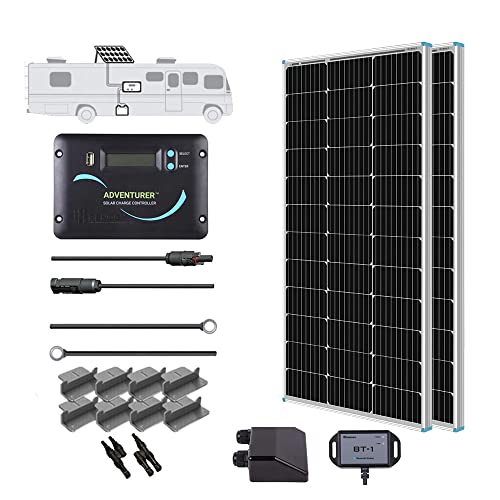
Renogy 200W 12V N-Type RV Solar Kit

DOKIO 200W Solar Panel Kit, 2-Pack

SOLPERK 30W 12V Battery Maintainer Kit

ECO-WORTHY 400W 12V Premium Solar Kit

Hoysicy 100W 12V Solar Battery Maintainer Kit

ECO-Worthy 1.6KWH Complete Solar Kit 400W

Rvpozwer 200W N-Type Solar Kit

ECO-Worthy 7.168KWH 800W Solar Kit
More Details On Our Top Picks
This 400-watt setup is built for a bigger energy appetite, so it makes sense for a cabin, an expanded RV system, or a truck setup that needs more than just light charging. The 40A MPPT controller, or maximum power point tracking controller, helps the array work closer to its usable output in changing light, and the Bluetooth module gives you a cleaner way to check status without standing over the gear.
Compared with the smaller Renogy 200W kit later in this list, this one is clearly the more ambitious package and the trade-off is a larger install footprint. You also get Z brackets, fuse hardware, adaptor pieces, and tray cables, so the box leans toward a more complete build for a weekend install in a garage or driveway.
Strong Points
- Four 100W panels create a flexible layout for roof space.
- The MPPT controller suits users who want steadier charging behavior in varied light.
- Bluetooth support makes status checks less of a hassle once everything is mounted.
- Included brackets, cables, and fuse pieces reduce extra parts hunting.
Points To Note
- The larger array needs more roof or ground space than the 200W kits here.
- Installation can feel involved for anyone new to multi-panel wiring.
- The setup makes more sense for committed off-grid use than for occasional trickle charging.
Feature Snapshot
Who It Suits Best
You suit this kit best when you want a serious 12V array for a larger RV, a small off-grid structure, or a vehicle-based system that runs more than basic lights and phone charging.
Where A Sibling Pick Shines
Renogy 200W 12V N-Type RV Solar Kit fits better for lighter RV use, shorter weekend trips, or a roof that simply cannot spare the space for four panels.
This Renogy kit stays in the practical middle ground, which helps for trailers, boats, and campers that need useful charging without a sprawling roof layout. The Adventurer 30A LCD PWM controller, a pulse-width modulation unit that keeps the charging process straightforward, makes the kit friendlier for basic solar setups than a more complex all-in-one system.
Compared with the larger 400W Renogy kit above, this version asks less of your mounting surface and wiring plan. The included brackets also suit more compact installs, and that matters for travel rigs where every square inch of roof space already has a job.
What We Like
- 200W suits modest daily charging needs without overbuilding the system.
- The LCD controller gives you an easy read on charging status.
- Mounting brackets are included, which helps shorten the parts list.
- It works well for RV, boat, trailer, and camper use cases.
Room For Improvement
- PWM control is simpler than MPPT, so it suits basic systems more than high-efficiency builds.
- The kit is less fitting for larger battery banks than the 400W options in this roundup.
- Roof fit still matters, so planning the bracket layout takes some care.
At A Glance
Right Fit For
You fit this kit best when your RV, trailer, or boat needs dependable daytime charging and you want an easier install than a larger multi-panel package.
Look Elsewhere When
Renogy 400W 12V Premium Solar Kit suits you better for larger battery storage, heavier appliance use, or a cabin that needs more headroom.
This DOKIO set keeps things modular, which can be useful for a DIY-minded install where you want two separate 100W panels instead of one fixed format. The 5 m cable, about 16.4 feet, gives you room to place the array and the controller with less strain on the layout, and the included battery clips make a bench-style connection more approachable.
Unlike the Renogy 200W kit, the controller is not bundled here, so your final system design stays a little more open-ended. That trade-off suits shoppers who already have a controller or want to choose one that matches a very specific battery bank.
Highlights
- Two separate 100W panels give you layout flexibility.
- The long cable helps with placement on vans, campers, or sheds.
- Battery clips are handy for simpler hookup scenarios.
- The kit works well as an expansion or replacement pair.
Honest Caveats
- The charge controller is sold separately, so the full system takes more planning.
- You’ll need to confirm that your controller matches the battery setup.
- Owners who want an all-in-one box may prefer a more complete kit.
Core Details
Made For
You fit this kit best when you want a flexible 200W panel pair for a project you’re piecing together around your own controller choice.
Another Choice May Suit
Renogy 200W 12V N-Type RV Solar Kit fits better for a more complete package with controller and brackets already lined up for the install.
For parked cars, motorcycles, RV batteries, and boat batteries, a 30W maintainer keeps the footprint small and the intent very clear. The MPPT controller helps the panel stay more efficient than a bare-bones trickle setup, and the adjustable bracket matters because a low-output panel still needs decent sun exposure to do its job.
Compared with the larger Renogy and ECO-WORTHY kits, this one is about battery upkeep rather than running a full cabin or appliance stack. The honest read is that it suits storage and occasional use far better than heavy daily loads.
Positives
- Small output suits maintenance instead of full system charging.
- The MPPT controller adds smarter power handling for a compact kit.
- Adjustable mounting helps you aim the panel more cleanly.
- Works well for seasonal vehicles that sit for stretches.
Softer Spots
- The 30W output is for upkeep, not high-demand power use.
- Regular cleaning matters more here because a small panel loses margin quickly in shade or grime.
- It makes the most sense as a maintainer, not as a main solar source.
Details At A Glance
Who Will Love This
You suit this kit best when you need a compact battery maintainer for a parked vehicle, a boat, or a seasonal RV that sits more than it travels.
Swap It Out When
Hoysicy 100W 12V Solar Battery Maintainer Kit fits better for an owner who needs more charging margin and a longer cable run.
This ECO-WORTHY kit sits close to the Renogy 400W setup, but it carries the brand’s own mix of 100W N-type panels, MPPT control, Bluetooth monitoring, and Z brackets. That combination suits a motorhome, camper, or small off-grid structure where you want a full 400W class system without building every piece from scratch.
The trade-off is similar to the Renogy 400W package, because you still need room for four panels and the wiring work that comes with them. For most garages and weekend installs, the appeal is the balance between output and included hardware rather than any single flashy feature.
Bright Spots
- Four 100W panels give you a useful 400W class array.
- MPPT control supports better power capture than simpler controller styles.
- Bluetooth monitoring can make system checks more convenient.
- The bracket set helps the kit feel more complete out of the box.
Things To Consider
- The full setup needs committed roof or ground space.
- Multi-panel wiring takes a little planning, especially on a first install.
- It suits power-hungry RV life better than light maintenance duty.
Quick Facts
The Right Fit
You suit this kit best when you want a full 400W off-grid layout for a camper, RV, or compact home project and prefer an included controller plus brackets.
Where A Sibling Pick Shines
Renogy 200W 12V N-Type RV Solar Kit fits better for lighter roof space, simpler wiring, or a travel setup that does not need the larger array.
The Hoysicy kit is the sort of compact setup that makes sense for a shed, a boat battery, or a smaller RV that only needs steady upkeep. The monocrystalline panel, a single-crystal style known for efficient use of space, pairs with a 20A controller and a 16.4-foot extension cable, so placement feels more forgiving than a short-lead kit.
Compared with the SOLPERK 30W maintainer, this one gives you more output and a wider cushion for cloudy days or slightly longer cable routing. The trade-off is that it asks for a little more mounting attention, though that still stays well within the small-system category.
Best Bits
- 100W gives more charging margin than a tiny maintainer panel.
- The 20A controller suits a modest 12V maintenance setup.
- 16.4 feet of cable helps with real-world placement.
- Monocrystalline construction fits compact spaces well.
Areas To Watch
- It still works best as a maintainer rather than a main power source.
- Longer cable runs benefit from tidy routing and secure fastening.
- Vehicles stored under deep shade will need a different approach.
Spec Overview
Built With In Mind
You suit this kit best when you want a compact 12V maintainer for a boat, RV, or storage setup and want a bit more output than a tiny trickle panel.
Reach For A Different Pick When
SOLPERK 30W 12V Battery Maintainer Kit fits better for the smallest maintenance jobs and a simpler footprint on a parked vehicle.
This ECO-Worthy package goes beyond panels alone, because it brings two 12V 100Ah lithium batteries, a 2000W power inverter, Bluetooth monitoring, and a 40A MPPT controller into one system. For RV living or a serious off-grid build, that means you are looking at a broader energy stack rather than just a charging array.
That extra scope makes it very different from the simpler 400W kits above, and the payoff is convenience. The trade-off is size, weight, and planning, because battery placement, inverter location, and cable routing all matter once the system becomes this complete.
Reasons To Buy
- Panels, batteries, inverter, and controller arrive as one system.
- The lithium batteries add storage for evenings and cloudy stretches.
- The 2000W inverter widens the list of usable devices.
- Bluetooth support helps make a larger setup easier to monitor.
Small Caveats
- The system takes more room than a panel-only kit.
- Installation is more involved because storage and inverter placement matter.
- It makes the most sense for people ready to commit to a full off-grid layout.
Technical Sheet
Whose Shelf It Belongs On
You suit this kit best when you want a complete RV or off-grid power package and prefer buying the storage and inverter pieces alongside the panels.
Skip It When
Renogy 400W 12V Premium Solar Kit fits better for a panel-focused build where you want a smaller, simpler list of parts.
This 200W kit stands out because the N-type panels are paired with a stated 25% efficiency figure, which points to strong output in a compact footprint. For boats, campers, and tight roof layouts, that kind of density matters because you get useful charging without needing the bulk of a four-panel 400W array.
It also includes a 30A controller, 10AWG solar cable, tray cable, and black Z brackets, so the install is more self-contained than DOKIO’s controller-sold-separately route. The honest read is that it looks like a tidy fit for people who care about panel quality and a cleaner parts list.
Standout Traits
- N-type panel design points toward efficient use of space.
- The 25% efficiency claim supports a strong output-to-size ratio.
- The kit includes both solar cable and tray cable.
- Black Z brackets help the mounting hardware look less visually busy.
Trade Offs
- The 200W ceiling still limits it to modest system demands.
- High-efficiency panels can still underperform in poor placement or shade.
- The compact focus leaves less room for expansion than a larger multi-panel kit.
Feature Card
Perfect Match For
You suit this kit best when roof space is tight and you want a 200W package with a strong efficiency focus for a camper or boat.
Where A Sibling Pick Shines
Renogy 400W 12V Premium Solar Kit fits better for larger off-grid loads and owners who want more total array output than a compact two-panel setup.
This is the most complete system in the roundup, and it behaves like it. You get 800W of panels, a 3000W UPS inverter charger, two 12.8V 280Ah lithium batteries, and a 60A MPPT controller with Bluetooth, so the package is aimed at serious off-grid living rather than casual solar support.
Compared with the ECO-Worthy 1.6KWH 400W kit, this version doubles down on storage and inverter headroom, which matters for larger RVs or home-style backup projects. The catch is that a system this complete needs room, planning, and a clear idea of what you want to run.
Upsides
- 800W of panels gives the system a much larger charging base.
- The 3000W UPS inverter charger supports a wider device range.
- Two large lithium batteries increase stored energy for later use.
- Bluetooth monitoring helps you keep tabs on a bigger setup.
- The 60A MPPT controller fits a higher-output build.
Worth Noting
- The system needs substantial space for panels and battery storage.
- Installation and cable planning are more involved than with smaller kits.
- It makes sense for committed off-grid use, not casual weekend charging.
Core Details
Best Suited To
You suit this kit best when you want a large RV or off-grid system with serious storage and inverter capacity, not just a panel kit with a battery attached.
Not Your Match When
Rvpozwer 200W N-Type Solar Kit fits better for a smaller camper or boat where a compact panel-first layout makes more sense.
How To Choose The Right Solar Panel Kits
Match Output To Daily Demand
Start with what you actually plan to run, not with the biggest number on the product page. A 30W maintainer suits a parked car or seasonal battery, while 200W is a more realistic floor for an RV that powers lights, small charging, and light electronics. 400W and above start to make sense once you want refrigeration support, longer cloudy-day cushion, or a more serious off-grid routine.
Controller type matters just as much as panel wattage. PWM controllers are simpler and often fine for straightforward systems, while MPPT controllers usually suit people who want better power handling from a larger or more efficient array. The trade-off is cost and system complexity, so your comfort level with wiring should guide the choice too.
Measure Space Before You Shop
Roof space, ground space, and cable routes can make or break the install. Four-panel kits like the Renogy 400W and ECO-WORTHY 400W need room to breathe, while compact kits like the SOLPERK 30W or Hoysicy 100W are easier to place on a van roof, battery box, or shed wall.
Mounting hardware also changes the job. Z brackets support a permanent roof-style install, and adjustable mounts help with aiming on a maintainer setup. A kit that includes brackets, cable, fuse pieces, or battery clips can save time, but it only helps when those parts match the way you plan to mount and wire the system.
Think In Terms Of System Pieces
Some kits are panel-first, some are controller-first, and some are almost complete power systems. DOKIO leaves room for your own controller choice, which suits a DIY build with a specific plan, while the ECO-Worthy 1.6KWH and 7.168KWH systems pull batteries and inverter hardware into the package. That difference changes not just the price band, but also the amount of planning needed before installation starts.
Battery storage is the part many people undercount. A panel can only collect power during daylight, so lithium batteries matter when you want evening use or backup capacity after the sun drops. For RV travel, cabin backup, or long stays off-grid, the battery stage often matters just as much as the panels themselves.
Things Worth Knowing First
Mistakes Worth Dodging
One common misstep is matching a large panel kit to a very small battery bank. That can leave you with more solar input than your setup can comfortably use, so the system feels overbuilt rather than helpful.
Another is overlooking controller type. A basic controller works for simple needs, but a larger array with more ambitious daily use usually benefits from a stronger match between the panels and the electronics.
What The Higher Tier Buys
More expensive kits usually include larger arrays, MPPT controllers, Bluetooth monitoring, bigger batteries, or inverter hardware. Those additions matter because they reduce piecemeal shopping and give you a more complete power path from panel to storage to use.
The upgrade makes sense for RV living, cabins, and backup setups that need staying power. For occasional battery maintenance, spending up rarely pays off the way it does in a full off-grid build.
Frequently Asked Questions
What size solar kit suits a small RV?
A 200W kit is a sensible starting point for a small RV with light electrical needs. Larger rigs or heavier appliance use usually call for 400W or more.
Is MPPT better than PWM?
MPPT usually fits larger or more serious systems because it handles power conversion more efficiently. PWM still works well for simpler 12V setups and smaller loads.
Do you need batteries with a solar kit?
Batteries matter when you want power after sunset or during cloudy stretches. A panel-only setup can charge, but storage is what keeps the system useful at night.
Can a maintainer panel keep a vehicle battery ready?
A small maintainer panel can support a parked vehicle battery over time. It suits storage use better than regular driving or high accessory loads.
What matters most for an off-grid kit?
Panel output, battery capacity, and inverter size all need to work together. A strong array with undersized storage usually feels unbalanced in real use.
Closing Thoughts
Your best solar setup comes from matching the kit to the way you actually live, park, travel, or store gear. Small maintainers suit dormant vehicles, 200W kits work well for modest RV use, and 400W plus systems start to fit heavier off-grid plans. Complete packages make sense when you want fewer separate parts and a cleaner path from sunlight to stored power. Choose the one that matches your space and your routine, and the rest of the install feels much more manageable.
