

Solar motion flood lights can make a dark driveway, side yard, or back gate feel easier to manage after sunset. You want enough coverage for the path, enough motion response for everyday use, and a setup that doesn’t turn into a weekend project. The picks below focus on real-world fit, from compact wall mounts to wider multi-head lights for larger yards. A few lean simple, while others give you more control through remote settings or separate solar panels.
The Shortlist At A Glance

Onforu 4500LM Solar Lights Outdoor 3 Heads
CLAONER Solar Outdoor Lights Motion Sensor 2500LM 286 LED

ropelux Solar Flood Lights Outdoor 6000LM High Brightness

YSEAGA Solar Lights Outdoor Waterproof 288 LED 2800LM

SZPOWER 6000LM Solar Lights Outdoor Waterproof 6 Heads
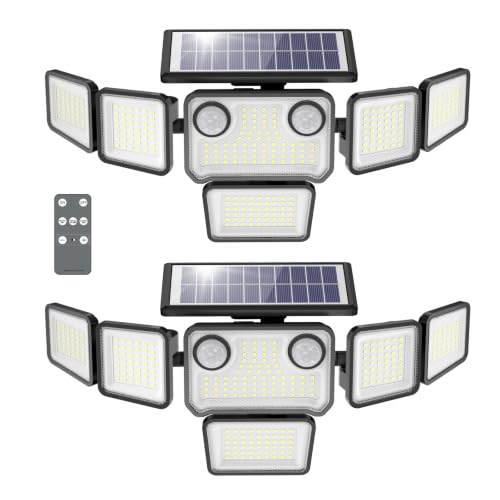
omibee Solar Lights Outdoor 6000LM 310 LEDs Dual Motion
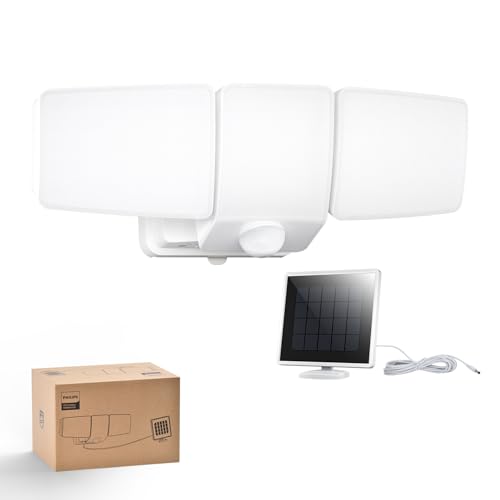
Philips 3600LM Solar Security Lights 5000K Waterproof

ropelux Solar Flood Lights Outdoor 7000 Lumens Aluminum Arm
More Details On Our Top Picks
The three-head layout gives this Onforu a wider spread than a single-lamp wall light, so it fits porches, side doors, and yard corners where you want coverage across more than one direction. Remote control adds a bit of convenience, especially for routine evening use around a garage or back patio.
The trade-off is that the larger light head layout can look busier on a small fence line, so it suits practical setups more than minimalist ones. You’ll probably appreciate it most where one light needs to cover a broad patch rather than a narrow walkway.
Strong Points
- Three heads spread light across a wider area than a single fixed lamp.
- Remote control makes mode changes easier from a doorway or window.
- IP65 rating supports outdoor placement in exposed spots.
- Useful for everyday access points like porches, sheds, and garage edges.
Things To Consider
- The larger head cluster needs more visual space on the wall.
- Remote-based control is handy, though it adds one more item to keep track of.
Key Specs
Who It Suits Best
Homeowners who want broad porch or yard coverage with simple remote control will get the most from this layout.
A Better Fit Elsewhere
CLAONER Solar Outdoor Lights Motion Sensor 2500LM 286 LED suits smaller mounting spots where you want more compact hardware and a cleaner profile.
CLAONER leans into control feedback, and that’s the part that stands out first: the battery and mode display gives you a clearer read on how the light is set up than a basic motion lamp. In a garage, patio, or side yard, that kind of visibility can make day-to-day use feel less guessy.
The 3-head wide-angle layout helps it cover a decent patch without turning into oversized hardware, which is useful for tighter exterior walls. The warm white finish also feels a bit softer than bluer outdoor beams, so it works well near entry doors where you want light without harsh glare.
What We Like
- Visual battery and mode display makes settings easier to check at a glance.
- Three lighting modes give you more control over how it behaves at night.
- 286 LEDs add density for fuller coverage across a small to medium zone.
- Warm white output can feel easier on the eyes near doors and patios.
Room For Improvement
- 2500 lumens is more modest than the higher-output picks in this list.
- The display adds helpful feedback, but it also means a more feature-heavy design.
- Compact mounting spots may still need careful aiming to get the coverage you want.
Feature Snapshot
Best Suited To
Home setups that need clear settings feedback and a calmer warm-white beam will suit this model well.
Swap It Out When
Onforu 4500LM Solar Lights Outdoor 3 Heads makes more sense for wider porches and larger wall sections that need broader spread.
The ropelux unit is built for people who want a stronger wash of light across a bigger section of driveway, patio, or front approach. At 6000 lumens with a 6500K color temperature, it leans bright and crisp, which is useful for security-focused placement where visibility matters more than a soft glow.
The five modes give it more flexibility than the simpler picks above, and that matters in mixed-use spaces where some nights call for motion response and other nights call for a different lighting pattern. One thing worth considering is that the brighter, cooler beam can feel pretty assertive near a bedroom window, so placement matters.
Highlights
- 6000-lumen output gives you strong coverage for larger outdoor sections.
- 6500K light color reads crisp and clear across open spaces.
- Five operating modes add more flexibility than the simpler models here.
- Good fit for garage fronts, street-facing walls, and broad patios.
- IP65 protection supports outdoor mounting in exposed conditions.
Softer Spots
- The brighter, cooler tone may feel less relaxed near sitting areas.
- Five modes are useful, though they can take a little more setup time.
At A Glance
Who Will Love This
Households with bigger driveways, open yards, or front-facing walls will appreciate the stronger output and flexible modes.
Look Elsewhere When
CLAONER Solar Outdoor Lights Motion Sensor 2500LM 286 LED fits better for smaller wall spaces where you want a gentler, more compact setup.
YSEAGA lands in the useful middle ground: enough LED density and enough output for everyday yard lighting, without chasing the bigger 6000-lumen numbers of the ropelux and SZPOWER options. The remote control makes it easier to adapt the light from a patio chair, garage doorway, or side entrance.
The four-head shape gives you a bit more directional spread than a very compact lamp, though it still stays in the practical residential lane. In most side yards, that balance feels easier to live with than an oversized fixture, especially on walls that already carry a doorbell, camera, or outlet box.
Bright Spots
- Four heads help distribute light across a broader patch than single-panel styles.
- Remote control adds convenience for routine mode changes.
- 288 LEDs provide a dense lighting layout for residential use.
- Works well for patios, garage walls, and backyard access points.
Areas To Watch
- 2800 lumens is solid, though it sits below the brighter models in this roundup.
- The multi-head layout may need a little aiming to avoid wasted spill.
- Remote-based control can be convenient, but it also asks you to keep track of the remote.
Details At A Glance
Made For
Practical household setups that want a remote and a balanced light spread will get good mileage from this one.
Another Choice May Suit
ropelux Solar Flood Lights Outdoor 6000LM High Brightness fits better for larger properties that need more reach and a stronger beam.
SZPOWER feels built for a larger perimeter, with six heads and two motion sensors giving it more angles to work with than the single-sensor models in the list. That matters around long fence lines, broad patios, or house corners where one trigger zone can leave blind spots.
The 310-LED layout backs up that broader shape, and the remote control adds convenience for changing modes without climbing back to the mount. The honest read is that this much hardware makes more sense on a bigger wall or a post, because it can look a little busy on a tight entryway.
Reasons To Buy
- Six heads help distribute light across a wide perimeter.
- Two motion sensors improve coverage across multiple approach paths.
- 310 LEDs support a fuller lighting pattern around the mount.
- Remote control adds convenience for everyday mode changes.
Points To Note
- The larger hardware footprint suits open exterior walls better than compact spots.
- More heads usually means more aiming work during installation.
- Regular cleaning of the panel and sensor area helps keep performance consistent.
Core Details
Whose Shelf It Belongs On
Properties with wide open edges, multiple entry paths, or long outer walls are the best match for this style.
Where A Sibling Pick Shines
YSEAGA Solar Lights Outdoor Waterproof 288 LED 2800LM makes more sense for smaller patios where a lighter, less crowded fixture fits better.
omibee follows a similar high-coverage formula to SZPOWER, but the layout feels aimed at broad backyard monitoring rather than a purely front-facing install. Dual motion sensors matter in spaces where people approach from more than one direction, especially around side gates or split yard access.
The 6-head design and 310 LEDs give it the kind of spread that suits larger residential areas, though that also means you’ll want to place it where the body doesn’t crowd nearby trim or fixtures. For most backyards, the mix of remote control and broader sensing makes it easy to live with once mounted.
Positives
- Dual sensors help catch movement from more than one approach.
- Six heads give it a broad lighting footprint.
- 310 LEDs support strong coverage for a larger yard.
- Remote control keeps day-to-day adjustments simple.
- IP65 protection suits exposed exterior mounting points.
Honest Caveats
- The larger footprint needs enough wall space to sit cleanly.
- Cleaning around the sensor and panel area helps keep upkeep simple.
Feature Rundown
The Right Fit
You’ll get the most from this pick on larger backyards, fence lines, and garage sides that need more than one motion zone.
Where Shoppers Go Wrong
CLAONER Solar Outdoor Lights Motion Sensor 2500LM 286 LED is the smarter call for smaller exterior walls where oversized hardware would feel crowded.
Philips takes a more flexible route than the fixed-wall models above, thanks to the separate solar panel and the 16-foot cable that lets you place the panel where sun access is better. That separation is a real advantage for garages, sheds, or shaded eaves where the light mount and the panel do not share the same ideal spot.
The dimmable LED setup and three adjustable heads make it easier to shape the output for a driveway or yard entrance without blasting a single hard beam everywhere. In most installations, that makes it feel more tailored than the all-in-one units, though it does ask for a little more planning during setup.
Upsides
- Separate solar panel placement gives you more mounting flexibility.
- 16-foot cable helps reach a sunnier spot without moving the light body.
- Three adjustable heads make aiming more precise.
- Dimmable output gives you more control over brightness level.
Minor Gripes
- The split-panel design adds a bit more installation planning.
- More parts can mean more cable management on the wall.
- It feels better suited to practical lighting control than a very simple setup.
Technical Sheet
Built With In Mind
Shaded garages, side sheds, and awkward mounting spots benefit most from the split-panel layout.
Reach For A Different Pick When
Onforu 4500LM Solar Lights Outdoor 3 Heads is easier to install for a straightforward wall mount where you want fewer parts to manage.
This ropelux model pushes into a more area-light style with 7000 lumens, a 6000 mAh battery, and an aluminum arm that feels better matched to a sturdy post, barn wall, or wide lot edge. The dusk-to-dawn behavior means it’s built for longer-running outdoor lighting where you want the fixture to manage itself through the night.
Compared with the more residential Onforu and CLAONER options, this one feels like the strongest fit for bigger, more open spaces that need a broad, dependable beam. The trade-off is simple, it looks and behaves more like a serious area light than a compact porch lamp.
Best Bits
- 7000 lumens make this the brightest pick in the roundup.
- 6000 mAh battery supports longer-running outdoor lighting use.
- Aluminum arm adds a sturdier mounting feel.
- Dusk-to-dawn behavior suits long evening coverage.
- Three modes give you some control over how it operates.
Small Caveats
- The larger, more industrial shape suits open spaces better than small entryways.
- It may look a bit oversized on a modest porch wall.
- Outdoor mounts work best with a solid surface and regular panel cleaning.
Core Details
Who Should Grab It
People lighting barns, large yards, or wide street-facing spaces will get the most value from this stronger area-light style.
Skip It When
Philips 3600LM Solar Security Lights 5000K Waterproof is the cleaner choice for tighter residential walls that need more flexible placement.
How To Choose The Right Solar Motion Flood Lights
Match Output To The Space
Lumen output tells you how much light a fixture can produce, but the real question is how far that light needs to travel. A narrow side path can work with a lighter setup, while a broad driveway or open yard usually benefits from a stronger beam and more head coverage.
Color temperature matters too. A 5000K or 6500K light looks cleaner and brighter, while warmer white can feel easier around patios and doors where you spend time at night. That simple choice often separates a practical security light from one that feels too harsh for daily use.
Look Closely At Mounting Flexibility
Fixed all-in-one lights are simpler to place, and they suit garages, fences, and porch walls where the sun hits the same surface that holds the light. Separate-panel designs work better in shade, because the solar panel can sit in a brighter spot while the lamp stays where you need it.
The trade-off is setup complexity. Split-panel models ask for a little more cable management, while compact units are quicker to mount but less adaptable if your wall stays shaded for part of the day.
Think About Sensor Behavior And Modes
Motion sensors are the heart of this category, so you want a fixture that matches your property layout. Single-sensor lights are fine for simple entries, while dual-sensor or wider-angle designs suit spaces with multiple paths and corners.
Mode count matters more than it first appears. A basic two- or three-mode light keeps things simple, while higher-mode models give you more control over motion response, dimming, and dusk-to-dawn style use.
Build Quality And Everyday Use
IP65 protection shows up often in this group, and that rating generally signals outdoor-ready sealing against dust and water exposure. Aluminum parts, heavier arms, and stronger housings usually make sense for exposed walls or larger lots, though they can add bulk.
Maintenance is usually straightforward, wipe the panel, clear dust from the sensor, and keep the mounting surface snug. That little routine helps the light behave more consistently through changing seasons.
A Quick Reality Check
Common Shopping Slip Ups
Many people focus on brightness alone and miss the shape of the beam. A high lumen count still feels wrong if the heads don’t point where your walkway or gate actually sits.
Another easy miss is panel placement. A shady wall can limit charging, so a split-panel light often makes more sense than an all-in-one unit in that kind of spot.
The Upgrade Payoff
Higher-tier models usually pay for better coverage, more adjustable heads, stronger housing, or a separate solar panel. You also tend to get easier control, whether that means remote operation, multiple modes, or a clearer battery readout.
That extra spending starts to make sense on larger yards, barn walls, or mixed-use spaces where a basic lamp would leave dark corners. For a small porch, the simpler option often feels plenty.
Frequently Asked Questions
How bright should solar motion flood lights be for a driveway?
A modest driveway can work well with mid-range output, while a wider drive usually benefits from stronger lumen counts and wider head spacing. The beam pattern matters just as much as the number on the box.
Do separate solar panels help in shaded areas?
Yes, they help a lot when the mounting wall doesn’t get solid sun. The panel can sit in a brighter spot while the lamp stays where you need light.
What does IP65 mean for outdoor lights?
It points to outdoor sealing that suits dust exposure and water spray. It’s a useful sign for wall-mounted gear, especially in open yard locations.
Are multi-head lights better than single-head lights?
Multi-head designs spread light more widely and can cover corners or side approaches better. Single-head models stay simpler and often fit smaller mounts more neatly.
Do more modes always matter?
They matter most when you want more control over how the light behaves at night. For a basic entry point, fewer modes can actually feel easier to live with.
Closing Thoughts
You’ve got a solid spread here, from compact wall lights to brighter area-style fixtures with separate panels and extra control. The right choice depends less on hype and more on your wall space, your sun exposure, and how much ground you need to cover after dark. For a porch, garage, or side yard, a simpler model can be enough. For a wide driveway or barn wall, the larger picks make more sense and feel easier to live with over time.
