

Solar hot water gear covers a wide range, from small circulation pumps to portable boil-water setups and full-home electric units. That mix matters because your best fit depends on whether you’re circulating water through a panel loop, warming water at camp, or improving flow in a house with a recirculation line. The right choice saves you from mismatched fittings, weak flow, or a setup that’s too small for the job. You’ll see the strongest options below, arranged by use case.
Quick Look At The Shortlist

BYT-7A006 DC 12V Solar Hot Water Heater Circulation Pump
BYT-7A014 DC 12V Solar Hot Water Heater Circulation Pump
BYT-7A014 DC 12V Solar Hot Water Heater Circulation Pump

Hot Water Recirculating Pump 120W for Electric Water Heater System

4Patriots Sun Kettle: Portable Solar Water Heater

10W Solar Water Pump KIT: DC Brushless Submersible Water Pump

Stiebel Eltron Tempra 29 Plus Electric Tankless Water Heater

DC 12V Solar Hot Water Heater Circulation Brushless Little Pump

VEVOR Hot Water Recirculating Pump
More Details On Our Top Picks
Bayite keeps this one tight and simple, which fits small solar loops better than bulky house pumps. The non-self-priming design matters, because you’ll want a system that already has water in place before the pump starts moving it.
The 2.1 GPM flow rate and 9.8-foot discharge head make it a better match for shorter runs, not sprawling installs. For a shed setup, a compact thermal loop, or a hobby system with modest lift, that restraint is part of the appeal.
Strong Points
- Low-profile form keeps the install straightforward.
- 2.1 GPM suits modest circulation needs.
- 9.8-foot head works for short vertical lifts.
- DC 12V power fits many small off-grid builds.
Points To Note
- Non-self-priming design needs a prepared line.
- Not meant for larger, high-demand loops.
Feature Snapshot
Who It Suits Best
You’ll get the most from this pump in a compact solar water loop, a small DIY heater path, or any setup where low-voltage simplicity matters more than brute force.
Swap It Out When
VEVOR’s Hot Water Recirculating Pump suits homes that need three-speed flexibility and a sturdier recirculation path.
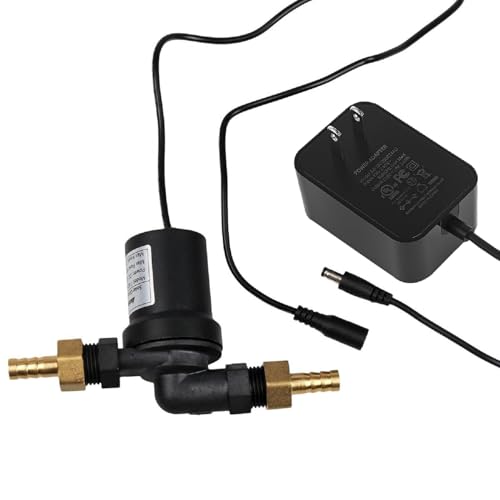
This Bayite version adds the DC power supply adapter, so the setup burden is lighter than the bare-bones option above. That makes a real difference for a garage bench, a first solar loop, or a small hot-water circuit where you want fewer parts to source separately.
The listing also gives you the same compact 12V circulation approach, plus the 8 LPM figure for flow context, which helps when you want a little more clarity around movement without stepping into a big residential pump. The honest read is that it’s still a small-system part, just with a nicer starter kit feel.
Upsides
- Included adapter trims setup hassle.
- 12V operation keeps it friendly for small systems.
- 8 LPM spec gives clearer flow guidance.
- Low-noise design suits indoor utility spaces.
Small Caveats
- Still built for compact circulation, not heavy demand.
- Adapter inclusion helps, but routing still needs planning.
Details At A Glance
Who Will Love This
You’ll like this version most for a tidy DIY build where an included power adapter saves time and removes one more compatibility question.
A Better Fit Elsewhere
Item 4, the ZeroPone Hot Water Recirculating Pump 120W for Electric Water Heater System, suits a larger home plumbing job better.
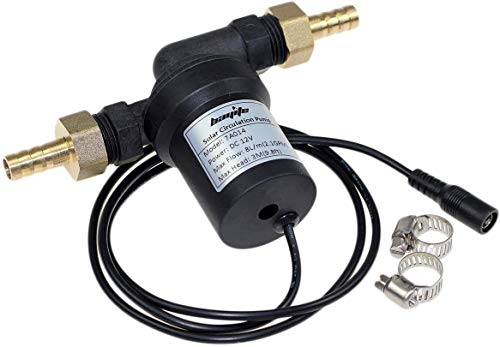
Compared with Item 2, this Bayite version strips things back to the basics. That makes sense for a modest build where you already have power sorted and just want the circulation hardware itself.
The 2.1 GPM flow and 9.8-foot head keep it in the same small-system lane as Item 1, so it’s easy to size for a short solar water path. For a bench-top project, a small loop heater, or a setup with narrow tubing, the lighter package is part of the charm.
Bright Spots
- Simple spec set keeps the choice easy.
- 2.1 GPM works well for small loops.
- 9.8-foot head supports short lifts.
- Compact build helps in tight utility spaces.
Areas To Watch
- No bundled power adapter listed here.
- Like Item 1, it suits small-scale circulation better than large homes.
Core Details
Whose Shelf It Belongs On
This fits a hands-on project owner who wants a lean pump without extra accessories getting in the way.
Reach For A Different Pick When
Item 2, the BYT-7A014 DC 12V Solar Hot Water Heater Circulation Pump with adapter, suits a cleaner first-time setup more comfortably.
ZeroPone moves away from the small 12V category and into a more house-focused recirculating pump. The 120W rating and the stainless steel head point toward a sturdier role, especially in a home where hot water has to travel through longer plumbing runs.
The included 3/4-inch G to 1/2-inch NPT adapter also matters, because fitting mismatch is where a lot of installs get awkward fast. For an electric water heater system in an occupied home, that extra compatibility can save you a lot of backtracking.
What We Like
- 120W output suits more demanding recirculation jobs.
- Stainless steel head adds a sturdier feel.
- Adapter inclusion helps bridge common thread sizes.
- Better fit for whole-house plumbing than small loop pumps.
Honest Caveats
- Larger house systems usually need more installation planning.
- Metal components can be a little less forgiving during fit-up.
Quick Facts
Built With In Mind
You’ll appreciate this most in a house that needs faster hot-water availability at multiple taps, not a tiny solar experiment.
Where A Sibling Pick Shines
For a smaller solar loop, the bayite BYT-7A006 DC 12V Solar Hot Water Heater Circulation Pump is easier to size and place.
This one leaves the plumbing world behind and acts more like a portable solar boil pot. The tempered glass tube is the key detail here, because it focuses sunlight in the middle of the flask and turns a compact vessel into a camp-friendly heat source.
The listed 16.9-ounce capacity makes the trade-off obvious, small batch use instead of household volume. For hunting trips, roadside setups, or emergency kits, that size can be easier to carry than a pump-based system, though it asks for patience and decent sun.
Reasons To Buy
- Portable form suits travel bags and kits.
- Solar heating keeps the setup simple outdoors.
- Tempered glass tube is central to the design.
- Compact size is easier to pack than pump systems.
Minor Gripes
- Small capacity limits batch size.
- Works around weather, so sunlight quality matters.
- Not a fit for home plumbing lines.
Feature Rundown
Perfect Match For
You’ll get the most value from this in a pack, on a field trip, or in an emergency kit where portability matters more than volume.
Look Elsewhere When
The ZeroPone Hot Water Recirculating Pump 120W for Electric Water Heater System suits stationary household plumbing far better.
AEO goes in a different direction again, pairing a brushless submersible pump with its own 18V, 10W panel. Brushless means the motor avoids physical brushes, which usually keeps the operation smoother and makes it a better fit for long-running outdoor water features.
The 186 GPH figure, short for gallons per hour, tells you this is about moving water steadily rather than heating it. For a solar fountain, fish pond, or aquarium, that is exactly the sort of movement you want without dragging in a backup battery.
Positives
- Brushless motor design suits long outdoor use.
- Included solar panel keeps the kit self-contained.
- 186 GPH is clear enough for small water features.
- No backup battery simplifies the layout.
Areas To Watch
- This is a water-movement kit, not a hot-water heater.
- Outdoor placement depends on available sunlight.
- Pond owners still need routine cleaning around the intake.
At A Glance
The Right Fit
You’ll be happiest with this around a pond, fountain, or aquarium where solar power and quiet circulation matter more than heat.
Another Choice May Suit
For a true hot-water recirculation job, the VEVOR Hot Water Recirculating Pump gives you a home-plumbing layout instead.
This sits in a different class from the circulation pumps, because it’s a whole-home tankless heater rather than a loop component. The 28.8kW rating and 240V requirement point to serious electrical demand, so it fits planned installs where the panel, breakers, and wiring already match the load.
Advanced Flow Control is the standout detail, since it helps manage output as demand changes around the house. For larger homes with steady hot-water use, the clean benefit is fewer temperature swings and less waiting at the tap, though the electrical setup is not casual work.
Best Bits
- Tankless design avoids storing heated water.
- Advanced Flow Control helps during changing demand.
- High electrical capacity suits whole-home use.
- Compact wall-mounted style saves floor space.
Trade Offs
- Requires a serious electrical setup.
- Better for planned home installs than quick swaps.
- Not aimed at small solar loops.
Technical Sheet
Who Should Grab It
You’ll want this for a larger household that needs a serious tankless heater and already has the electrical support to match.
Swap It Out When
The bayite BYT-7A014 DC 12V Solar Hot Water Heater Circulation Pump with adapter is the easier pick for a small off-grid loop.
SENSTREE keeps this pump in the small-circulation lane, but the brushless motor gives it a more polished feel than basic utility pumps. The ETL listed adapter is useful from a setup standpoint, because it adds a clearer power path for home brewing loops and similar recirculation jobs.
The 780 L/H figure, which is litres per hour, is the key sizing clue. That puts it in the modest-flow camp, so it suits a compact brewing setup, a small heated loop, or any project where you want controlled circulation without extra bulk.
Standout Traits
- Brushless design supports smoother operation.
- ETL listed adapter improves setup confidence.
- 780 L/H gives a clear flow target.
- 12V format works in compact builds.
Worth Noting
- Small flow range keeps it in light-duty territory.
- Best used in a prepared loop, not a rough retrofit.
Feature Card
Built With In Mind
You’ll probably appreciate this most in a small brewing room or a tidy loop setup where the line run stays controlled.
Where Shoppers Go Wrong
The Stiebel Eltron Tempra 29 Plus Electric Tankless Water Heater makes more sense for whole-home heating needs.
VEVOR lands in the middle ground between the small 12V pumps and the larger house heater above. The stainless steel head, aluminum housing, and PES impeller create a more substantial build, and the brass fittings with water-stop are there to help with fit and sealing in standard plumbing setups.
The three-speed control is the part that many households will notice most, because it gives you some room to match the pump to different hot-water demands. The brass adapter also helps, though you still want to check the 3/4-inch G thread and 1/2-inch NPT compatibility before you commit to the layout.
Highlights
- Three-speed control adds useful flexibility.
- Stainless steel head feels suited to wet environments.
- Brass adapter broadens fitting compatibility.
- Good middle-ground option for household recirculation.
Room For Improvement
- Plumbing compatibility still needs a careful check.
- More feature depth can mean more installation decisions.
Feature Rundown
Who It Suits Best
You’ll get the most out of this in a home that wants adjustable recirculation without jumping all the way to a larger heater.
Swap It Out When
The ZeroPone Hot Water Recirculating Pump 120W for Electric Water Heater System is the better call for a stronger house-focused setup.
How To Choose The Right Solar Hot Water Systems
Start With The Job, Not The Label
Solar hot water systems cover several very different jobs, so the first step is matching the item to the task. A 12V circulation pump belongs in a small loop, a portable solar kettle belongs in a pack, and a tankless heater belongs in a house with the right electrical setup. That separation matters more than brand flair.
Power source is the next filter. Low-voltage DC pumps usually fit DIY solar loops and modest off-grid builds, while 110V or 240V units suit more permanent electrical installs. You save time later by choosing the voltage that already fits the space you own.
Check Flow, Head, And Capacity
Flow rate tells you how much water a pump can move, usually in GPM, LPM, or GPH. Head tells you how high it can push water, which matters in vertical runs, rooftop loops, and taller plumbing paths. Capacity matters for portable units, because a small vessel can only serve one person or one batch at a time.
These numbers are where mismatches show up. A compact 2.1 GPM pump can be plenty for a short recirculation path, while a home heater needs a much larger electrical and plumbing footprint. The right spec keeps the system useful instead of strained.
Mind The Fittings And Installation Fit
Thread type can make or break the install. A 3/4-inch G thread, 1/2-inch NPT adapter, or included power adapter saves you from hunting parts after the box arrives. That is especially helpful in a garage, workshop, or retrofit where you want the job to stay tidy.
Maintenance is usually simple, but access still matters. Pumps with compact housings are easier to place in tight cabinets, yet they still need clean water paths and sensible routing. For homes with older plumbing, fitting compatibility often deserves as much attention as output numbers.
Things Worth Knowing First
Mistakes Worth Dodging
Many shoppers focus on watts alone and miss the rest of the picture. A pump can look powerful on paper and still be wrong for the head height or thread size in your setup.
Another common miss is buying a hot-water circulation product for a job that needs a portable solar heater, or the other way around. Matching the use case keeps the purchase from turning into a plumbing puzzle.
The Upgrade Payoff
Higher-tier models usually cost more because they bring stronger housings, more control options, or broader electrical support. Stainless steel heads, brass adapters, and multi-speed settings all add material and design complexity.
That extra spend makes sense when your install is permanent, your plumbing is picky, or your household runs hot water often. For a small loop or a one-off camp setup, basic gear usually makes more sense than paying for features you won’t use.
Frequently Asked Questions
What makes a solar hot water system different from a regular water heater?
Solar hot water setups use sunlight directly or support solar-linked circulation, while regular heaters rely on grid power or gas alone. The right choice depends on whether you need heating, circulation, or portable boiling.
Can a small DC pump handle a home plumbing setup?
Small DC pumps are better for short loops, hobby systems, and modest circulation tasks. A house with multiple fixtures usually needs a stronger recirculating pump or a full tankless heater.
Why does head height matter so much?
Head height tells you how far a pump can push water upward. A pump with low head can struggle in rooftop loops, tall vertical runs, or awkward multi-level layouts.
Is a brushless pump worth the step up?
Brushless designs usually suit longer-running jobs because they avoid the wear pattern of brushed motors. That can make sense for ponds, fountains, and recirculation projects that stay on for long periods.
What should you check before ordering fittings?
Check the thread standard, adapter size, and power needs before you place the order. A close match there saves you from reworking the install later.
Closing Thoughts
The right solar hot water setup depends on your space more than any headline spec. A tiny 12V pump, a portable solar kettle, and a whole-home tankless heater all solve different problems, and that’s the whole point of this list. Match the job first, then the plumbing, then the power. Do that, and your choice feels a lot simpler.
